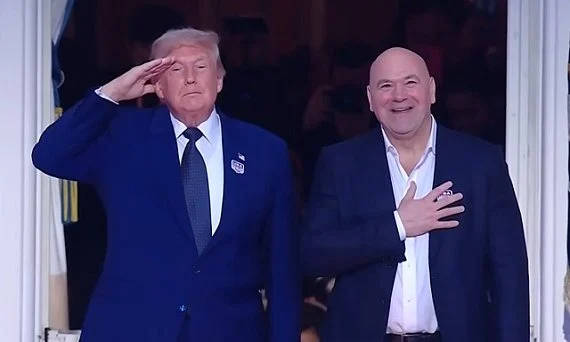
The intersection of combat sports and American politics experienced another colorful chapter this week when United States President Donald Trump addressed recent speculation regarding a potential White House appointment for Ultimate Fighting Championship (UFC) Chief Executive Officer Dana White. While initial reports and viral social media posts suggested a serious administrative shakeup might be on the horizon, the President has clarified that his remarks about naming the prominent combat sports executive as the next White House press secretary were entirely in jest—even if White himself reportedly found the concept appealing.
The speculation began when Trump, a longtime friend and political ally of the UFC chief, floated the idea of bringing White into the executive branch briefing room. During discussions regarding the political landscape and his administration’s communication strategy, Trump mused about the unique dynamic a figure of White’s intensity would bring to the podium. To illustrate the unorthodox concept, the President pointed to the broader cultural influence of mixed martial arts, suggesting that elite fighters could offer a different kind of presence when dealing with the daily press corps.
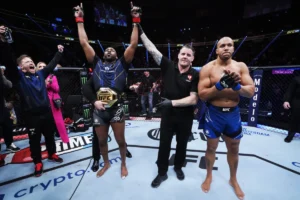
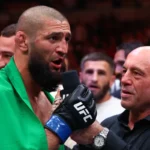
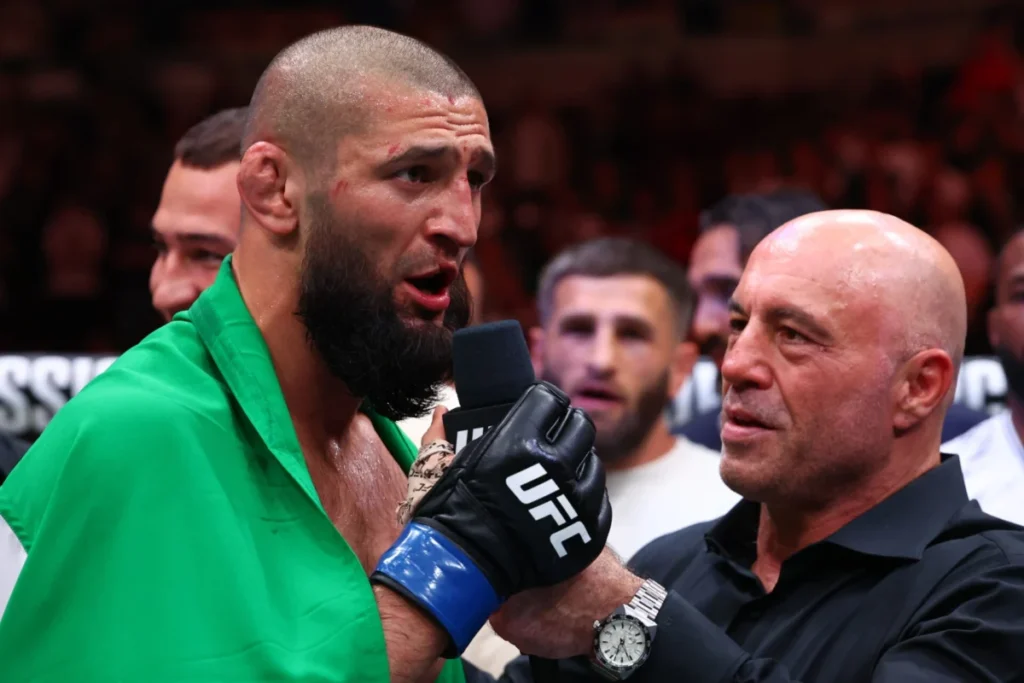
Trump expanded on the theme by referencing prominent names from the upper echelons of the sport, including lightweight contenders and champions such as Islam Makhachev, Khabib Nurmagomedov, Justin Gaethje, former dual-division champion Daniel Cormier, bantamweight and featherweight great Amanda Nunes, and two-division PFA and Olympic star Kayla Harrison. In Trump’s characteristically hyperbolic framing, such formidable athletes would be well-equipped to handle the rigorous environment of Washington politics, jokingly suggesting they were needed to protect the country from what he frequently describes as the political opposition.
The rhetoric quickly escalated online when Trump shared an animated video across his digital channels. The simulated footage humorously depicted various UFC fighters physically dominating reporters during a mock White House press briefing. The post immediately drew widespread attention, igniting a flurry of media commentary, internet memes, and serious speculation across political and sports news outlets alike.
Speaking to reporters in West Palm Beach, Florida, Trump addressed the viral reaction and cleared up any misunderstandings about his intentions. He confirmed that the entire episode was meant as a joke, expressing surprise that observers did not immediately recognize the lighthearted nature of the commentary.
"I posted the greatest wrestlers and UFC fighters in the world, like Khabib, like Justin Gaethje, who’s phenomenal," Trump told reporters in West Palm Beach. "And you see a lot of rough faces there. And you would have thought that people would have said, ‘He’s having a good time.’ I will tell you I was only kidding."
Despite clarifying that the appointment was never a formal policy proposal, Trump revealed that the UFC leader was quite amused by the public chatter and the imaginarity of the scenario. According to the President, White embraced the humorous premise wholeheartedly, appreciating the sheer spectacle of the idea.
"But Dana loves the idea," Trump added with a smile. "And there’s only one Dana. You wouldn’t mess around with him so much."
The Longstanding Alliance Between Donald Trump and Dana White
The playful banter between the two high-profile figures underscores a relationship that spans decades, predating Trump’s entry into formal politics by many years. Dana White and Donald Trump share a history rooted in the early, turbulent days of the Ultimate Fighting Championship, long before the organization grew into a multi-billion-dollar global entertainment enterprise.
In the early 2000s, when mixed martial arts struggled for mainstream legitimacy and faced regulatory bans across numerous states due to political and athletic resistance, it was properties owned by Trump that provided a vital lifeline. Most notably, the Trump Taj Mahal in Atlantic City, New Jersey, opened its doors to host pivotal UFC events. That crucial support helped the fledgling promotion survive its most precarious era, forging a bond of loyalty between White and Trump that has endured through the decades.
In the years since, that alliance has only deepened. As Trump transitioned from real estate mogul and reality television host to the political arena, Dana White emerged as one of his most steadfast and visible corporate supporters. White famously spoke at multiple Republican National Conventions, vigorously defending Trump and leveraging his own platform in the sports entertainment industry to rally support among demographics that resonated with both combat sports and conservative politics.
Furthermore, the relationship extends beyond White himself to include many of the sport’s biggest stars. Over successive electoral cycles, numerous high-profile UFC fighters and mixed martial artists have openly endorsed and campaigned for Trump, frequently appearing ringside at events alongside the President or joining him at political rallies. Fighters often praise Trump for his regular attendance at UFC pay-per-view events, where his arrival in arenas is routinely met with roaring crowds and thunderous applause from fans who bridge the worlds of combat sports and populist politics.
While the prospect of Dana White stepping behind the podium in the James S. Brady Press Briefing Room to field questions from the White House press corps remains purely a hypothetical joke, the episode highlights the unique cultural synergy between the Trump administration and the upper echelons of mixed martial arts. As Trump continues to blend traditional political messaging with pop culture and sports entertainment references, the enduring partnership between the President and the UFC chief remains as visible as ever—ensuring that whenever their paths cross, whether in politics or sport, it commands the full attention of the public.