
The 1912 Olympic marathon was contested under the sweltering heat of a brutal Scandinavian heatwave, and before long, Shizo Kanakuri of Japan was severely flagging. His journey from East Asia to Stockholm had been an ordeal in itself, leaving him physically debilitated before the race had even begun. Having barely trained and severely struggled to sleep throughout the grueling trip, Kanakuri reached his breaking point at around the 16-mile mark. Exhausted, dehydrated, and thoroughly disoriented, he stumbled off the official marathon route and drifted into the garden of a local Swedish family. There, according to his somewhat bemused hosts, the marathon runner sat down and spent the next hour quietly sipping orange juice.
Overcome with shame at his failure to complete the race, Kanakuri quietly boarded a boat the following day and returned to Japan without notifying Olympic officials. Back in Sweden, the mystery of the "disappearing runner" grew into an enduring piece of sporting folklore. Kanakuri’s name remained officially listed on the country’s missing persons registry for more than half a century.
It was not until the 1960s that a persistent journalist finally tracked him down to Kumamoto in southern Japan, where he was living a quiet life as a geography teacher. Recognizing a spectacular public relations opportunity, Swedish television flew Kanakuri back to Stockholm at considerable expense and escorted him to the exact location where he had abandoned his run decades earlier.
There, in March 1967, Kanakuri ran across the finish line to officially complete the 1912 Olympic marathon. His final time was recorded as 54 years, eight months, six days, five hours, 32 minutes, and 20.3 seconds. None of this extraordinary saga carried the slightest sporting consequence. Yet it was a delightful story that generated substantial global interest. The newspapers successfully filled their column inches, the television networks filled their broadcast schedules, and in the end, perhaps that was all that truly mattered.
All of which brings us, by an equally circuitous route, to the heavyweight showdown between Tyson Fury and Anthony Joshua. This is a fight that is frequently described as taking place several years too late, occurring long after the 38-year-old Fury and the 36-year-old Joshua have passed their absolute athletic peaks. It arrives years after either man last defeated a world-class contender in their prime, representing a delay so prolonged that it makes the protracted negotiations for Floyd Mayweather Jr versus Manny Pacquiao look almost impromptu by comparison.

Yet to suggest that this fight is taking place too late is to misunderstand the fundamental machinery of modern prizefighting. In truth, Fury versus Joshua is happening at the precise moment it was always intended to happen: at the exact financial sweet spot where maximum commercial yield intersects with a complete absence of genuine sporting jeopardy.
Had this bout been staged in 2021, both fighters would have been putting everything on the line—world championship belts, the undisputed heavyweight crown, and their ultimate athletic legacies. Had it been delayed until 2031, not even the combined promotional wattage of Frank Warren, Eddie Hearn, Dana White, and Turki al-Sheikh could have convinced the buying public that it was anything more than a fairground sideshow.
Instead, the contest must happen right now, just before the public completely ceases to care. Like an experienced market trader extracting the absolute highest price for a piece of fruit on the very precipice of rot, the boxing business is operating in peak commercial mode. "We will get it on at the right time," Joshua remarked back in April 2016, shortly after defeating Éric Molina, when a potential showdown with Fury was worth only a fraction of the £150 million mega-event it has become today. In the unique economy of modern boxing, absence does not make the heart grow fonder; it simply makes the purse grow fatter.
That this structural delay is routinely treated as a minor inconvenience—a temporary glitch in the system rather than a fundamental existential defect—explains much about boxing’s gradual drift toward mainstream irrelevance. Virtually every other major sport on earth operates on the foundational principle that, at some regulated interval, the absolute best competitors must face the absolute best. Other sports construct rigorous tournament frameworks, seasonal leagues, and governing authorities designed specifically to compel these confrontations into existence.
Boxing stands virtually alone as the only sport in the world where this principle does not apply. This reality raises a lingering question: can prizefighting still be considered a legitimate sport at all, at least within the modern, codified definition of the term?
Predictably, Fury has spent recent months attempting to pin the entire blame for the delay on Joshua, presenting a narrative in which he himself has been standing ready in his fight gear all along. This version of history conveniently glosses over the vast stretches of time Fury spent away from the top of the division. It ignores the two and a half years he spent out of the sport dealing with doping charges, substance abuse issues, and severe mental health struggles.
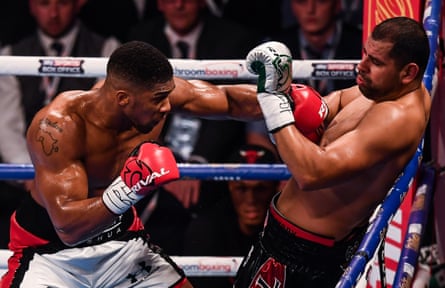
It also ignores the subsequent two and a half years spent embroiled in a bitter legal and athletic battle with Deontay Wilder, fought out both inside the ring and through arbitrations in courtrooms. As thrilling as the Fury-Wilder trilogy undoubtedly was, it carried an underlying sense of lost opportunity. As one brutal rivalry played out to its conclusion, the prospective golden era of an all-British heavyweight unification was systematically eroded.
Then came the retirements—at least five of them, depending on how meticulously one tracks Fury’s public declarations. There is a certain nostalgia in recalling Fury’s first formal exit from boxing in 2013, when he announced he was "1000000%, no matter what" never fighting again. That was followed by similar declarations of finality in 2016, in 2017 when he declared "THE END," and again in 2022 when he insisted it was "the gospel truth" that no amount of money could lure him back. Most recently, another period of retirement stretched from 2025 into 2026. While contract negotiations in high-stakes sports are notoriously complex, repeatedly declaring oneself permanently retired is hardly the traditional route to establishing oneself as a reliable athletic partner.
Accusations of cowardice are entirely out of place when directed at anyone who steps inside a boxing ring and risks their physical wellbeing for public entertainment. Yet it remains a genuine shame that a rivalry capable of defining a generation of British boxing is being staged only when the athletic stakes have fallen so low.
For all the promotional noise and biblical grandeur that will be generated in the coming weeks, what does this fight actually prove? What long-standing debate is genuinely settled, and what legacy is meaningfully altered? Furthermore, is it truly in anyone’s commercial interest for anything to be definitively settled, given the obvious potential to market an equally lucrative rematch a year or two down the line?
Historically, prizefighting has derived its power from its ability to hold two conflicting ideas in harmony. On one side is the sense of sporting ultimacy—the raw, unvarnished spectacle of supreme human endurance and skill, featuring the finest combatants on earth. On the other side is the world of vaudeville and pantomime—the deliberate, theatrical packaging of physical conflict for mass entertainment and profit.
Boxing reaches its absolute peak when these two forces act in service of one another. Like a Christmas cracker, the sport requires both the attractive outer wrapping and the explosive element inside. Strip away either component, and the core concept begins to fall apart.
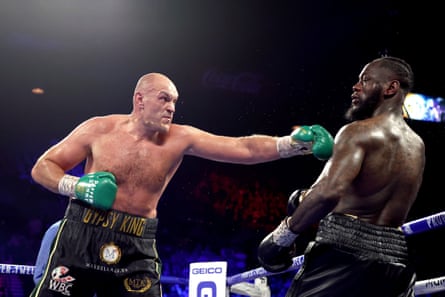
For years, however, these two elements have been pulling apart in opposite directions. The modern boxing landscape has increasingly fractured around two distant poles: elite, meritocratic sporting competition on one side, and algorithmic celebrity spectacle on the other.
In the realm of pure meritocracy, extraordinary talents such as Moses Itauma remain well-kept secrets from the general public, while high-caliber world title fights like the all-British clash between Daniel Dubois and Fabio Wardley are celebrated by purists as domestic classics yet fail to make a major dent in wider pop culture.
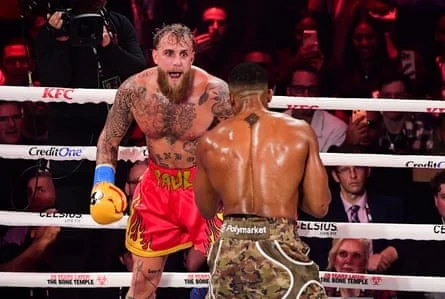
In the realm of celebrity spectacle, internet personality Jake Paul commands massive pay-per-view audiences, undisputed heavyweight champion Oleksandr Usyk steps into crossover bouts against kickboxers, rumors persist of Floyd Mayweather Jr emerging from retirement for exhibitions against Mike Tyson, and veteran rivalries like Conor Benn versus Chris Eubank Jr are recycled endlessly for public consumption.
Where, then, does Fury versus Joshua belong in this divided landscape? Which leg of Shizo Kanakuri’s marathon are we actually paying to watch? The natural impulse is to believe that Fury can still summon the evasive genius and physical dominance of his peak years, rather than acting as a tired provocateur. There is an equal urge to believe in the pristine, optimistic version of Joshua from the mid-2010s—a fighter defined by clean lines and explosive athletic promise. Everyone wants to believe that this represents the pinnacle of elite sport. Yet deep down, the true nature of the event remains impossible to ignore.