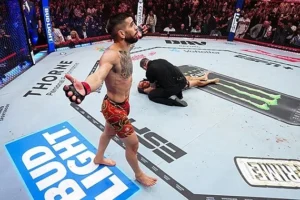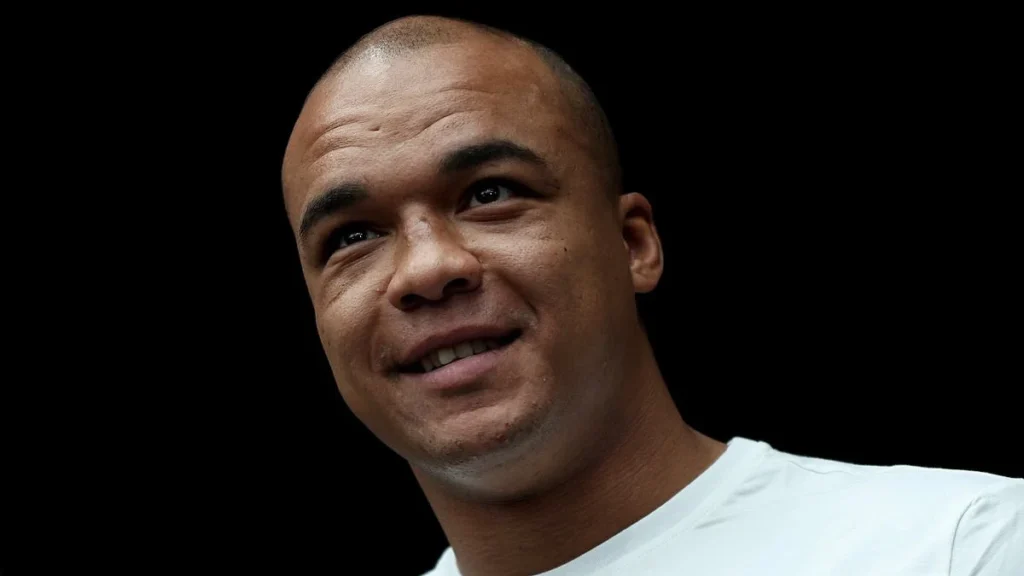
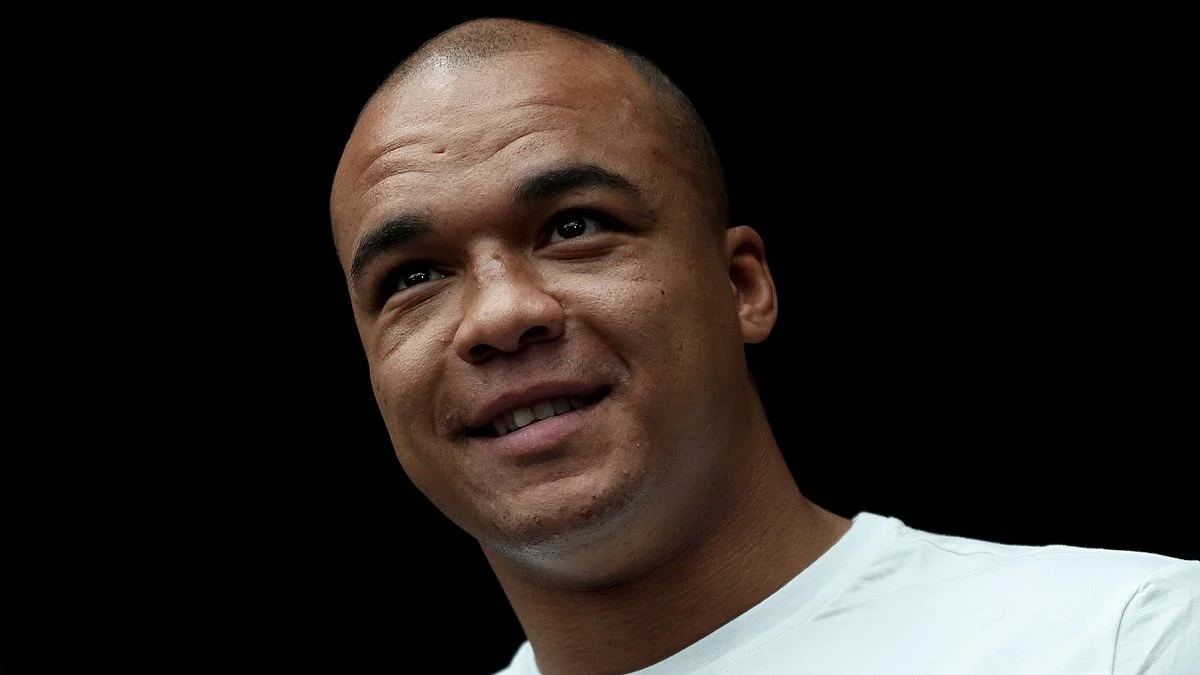
Fabio Wardley is not supposed to be here again so soon.
Not, at least, according to those who watched him endure 11 gruelling, punishing rounds against Daniel Dubois in Manchester last May. Not according to the concerned observers who openly questioned whether his corner should have pulled him out of the contest earlier, as his face became increasingly battered and his right eye swelled completely shut under the relentless onslaught. And certainly not according to the pundits and analysts who believe the sheer magnitude of the physical punishment he absorbed makes stepping back into the ring for an immediate rematch a risk far too dangerous for any fighter to contemplate.
Yet, as has so often been the case throughout his professional journey, Wardley has never been one to follow the conventional script.
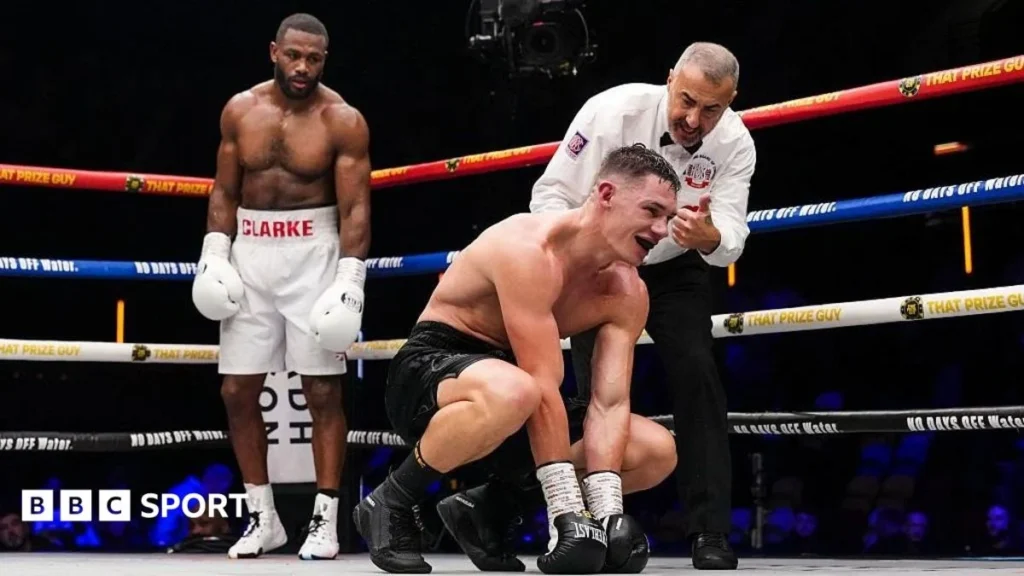
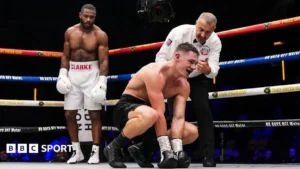
When the 31-year-old first shared the ring with Dubois, 29, he did so carrying the prestige of the WBO heavyweight championship. In the early stages of that high-stakes encounter, Wardley threatened to pull off one of the most significant victories of his career, stunning his opponent by dropping him twice in the opening three rounds. However, Dubois showed immense championship resolve, steadily fighting his way back into the contest, regaining the momentum, and ultimately stopping Wardley in the 11th round of a brutal war.
Now, with the WBO world title once again hanging in the balance, Wardley finds himself returned to a familiar psychological and competitive territory: he is the challenger, the betting underdog, and the man whom a large portion of the boxing public expects to fall short once more.
And, as he explains during a candid conversation ahead of the eagerly anticipated rematch, he rather likes it that way.
"It’s been the staple of my career for as long as I can remember, well, since I started. It has been the main focal point," Wardley reflects, discussing the perennial doubts that have shadowed his ascent through the heavyweight ranks. "After the first five or six fights, when I started to step up the level, even incrementally, even slightly, people were saying I was going to lose, that it was a step too far, and all the rest of it. It’s all the stuff everyone’s heard before."
"It’s a side of the coin I’m very much used to, and the pressure’s off. I’m the challenger here. I’m expected to lose and expected to go even quicker, and Daniel’s supposed to put on a better performance, and all the rest of it. So there’s no pressure on me. There’s nothing on my shoulders."
It is a strikingly relaxed and grounded assessment from an elite athlete actively preparing to walk back into the danger zone with the very man who handed him the first professional defeat of his career.
Wardley, however, insists that the setback has done little to alter his core identity or his outlook on the sport. He is entirely realistic about the reality of losing, refusing to sugarcoat the outcome while simultaneously putting the result into a pragmatic perspective. A world title defeat is never fun, he acknowledges, but it was far from a defining or catastrophic moment in his life story.
"Not a lot has changed. I’m not that different. Don’t get me wrong, a loss is never fun. It’s never nice, it’s never enjoyable. But for me, at least, it wasn’t soul-crushing or devastating, and it hasn’t had any effect on me as a person, my character or anything else," he says.
"The job’s the job, the game’s the game. From the very beginning, I’ve accepted that getting through heavyweight boxing unscathed isn’t guaranteed, especially given the way I compete at the highest level and my desire to take on the biggest challengers out there."
Looking back at the trajectory that led him to face Dubois in the first place, Wardley notes that the matchup was entirely of his own making. Rather than seeking out carefully managed fights to protect an unblemished record, he actively pursued the toughest tests available in the division.
"I think people forget that the first time around, I picked Daniel. I asked for that fight because I looked at the crop of heavyweights and thought, ‘That’s the best one to challenge myself against,’" he explains.
"Knowing that about myself, and knowing that’s my angle, was I ever going to get through this undefeated like Floyd Mayweather? Probably not. So, look, it comes how it comes. But as long as I’m happy with myself in terms of the performances, that I’ve given my all and all the rest of it, I can sleep at night."
That unwavering willingness to put himself directly in the firing line is precisely what has turned Wardley into one of the most compelling and exciting figures in the modern heavyweight landscape. His fights are rarely short on high drama, and his initial meeting with Dubois was a prime exhibition of that volatile style. Wardley started the fight at a blistering, explosive pace, shocking the arena by putting Dubois down within the opening 10 seconds. Yet, the high-octane start laid the groundwork for a dramatic momentum shift as the cumulative damage began to take its toll in the later rounds.
As the bout wore on, Wardley was forced to absorb punishing heavy shots while visibly compromised, fighting through considerable physical trauma. The severe state of his face between rounds sparked widespread debate within the boxing community, with critics openly questioning whether the contest should have been halted earlier by the referee or his coaching staff. Particular scrutiny was directed at his corner for sending him back out into the fray ahead of the demanding 10th round.
Wardley firmly rejects the narrative that his team failed him or compromised his safety. Instead, he views the individuals in his corner as an extension of his family, placing absolute trust in their judgment and believing that they always prioritize his long-term welfare, regardless of how their decisions might be interpreted by external critics peering in from the outside.
He is equally dismissive of the public noise surrounding the swift turnaround and the timing of the rematch. In his view, onlookers sitting safely outside the camp cannot possibly possess a complete understanding of his physical recovery, nor can they accurately gauge his medical readiness. From Wardley’s perspective, he and his trusted team are uniquely qualified to evaluate the true extent of the damage sustained and determine whether he is fully prepared to lace up the gloves again.
For Wardley, the stark prospect of stepping into another brutal, punishing encounter is not something he has avoided or hidden from. It is a harsh reality he has had to confront honestly with himself, fully understanding that by choosing to share the ring with Dubois once more, he is willingly inviting the very real possibility of enduring another severe physical ordeal.
It is a remarkable and mature psychological process: to consciously acknowledge the probability of experiencing the exact same damage all over again, to honestly ask himself whether he possesses the stomach to go through it, and ultimately to make peace with the answer long before the first bell rings on Saturday night.
"It’s a level of early acceptance. The second I triggered the rematch clause, even before that, I had to have a conversation with myself and ask, ‘This could go the exact same way. Are you ready for that? Are you OK with that?’" Wardley shares.
"As long as the answer is yes from me to me, then cool, let’s go. But by now, it’s nowhere near my brain as a question mark or something I’m having to deal with, battle with or anything else. It’s already been ticked off, boxed and put away. It is what it is."
There is a distinct lack of melodrama in his delivery when discussing the dangers of the sport. When confronted with the possibility of returning to the same type of punishing battle, Wardley makes no attempt to dress his mindset up as mythical fearlessness, nor does he pretend that the inherent risks of heavyweight boxing do not exist. Rather, it is a clear-eyed acceptance of the trade-offs required to compete at the elite level.
That fierce competitive philosophy is perhaps best demonstrated by his immediate reactions inside the ring when he is on the receiving end of clean punches. Unlike fighters who might look to retreat, clinch, or quietly survive after being caught, Wardley’s instinct is to ensure his opponent understands there will be an immediate and dangerous price to pay for landing those blows.
"Especially in those moments, it’s about getting back at them. All right, you took one… let your hands go. Don’t just let them get away with it for free. At least let them know. Let them have it in their brain that if they get off a few shots, I’m not just going to take them, run away and roll over," he says.
That unrelenting mindset produces spectacular entertainment for the fans, but it also places immense, high-stakes demands on a fighter’s corner during the fleeting moments of rest between rounds.
When asked about the atmosphere on the stool during those intense 60-second intervals, Wardley is remarkably pragmatic. He views the brief break as far too precious to waste on emotional reassurance or sympathetic checks, insisting that every second must be dedicated strictly to vital tactical information.
"No, I think it’s 90 per cent tactical, 10 per cent everything else, because in those moments, compassion doesn’t need to come into it. That’s not where the compassion needs to be," Wardley explains.
"Those 60 seconds are so precious, such a small moment. It feels like a click. It feels like nothing. It feels like it’s done and gone so quickly that you’re on your stool, you’re off your stool and the next round has started."
"In that time, you need to get the information. It’s not time for, ‘Oh, a little rub on the shoulder. Are you doing OK, Fab? Is everything alright? Are you going to be alright, mate? Do you want me to dab your face a bit?’ No. Let me know what I need to know. Let’s get this going again."
Wardley heads into the weekend fully aware that the rematch will ask profound questions of his stamina, his heart, and his durability. He knows the doubters will be watching closely, ready to scrutinize every movement and question every punch absorbed. But he also remains anchored by the exact motivations that drove him to seek out the initial fight against Dubois in the first place.
For Fabio Wardley, the relentless pursuit of the division’s ultimate challenges has always carried far more weight than the comforting illusion of a protected, undefeated record. Defeat in Manchester did nothing to alter that philosophy. He returns to the ring because the possibility of a difficult ending has already been fully processed and accepted, and because for a competitor of his nature, the rewards of chasing greatness make the risk entirely worth taking.