

The ringside judges in Yong-In, South Korea, were given an uncomplicated assignment during a high-stakes night of regional championship boxing, as the evening’s primary features concluded long before the final bells could sound. In an impressive display of offensive firepower and tactical superiority, both South Korean standout Bo-Mi-Re Shin and rising force Isroilzhon Sultonov delivered definitive technical knockout victories, leaving no doubt regarding their dominance within their respective weight classes and securing prestigious sanctioning body honors under the WBA Asia banner.
The fight card in Yong-In highlighted the growing momentum of professional boxing in the region, bringing together high-caliber athletes fighting for championship status. With championship titles on the line, the event promised intense action, but few anticipated that neither featured contest would require the official scorecards. Instead, the night belonged entirely to the victors, who systematically dismantled their opponents with calculated aggression, precise punching, and overwhelming pressure.
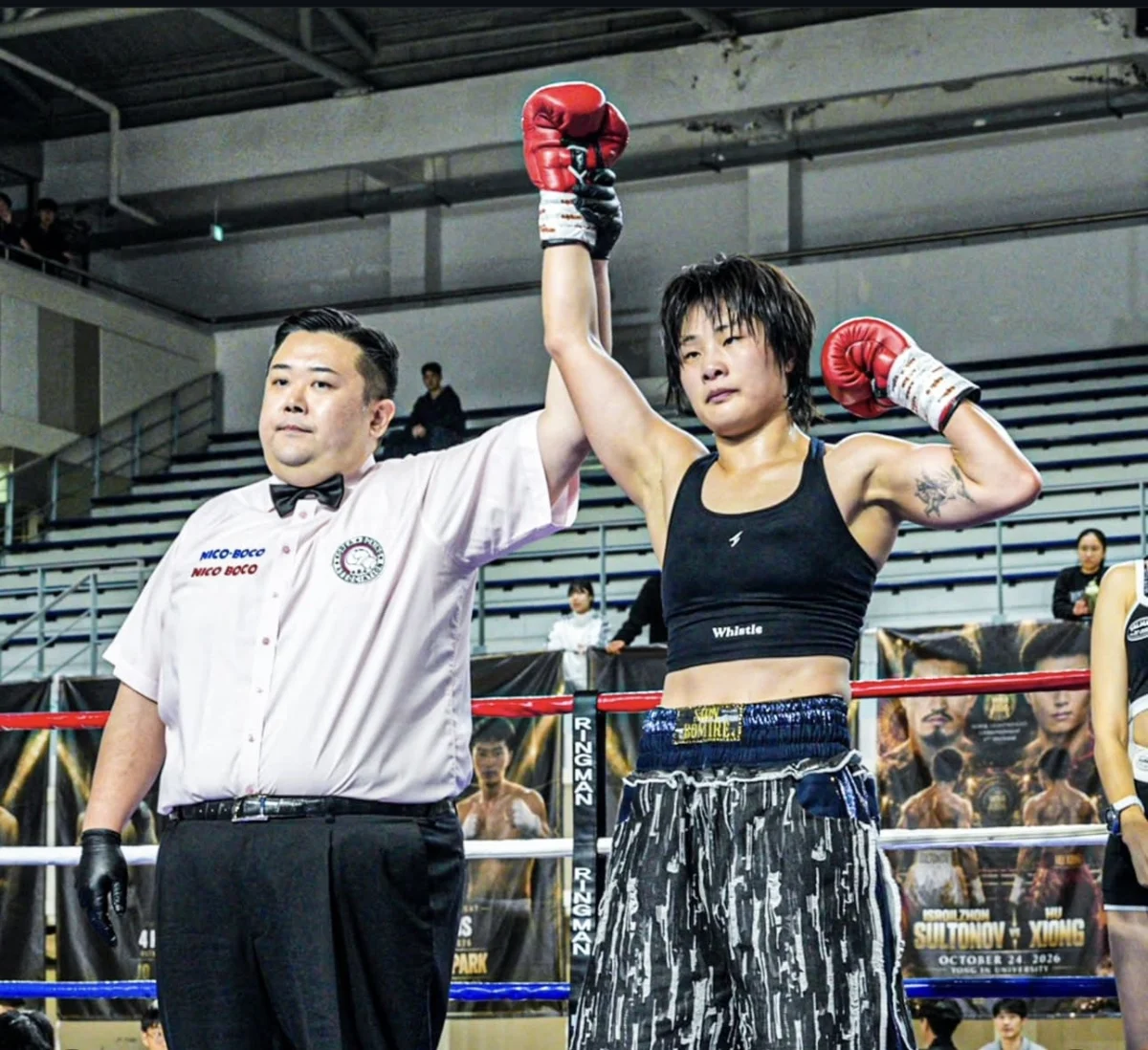
In the women’s lightweight division, home-country star Bo-Mi-Re Shin turned in a masterful performance against challenger Adelina Satybaldieva, defending her WBA Asia female lightweight title with authority. From the moment the opening bell rang, Shin established herself as the commander of the ring, stepping immediately into the center of the canvas and asserting her presence. She refused to yield ground, using sharp footwork and assertive positioning to pin Satybaldieva toward the outer perimeter of the canvas.
Shin’s offensive strategy was both methodical and relentless. Rather than relying solely on high-volume headshots, the South Korean champion demonstrated sophisticated ring craft by varying her targets effectively. She established her range early with precise, straight punches to the head, keeping Satybaldieva on the defensive and disrupting the challenger’s ability to find any offensive rhythm. These straight punches served as the entry point for a devastating and continuous body attack that quickly became the defining feature of the bout.
As the rounds progressed, Shin’s targeted assault on Satybaldieva’s midsection began to take a visible toll. In professional boxing, sustained body work serves to drain an opponent’s endurance, slow down their footwork, and force their guard to drop, creating openings for follow-up attacks to the head. Shin executed this classic tactical approach to perfection. Each clean strike to the body weakened the challenger’s resolve, incrementally stripping away Satybaldieva’s stamina and defensive sharpness.
Despite Satybaldieva’s efforts to withstand the assault and navigate through the champion’s steady output, the cumulative damage grew increasingly difficult to manage. Shin remained patient, refusing to rush into reckless exchanges while consistently applying steady pressure. By maintaining control of the center ring, Shin ensured that Satybaldieva was constantly reacting to her movements rather than instigating her own offense.
The final breakthrough arrived in the fifth round. Recognizing that her opponent was visibly compromised by the relentless body attack and steady combination punching, Shin escalated her aggressive output. Turning up the tempo, the hometown favorite drove Satybaldieva back against the ropes, cutting off potential escape routes with sharp lateral movement. Once the challenger was trapped along the perimeter, Shin unleashed a ferocious, unanswered flurry of punches.
With Satybaldieva unable to return fire or defend herself effectively against the bombardment, the referee acted swiftly to prioritize fighter safety. Stepping between the two competitors, the official waved off the contest, officially awarding Shin a technical knockout victory in the fifth round. The decisive finish allowed Shin to successfully retain her WBA Asia female lightweight championship, earning widespread praise for her tactical discipline, punching accuracy, and relentless finishing ability.
Following the thrilling conclusion of the women’s lightweight championship, the focus shifted to the super lightweight division, where the 140-pound competitors delivered an equally captivating, albeit far more grueling, battle of attrition. Featuring Isroilzhon Sultonov against the exceptionally durable Chinese contender Hu Xiong, the contest had the vacant or contested WBA Asia East super lightweight title hanging in the balance, setting the stage for a high-intensity showdown between contrasting styles.
From the opening round, Xiong made his tactical intentions clear. The Chinese fighter aimed to turn the championship bout into an inside brawl, constantly advancing and attempting to smother Sultonov’s range. In the early stages of the fight, Xiong’s aggressive, forward-marching strategy yielded success. By forcing the action at close quarters, Xiong dragged Sultonov into heavy exchanges, testing the patience and defensive fortitude of his opponent.
During these initial rounds, Xiong pressed the pace with determination, trying to bully Sultonov toward the ropes and land short-range hooks and uppercuts. The close-range environment appeared to favor Xiong’s rugged approach, as he sought to make the fight as physically taxing as possible. However, championship boxing often hinges on a fighter’s ability to adapt under pressure, and Sultonov soon demonstrated the depth of his technical arsenal.
As the match moved past the early rounds, Sultonov began to solve the complex puzzle presented by Xiong’s constant forward motion. Rather than continuing to engage in chaotic inside scrambles, Sultonov adjusted his footwork and timing, establishing the proper distance required to utilize his natural assets. His superior hand speed and crisp counterpunching emerged as the critical factors in altering the trajectory of the championship bout.
Sultonov’s accuracy began to shine as he timed Xiong’s entries with sharp counter shots. As Xiong stepped inward to initiate close-range attacks, Sultonov repeatedly tagged him with precise counters, slipping out of danger before the Chinese fighter could reset his offense. This ability to punish Xiong’s aggression dramatically altered the dynamic of the fight, forcing Xiong to absorb heavy damage simply to get within striking distance.
As the bout entered the championship rounds, Sultonov’s systematic breakdown of Xiong became increasingly pronounced. The early physical exertion, combined with the continuous impact of Sultonov’s sharp counterpunches, began to wear heavily on the resilient Chinese fighter. Although Xiong demonstrated remarkable heart and durability by continuing to push forward, his speed diminished, his punches lost their crispness, and his defensive guard grew porous.
Sultonov maintained absolute composure throughout this grueling process, picking his shots with surgical precision. He mixed single power shots with multi-punch combinations, repeatedly piercing Xiong’s defense. The cumulative effect of Sultonov’s heavy, accurate leather was undeniable, as Xiong’s work rate dropped significantly under the constant strain of the punishment he was receiving.
The definitive moment arrived in the ninth round. Sensing that Xiong was fundamentally spent and no longer capable of altering the contest’s momentum, Sultonov moved in to close the show. With refined aggression, Sultonov trapped Xiong and unleashed a decisive, continuous barrage of heavy punches. Xiong, battered by nine rounds of grueling combat, was unable to mounted an effective defense or offer meaningful counter-offense in response to the onslaught.
Observing the severe turn in action and the defenseless state of the brave challenger, the referee intervened, stopping the fight in the ninth round to grant Sultonov a compelling technical knockout victory. The stoppage earned Sultonov the WBA Asia East super lightweight championship, capping off a remarkable display of composure, tactical mid-fight adjustment, and explosive counterpunching skill.
The double-header of stoppage victories in Yong-In delivered an unforgettable night of championship boxing, demonstrating the talent and competitive spirit present within the WBA Asia ranks. For Bo-Mi-Re Shin, the fifth-round victory reaffirmed her status as a premier force in the women’s lightweight division, showcasing a complete skill set built on dominant ring generalship, devastating body work, and a killer instinct when opportunies present themselves. For Isroilzhon Sultonov, his ninth-round triumph over a grueling opponent underscored his elite technical capabilities, patience, and championship resolve at 140 pounds.
By concluding both headline bouts inside the distance, Shin and Sultonov ensured that the event in Yong-In will be remembered as a night of spectacular action where technical proficiency and overwhelming pressure reigned supreme, leaving no work for the ringside judges and setting a benchmark for regional title defenses moving forward.