

At an age when many individuals are settling into a more sedentary lifestyle, Tom Cruise continues to perform death-defying stunts that would exhaust actors half his age. Whether he is dangling from the side of a soaring military aircraft or racing motorcycles off treacherous cliffs, the Hollywood icon maintains a physical condition that constantly defies conventional expectations of aging.
How a man born in July 1962 maintains a physique capable of withstanding such intense physical abuse has long been a subject of fascination for fans and fitness enthusiasts alike. Recent coverage from outlets such as Men’s Health UK has highlighted his remarkably diverse fitness regimen, while viral social media posts have frequently pointed to a specific, behind-the-scenes methodology credited for his enduring strength.
Los Angeles-based trainer Wes Okerson is frequently linked in wellness circles to the actor, credited with guiding him through a gentler, progressive training system designed to protect the joints before introducing heavy loads. However, looking past the viral claims reveals a nuanced picture of how Hollywood’s most famous action star truly maintains his conditioning, offering valuable lessons for anyone hoping to preserve mobility and strength well into later life.
The Big Idea: Build Strength Without Wrecking Your Joints
The core philosophy attributed to Okerson’s approach centers on what is broadly known as low-impact training. Over decades of high-intensity performance, pounding runs, explosive plyometric jumps, and heavy external loading can take a severe toll on the human body, straining cartilage, compressing spinal discs, and chronicling wear and tear in the knees and hips.
The central premise of this methodology is simple yet often overlooked: individuals must earn the right to lift heavy things. Movement quality and structural integrity must take precedence, meaning external loads are only introduced after foundational movement patterns appear clean and unhindered. While this measured approach may initially sound too modest for an action superstar, it forms the bedrock of sustainable physical longevity.
The Progression, Step by Step
To achieve this balance, fitness systems aimed at joint preservation typically rely on a deliberate hierarchy of movement. The process begins with solidifying bodyweight foundations. Simple movements such as squats, lunges, and push-ups are performed with slow, deliberate control. Executing these foundational patterns with immaculate form reveals muscular imbalances and weak links long before a heavy barbell can introduce unnecessary stress and potential injury.
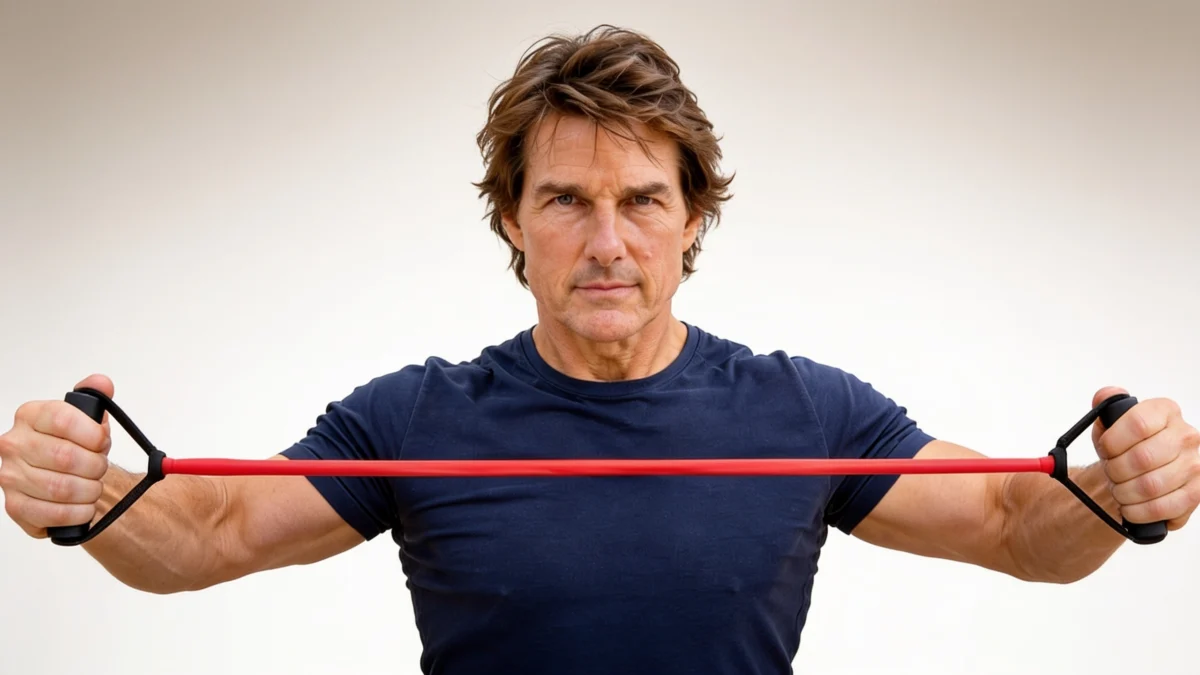
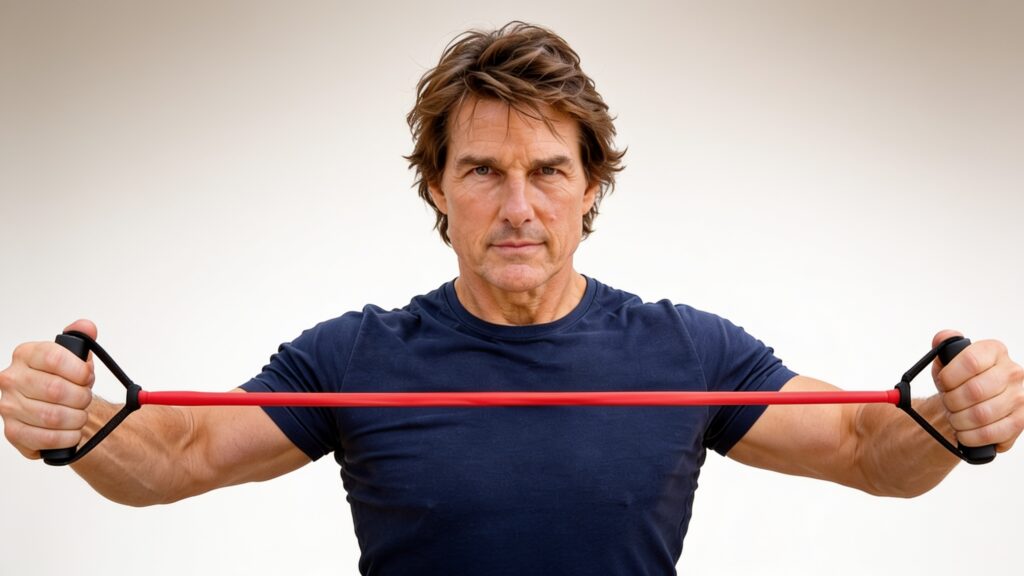
Once bodyweight mastery is established, the progression often incorporates resistance bands to raise the physical challenge. Unlike rigid iron, resistance bands provide variable resistance throughout the entire range of motion, becoming progressively tougher as the muscles shorten. Because this type of resistance keeps joint compression significantly lower than traditional free weights, it offers a joint-friendly alternative for individuals with sensitive knees, shoulders, and hips.
Cardiovascular conditioning forms another crucial layer of the strategy, often favoring incline walking over high-impact pavement pounding. Walking uphill at a steep gradient elevates the heart rate and caloric expenditure to levels comparable with jogging, all while dramatically reducing the impact forces absorbed by the knees and lower back. This approach also heavily engages the posterior chain—including the glutes, hamstrings, and calves—muscles that are frequently neglected by individuals who spend their days seated at desks.
Upper-body pulling and hanging movements represent another vital component of functional longevity. Pulling strength is notoriously undertrained among aging adults, despite its importance for everyday tasks ranging from carrying groceries to navigating physical obstacles. Utilizing a simple pull-up bar offers a scalable method to maintain grip strength, shoulder health, and upper back resilience.
Finally, traditional weights enter the equation only after all preceding movement patterns have become solid and repeatable. By the time heavier loads are introduced, the tendons, stabilizing muscles, and overall neuromuscular coordination have been thoroughly prepared to handle the added stress safely.
Why Science Backs the Logic
The underlying logic of this progressive, joint-conscious training finds robust support in modern sports science and medical research. As individuals age, they face the natural onset of age-related muscle loss known as sarcopenia, a process that typically accelerates after the age of 60. Progressive resistance training remains the single most reliable counterpunch to this decline, helping to preserve lean muscle mass, enhance bone mineral density, and maintain metabolic health.
Furthermore, peer-reviewed literature continually validates the effectiveness of resistance bands for building strength and muscular endurance, particularly among populations with existing joint sensitivities. Gradually progressing from simple, unloaded movements to more complex external resistance aligns seamlessly with established sports medicine principles for older adults, minimizing acute injuries while maximizing long-term functional capacity.
A Reality Check Before You Copy Cruise
Despite the tidy narratives found across digital platforms, fitness consumers must separate viral marketing from verified reality. Much of the specific discourse linking Wes Okerson’s exact protocols to Tom Cruise circulates primarily through social media threads and online wellness content rather than official biographical confirmations or direct interviews outlining a rigid daily blueprint. Similar online spaces have frequently linked the same trainer to other prominent public figures like Gerard Butler and Jeff Bezos, revealing a common pattern utilized by fitness marketers to capture public attention.
In reality, Cruise’s documented physical habits paint a much broader and more demanding picture. Men’s Health UK has detailed an eclectic mix of activities that extend far beyond standard gym routines, including sea-kayaking, caving, competitive fencing, intensive treadmill running, rock-climbing, and rigorous outdoor hiking.
Clearly, his routine cannot be categorized as purely low-impact. Combined with the support of professional athletic trainers, dedicated recovery staff, and demanding film production schedules that dictate relentless physical conditioning, his results rely on an ecosystem of time, resources, and professional support that remains out of reach for the average person.
What You Can Borrow Starting This Week
While attempting to replicate a global movie star’s exact lifestyle is entirely unrealistic, adopting the underlying sequencing of his physical preparation is entirely achievable. Everyday fitness enthusiasts can easily integrate the core philosophy of joint protection and movement progression into their own weekly routines.
A practical action plan begins with prioritizing fundamental movement patterns using bodyweight alone, ensuring that technique is refined before adding external resistance. Incorporating variable resistance tools, such as bands, can provide an effective stimulus for muscle growth without overwhelming the joints. Swapping high-impact running for sustained incline walking on a treadmill or outdoor trail can deliver cardiovascular benefits while sparing the knees from excessive wear and tear.
Above all, individuals pursuing longevity must prioritize adequate sleep and structured recovery periods, as muscle tissue and connective strength are built during rest rather than during the workouts themselves. Anyone managing chronic joint pain, existing heart conditions, or advanced bone density concerns should always consult with a qualified medical doctor or physical therapist before launching a new exercise regimen.
Ultimately, maintaining strength and vitality past the age of 60 requires patience, consistency, and a respect for physiological limits. By starting gently and progressing intelligently, individuals can build a foundation of physical resilience that supports an active life for decades to come.