
If one were to rank the world’s elite sports stars purely by the sheer size of their social media followings, the top of the leaderboard would be entirely predictable. Global icons like Cristiano Ronaldo, who commands the largest individual footprint on Instagram, would sit comfortably at the very pinnacle, flanked by fellow household names like Neymar and Lionel Messi. Yet, the release of this year’s definitive 50 Most Marketable Athletes (50MM) list offers a fascinatingly different perspective on digital influence—one that decouples sheer audience volume from true marketing power.
Topping this year’s prestigious ranking is tennis star Aryna Sabalenka, followed closely by freestyle skier Eileen Gu in second place and NBA star Giannis Antetokounmpo rounding out the top three. Meanwhile, traditional social media juggernauts find themselves further down the table: Ronaldo claims 14th place, Neymar sits at 24th, and Messi is positioned at 27th.
This ordering is by no means a reflection of diminished global appeal for these legendary figures. Securing any position within a meticulously curated list drawn from a pool of more than a thousand evaluated athletes represents an extraordinary professional achievement. However, the contrast highlights a crucial modern reality: a massive accumulated audience serves merely as a starting point rather than the entire narrative of an athlete’s marketability.
For industry professionals working directly with athletes, clubs, and sports leagues across Europe, the most common operational inquiry revolves around growth. The question, "How do we grow?" is almost invariably code for "How can we acquire more followers?" But a close examination of the 50MM list suggests that a far more valuable inquiry centers on how athletes show up for the audiences they have already established. Rather than merely reflecting how many pairs of eyes are watching, the list underscores how effectively athletes utilize their digital platforms to forge genuine human connections. Four distinct behavioral pillars consistently define those who rank highest.
Something Beyond Sport
For the vast majority of sports enthusiasts, allegiances to a particular team or discipline are forged in early childhood and rarely altered. Consequently, true, organic audience growth for an individual athlete almost invariably originates from outside the traditional arena. It happens during a crossover moment—an instance where an ordinary individual with no prior interest in a specific sport discovers a compelling reason to care about the athlete as a person.
Eileen Gu exemplifies this dynamic on this year’s roster. As an Olympic champion, she moves seamlessly between worlds as a Stanford University student and a high-profile fashion cover star, constructing a powerful personal profile that bridges cultural audiences in the United States and China with effortless grace.
Similarly, Rayssa Leal, positioned at number 42 and serving as the youngest athlete on the list at just 18 years old, competes in a domain where athletic competition and subculture have historically remained inseparable. Skateboarding arrives equipped with its own distinct music, aesthetic style, and vernacular, and Leal is entirely fluent in every facet of that culture.
Alysa Liu, ranked sixth, provides a third compelling illustration. Having previously stepped away from competitive figure skating as a teenager before mounting a triumphant return entirely on her own terms, her narrative is fundamentally about personal agency just as much as athletic prowess. That story resonates powerfully with individuals who have never before tuned in to watch figure skating.
In each of these instances, the sport itself acts as the initial point of entry, opening the door for curious observers. However, the sport alone fails to explain why those audiences ultimately choose to stay.
A Recognizable Voice
The highest-performing athlete accounts across social media platforms consistently pass a remarkably straightforward test: if an observer covers up the athlete’s name on a post, the distinctive voice should still make the authorship immediately identifiable.
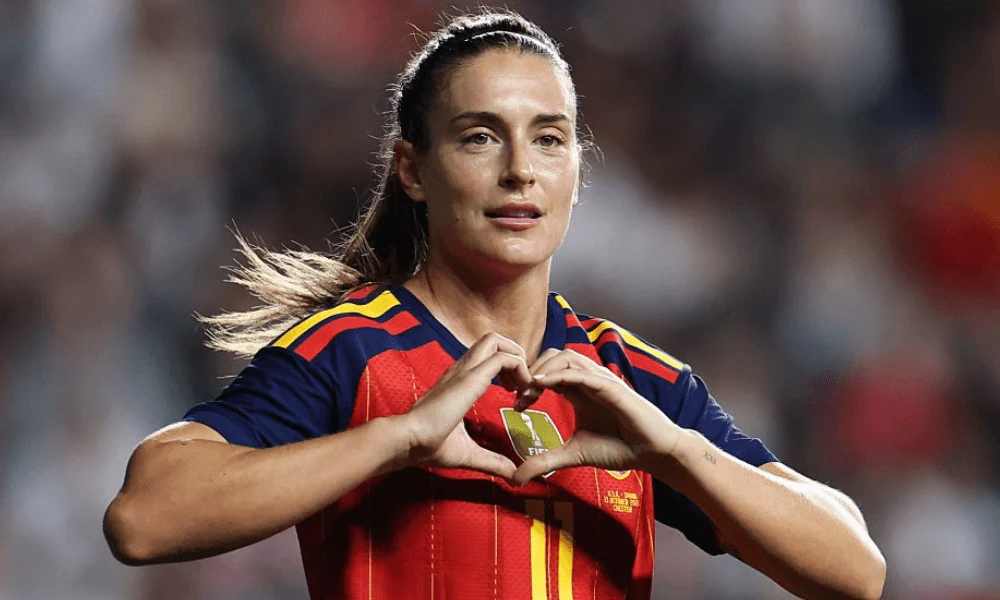
Alexia Putellas, who claims the 47th spot, represents a prime example within European football. Having spent years cementing her status as one of the defining voices of the women’s game, her digital output consistently reads and sounds authentically like her rather than resembling a calculated corporate campaign. That innate authenticity explains why her public statements carry profound weight well beyond the boundaries of her sport.
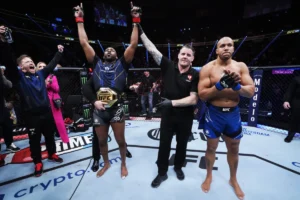
Ilia Topuria, positioned at 41, demonstrates a different register of this same phenomenon. His unwavering self-confidence and his vocal pride in his Spanish and Georgian heritage are entirely unmistakable. Across Spain, he commands recognition from the general public regardless of whether individuals actively follow mixed martial arts.
Max Verstappen secures the 48th position by passing this identity test entirely on his own terms. Characterized by a blunt, dry demeanor and an apparent disinterest in sounding polished or media-trained, his digital presence always reflects his genuine voice. That unfiltered quality remains notoriously difficult to manufacture artificially, which precisely explains why contemporary audiences place their trust in it.
Consistency
If a single daily habit separates the prominent names featured on the list, it is the practice of showing up on ordinary days when absolutely nothing competitive is happening.
The typical sports league provides roughly 50 competitive matchdays per year, leaving more than 300 days when no matches take place. The athletes who steadily rise in prominence tend to be those who deliberately fill these quiet stretches with glimpses of their training regimens, travel experiences, family moments, and the mundane details in between.
Erling Haaland, who sits at number four, serves as the clearest illustration of this principle. One need only look at the massive pop culture moment sparked by his recent haircut—which generated days of widespread public debate, viral memes, and copycat styles extending far beyond the footballing world—all stemming from a player simply letting everyday supporters share in a personal moment.
Haaland is notably the sole current Premier League player to feature on the 50MM list, a fact worth pausing to consider given the immense global broadcast reach of English football. While there is certainly no shortage of elite talent or compelling narratives within the domestic English game, an evident opportunity exists for clubs and players alike to share more of the everyday material that occupies the vast spaces between matchdays.
Alphonso Davies, ranked 34th, demonstrates this approach in action. His expansive digital audience has been constructed just as much around his personality as his on-field performances, cultivated through years of inviting followers into his life away from the pitch. This foundation ensures his digital presence holds steady even when unexpected injuries temporarily interrupt his appearances on the field.
In both cases, the underlying pattern remains identical: spectacular moments may initially draw people in, but authentic everyday material is what ultimately persuades them to stay.
Genuine Two-Way Conversation
When people are asked how they discovered the latest digital clip that made them laugh out loud, the answer is rarely the public social media feed. More frequently, the content arrives via a trusted peer—a friend who understood their specific sense of humor and sent the media piece directly. The private group chat, rather than the public grid, increasingly functions as the primary destination where digital content actually lands and resonates.
The athletes who achieve the furthest reach understand this dynamic instinctively. They produce media worth sharing with others, and they actively respond when people interact with their posts, effectively transforming a traditional one-way broadcast into something resembling a genuine interpersonal relationship.
At just 19 years of age, and before launching his professional career in the NBA, AJ Dybantsa occupies the tenth spot on the list—a remarkable achievement. Commanding an audience of that immense scale ahead of a single professional minute in the league is not built solely on athletic performance. It rests firmly on directness, characterized by speaking directly with people rather than broadcasting down to them.
Coco Gauff, positioned at 32, provides another striking example. Observers consistently praise the manner in which she addresses her followers with earnestness, utilizing replies that read more like text messages from a close friend than formal public statements from a global sports star.
Both Dybantsa and Gauff succeed in their respective approaches not simply because they capture fleeting attention in the moment, but because they curate content that remains authentically true to themselves while feeling uniquely worthy of passing along to others.
What the List is Really Measuring
Reviewing the fundamental metrics that underpin the ranking reveals what the 50 Most Marketable Athletes list is truly capturing. It measures not merely who commands the largest profile today, but the accumulated equity an athlete has successfully constructed, the forward momentum driving their career, and the remaining headroom they possess for future expansion.
Viewed through this analytical lens, the recurring behaviors exhibited by these elite athletes cease to look like mere coincidences.
Consistency serves as a direct route to building equity, because showing up consistently across the 300 quiet days compounds in a manner that high-profile matchdays alone can never achieve. A recognizable voice constructs lasting momentum, because a fan who immediately recognizes a post before looking at the author’s name is a fan who will actively seek out the next piece of content. Meanwhile, maintaining two-way conversations and cultivating a vibrant life beyond sport creates essential headroom, opening up doors to broader audiences who never initially cared about competitive results.
The athletes who thoroughly master these underlying principles will undoubtedly continue to feature prominently on the ranking for years to come.