

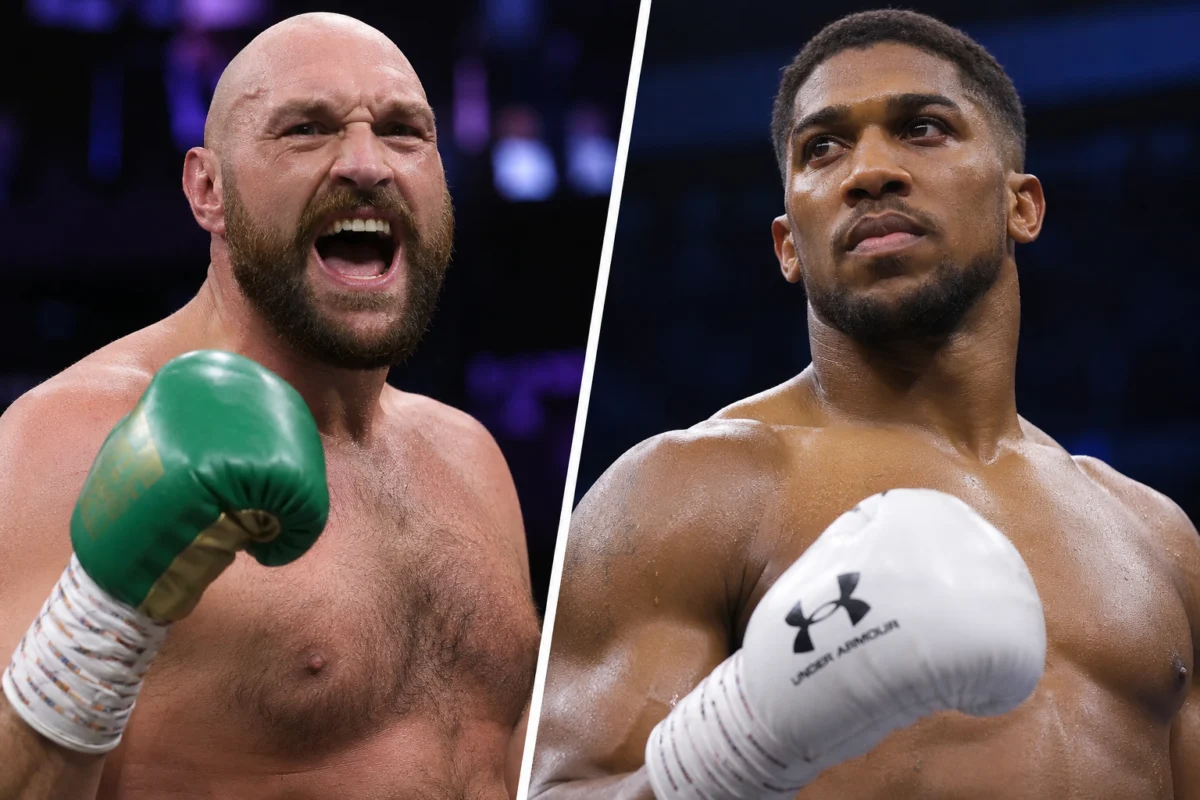
After years of rampant speculation, lingering contract talks, and endless public back-and-forth, British heavyweight rivals Anthony Joshua and Tyson Fury are finally scheduled to share a professional boxing ring. Their long-awaited mega-fight is officially set for December 11, 2026, at the iconic Principality Stadium in Cardiff, with global streaming giant Netflix carrying the live event to audiences worldwide. Both men have captured
world titles and cemented their legacies in the division, but neither arrives at this defining clash without legitimate questions surrounding their recent form, defensive durability, and competitive trajectory.
Past fights offer valuable clues rather than a ready-made result. In the upper echelons of heavyweight boxing, punching power, lateral movement, stamina, recovery, and split-second tactical decisions can look drastically different depending on the opponent standing across the canvas. Understanding those nuanced limits and physical boundaries matters immensely when examining the complex betting markets and overarching narratives surrounding the matchup.
Anthony Joshua and His Unfinished Business
Anthony Joshua enters this defining career chapter with an impressive professional resume boasting 30 victories, four defeats, and 27 wins coming by way of knockout. His trademark finishing power and explosive combinations remain evident every time he steps between the ropes. However, a close examination of his three most recent performances shows why raw statistics and career results alone provide an incomplete account of his current competitive form.
These fights offer varying pieces of evidence rather than a straightforward, linear comeback story. Tyson Fury presents a completely different set of tactical demands, physical dimensions, and psychological challenges compared to Joshua’s previous foes. Consequently, Joshua’s past results cannot definitively establish how effectively he will manage the high-stakes exchanges, distance control, and pacing expected when the opening bell rings this coming December.
Tyson Fury and the Test of Adaptability
Tyson Fury’s storied professional record stands at 36 wins, two losses, and one draw, with 25 victories secured by knockout. Supreme lateral movement, elite distance management, and uncanny tactical adjustments have defined his career alongside his deceptive punching power and formidable size. These distinct qualities remain vital when assessing how the "Gypsy King" might approach Joshua, whose orthodox power-punching style presents entirely different demands than the opponents Fury has faced of late.
Oleksandr Usyk handed Fury the first defeats of his professional career, securing a hard-fought split decision in May 2024 followed by a decisive unanimous decision victory that December. While Fury enjoyed productive, successful stretches in the early and middle rounds of their first meeting, Usyk’s relentless work rate, sustained pressure, and technical brilliance ultimately disrupted the taller Briton. Both encounters served as stark reminders that sheer size, height, and reach advantages cannot automatically neutralize a smaller, highly mobile, and technically proficient opponent.
Fury subsequently returned to the win column with a unanimous decision over Arslanbek Makhmudov in April 2026, followed by a victory in July over Mariusz Wach after Wach’s corner wisely withdrew their fighter following seven punishing rounds of action. While those summer performances documented vital activity and kept him sharp, they did not entirely establish whether his previous vulnerabilities had disappeared, nor could they reliably predict how he will respond to the specific threat posed by Joshua.
What Their Fights With Usyk Actually Reveal
The parallel histories of both British icons against the same elite opposition offer a fascinating analytical bridge. Joshua previously lost to Usyk by unanimous decision in September 2021 and a narrow split decision in August 2022. Because Fury’s two defeats followed in 2024, both men have now faced the exact same exceptional heavyweight twice on the sport’s grandest stages. That shared history provides a useful reference point for analysts and fans alike, yet it does not create a simple, straightforward ranking or hierarchy between the two domestic rivals.
Usyk’s exceptional movement, precise multi-punch combinations, and disciplined pacing presented both men with distinct tactical problems. Their individual responses varied significantly from fight to fight, ranging from successful attempts to control the distance with a stiff jab to moments where suffocating pressure completely disrupted their preferred fighting strategies. Furthermore, the external circumstances differed greatly across those bouts, including each boxer’s age, physical preparation, training camp dynamics, and overall position in his career timeline.
Fans reviewing current betting odds can easily compare market expectations for their first professional meeting. Yet a price favoring one fighter cannot definitively explain whether he will manage the other’s jab, lateral movement, or concussive power effectively. Betting odds summarize public expectations and financial markets; they are never a substitute for a rigorous examination of what actually happens when two elite athletes collide inside the squared circle.
There is always a familiar temptation among pundits and fans to argue that whoever fared better against Usyk should naturally win this upcoming fight. Boxing, however, rarely works with such neat mathematical precision because different opponents pose vastly contrasting physical styles and tactical demands. Their shared history identifies technical habits and potential weaknesses worth studying closely, but it offers no guaranteed outcome on fight night.
How the Styles Could Change Everything
Joshua’s explosive power and Fury’s unorthodox movement and adaptability create a wide array of fascinating tactical possibilities. The entire contest could ultimately depend on where the physical exchanges take place in the ring, how each boxer responds to sudden pressure, and whether early tactical adjustments remain effective as the championship rounds progress deep into the night.
These are potential strategic approaches, but previous performances can never definitively establish which tactics either boxer will ultimately employ or execute successfully under the bright lights of Cardiff.
Reading the Market Without Mistaking It for Evidence
Early betting markets ahead of the matchup placed Tyson Fury as the betting favorite, with odds hovering around -196, while Anthony Joshua sat as the underdog at +152. Those specific prices translate to implied probabilities of approximately 66 percent for Fury and 40 percent for Joshua, before accounting for standard sportsbook margins. These figures reflect shifting public market expectations and financial backing rather than a definitive, objective assessment of either fighter’s true athletic ability, and those lines remain subject to fluctuation as December 11 approaches.
A standard winner market asks the fundamental question of which boxer will prevail over the course of the bout, while method-of-victory markets consider how that specific result might arrive. Those are distinctly different analytical questions, particularly when one competitor is universally associated with devastating one-punch finishes and the other with slick tactical flexibility and endurance. Neither market can possibly capture every single tactical exchange, tactical shift, or unexpected mid-fight adjustment.
Recent victories also deserve proper context. Joshua’s recent stoppages demonstrate his continued, lethal punching threat, while Fury’s comeback victories indicate that he retains his competitive sharpness and ring IQ. The overall quality of the opposition and the actual nature of each performance matter far more than treating every win as equal evidence.
The most useful comparison weighs current athletic skills against specific, identifiable vulnerabilities. Fury’s vast championship experience may heavily influence pre-fight expectations, but Joshua’s concussive power makes any momentary lapse in concentration exceptionally dangerous. Market odds are always most informative when examined critically alongside those competing tactical considerations.
What Matters When They Finally Meet
The December showdown brings together two decorated heavyweights with contrasting strengths and lingering questions to answer regarding their current primes. Joshua needs to make his considerable power count effectively without sacrificing his defensive discipline and footwork, while Fury must control the range and distance without becoming overly passive or allowing Joshua to dictate the tempo. Neither task will be easily accomplished if the opposing man successfully executes his own game plan.
Past fights provide concrete evidence regarding boxing habits, psychological resilience, and tactical choices under pressure. However, they cannot definitively determine who will adapt better when those contrasting styles and habits collide in the center of the ring. That exact uncertainty is precisely why this historic first professional meeting between two of Britain’s greatest heavyweights remains so compelling.