


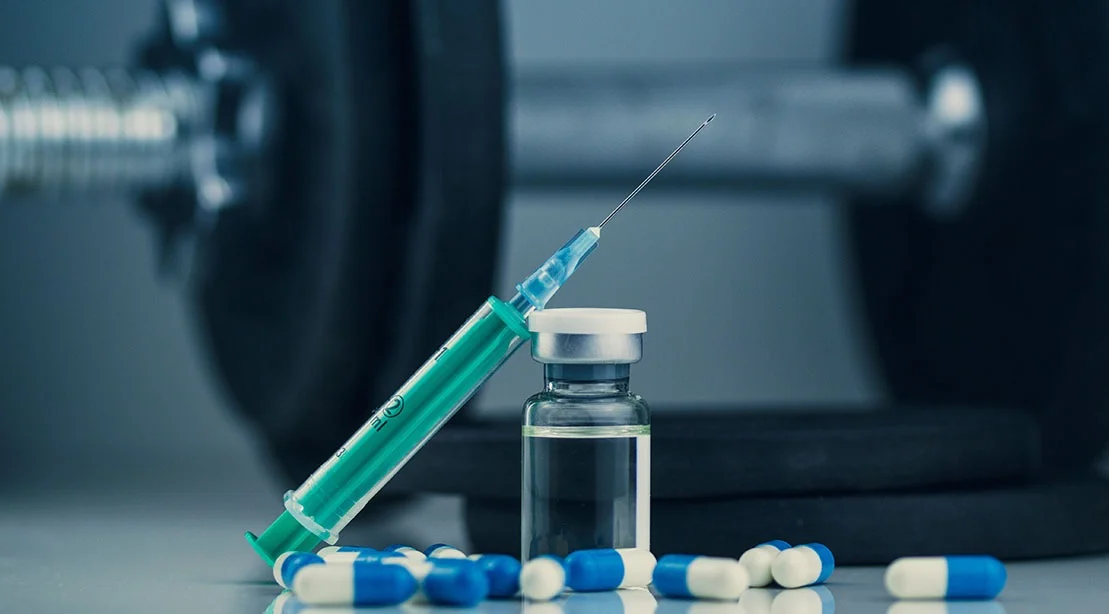
There is a distinct psychological profile shared by a certain subset of athletes who treat the World Anti-Doping Agency’s prohibited list less like a binding regulatory framework and more like a tactical treasure map. These competitors will pour over the text, scan for omissions, and operate under the assumption that anything not explicitly itemized represents an open loophole. They acquire substances with names resembling random Wi-Fi passwords, shipped in vials marked strictly for "research use only," and relied upon based on the assurances of online commentators claiming the compound can rapidly repair torn tendons, melt stubborn subcutaneous fat, or radically transform human endurance. For athletes looking to skirt regulations, it feels like a foolproof setup until reality intervenes.
The regulatory environment surrounding that high-stakes game is about to become considerably more hostile. The World Anti-Doping Agency (WADA) has released its official 2027 Prohibited List, set to go into official effect on January 1. Among the notable adjustments, the agency has introduced explicit references to peptides within the classification category reserved for non-approved substances. To reinforce this shift, the U.S. Anti-Doping Agency (USADA) has issued a comprehensive advisory informing athletes, coaches, and support personnel that they can no longer assume an experimental peptide is legally permissible merely because its specific chemical name or alphabet-soup moniker is absent from the printed index.
This clarification addresses an urgent regulatory challenge, as the broader peptide marketplace has evolved into a chaotic landscape. It is an industry where legitimate, life-saving medicine, promising clinical research, deeply questionable commercial marketing claims, and unverified chemical formulations exist in a messy overlap.
What Changes Are Included in WADA’s 2027 Prohibited List?
To prevent unnecessary panic across athletic communities, it is vital to understand that WADA has not enacted a blanket ban on every peptide in existence. Peptides are fundamentally chains of amino acids, and many serve as established, indispensable medical therapies. Insulin, for instance, is a peptide essential for managing diabetes. The specific regulatory classification in question, known as category S0, is designed strictly for pharmacological substances that have received no official approval for human therapeutic use by any governmental health authority anywhere in the world, provided those substances are not already captured by an existing prohibited class.
Certain peptides naturally fall under entirely different, pre-existing categories within the code. Consequently, the appearance of the word “peptides” specifically under the S0 umbrella functions as a precise administrative clarification rather than a sweeping declaration that all peptide-based drugs are forbidden.
The critical takeaway for competitors is that experimental or gray-market substances were not necessarily permissible under previous guidelines simply because they were novel. Well-known research compounds such as BPC-157, for example, were already strictly prohibited under overarching rules governing non-approved substances. Other related compounds, including specific growth-hormone secretagogues and analogs, are captured elsewhere in the multi-tiered code. What has fundamentally changed is the explicit statutory language, designed to dismantle the defense that an unlisted research chemical enjoys a default free pass. For any athlete competing within a tested sports federation, attempting to excuse a positive test with the logic that the substance could not readily be found on a search engine holds zero weight with disciplinary panels.
The 2027 update introduces several other notable additions as well. WADA has formally named two experimental metabolic modulators, SLU-PP-332 and SLU-PP-915, as concrete examples within its hormone and metabolic modulators category. Furthermore, the updated list expands examples of diuretics and masking agents to include prescription drugs such as eplerenone and finerenone, both of which possess entirely legitimate and widespread medical uses in mainstream clinical practice.
This inclusion highlights a recurring misconception among competitors: the prohibited list is not merely a catalog of designer agents synthesized exclusively for athletic cheating. It routinely encompasses ordinary, commercially available prescription medications, with regulatory status often hinging entirely on the specific drug, dosage, and medical context.
Meanwhile, high-profile substances like semaglutide and tirzepatide—the active pharmaceutical ingredients powering two widely prescribed families of weight-loss and type-2 diabetes treatments—remain positioned on WADA’s active monitoring program for 2027. Inclusion on the monitoring program equates to observation, not prohibition. WADA utilizes this mechanism to systematically gather comprehensive data regarding the prevalence and patterns of use of these specific medications within organized sports; it has not criminalized their presence.
This crucial distinction mirrors the regulatory status of caffeine, which is continuously monitored in competitive environments but remains permitted for consumption. Such distinctions demonstrate the methodical approach regulators take in differentiating between active surveillance and outright sanction.
Concurrently, WADA has refined its regulatory language surrounding cannabinoids. The agency clarified that psychoactive THC-related cannabinoids, encompassing a variety of emerging synthetic and semi-synthetic variants, are strictly prohibited in competition. While naturally occurring cannabidiol (CBD) itself is not banned, athletes face a persistent and well-documented hazard: consuming a commercial CBD product that contains undisclosed or trace amounts of THC can easily trigger an adverse analytical finding and result in a formal anti-doping violation.
Ultimately, whether an athlete operates at the elite Olympic level, within professional combat sports, competitive weightlifting, or regional amateur competitions, the foundational tenet of anti-doping remains absolute. Athletes are strictly and independently responsible for every substance that enters their body. The absence of a warning label, an unlisted ingredient, or misplaced reliance on the guidance of a physician or coach does not constitute a valid alibi under strict liability rules.
While clinical research into novel performance and therapeutic compounds remains essential for medical advancement, the gap between preliminary laboratory investigation and verified human safety is vast. Many competitors continue to rely on anecdotal online forums and unverified theories, betting their careers on the hope that a substance works and that testing protocols cannot yet detect it. As the January implementation date approaches, WADA’s latest revisions serve as a stark reminder that the regulatory landscape is tightening, leaving very little room for error for those willing to gamble on the gray market.