In the small hours of May 16, 1955, my father woke me in the pitch darkness of our home, struck a match to light a solitary candle in the scullery, and plugged in his old crystal radio set. With the faint amber glow flickering against the walls, he told me to sit quietly and listen to a world heavyweight championship fight taking place thousands of miles away in San Francisco.
Across the Atlantic, Don Cockell, a brave and stocky battler hailing from Balham in south London, was stepping into the ring to challenge Rocky Marciano, the fearsome undefeated champion from Brockton, Massachusetts. It was a clash of worlds, but through the crackling transatlantic static whistling out of the earphone, there was little room for romance. Most of what we heard was the grim, unrelenting sound of Marciano’s eight-ounce gloves thudding repeatedly into Cockell’s head and ribs.
Cockell showed the kind of resolve that bordered on agony. Marciano knocked him to the canvas time after time, yet the Londoner hauled his battered body back up to face more punishment. The unequal contest dragged on until the ninth round, when the champion finally nailed him to the canvas for good with a booming right hand that seemingly connected while Cockell was already defenseless on his knees.
When the BBC radio commentator managed to put that controversial finish to the victorious champion in the aftermath, Marciano offered a smooth, dismissive compliment: "Britain can be proud of her boy Don Cockell."
My father, Jack Powell, was not a man to be easily swayed by polite platitudes. His own toughness had carried him through the terrifying beach landings and muddy trenches of the Second World War, as well as through countless scrap-iron fights both inside and outside the ropes. Listening to the American’s condescending praise, he slammed his heavy fist onto the scullery table in disgust. "As if keeping beating us ain’t enough," he growled into the cold night air, "they have to bloody patronise us."
I was 13 years old that morning, sitting in the candlelight and absorbing the bitter lesson of British ring inferiority. Not until I reached the age of 50 would that deep-seated national wound truly heal. By that time, Marciano had long since cemented his legendary status as the only heavyweight champion in history to retire completely undefeated, while British boxing endured an agonizing, century-long wait for a worthy successor to the great Bob Fitzsimmons.
Fitzsimmons had claimed the crown back in 1897, and the eternity that followed his departure was thoroughly flooded with iconic Americans who turned the heavyweight division into an exclusive private estate. The sport’s marquee category was ruled by revered, mythic figures: Jack Johnson, Jack Dempsey, Joe Louis, Floyd Patterson, Sonny Liston, Muhammad Ali, Joe Frazier, George Foreman, Mike Tyson, Larry Holmes, and Evander Holyfield.
That golden age of heavyweight boxing produced the cultural monuments of the twentieth century. It gave the world the Fight of the Century and the savage Thrilla in Manila, both contested between Ali and Frazier. It delivered the tactical genius of the Rumble in the Jungle between Ali and Foreman, the seismic shock of Buster Douglas’s Upset of the Century over Mike Tyson in Tokyo, the historic confrontations between Dempsey and Gene Tunney, the high-stakes drama of Louis against Max Schmeling and Jersey Joe Walcott, and the electrifying night when a young Cassius Clay slew the Sonny Liston monster. Throughout that era, the Star-Spangled Banner flew supreme over the sport, accompanied by America’s mocking, long-running label for our domestic challengers: "Britain’s Horizontal Heavyweights."
There were moments of defiance, but they invariably ended in heartbreak. Sir Henry Cooper famously remained perpendicular against Muhammad Ali, the greatest of them all, yet there was scant recognition over the water for what unfolded in their first stadium encounter. Cooper detonated his trademark left hook, affectionately christened "’Enery’s ’Ammer," catching Ali flush and dropping him heavily to the canvas, leaving him on the brink of being counted out. Yet Ali survived the crisis, and Cooper’s fragile skin betrayed him. Severe facial cuts brought an end to that bout and repeated the misfortune in their rematch, ensuring that American commentators rarely gave Britain’s favorite pugilist his full due.
Because the drought had lasted so long and carried such humiliation, British fight fans could hardly contain their delight when the tide finally began to turn. We gloated openly when Riddick Bowe notoriously dumped his WBC belt directly into a London dustbin rather than face Lennox Lewis, allowing the British fighter to be elevated to his maiden world championship by decree. We rejoiced when Lewis emphatically validated his title by overcoming Oliver McCall in September 1995. We proudly acclaimed "Lenny the Lion" as he grew into his stature, eventually reigning as Britain’s only three-time world heavyweight champion and vanquishing every man he ever shared a ring with.
During that same transformative era, the nation exhaled a collective sigh of relief when Frank Bruno finally achieved his lifelong dream. Bruno defeated McCall at an emotionally charged Wembley Stadium to become world champion, fulfilling a destiny that had slipped through his fingers so many times before. Yet that joy was tempered with nervous dread when we watched Bruno genuflect repeatedly on his anxious ring walk in Las Vegas, heading toward a second crushing stoppage at the hands of Mike Tyson to surrender his hard-won crown.
Even with those fluctuating fortunes, British heavyweight boxing was undergoing an unmistakable transition from prolonged famine to unprecedented feast. Throughout the long history of the prize-ring, the United States has produced 53 heavyweight champions, tracing all the way back to the bare-knuckle pioneer John L. Sullivan in the late 1880s. Yet Britain went from having just one active heavyweight titlist in 2003—Lewis, when he bloodied and defeated Vitali Klitschko in his final ring appearance—to an astonishing running total of 11 world champions today. That tally stands even if one discounts the historical asterisks beside Michael Bentt, Herbie Hide, and Henry Akinwande, who wore the WBO strap before that governing body earned full parity alongside the traditional organizations.
David Haye subsequently added another vibrant chapter to the Lewis legacy. Moving up from the cruiserweight division, where he had reigned as undisputed king, Haye bamboozled the towering, seven-foot Russian giant Nikolai Valuev to capture a heavyweight title, emulating the historic feat previously accomplished by Evander Holyfield.
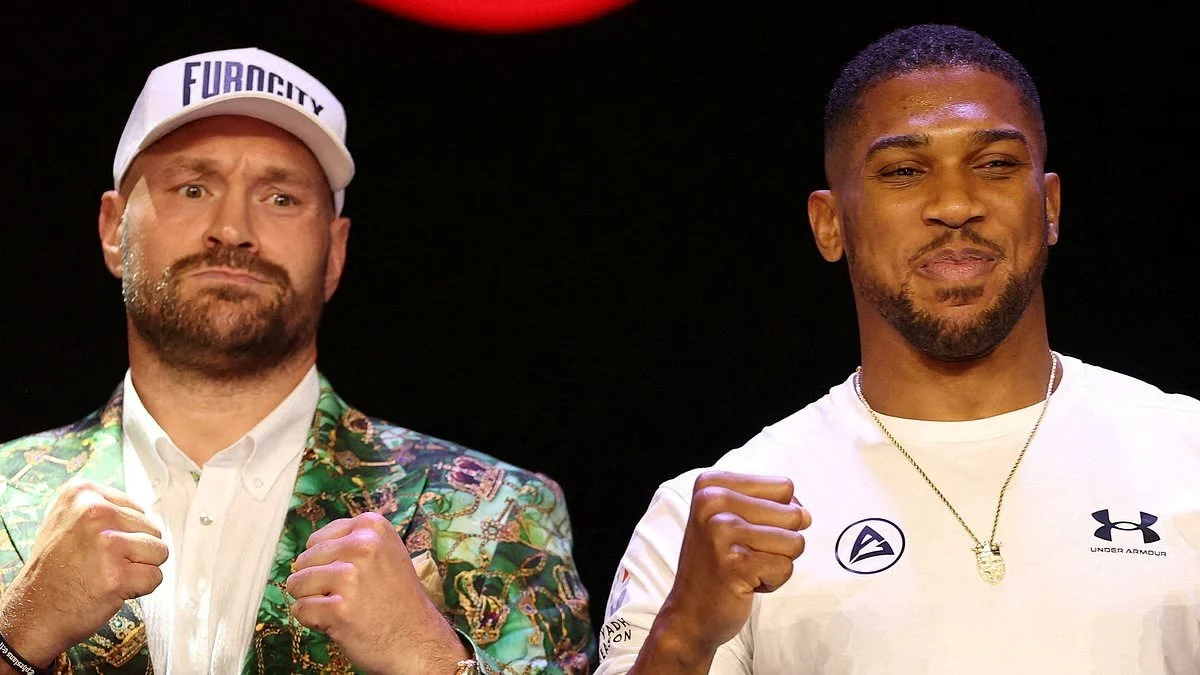
The division had already slipped away from American hands through the dominance of the Ukrainian Klitschko brothers, Vitali and Wladimir, who effectively dismantled the remaining vestiges of US supremacy. Yet British heavyweights soon took command of that frontier as well. Following the blueprint laid down by Lewis in his brutal war with Vitali, both Tyson Fury and Anthony Joshua rose to international stardom by defeating Wladimir Klitschko in defining encounters.
That British dominance was dramatically interrupted by Oleksandr Usyk, whose revival of the Kyiv conspiracy brought masterclasses of footwork and ring intelligence. Usyk secured back-to-back dazzling points victories over both the Gypsy King and Anthony Joshua, before repeating the trick with a pair of triumphs over their heir apparent, Daniel Dubois. Yet when Usyk abruptly relinquished his undisputed collection of belts, the vacuum immediately triggered another UK renaissance—one where the biggest fights in the world do not feature Americans at all, but rather British heavyweights squaring off against one another for the sport’s most glittering prizes.
This weekend at the O2 Arena in London, Daniel Dubois and the remarkably rebuilt former white-collar fighter Fabio Wardley are set to reprise their blood-and-thunder rivalry. This time, the stakes are elevated, with Dubois defending the now fully respected WBO championship belt.
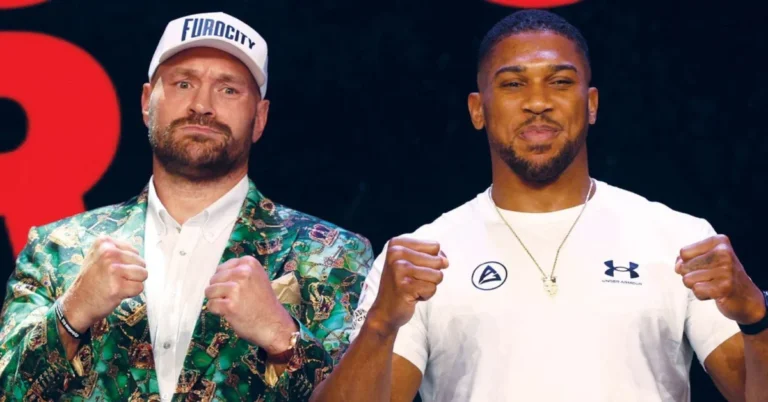
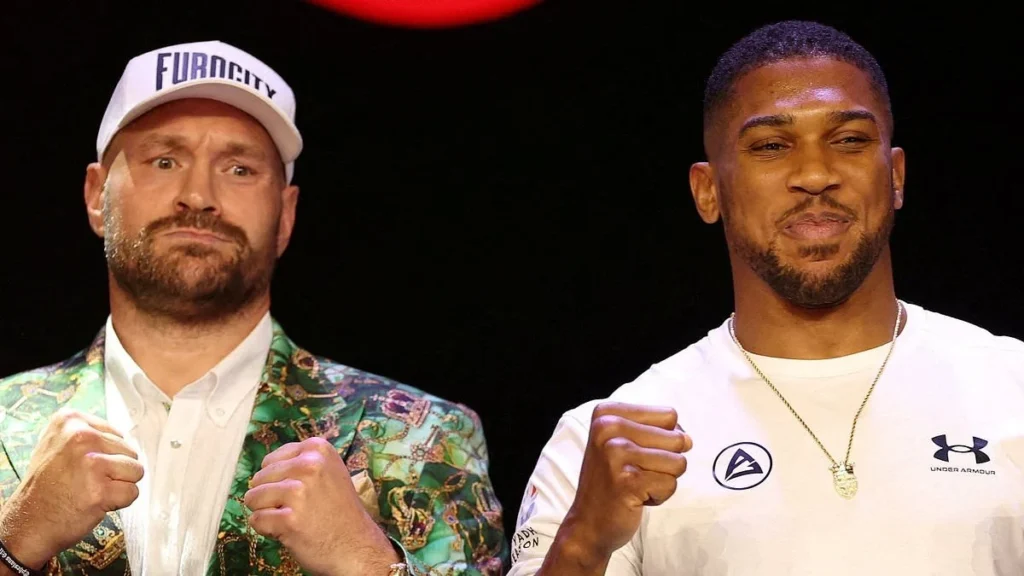
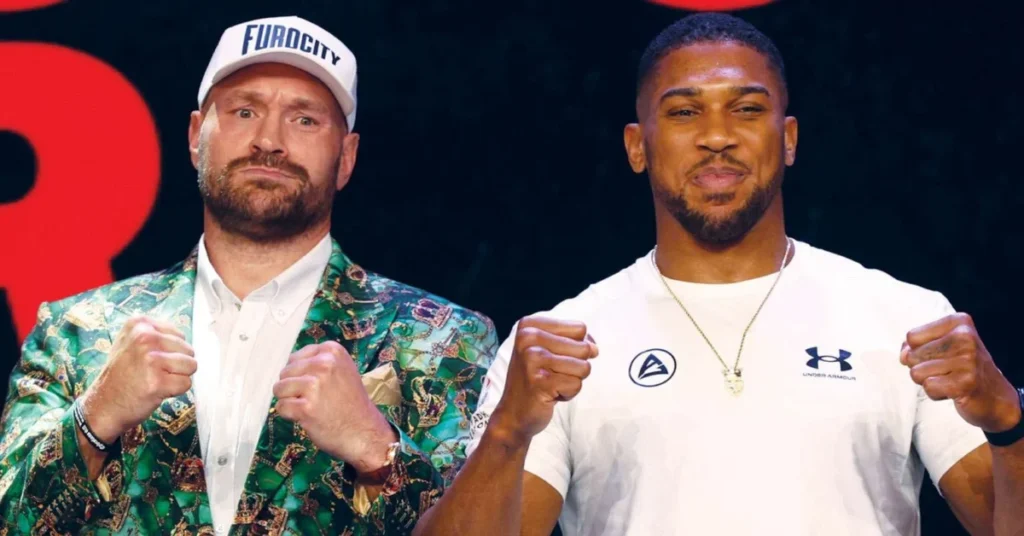
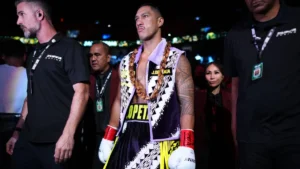
The victor of that domestic collision will almost certainly be positioned to meet the winner of the long-delayed showdown between Tyson Fury and Anthony Joshua. Even arriving belatedly in December, that encounter carries such immense public fascination that ticket prices have soared higher than the gross national product of some developing nations. Waiting just behind them is Moses Itauma, who is expected to overcome his sudden stamina struggles and a squandered IBF title opportunity against Croatia’s Filip Hrgovic to resume his place as the standard-bearer for the next generation. Meanwhile, Germany’s WBC champion Agit Kabayel will soon find himself directly in the crosshairs of this British onslaught.
With virtually all of these contenders, aside from Joshua, operating under Frank Warren’s promotional banner, the boxing calendar is primed for an endless series of lucrative, all-British dust-ups. Across the Atlantic, the horizon looks barren, with Jared Anderson standing as the lone American big man showing any genuine promise.
It is a stunning reversal of fortunes, particularly when considering how American pundits used to belittle Deontay Wilder, their last heavyweight champion of note, writing him off as "just a puncher." In reality, Wilder was the most destructive one-punch artist the sport had seen since Iron Mike Tyson. Today, boxing enthusiasts in the States must look back with deep regret at how Tyson Fury dismantled the Bronze Bomber, violently extinguishing his five-year knockout reign in the punishing final installment of their epic trilogy.
Throughout the storied history of the American prize-ring, the world heavyweight championship served as an undisputed symbol of the nation’s sporting virility and athletic pride. Today, the United States holds no claim to any of the major heavyweight belts.
This decline is largely driven by shifting sporting realities. The overwhelming majority of towering, gifted young American athletes—whether emerging from elite collegiate programs or striving to escape the impoverished inner-city projects—inevitably choose the riches and prestige of the NBA, the NFL, or Major League Baseball. Facing the brutal physical toll of the boxing ring on the slim hope of achieving ring stardom simply no longer appeals to the modern American heavyweight.
As a consequence of that talent drain, the American boxing landscape has been reduced to placing its heavyweight-sized hopes on a flamboyant young Mexican-American welterweight, Ryan Garcia, off the back of his demolition of Conor Benn. Meanwhile, the undisputed Blue Riband prize of boxing remains firmly rooted on this side of the Atlantic. It is not so Yankee-Doodle-Dandy over there now.