


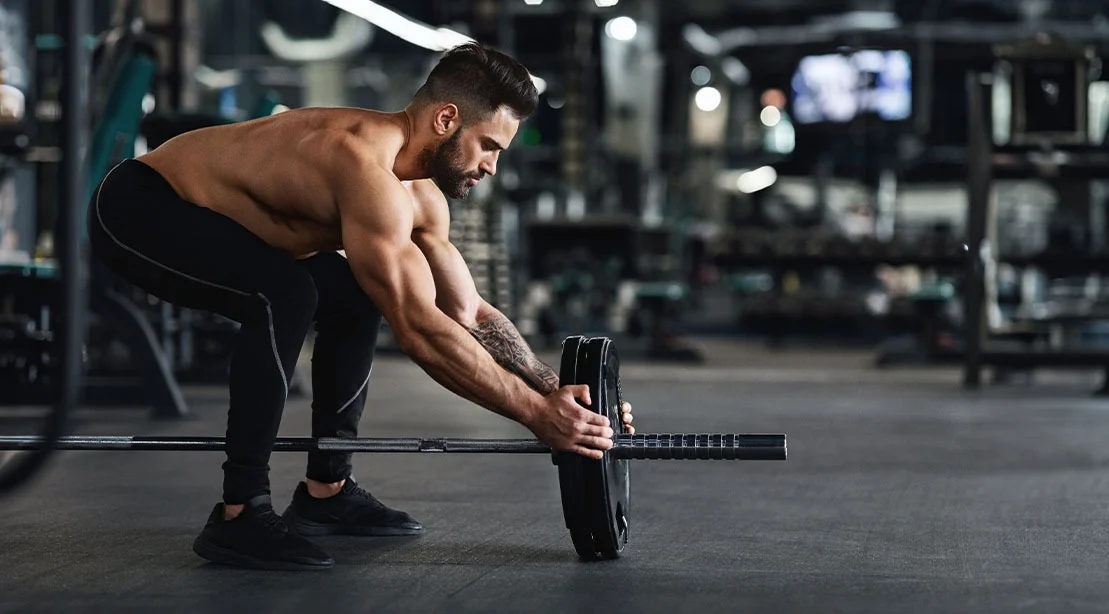
For countless gym-goers, the training log is practically a historical artifact. Mondays remain dedicated to the chest, Tuesdays belong to the back, and somewhere in the routine lie three sets of ten executed with the exact same dumbbells that have been gathering chalk since the Clinton administration. Practitioners sweat, they grunt, they admire their posture in the mirror, and ultimately they wonder why their physiques refuse to change.
Two recent studies have taken a fresh look at this enduring fitness problem, examining the foundational principle of progressive overload—the practice of systematically increasing resistance as the body adapts to training. While hardly a revolutionary concept, the underlying science has long deserved empirical scrutiny. Six hundred years ago, the legendary Greek athlete Milo of Croton reportedly slung a growing calf over his shoulders and walked the hills of his farm every day until the animal matured into a massive bull, growing alongside the increasing load. Centuries later, fitness pioneer Joe Weider formalized the principle as his progressive overload system. While modern research cannot validate ancient legends, recent data suggests that the core idea remains as relevant today as it was in antiquity.
What Do New Studies Reveal About Progressive Overload and Muscle Hypertrophy?
The first of these studies, published October 14 in the Journal of Strength and Conditioning Research, sought to quantify the effects of progressive loading on muscle growth. The investigation involved 41 previously untrained young women who had their arms assigned to different experimental conditions. Participants performed one-arm bicep curls three times a week for an eight-week duration. One training group progressively added weight whenever they successfully reached the upper limit of an eight-to-12-repetition range. A second group kept both the weight and the repetition scheme strictly fixed throughout the trial. A third, non-training comparison condition served as a control.
The results demonstrated that while both exercising conditions successfully built muscle tissue, the progressively loaded group achieved greater thickness in the elbow flexors.
However, context is critical when interpreting these findings. The data does not indicate that the participants who kept their weights static experienced zero growth; they still built muscle. Novice lifters can make substantial physical progress on a training stimulus that would typically leave an experienced athlete entirely unaffected. Furthermore, the researchers were not evaluating comprehensive, multi-year bodybuilding programs, but rather a tightly controlled, isolated exercise. Anyone claiming this research proves that a trainee must add five pounds to every lift every single week is selling a level of absolute certainty that the study simply does not contain.
A second paper, published October 15 in the International Journal of Sports Medicine, expanded on these findings by putting 31 untrained adults through a 12-week regimen of leg extensions. In this setup, each participant trained one leg with progressively increasing loads and the opposite leg with a fixed load, performing the movements twice weekly. Across both limbs, participants gained muscle mass overall. While the groups did not show statistically significant differences at individual measurement points throughout the majority of the trial, a distinct divergence occurred during the final three weeks. During this closing window, muscle growth was notably greater in the progressively loaded legs.
Furthermore, the researchers discovered that the fixed-load legs ended up working significantly further away from muscular failure by the end of the study. In practical terms, movements that had once posed a severe challenge had become relatively easy over time.
This physiological shift underscores why progressive overload remains a vital concept for the modern gym environment. The principle is not a dogmatic religious requirement demanding that an athlete pile more iron onto a barbell during every single workout. Rather, it functions as a necessary mechanism to prevent yesterday’s grueling challenge from quietly transforming into today’s casual warm-up. Trainees can progress through various avenues, such as adding repetitions, improving movement control, increasing the useful range of motion, or eventually increasing the external weight. The optimal method depends entirely on the specific exercise, the individual, and their personal training objectives. Keeping an accurate training log is essential in this process, as human memory possesses a remarkable talent for turning a mediocre, half-hearted set into an impressive personal record by the time the athlete returns home.
Progress Is More Than Just Adding Weight
Complicating the narrative further is a separate study published in The Journal of Physiology toward the end of 2025, which reported comparable muscle growth between groups using heavier loads and those using lighter loads, provided that all working sets were carried to the point of voluntary fatigue. This raises a valid scientific question regarding how heavy a weight actually needs to be when overall effort remains high. While the October studies examined what happens when weight is systematically allowed to progress or is intentionally held back, the physiological reality is that load, effort, and progression are closely intertwined concepts rather than interchangeable variables.
Naturally, experts caution against building a sweeping national training policy or dogmatic dogma around a pair of small-scale studies involving beginners performing basic curls and leg extensions. These investigations do not explicitly outline how a seasoned, advanced bodybuilder should manage a decades-long training career, nor do they justify grinding every single working set into absolute exhaustion. Variables such as joint health, systemic recovery, and the unavoidable weeks when life introduces overwhelming stress continue to matter profoundly.
Nevertheless, the findings present a compelling case against training on autopilot. If an athlete is gradually getting stronger, performing higher-quality work, or making the exact same weight heavier through vastly superior execution, they are actively giving their muscles a biological reason to adapt and grow. Conversely, individuals who perform the identical routine indefinitely while expecting drastically different results can rarely blame poor genetics, flawed supplements, or suspected underground pharmaceuticals. The weights are rarely what holds a lifter back; rather, it is a lack of imagination in program execution.