

In the digital landscape of health and fitness advice, a popular content creator has sparked widespread discussion with a provocative premise: achieving a lean physique with visible abdominal definition and roughly 12 percent body fat is entirely possible without engaging in endless hours of traditional cardio. Instead of sweating through exhausting treadmill sessions, the creator argues that sustainable fat loss relies on a targeted combination of daily nutritional habits, strength training, optimized sleep, and a specialized lab-based approach that most dieters overlook entirely.
At 49 years old, the creator reports maintaining a remarkably lean 10.5 percent body fat without the use of exogenous hormones or performance-enhancing peptides. His blueprint challenges several mainstream fitness norms, suggesting that the modern reliance on medications like Ozempic and chronic low-intensity steady-state cardio is fundamentally misguided. While some aspects of his advice align neatly with established nutritional science, other elements—particularly his stances on dietary fats, rigorous thyroid markers, and specific food choices—warrant a closer examination before individuals undertake a complete lifestyle overhaul.
Building Meals Around Protein and Animal Foods
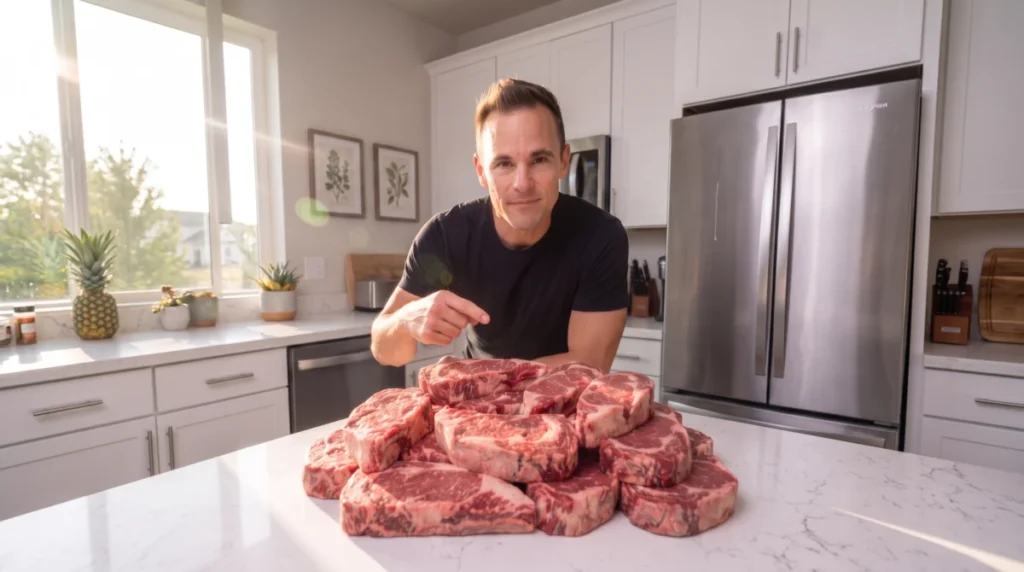
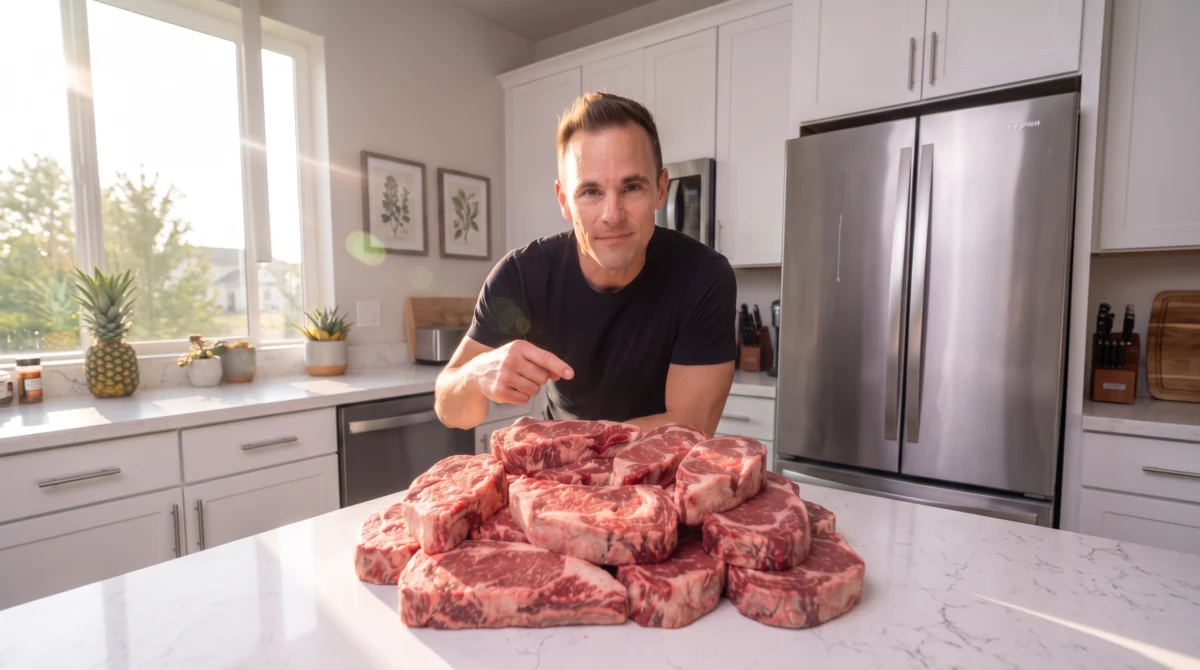
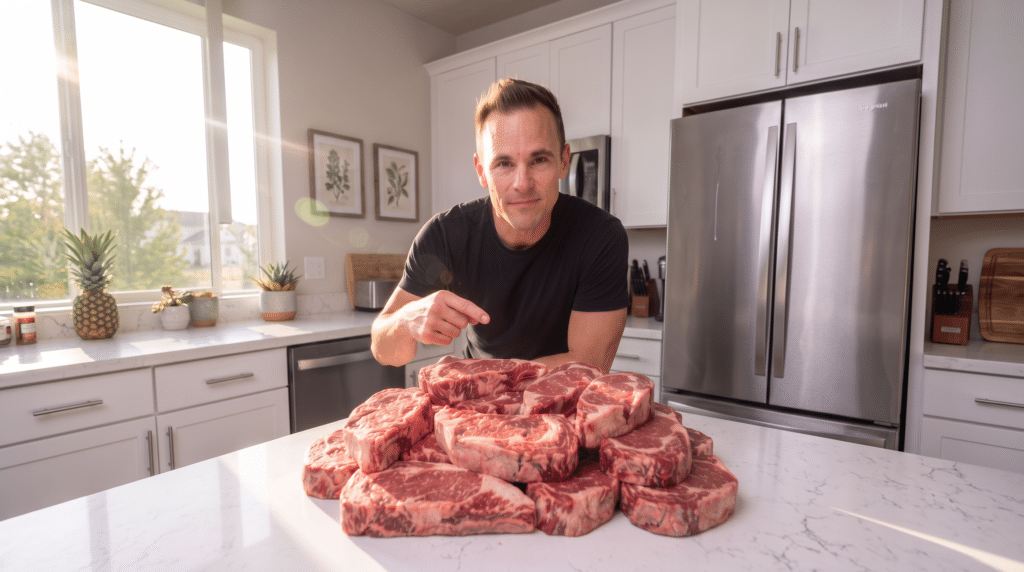
At the core of the creator’s dietary strategy is a heavy emphasis on protein intake, recommending roughly 0.8 to 1 gram of protein per pound of body weight. Animal-sourced foods anchor his daily menu, with ground beef frequently highlighted as an affordable and versatile staple. According to his calculations, roughly one pound of meat delivers approximately 100 grams of protein. For someone weighing 165 pounds, the daily target centers between 140 and 165 grams, sourced primarily from beef, eggs, and raw milk.
While animal proteins are widely recognized for their high biological value and complete amino acid profiles, mainstream nutritional science notes that plant-based eaters can achieve identical targets by strategically combining various plant protein sources, making animal products a matter of personal preference rather than biological necessity. Furthermore, public health agencies consistently warn against the consumption of unpasteurized dairy products due to potential bacterial contamination risks, pointing to pasteurized alternatives as the safer choice for everyday nutrition.
Prioritizing Food Quality and Satiety Over Simple Calorie Counting
The creator concedes that the foundational laws of thermodynamics still apply to human weight management, but he argues that obsessing over raw calorie numbers misses a crucial behavioral variable. In his view, chronic hunger is the primary driver of dietary failure. If an individual spends the entire day fighting hunger pangs, long-term adherence becomes nearly impossible, making satiety the ultimate lever for making a caloric deficit sustainable.
To achieve this natural satiety, the creator advocates for what he calls the great-grandmother rule. The guiding principle is straightforward: if an ingredient is unfamiliar to a person’s great-grandmother, the product should be avoided. By consuming a diet where 90 to 95 percent of food intake consists of single-ingredient whole foods, he contends that weight gain becomes exceptionally difficult and natural weight loss follows as a byproduct.
While clinical evidence strongly supports the idea that whole-food diets increase satiety and reduce spontaneous calorie intake, nutritionists caution that broad guarantees of success vary significantly from person to person due to individual metabolic differences and psychological relationships with food.
Navigating Carbohydrates and Dietary Fats
Addressing the broader macronutrient landscape, the creator warns against overly restrictive carbohydrate diets, arguing that prolonged low-carb or ketogenic regimens can elevate cortisol levels and suppress thyroid function. Because active individuals require sufficient energy replenishment, his personal intake ranges between 250 and 300 grams of carbohydrates daily, sourced from whole foods like fruit, honey, squash, and root vegetables. While scientific consensus indicates that strict carbohydrate restriction is not mandatory for fat loss—with overall caloric deficit and protein adherence remaining the primary drivers—individual tolerance for carbohydrates varies widely.
On the topic of dietary fats, the creator rejects the notion that fat should be heavily restricted, noting that dropping below roughly 25 percent of total daily calories from fat often triggers intense cravings. Incorporating foods like butter and cheese into his meals helps maintain satiety. His personal macronutrient distribution typically lands around 15 percent protein, 42 percent carbohydrates, and 42 percent fat, though he stresses that these ratios can be adjusted to individual preference. Mainstream cardiology guidance, however, advises caution and moderation regarding saturated fat consumption, meaning individuals with a history of heart disease should consult medical professionals before significantly increasing their intake of dairy fats.
Reevaluating the Role of Endless Cardio in Fat Loss
Challenging one of the most common fitness tropes, the creator argues that traditional cardiovascular exercise—such as running and cycling—offers tremendous benefits for cognitive health, but serves as an inefficient tool for primary fat loss. He points to the constrained energy model of human metabolism, which suggests that after engaging in rigorous exercise sessions, individuals often unconsciously reduce spontaneous physical movement and fidgeting throughout the day, resulting in a similar total daily energy expenditure.
Rather than relying on cardio to burn fat, his solution focuses on building and preserving muscle mass through resistance training to elevate resting metabolic rate. While the metabolic boost from additional muscle tissue is modest rather than miraculous, lifting weights provides structural benefits, whereas cardiovascular exercise remains a vital component of long-term cardiovascular health.
The Overlooked Impact of Sleep on Body Composition
Sleep is framed as a critical, yet frequently neglected, component of any successful fat-loss plan. Referencing comparative sleep studies, the creator highlights research showing that calorie-matched dieters who slept between eight and nine hours per night lost significantly more total weight, and a higher proportion of that weight came from fat, compared to those restricted to five or six hours of sleep. Chronic sleep deprivation, by contrast, was associated with greater losses in lean muscle mass rather than fat.
While sleep experts generally recommend a minimum of seven hours of nightly sleep for healthy adults, aiming for an eight-to-nine-hour window aligns well with optimal recovery guidelines.
Examining Thyroid Health and Micronutrient Status
The final dimension of the creator’s protocol involves a detailed laboratory panel to assess metabolic and endocrine health. He recommends checking a comprehensive list of markers, including TSH, free T3, free T4, total T3, total T4, and reverse T3, alongside thyroid antibodies to identify potential autoimmune activity. He places particular emphasis on free T3, arguing that optimal levels should reside in the upper half of standard reference ranges.
Furthermore, he contends that standard medical lab ranges can be overly permissive, viewing higher TSH levels as a sign of suboptimal thyroid performance. Mainstream endocrinology, however, treats these reference thresholds with greater flexibility, relying on conventional clinical cutoffs for diagnosis. Experts emphasize that any concerns regarding thyroid function or hormone optimization should be evaluated by qualified medical professionals rather than managed through self-diagnosis.
Supporting proper thyroid function, particularly the conversion of inactive T4 into active T3, requires adequate micronutrients such as zinc, selenium, iron, iodine, and vitamins A and E. While certain vegetables like broccoli and kale contain goitrogens that can theoretically interfere with iodine uptake, their impact is typically negligible unless an individual already suffers from a severe iodine deficiency.
Broader Perspectives on Leanness and Modern Treatments
Reflecting on his current physical condition at age 49, the creator attributes his sustained leanness to consistent whole-food nutrition, adequate rest, resistance training, and active management of his daily lifestyle factors, while firmly dismissing the modern trend toward pharmaceutical weight-loss interventions like GLP-1 receptor agonists for individuals without clinical obesity.
While clinical data demonstrates that medications such as Ozempic provide substantial therapeutic weight-loss benefits for patients struggling with obesity, health professionals universally agree that foundational lifestyle habits—including proper nutrition, adequate sleep, and regular movement—remain indispensable for long-term health and wellness.