

Few aspects of professional boxing generate as much fiery debate, barroom argument, and outright controversy as the sport’s scoring system. Every so often, a high-profile bout ends with a verdict that leaves fans, analysts, and fighters alike scratching their heads in disbelief. Given the bewildering decisions that are occasionally handed down by judges, it is easy for devoted followers of the sweet science to question the integrity of the process. Yet, these glaring anomalies tend to be relatively rare when weighed against the countless matches that proceed smoothly and without controversy across the globe every single week.
Still, for the casual observer or someone newly drawn to the sport, the mechanics of professional boxing scoring can feel dense, opaque, and inherently confusing. Understanding how a winner is determined requires looking past the superficial chaos of the ring and examining the precise regulatory framework that governs modern prizefighting.

At its core, professional boxing operates universally under the 10-Point Must System. This regulatory scoring method is built on the foundational premise that the designated winner of any given round must be awarded 10 points. By design, the vast majority of rounds conclude with a 10-9 score, meaning the losing fighter of that specific round is awarded 9 points. Naturally, this standard equation shifts only when there is an official obligation to deduct points due to fouls, or, in exceptionally rare instances, when a round is judged to be entirely even, resulting in a 10-10 score—an outcome that seasoned judges try to avoid and fans almost never witness.
Point deductions introduce a layer of immediate arithmetic into the bout. For instance, a knockdown—where a fighter is forced to touch the canvas or is rendered unable to stand under their own power before the referee counts to ten—automatically leads to a one-point deduction for the fighter who has been dropped. Furthermore, if multiple knockdowns occur against the same fighter within a single round, additional points are subtracted accordingly. However, if both combatants manage to score knockdowns against each other within the same three-minute frame, the point deductions effectively cancel each other out on the judges’ scorecards, returning the round to a standard baseline unless other infractions occurred.

The Basics of Judging and Referee Intervention
The underlying philosophy of the professional boxing scoring system is not rocket science. In simple terms, it works. Awarding ten points to the winner of a round and nine points to the loser is straightforward enough for any sports fan to grasp. The complications, and subsequent controversies, typically arise from the subjective interpretation of the judges sitting ringside. Given that these arbiters can occasionally appear to be watching the action through a distorted lens, their individual assessments of what constitutes winning a round can bring the system into disrepute. Because the system lacks an automated mechanism to correct flawed human judgment, judges frequently face severe public criticism for how they allocate points.
While judges dictate the mathematical outcome of the rounds based on overarching performance, the referee inside the ring holds the unilateral authority to enforce rules and penalize infractions. A referee can instruct the official scorekeepers to deduct points whenever a fighter commits intentional or unintentional fouls. Violations ranging from excessive holding and clinching to low blows, rabbit punches to the back of the head, or hitting after the bell can all trigger immediate point deductions. Referees often issue verbal warnings before taking a point, but they are under no regulatory obligation to warn a fighter first; a severe or blatant foul can result in an immediate point being stripped away.

Of course, the majority of professional bouts do not feature such blatant indiscretions or rule-breaking. In most clean fights, the outcome rests entirely in the hands of the three ringside judges, whose independent tallies determine who walks away with the victory.
The Core Scoring Criteria Inside the Ring
To understand how judges arrive at their round-by-round totals, it is necessary to examine the primary criteria that influence their decisions. These factors typically tie into a dominant fighter’s overall control and execution throughout the duration of a round.

Judges consistently look for evidence of ring generalship, which essentially measures a fighter’s ability to control the physical space of the ring, dictate the tempo of the fight, and neutralize their opponent’s preferred style. Closely tied to this is effective aggression. A fighter who constantly moves forward, presses the action, and forces the engagement will earn favorable impressions from the judges—provided, crucially, that their offensive output is demonstrably more effective and accurate than the counter-attacks launched by their opponent.
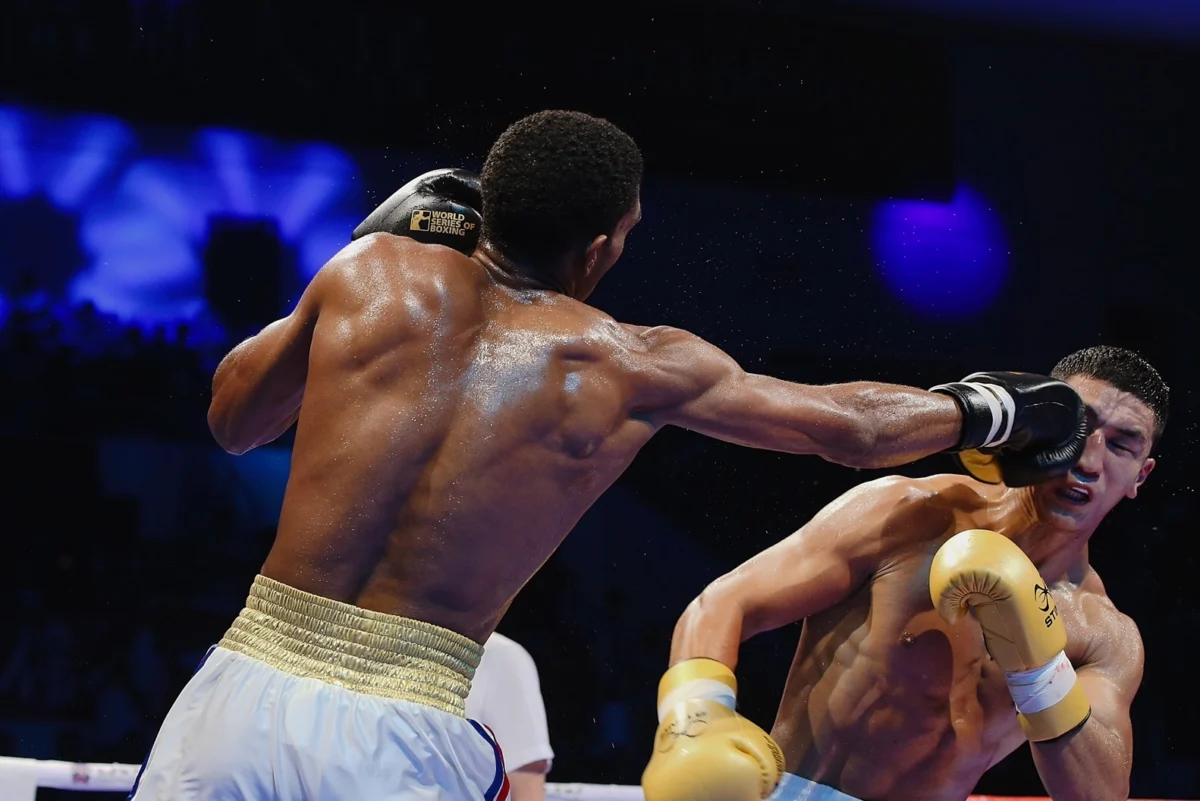
When evaluating offense, raw power carries significant weight. Impressive, clean power punches that visibly snap an opponent’s head back or alter their posture naturally draw the attention of the scoring panel. High punch volume and crisp combinations also factor into the evaluation, so long as those punches land cleanly rather than simply bouncing harmlessly off an opponent’s guard.

Conversely, a defensive masterclass can be just as compelling to judges as an aggressive onslaught. A skilled defensive specialist who successfully mitigates incoming damage, causes opponents to miss wildly, and capitalizes with sharp, accurate counter-punches will be heavily rewarded on the scorecards. Historical legends and modern technicians like Vasyl Lomachenko and Floyd Mayweather Jr. serve as prime examples of fighters who mastered the art of winning rounds primarily through exceptional defensive prowess and surgical counter-striking.
Breaking Down Official Fight Decisions
For fans who have ever struggled to comprehend how a specific match outcome was reached, examining the mechanics of the judging panel provides logical clarity. Every sanctioned professional bout assigns three independent judges to score the action from different vantage points around the ring. This multi-judge setup allows the sport to employ a majority rule. If two of the three judges agree on a winner, their consensus overrides the dissenting scorecard of the third judge, ensuring that a single outlier cannot single-handedly skew the final result.

While a fight can ultimately end in one of three primary outcomes—a win, a loss, or a draw—the combination of the three judges’ individual cards creates five distinct official decision types recognized in professional boxing.
A unanimous decision is announced when all three judges independently score the bout in favor of the same fighter, reflecting a clear and undisputed winner. A majority decision occurs when two judges score the fight for one fighter as the winner, while the third judge views the bout as an even draw. A split decision takes place when two judges award the victory to one combatant, but the third judge awards the match to the opposing fighter.

When looking at ties, a majority draw is declared if two judges score the match as an even draw, while the remaining judge gives the nod to either Fighter A or Fighter B. Finally, a split draw happens when one judge scores the fight as a victory for Fighter A, a second judge scores it as a victory for Fighter B, and the third and final judge rules the bout an even draw.
Earning the Favor of the Ringside Judges
Given the subjective nature of judging, fighters and their corners are constantly strategizing on how to secure the favor of the official panel. In theory, this comes down to ticking every box the judges are trained to observe.

Beyond effective aggression, ring generalship, clean punching power, and defense, judges also look at the economy of shots and a fighter’s ability to intelligently manage the clock. Stealing a round in the final thirty seconds through a flurry of unanswered punches can heavily influence a judge who is weighing a tightly contested three-minute frame.
While boxing’s scoring system frequently faces criticism and accusations of being fundamentally flawed, it remains the most trusted and enduring framework for evaluating a combat sport where subjective human performance must be quantified. As long as prizefighting exists, there will be a necessity for a reliable method to separate the winner from the loser, and the current system remains the established standard of the sweet science.