

In the realm of strength training and powerlifting, athletes and recreational lifters routinely spend hours fine-tuning their programming. They obsess over bench press arch, elbow flare, bar path, tempo, and progressive overload schemes, searching for the technical cue that will yield an extra five or ten pounds on the bar. Yet, according to physical therapist and strength coach Jeff Cavaliere, the vast majority of lifters overlook the very first point of contact between their body and the resistance: their wrists.
In a recent instructional presentation, the founder of ATHLEAN-X opened with a deceptively simple question aimed at anyone looking to improve their upper-body pushing power: how are you benching right now?
Rather than focusing on bench angles, movement cadence, or the total weight loaded onto the implement, Cavaliere zeroed in directly on wrist orientation and grip mechanics. According to the veteran trainer, an overwhelmingly common error in how lifters hold dumbbells and barbells leads directly to chronic joint irritation, energy leaks, and artificial strength plateaus. By making a subtle biomechanical shift in the hands, Cavaliere asserts that lifters can instantly reduce joint discomfort, protect the structural integrity of the forearm, and press heavier loads with greater stability.
The Dumbbell Grip Shift That Changes Everything
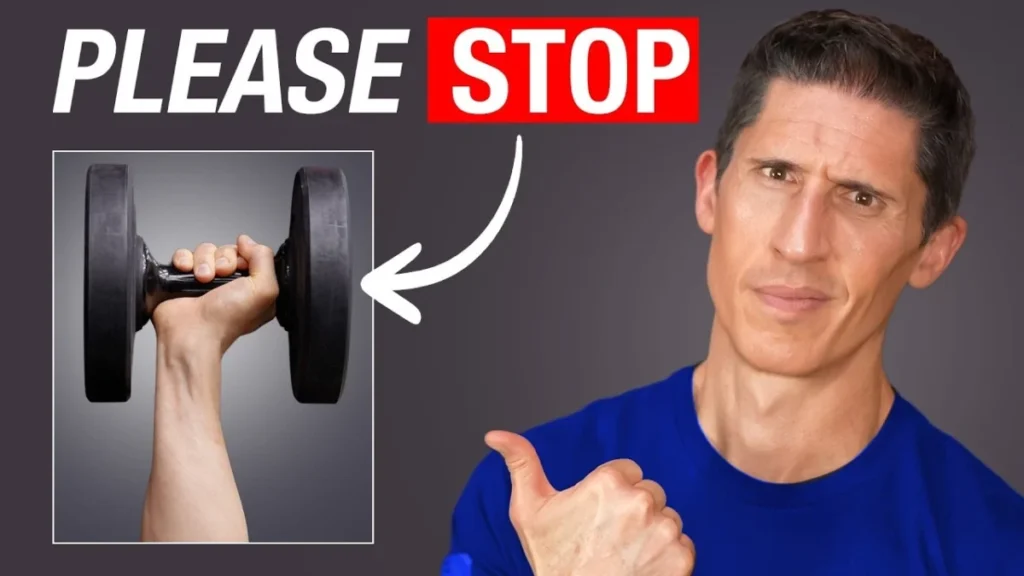
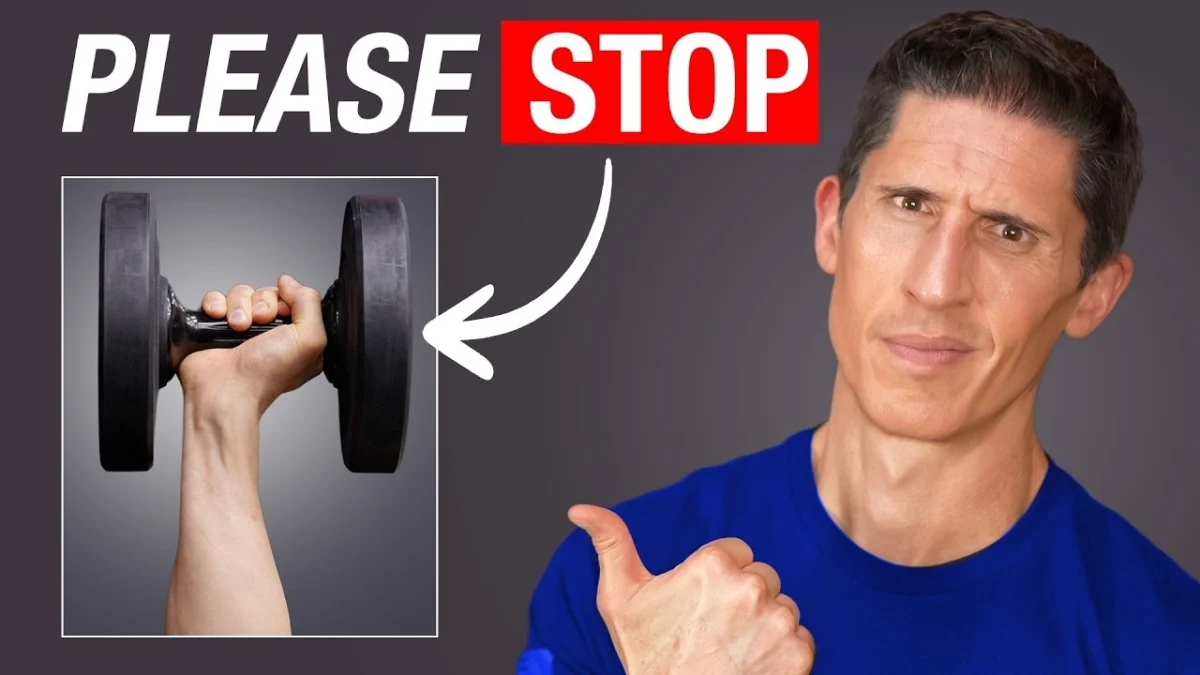
The standard approach to dumbbell bench pressing has long been treated as intuitive. Most gym-goers unrack a pair of weights, place their hands dead center along the handles, wrap their fingers evenly, and begin pressing upward. While symmetrical hand placement seems logical on the surface, Cavaliere suggests that this default position works directly against the natural architecture of the human hand and wrist.
Instead of setting up in the exact middle of the implement, Cavaliere recommends deliberately shifting the placement of the hand slightly toward one end of the handle.
"Instead of gripping it traditionally right down the middle of the dumbbell, I want to shift my grip just a little bit to the end," Cavaliere explained.
By sliding the hand slightly toward the thumb side of the dumbbell bell, the entire dynamic of how the weight is distributed across the palm changes. Once positioned against this inner edge, the intent behind the grip must also shift. Cavaliere instructs lifters not to distribute tension uniformly across all four fingers, but rather to concentrate their force production through the thumb side of the hand, particularly the index and middle fingers. The remaining fingers—the ring finger and pinky—still wrap securely around the handle, but they serve primarily as structural support rather than the primary focal point of the squeeze.
"I’m just squeezing as hard as I can through those at the thumb side end of the dumbbell," Cavaliere stated.
Crucially, Cavaliere pointed out that lifters should not confuse this targeted pressure with a hook grip—a technique widely utilized in Olympic weightlifting where the fingers wrap over the thumb to secure a pulling movement. In this pressing context, the hand mechanics serve a completely different purpose. As Cavaliere noted, "We’re not pulling anything." The objective is not to lock onto a bar during traction, but to create an optimal, supportive shelf for heavy downward compression.
What You Should Feel
When this adjusted grip is executed correctly, the physical presentation of the dumbbell immediately changes. Rather than resting parallel to the floor, the dumbbell naturally tilts. The thumb side tilts slightly upward, while the pinky side settles slightly lower.
This subtle inclination alters the lifter’s proprioceptive feedback. Under a traditional center-grip setup, lifters often experience a harsh, pinching sensation or a feeling that the weight is constantly threatening to hyperextend the wrist backward. With the offset grip and targeted thumb-side squeeze, the load feels more integrated with the forearm musculature. The joint feels packed, stable, and capable of transmitting force directly from the pectorals and triceps into the implement without an agonizing focal point at the base of the hand.
That slight tilt is not a technical flaw; it is the entire point of the adjustment. To understand why this tiny tilt produces such profound relief and stability, one must examine the structural anatomy of the human arm.
Why Your Forearm Bones Care About Grip
The human forearm relies on two primary long bones to transmit force between the elbow and the hand: the radius and the ulna. The radius is situated on the lateral, or thumb, side of the forearm, while the ulna runs along the medial, or pinky, side. Crucially, these two bones are neither identical nor symmetrical in their anatomical design.
"We have a longer radius than an ulna," Cavaliere pointed out.
Because the radius extends further distally into the wrist joint than the ulna, it bears the overwhelming majority of the axial compressive load transferred from the hand. When an athlete grips a dumbbell dead center, forcing the handle into a completely flat, horizontal plane across the palm, the physical geometry creates an unequal distribution of force. The rigid, level surface of the dumbbell drives downward directly into the extended head of the radius.
Cavaliere highlighted that this orientation frequently leads to acute mechanical irritation.
"It can cause compression at that portion of the wrist where the radius meets the wrist itself," he explained.
This compressive jamming at the radiocarpal junction carries dual consequences for anyone attempting to train heavy. The first and most obvious consequence is local inflammation, tenderness, and pain. When heavy loads repeatedly crush the carpal bones into the articular surface of the radius, the joint capsule and surrounding connective tissues become irritated. Over time, this can turn into chronic wrist pain that plagues an athlete through everyday tasks as well as pressing movements.
The second consequence, however, is a direct reduction in athletic performance. The human nervous system features built-in protective mechanisms designed to prevent self-inflicted structural damage. When the brain detects sharp or excessive compression within a vulnerable joint capsule, it initiates neural inhibition, effectively down-regulating the firing rate of the surrounding muscles to keep the lifter from pressing through dangerous joint stress.
"The wrist pain alone is enough to take away some of the weight that you can press there," Cavaliere noted.
In practical terms, an athlete struggling through a set of heavy dumbbell presses may believe their chest or triceps have reached muscular failure, when in reality, their central nervous system is dialing back power output to shield the wrist joint from harmful compression.
The Gap Is Your Friend
The core mechanical objective of Cavaliere’s grip tweak is the creation of what he terms "gapping" within the wrist complex. By shifting the hand toward the end of the dumbbell and exerting dominant pressure through the index and middle fingers, the thumb side of the hand rises slightly relative to the pinky side.
"The best way to do this is to get a little bit of that gapping here by letting the thumb tilt up just a little bit," Cavaliere said.
This slight elevation decompresses the precise zone where the carpal bones threaten to jam into the distal end of the radius. Rather than concentrating the downward load onto a single high-pressure contact point, the tilt creates breathing room in the joint space. The carpal bones maintain their structural contact across the broader surface of both the radius and the ulna, but they do so with superior mechanical alignment that allows force to travel uniformly down the skeletal column of the arm.
While Cavaliere’s adjustment offers an immediate mechanical solution for lifters dealing with positional discomfort, he also underscored the importance of distinguishing between technique-related strain and underlying pathology. Individual wrist anatomy, mobility, and tolerance for compressive loading vary widely from person to person. Lifters suffering from sharp, lingering, or chronic wrist pain should consult a medical professional or physical therapist for a thorough evaluation, rather than relying exclusively on technical adjustments in the gym.
Barbell Bench? Go a Little Narrower
While the offset grip provides an elegant solution for dumbbell training, it presents an obvious limitation: it cannot be applied to a standard barbell. Because a barbell consists of a single, continuous steel shaft, an athlete’s hands are bound into a fixed orientation. A lifter cannot independently tilt the bar to elevate the thumb side without throwing off the balance of the entire implement.
To solve this dilemma on the barbell bench press, Cavaliere looks to an alternative variable: grip width.
Many lifters naturally gravitate toward a wide grip on the barbell bench press in an effort to shorten the bar’s range of motion and maximize the recruitment of the pectoralis major. However, widening the grip forces the wrists into severe radial deviation and extension, exacerbating the exact compressive mechanism that causes pain in the first place.
"The wider I go, the more compression I get," Cavaliere cautioned.
As the hands spread farther apart along the bar, the angle of the forearm relative to the load becomes increasingly oblique. Instead of the weight driving straight down through the vertical bones of the forearm, the load shears across the thumb side of the wrist, jamming the carpal bones violently into the elongated radius.
To alleviate this strain, Cavaliere advocates for bringing the hands slightly inward. However, he was quick to clarify that this does not mean lifters should abandon their standard bench press style entirely in favor of a specialized triceps movement.
"I’m not suggesting you close-grip bench press all the time when you want to bench press," Cavaliere said.
Instead, the adjustment is far more subtle and individualized.
"Find the typical width that’s good for you on a bench press and then just go a little narrower than that to help offload some of that strain and compression on that radial side," he advised.
By moving the hands inward by just an inch or two compared to a wide setup, the forearms align closer to a vertical stack directly beneath the barbell at the bottom of the movement. This small positional adjustment significantly decreases the radial compression on the wrist joint, allowing the athlete to press with confidence, protect the joint capsule, and maintain high levels of force production without pain-induced neural inhibition.
How to Test It in Your Next Session
Rather than overhauling an entire strength routine at once, Cavaliere suggests that lifters introduce these grip modifications methodically. The neuromuscular system requires time to adapt to new hand positions and subtle shifts in balance.
Lifters are encouraged to test both the dumbbell offset grip and the slightly narrower barbell setup during light warm-up sets before attempting top working weights. This allows the lifter to tune into their joint sensations, confirm that the radial compression has dissipated, and ensure their balance remains stable throughout the entire pressing arc. Once comfort and control are established with lighter loads, lifters can progressively work up to their typical working weights.
Cavaliere remains confident that lifters who make these minor adjustments will notice an immediate difference in both comfort and performance, regardless of whether they are working through high-volume accessory work or pushing for heavy personal records.
"Go grab a set of dumbbells and do this," Cavaliere urged.
In strength training, major breakthroughs often stem from small, structurally sound refinements rather than sweeping programmatic overhauls. A simple shift in hand placement costs nothing, requires no specialized equipment, and offers a straightforward way to safeguard the wrists while unlocking latent pressing power.