
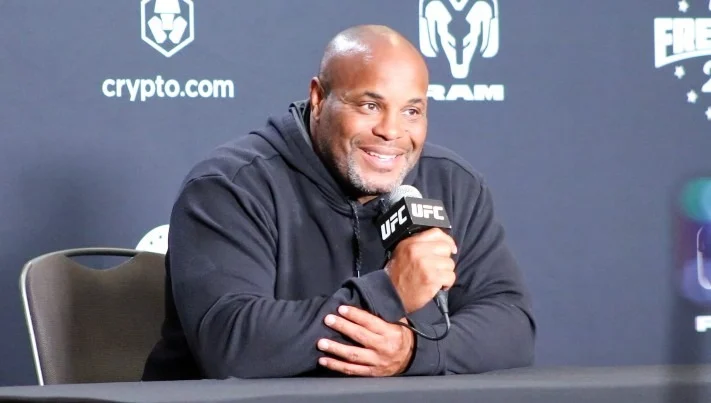
Cormier, who now serves as a prominent analyst and commentator for the promotion, made it clear that he is not interested in accepting excuses, buying into vague explanations, or sweeping the incident under the rug as just another blown call in the heat of combat. Instead, the Hall of Famer insists that transparency and strict accountability must apply to the officials inside the cage just as much as they apply to the athletes competing within it. For Cormier, the process of holding officials accountable begins immediately, and it starts with removing Miragliotta from upcoming high-profile assignments so that fighters do not continue to bear the financial and professional consequences of refereeing mistakes.
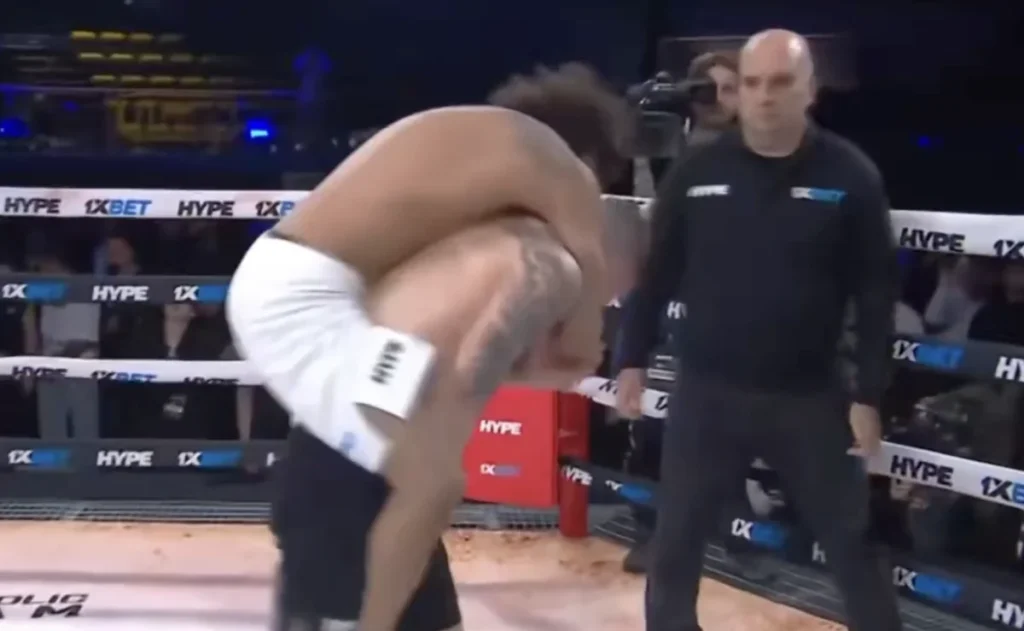
The controversy centers around a critical sequence where a fighter had successfully secured a dominant position, specifically taking the back of his opponent. In the elite levels of mixed martial arts, securing back control is one of the most coveted and difficult strategic achievements in a grappling exchange. Gaining that position often requires exhausting physical effort, technical precision, and tactical setup, sometimes taking an entire round to materialize against a resilient opponent. According to Cormier, who watched the sequence unfold from his vantage point right next to the Octagon, Miragliotta chose to inexplicably interfere with the action just as the grappling advantage was fully established.
Reflecting on the incident days after the dust had settled, Cormier emphasized that his perspective had not softened with time. Speaking directly to his audience on Monday, the former heavyweight and light heavyweight champion underscored the gravity of what he witnessed, explaining that distance from the immediate adrenaline of the live broadcast only reinforced his conviction that a massive error had occurred.
"I will say without a shadow of a doubt, with no second thought in my mind, I may have seen, from right next to the Octagon, one of the biggest referee errors I’ve ever seen in my entire life," Cormier declared during his broadcast. He went on to reiterate the depth of his conviction, noting that his assessment was not a knee-jerk reaction born out of the heat of the moment, but rather a carefully considered conclusion arrived at after sitting on the footage, reviewing the sequence, and thinking deeply about its implications for the sport.
Cormier expressed sheer disbelief as he watched Miragliotta step in to disrupt a fighter who was cleanly working from a dominant offensive position. In a sport governed by complex rules regarding activity, stalling, and engagement, Cormier pointed out that the athlete in question was committing none of the offenses that typically prompt a referee to restart or separate competitors. The fighter was neither stalling, avoiding action, nor engaging in passive behavior. Rather, he was actively working to maintain and improve a position that he had rightfully earned through superior grappling skill. By stepping in and breaking up the action, Miragliotta effectively stripped the competitor of his hard-earned tactical advantage, potentially robbing him of a legitimate victory.
Elaborating further on the strategic nuances of MMA officiating, Cormier detailed why the referee’s intervention crossed a major professional boundary. He explained that there are fundamental positions in fighting that should remain undisturbed by officials unless clear inactivity or dangerous illegal maneuvers demand a pause.
"Right away I said, ‘Oh my God, this is crazy. You cannot take somebody off of someone’s back. What I care about is knowing that it’s a dominant position,’" Cormier recalled. He emphasized the undeniable reality of the grappling exchange, noting that taking an opponent’s back is universally recognized across combat sports as one of the most advantageous positions possible. "It is a dominant position. There are positions in fighting that you never change. There was no stalling. He was not being timid. He was actually attempting to try to get to that position."
The core of Cormier’s frustration lies in the glaring double standard that often exists within combat sports regarding mistakes. Professional fighters train rigorously for months, sacrificing their bodies, time, and mental well-being, only to face severe professional and financial consequences when they make a critical error inside the cage. A fighter who makes a mistake gets finished, loses a bonus, drops in the rankings, or suffers a loss on their professional record. Cormier argues that officials must be held to an identical standard of performance, and when a referee makes a catastrophic error that directly dictates the result of a bout, they cannot simply be given a free pass.
As far as the former champion is concerned, Miragliotta needs to be benched immediately. Cormier argued that the veteran referee requires a mandatory reset, pointing to an upcoming schedule packed with major events where high-level officiating is critical. With a fight card scheduled at the UFC Apex facility in Las Vegas and another massive event looming in New York City featuring a heavyweight championship bout on the line, Cormier asserted that Miragliotta’s presence should not be permitted anywhere near the Octagon until he has had time to step away and reevaluate his decision-making process.
"Dan Miragliotta needs a reset. There’s a show this weekend at the Apex. Dan Miragliotta should not be there. There is a show in New York City where the heavyweight title will be on the line. Dan Miragliotta should not be there," Cormier stated firmly.
He clarified that his public critique of the veteran official was not driven by personal animosity, petty grievances, or a desire to tear down someone’s career. Instead, Cormier framed his stance as a necessary call for fairness and institutional integrity within the sport. He stressed that accountability should be universal, extending from the athletes and coaches all the way to the judges and referees who oversee fair play. In Cormier’s view, nobody within the ecosystem of professional mixed martial arts should be considered above scrutiny, least of all the officials whose judgments carry such immense weight.
Concluding his thoughts on the matter, Cormier reiterated that his intention was never to maliciously attack anyone on a personal level, but rather to address a systemic issue of professional responsibility. When bad actions or severe errors occur, Cormier maintains that the individuals responsible must face consequences. Whether the relevant athletic commissions will heed Cormier’s public call for disciplinary action, temporary suspension, or a scheduling reset remains to be seen. However, the former champion has made his position unmistakably clear: Miragliotta crossed a definitive line, and in a sport where fighters are ruthlessly held accountable for their own mistakes, referees should be held to the exact same standard.