
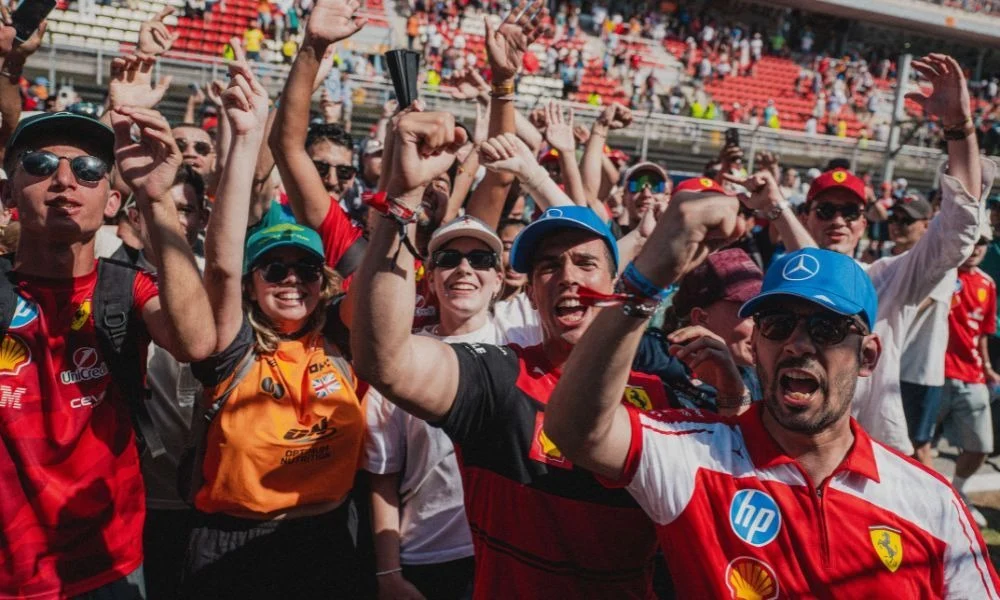
The global appeal of Formula One continues to scale unprecedented heights, fundamentally transforming how fans consume the sport and travel to races. According to comprehensive ticketing data released by Viagogo, motorsport enthusiasts from 160 countries purchased tickets to a Formula One Grand Prix in 2025. This figure represents a remarkable 42 per cent increase in international reach over a span of just six years, illustrating the rapid globalization and widening demographic footprint of the premier open-wheel racing championship.
With roughly 160 million people visiting Viagogo’s ticketing platform every month, Formula One has solidified its status as the company’s third-biggest global sporting category. It currently trails only soccer and the National Basketball Association (NBA) in terms of overall transactional volume on the platform. Capitalizing on this massive wave of worldwide popularity, Viagogo is actively looking for ways to stimulate and service even greater demand. Company executives believe this growth strategy delivers mutual benefits for all stakeholders across the motorsport ecosystem, including official partners like the Alpine Formula One team.
"If we can help introduce them to motorsport, introduce them to F1, and then introduce them to Alpine as a team to follow, that’s a great win for both of us," says Shaun Stewart, vice president of open distribution at Viagogo, highlighting the collaborative nature of modern sports marketing and fan acquisition.
“Buyers skew younger than they traditionally have”
Through years of analyzing ticketing trends, Viagogo has gained deep insight into the behavior of the modern Formula One fan, tracking how supporters interact with the sport and how the traditional race weekend continues to evolve. Major shifts are occurring not only in who follows the sport, but also in the motivations driving fans to attend live events and the geographic locations they choose to visit.
Official Formula One figures indicate that 57 per cent of all newly acquired fans are under the age of 35. Furthermore, women account for 75 per cent of all new fan acquisitions and now make up 42 per cent of the sport’s total global fanbase. These evolving demographics are directly mirrored in the ticket-buying patterns observed on secondary and open distribution platforms.
"We have the same gender split in regards to purchases with us, essentially the 60/40 split that the sport sees itself," Stewart explains. "What we’re seeing a lot in the new buyer demographics is they skew a lot younger than they traditionally have for us."
Beyond age and gender shifts, ticketing platforms have found that nothing triggers an immediate and localized surge in ticket demand quite like the presence of a home-country driver on the starting grid. National representation serves as a powerful catalyst for fan engagement, opening up entirely new regional markets almost overnight.
"The transactions in Argentina have been through the roof for us once [Franco] Colapinto joined Alpine," Stewart reveals, pointing to the immediate commercial impact of a driver capturing the imagination of a passionate sports nation. Similar phenomena have been observed elsewhere on the calendar: "Racing Bulls driver Liam Lawson changed how many people from New Zealand are buying F1 tickets, [and former F1 driver] Daniel Ricciardo did the same for Australia."
Recognizing this pattern, Viagogo actively tracks junior motorsport categories and international talent pipelines to forecast which nationalities might break onto future Formula One grids. By keeping a close eye on emerging prospects—such as Bulgarian teenager Nikola Tsolov, who is currently rising through the Red Bull young driver development program—platforms can predict which geographical markets are likely to experience sudden spikes in ticket demand.
At the same time, contemporary Formula One enthusiasts are increasingly willing to cross international borders to experience live racing firsthand, rather than limiting their attendance to domestic events.
"77 per cent of [British ticket purchases] are for races outside of the UK this year," Stewart notes, emphasizing the globetrotting nature of the contemporary fanbase. "In Brazil, 98 per cent of our transactions are for outside of Brazil. China is just slightly behind at 91 per cent, and then Australia."
“These are destination trips now”
This borderless consumption pattern fundamentally alters the operational landscape for race promoters. Organizers must now contend with an international audience while simultaneously working to retain the long-term loyalty of their domestic fanbases. Another significant evolution in fan behavior is that attendees no longer base their travel decisions strictly on geographic proximity. The Middle East, for instance, has successfully transformed into a major hub for destination-style events, drawing diverse crowds from every corner of the globe.

"Qatar is up about 73 per cent in regard to how many countries are buying tickets," Stewart adds. "If you look at anything from grandstand tickets for the Middle East races all the way up through to F1 Experiences and paddock passes, they’re more affordable, easier to get to, and we hear that drivers are more accessible."
These emerging trends contribute to a broader paradigm shift where a Formula One race weekend is viewed as a holistic lifestyle experience rather than a mere sporting competition. For Stewart, "the ticket is the gateway" to a much larger consumer journey.
"These are destination trips now, they’re three to five days in length," he explains, detailing the transformation of the traditional fan itinerary. "It used to be the demand was solely concentrated on the Sunday ticket. Now people are buying three-day passes, they’re going on five-day trips, and these are destinations where these become family trips."
To capture this broader consumer mindset, Viagogo maintains strategic partnerships with major travel brands such as Booking.com and Expedia, offering integrated packages that include flights and hotel accommodations. By embedding ticketing platforms into the wider global travel ecosystem, these collaborations help justify the substantial hosting fees that circuits and governments pay to secure a spot on the Formula One calendar, as the local economic impact multiplies through extended tourism.
The introduction and steady expansion of sprint races have also played a crucial role in convincing fans to commit to multi-day track attendance. Although the sprint format continues to spark debate among traditionalists who favor the classic grand prix weekend schedule, its commercial and operational success is undeniable. Formula One is set to feature ten sprint events on the calendar, a notable increase from the six held in 2026.
"With sprint races, you see a ten to 20 per cent jump in the Saturday demand once you add a sprint race to the calendar," Stewart observes. "You’d love to have a sprint at every race."
“We have two decades of buyer data”
From an operational standpoint, Viagogo is maximizing the commercial potential of this shifting demand through an open distribution framework. This model mirrors the successful architecture of the modern travel industry—comparable to how airlines sell seats directly through their own websites while simultaneously distributing inventory through global networks like Expedia or Kayak—effectively blurring the traditional boundary between primary and secondary ticket markets.
"Someone sitting in Buenos Aires can jump on a website and see F1 tickets for every F1 race in the calendar, it’s become a menu," Stewart explains. "Our 150-plus different websites are all localised—local language, local payment. Sometimes the primary experience is just designed around one language or one user base."
The central thesis behind this approach is that the primary obstacle preventing prospective fans from attending Formula One races is not financial cost or a lack of interest, but rather friction in access. By distributing tickets across multiple trusted channels, platforms remove these logistical barriers, capturing consumer segments that the sport might not otherwise reach through conventional, single-source ticketing outlets.
For rights holders, this open ecosystem ensures they retain strict control over pricing structures and secure their core ticket revenue while minimizing reliance on unregulated middlemen. Ticketing partners simply collect a transparent booking fee to cover payment processing and operational costs, effectively converting historical value leakage into a streamlined, reliable revenue stream.
Ultimately, platforms like Viagogo operate less as traditional resellers and more as comprehensive fan acquisition engines. This capability extends well beyond the boundaries of open-wheel racing, allowing ticketing networks to cross-pollinate audiences across different motorsport disciplines.
"We can advertise F1 to Nascar buyers," Stewart concludes, pointing to the power of deep consumer analytics. "We have two decades of buyer data. You go to Indy every year, but you’ve never been to Nascar or F1? That becomes an appropriate target."