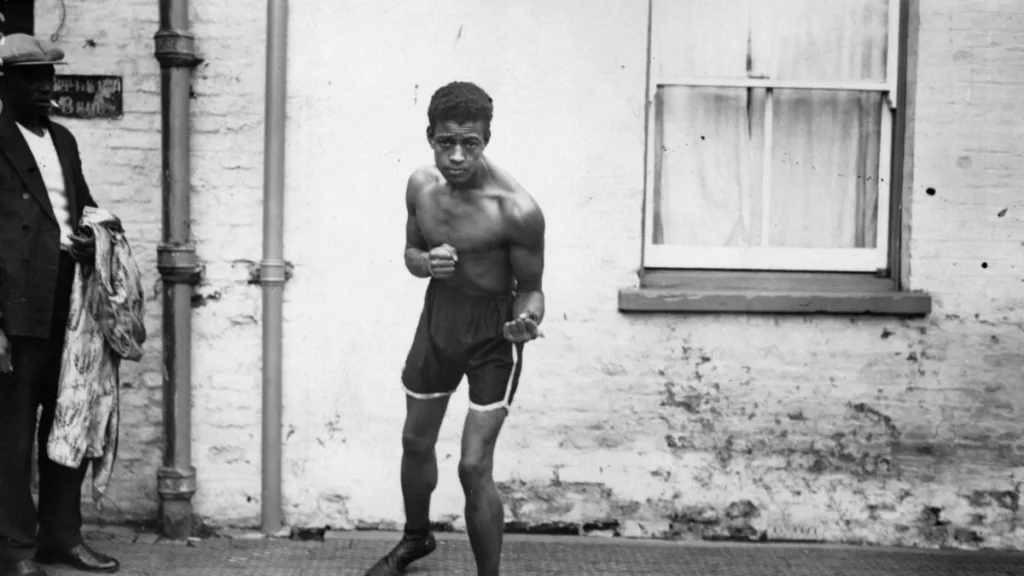


More than half a century after his death, one of Britain’s most extraordinary sporting and civil rights figures is finally receiving long-overdue civic recognition in the city where he was born, fought, and organized.
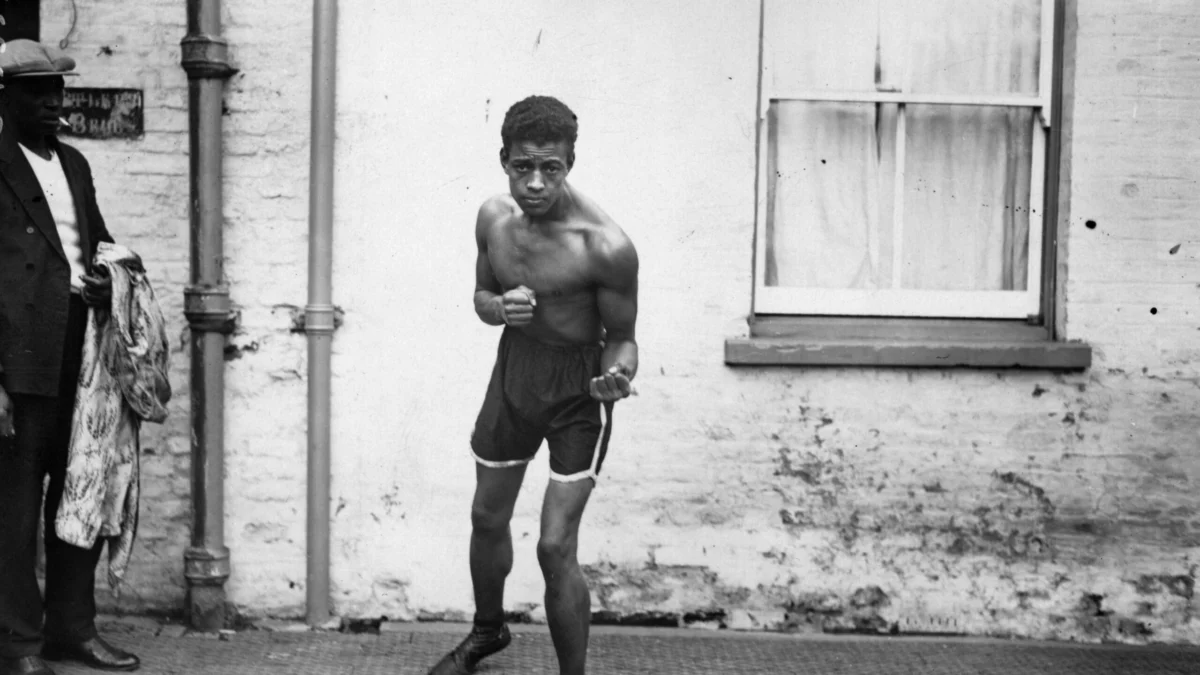
Leonard Benker Johnson was indisputably one of the finest boxers of his generation. Born in Manchester in 1902, Johnson accumulated more than 90 professional victories during an illustrious ring career. Yet, despite defeating the very best fighters in the nation, he was systematically denied the opportunity to compete for official British titles simply because of the colour of his skin.
Undeterred by the institutional racism that cut short his athletic ambitions, Johnson redirected his fighting spirit toward the struggle for social justice. In the decades following his retirement from boxing, he became a prominent trade unionist, a dedicated civil rights campaigner, and a respected community leader.
Now, following a sustained public campaign, Manchester City Council has confirmed that Len Johnson will become the first Black person to be commemorated with a statue in Manchester. The permanent monument, which remains subject to planning permission, is set to be erected in a prominent location opposite Manchester Victoria Station, ensuring that his legacy as both an elite athlete and a pioneer of civil rights is preserved for future generations.
From Unlikely Beginnings to Ring Dominance
Len Johnson’s journey into professional boxing began almost by accident. Born on October 22, 1902, in Clayton, Manchester, he was the eldest of four siblings. His mother was from Ireland, and his father, Bill Johnson, was a former boxer who had emigrated to Britain from Sierra Leone.
Johnson did not initially set out to follow in his father’s footsteps, possessing little early knowledge of or training in the sport. However, after getting into an altercation at his workplace, his father decided it was time to introduce him to proper boxing technique and took him to observe a local contest.

His initial training was remarkably frugal and resourceful. Lacking specialized equipment, the young Johnson built his stamina and footwork by skipping with a rope fashioned from an old washing line.
A few weeks later, he made his formal ring debut at the Alhambra Theatre in Openshaw. Facing off against fellow teenager Jerry Hogan, Johnson demonstrated an innate natural talent, securing a decisive victory via a third-round knockout. That early triumph marked the beginning of a remarkable athletic career that would ultimately encompass more than 90 professional victories across the middleweight and light-heavyweight divisions.
By the mid-1920s, Johnson had established himself as a dominant force in the sport. His major breakthrough came in 1925, a year in which he secured victories over some of the most celebrated figures in British boxing history. Over the course of just seven months, Johnson twice defeated Roland Todd, the reigning British middleweight champion.
That same year, he recorded a landmark victory against Ted "Kid" Lewis—a iconic multi-division champion who would later be praised by heavyweights like Mike Tyson as "probably the greatest fighter to come out of Britain."
Institutional Racism and Rule 24
Despite consistently proving himself superior to the country’s top-ranked fighters, Johnson was continually denied the opportunity to fight for the official British middleweight crown. His exclusion was not a matter of athletic standing, but of institutional policy.
At the time, the British Boxing Board of Control (BBBofC) enforced a strict racial restriction known as Rule 24. Under this rule, contenders for British title contests were explicitly required to have been "born of white parents." Because Johnson’s father was Black, the governing body refused to sanction him for title fights, effectively placing a glass ceiling over his athletic career.
Seeking recognition on a broader stage, Johnson traveled to Australia in 1926, where he defeated top international opponents to capture the Empire middleweight title. However, upon his return to the United Kingdom, boxing authorities informed him that his overseas championship achievement would not be officially recognized at home.

The systemic discrimination extended beyond title belts to financial opportunity and venue access. Johnson was systematically barred from fighting at prestigious venues such as the Royal Albert Hall and the National Sporting Club in London, where the most lucrative purses were offered.
The emotional and financial toll of this sustained prejudice eventually led Johnson to reflect publicly on the injustice. Speaking in 1930 about the institutional barriers holding him back, Johnson expressed his deep frustration with the establishment:
"I’m barred from the Albert Hall and the National Sporting Club. In fact, whenever there is big money, I’m kept out of it," Johnson remarked at the time. "The prejudice against colour has prevented me from getting a championship fight. I feel now that there is no use whatever going on with the business."
Johnson fought his final professional bout in 1933, stepping away from the ring with a stellar record that was nevertheless denied the official championships it warranted.
Civil Rights Leadership and the Pan-African Congress
While his professional boxing career came to an end in the 1930s, Johnson’s public life was far from over. Following the conclusion of World War Two, he translated his determination into political activism, becoming an influential voice for working-class communities and ethnic minorities in the North West.
Johnson joined the Communist Party and established himself as a trade unionist and community advocate in Moss Side, Manchester. His leadership within the local community led to his involvement in pivotal international civil rights movements.
In October 1945, Johnson served as a local representative at the historic Fifth Pan-African Congress, which was held at the Chorlton-upon-Medlock Town Hall in Manchester. The conference brought together prominent activists, scholars, and future political leaders from across the African continent and the diaspora, serving as a landmark gathering that helped accelerate the movement to liberate African nations from colonial rule.

Challenging the Pub ‘Colour Bar’
Johnson’s activism was equally impactful on a local level, where he directly confronted everyday racial segregation in post-war Britain.
In 1953, Johnson was refused service at the Old Abbey Taphouse, a pub located just south of Manchester city centre. At the time, establishments across the country operated under an informal "colour bar," which legally permitted venue owners and landlords to deny service to non-white customers at their discretion.
Refusing to accept the discrimination, Johnson teamed up with his friend and fellow campaigner Wilf Charles to mount a direct action protest. The pair formally lodged a complaint with the Mayor of Manchester and organized a public demonstration.
Johnson and Charles returned to the Old Abbey Taphouse accompanied by approximately 200 supporters, as well as representatives from the local press. Confronted by the mass demonstration and media scrutiny, the landlady relented and served Johnson a drink—an ironic victory given that Johnson himself was a non-drinker.
The stand taken by Johnson and his supporters at the Old Abbey Taphouse sent shockwaves through the region, effectively dismantling the pub "colour bar" across Manchester and establishing an early precedent for desegregation in public accommodations. It would take more than another decade before racial discrimination in public places was officially outlawed across the United Kingdom under the landmark Race Relations Act 1965.
Johnson passed away in 1974 at the age of 71, leaving behind a legacy as both an elite sportsman and an uncompromising campaigner for equality.
Len Johnson campaign
For years, grassroots organizers, local historians, and sports enthusiasts have worked tirelessly to secure a permanent public memorial honoring Johnson in his home city.

The effort has been spearheaded by the Len Johnson Campaign CIC, led by activist Deej Malik-Johnson. To fund the monument, the campaign organized a variety of community initiatives and high-profile fundraisers. These included an annual celebrity football match featuring prominent internet personality Angry Ginge, which drew backing from world-class darts prodigy Luke Littler and endorsement from former world champion boxer Tony Bellew.
The campaign’s efforts reached a triumphant milestone when Manchester City Council officially confirmed that space had been designated for Johnson’s statue directly opposite Manchester Victoria Station.
"Today’s news is another milestone towards properly acknowledging the historic contributions of a working-class, mixed-race Mancunian whose brave actions in the past developed the foundations of a better future," said Deej Malik-Johnson following the council’s announcement.
"In a sport and a society rigged against him because of his skin colour, Len made himself a champion for people outside the boxing ring," Malik-Johnson added. "At home and abroad, as an athlete, a worker, an organiser, a politician and a family man, he exemplifies the best of us."
Civic leaders have also voiced strong support for the project, noting that the statue will serve as both an educational resource and a symbol of pride for the city.
Tracey Rawlins, deputy leader of Manchester City Council, praised Johnson’s enduring legacy and his connection to the character of the city.
"Len Johnson was not only one of the best boxers of his era, he was also a model of a Mancunian—a community champion who contributed much to the city during his lifetime," Rawlins said. "His life and his remarkable achievements are part of Manchester’s history and deserve to be told."

Rawlins noted that the upcoming memorial will play a vital role in keeping Johnson’s memory alive for generations to come. "The planned statue will provide both a springboard for people to learn more about Len and a focal point for the city to remember and honour him."
The physical construction and installation of the monument will be entirely funded through public donations raised by the Len Johnson Campaign CIC, with final realization pending formal planning consent.