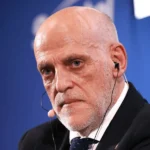

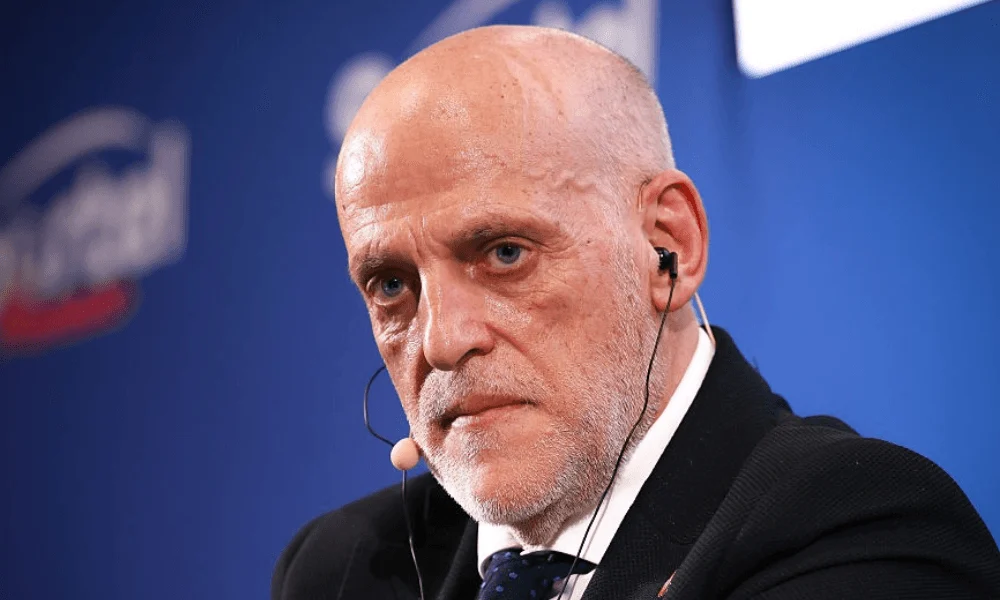
LaLiga president Javier Tebas has asserted that Manchester City richly deserve to face full justice after being found guilty of breaching Premier League financial rules, while simultaneously issuing a scathing demand for sweeping administrative reform at both FIFA and UEFA. The comments from the outspoken Spanish football administrator mark a significant escalation in the ongoing global debate surrounding financial fair play, regulatory enforcement, and governance transparency within elite professional club football.
The controversy centers around an independent commission’s definitive ruling that found Manchester City guilty of 114 out of 115 charges leveled against the reigning English champions. The sweeping charges detailed extensive, systematic breaches of the Premier League’s strict cost control regulations over a multi-year period. According to the findings of the exhaustive investigation, the club engaged in calculated efforts to artificially inflate its commercial and operational revenues while actively suppressing and concealing costs by a staggering margin exceeding UK£900 million. This illicit financial maneuvering occurred between the 2009-10 and 2017-18 seasons—a crucial formative era during which the club secured three of its eventual eight Premier League titles. Furthermore, the commission determined that the club failed to cooperate fully with investigators during the proceedings.
While Manchester City has consistently and vehemently denied all wrongdoing, the potential consequences of the verdict stand in stark contrast to previous challenges the club has faced on the European stage. Back in 2020, European football governing body UEFA handed down a stringent two-year ban from European club competitions alongside a €30 million fine after finding the club guilty of serious Financial Fair Play (FFP) violations. However, Manchester City successfully appealed that punishment at the Court of Arbitration for Sport (CAS). The appeal succeeded primarily because the court ruled that some of UEFA’s core allegations were time-barred and could not be punished due to the elapsed duration since the alleged infractions took place. Consequently, the ban was completely overturned, and the financial penalty was drastically reduced to €10 million.
Crucially, however, the Premier League operates under no such statute of limitations. Legal experts and industry observers note that should Manchester City’s upcoming appeals fail to overturn the independent commission’s findings, the resulting domestic punishments are expected to be far more severe and wide-ranging. Potential sanctions under consideration within the English football ecosystem include massive sporting points deductions, mandatory expulsion from the division, and unprecedented financial penalties that could permanently alter the competitive landscape of English football.
The fallout from the investigation has already sent shockwaves across the continent. Several of Manchester City’s domestic rivals have privately and publicly suggested that they reserve the right to pursue substantial legal action against the club. Beyond England, the financial discrepancies and regulatory breaches would have inevitably impacted European clubs—including prominent teams competing within LaLiga—that faced Manchester City in high-stakes UEFA Champions League fixtures during the disputed years, potentially skewing competitive balance and revenue distributions across the continent.
Addressing delegates at the prestigious Sportel sports business conference in Monaco, Tebas declined to speculate on the exact nature of the sanctions that the Premier League should ultimately impose. Nevertheless, he made it abundantly clear that he is monitoring the case with intense interest. He emphasized that the final outcome must carry enough deterrent weight to firmly discourage other ambitious clubs from attempting to bend or circumvent financial regulations in the future.
Reflecting on his longstanding history with the club’s leadership, Tebas recalled a tense encounter from years past. He noted that in 2017, during a Soccerex conference held in Manchester, he was confronted directly by Manchester City chief executive Ferran Soriano, who expressed deep frustration over Tebas openly discussing the club’s financial engineering and commercial practices. Tebas reiterated his vested interest in seeing how the landmark legal saga concludes, emphasizing that a definitive resolution is vital not only for the integrity of the Premier League but for the entire European football ecosystem. He pointedly remarked that various individuals within the regulatory sphere had to depart their positions at UEFA because of pressures and complications related to Manchester City, concluding that true justice must finally be served for the Premier League, European football as a whole, and UEFA.
Although Tebas did not explicitly name the specific officials he was referencing, public statements previously issued by Manchester City during their prior disputes with UEFA had heavily criticized Yves Leterme, the chief investigator of UEFA’s Club Financial Control Body (CFCB). Leterme ultimately stepped down from his role at UEFA in 2021, though there has never been any official indication linking his departure directly to the club’s legal battles.
When directly questioned by SportsPro whether Manchester City’s high-profile case highlights an urgent, systemic need for much greater and more robust financial regulation across European soccer, Tebas pointed to the stark contrast provided by LaLiga’s own regulatory framework. He highlighted that LaLiga’s famously strict economic control rules have successfully ensured that Spanish clubs operate with a fraction of the cumulative debts carried by many of their elite European counterparts. Expressing a mixture of critique and advice, Tebas remarked that he hopes the Premier League will recognize the necessity of adopting a more sensible approach to financial oversight, noting that English football currently navigates a remarkably complicated financial landscape.
Despite passionately demanding accountability and justice on UEFA’s behalf, the notoriously combative LaLiga chief did not extend immunity to European soccer’s governing body itself. Instead, Tebas broadened his critique, arguing forcefully that the sport as a whole should no longer be governed by isolated entities and must instead be overseen by a much wider, more diverse array of administrative bodies to prevent conflicts of interest.
Tebas has long established himself as a vocal and relentless critic of FIFA president Gianni Infantino, frequently challenging his centralized management style, leadership decisions, and controversial commercial initiatives, such as proposals to sell a significant equity stake in the men’s FIFA World Cup to external private investment funds. Elaborating on his vision for international reform, Tebas called for structural changes that align executive governance at FIFA, UEFA, and other major sports institutions with modern rulings handed down by sports courts of law. He warned that the current sporting landscape suffers from entrenched monopolies that fail to operate with the necessary levels of transparency when making monumental decisions, asserting that these governing bodies routinely fall short of expected standards. Concluding his remarks, Tebas insisted that established rules exist for a reason and that every participant in the global game, regardless of their wealth or influence, must be held to them.