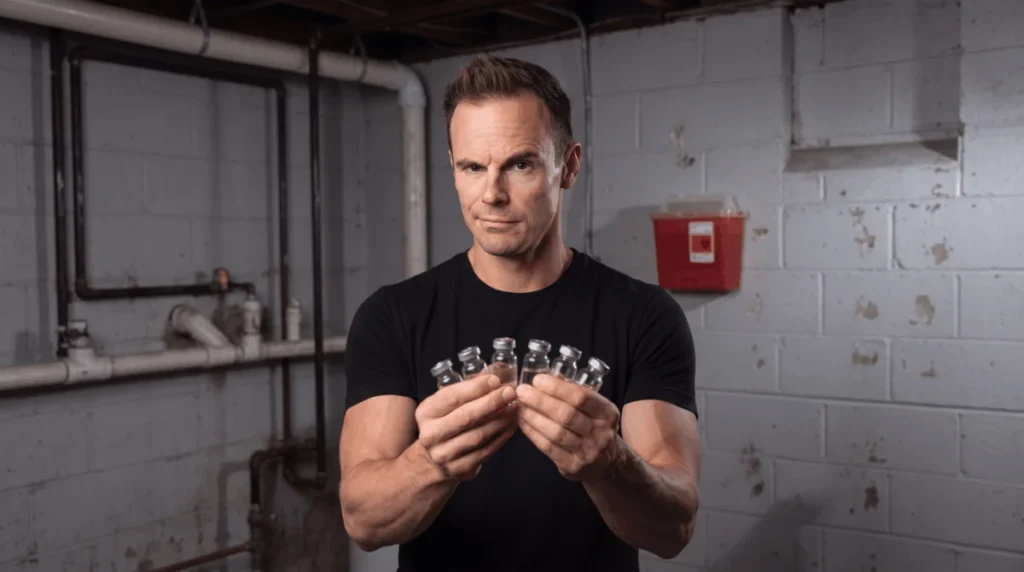

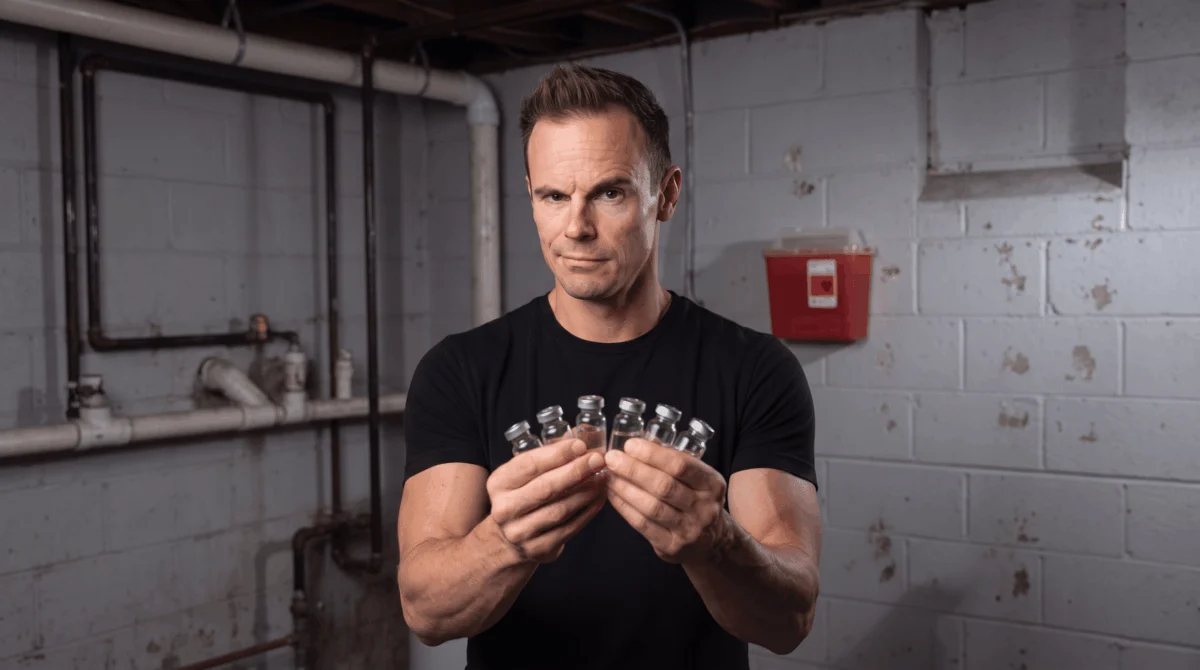
The U.S. Food and Drug Administration has introduced a temporary policy shift that makes six experimental peptides significantly more accessible to patients with medical prescriptions. However, federal regulators and medical experts are quick to emphasize that easier access does not equate to proven safety, clinical effectiveness, or official agency approval.
Under the new regulatory stance, federal officials announced that specialized compounding pharmacies will not face penalties for compounding and supplying BPC-157, epitalon, KPV, MOTS-c, Semax, and TB-500 to individuals who hold valid prescriptions. The catch, however, remains substantial: none of these six compounds have received FDA approval, and the new enforcement discretion serves as a temporary stopgap while the agency evaluates its long-term regulatory strategy for these substances.
This unfolding debate has steadily intensified over recent months. Advocates within the wellness and peptide therapy spaces have long argued that establishing legal, pharmacy-grade pathways for these compounds would offer a much safer alternative to the unregulated gray-market options already flooding online forums, underground laboratories, and direct-to-consumer telehealth clinics. Despite these arguments, the medical community remains sharply divided over the implications of the policy and the actual scientific backing of the peptides themselves.
What This Policy Change Actually Means
The recent guidance issued by the FDA does not constitute formal drug approval or an endorsement of efficacy. Instead, it grants what regulators call enforcement discretion. This legal mechanism means compounding pharmacies can legally manufacture and distribute these six specific peptides without incurring federal penalties, provided they adhere to strict reporting requirements regarding adverse side effects, safety signals, and quality control issues.
According to policy documents released by the Department of Health and Human Services, this temporary access window is designed to allow the agency to collect valuable real-world data. Regulators will use this information to determine whether these substances should eventually be incorporated into the official list of bulk drug substances that compounders are legally permitted to produce.
For proponents of the policy, the shift is viewed as a pragmatic victory for patient safety. Supporters argue that because individuals are already utilizing these peptides in significant numbers, ensuring that the supply chain runs through licensed pharmacies under physician supervision is vastly preferable to patients sourcing unknown substances from overseas gray-market vendors.
The Gray Market Isn’t Going Anywhere
Despite the opening of legal pathways through domestic compounding pharmacies, industry insiders predict that the underground market will remain resilient and heavily utilized. Ryan Beattie, director of business development at UK-based Adaptog Research & Life Sciences, suggests that economic factors will ultimately drive many users back to unregulated sources.
"My prediction is that those who are already using the gray market will continue to do so," Beattie noted. "So I think in the initial term, people will use compounding pharmacies in the US. What I then predict will happen is people will then get used to it, get more aware of it—and then switch to the gray market because of the cost."
Beattie’s assessment highlights a persistent economic barrier. Compounded medications produced domestically by licensed pharmacists are notably more expensive than their gray-market counterparts, and health insurance plans universally decline to cover these unapproved experimental treatments.
Interviews with consumers who regularly utilize what is colloquially known as the "Wolverine stack"—a popular combination of BPC-157 and TB-500 frequently sought out for the management of chronic pain and athletic injuries—reveal similar hesitation. When faced with the new regulatory framework, many users question what administrative hurdles and financial costs will be required to obtain prescriptions through traditional medical channels, leaving open the question of whether they will make the transition to legal pharmacies.
Advocates Say Compounding Could Improve Safety
The debate took center stage at the recent PepMed conference in Washington, D.C., where speakers associated with the American Academy of Peptide Medicine addressed the inherent dangers of the unregulated peptide trade. Conference participants argued that bringing these compounds into the regulated pharmacy system is an essential step toward mitigating harm and protecting patients from contaminated or improperly dosed products.
Dr. Alex Tatem, a urologist and men’s health specialist with a prominent online presence, framed the discussion around a broader critique of contemporary medicine. He characterized the established medical infrastructure as a reactive "sick care model" that excels at managing acute health crises but frequently falls short when individuals seek proactive, preventative measures to optimize their health and mitigate future disease risk.
The gathering featured a coalition of physicians, compounding pharmacy owners, and telehealth executives who converged around a single central argument: if patients are determined to access these experimental peptides, the safest and most responsible route is through licensed compounders operating under the direct oversight of trained physicians.
But the Science Isn’t There Yet
Conversely, FDA scientists and clinical researchers have repeatedly cautioned against the widespread, uncritical adoption of peptide therapies. During a federal advisory committee meeting, agency experts highlighted the glaring absence of rigorous, long-term human clinical trials—the kind traditionally required to secure formal drug approval—for all six of the newly accessible compounds.
Dr. Abud Bakri, a California physician specializing in longevity medicine, brings a personal perspective to the discussion, having utilized BPC-157 during his competitive powerlifting days to manage physical injuries. While he believes the peptide aided his recovery, he remains candid about the existing evidentiary gap within the scientific literature.
"If I’m going to have an honest conversation with a patient, I need to be able to fully elucidate the risk, which I can’t for some of these compounds," Bakri explained.
Similarly, Dr. Thomas Kremen, an orthopedic specialist who works with professional athletic organizations including the Los Angeles Chargers and the Los Angeles Lakers, recently reviewed the scientific data behind several popular peptides alongside his colleagues at UCLA Health. His conclusion was blunt: the current body of research simply does not support the widespread therapeutic hype.
When questioned about common assertions that BPC-157 actively accelerates tissue healing in humans, Kremen responded critically, noting that such claims rely almost exclusively on animal studies. "Maybe if they’re talking about a rat in some study," Kremen remarked. "I think if you’re making a claim, you better be able to cite the literature that supports that."
Misleading Claims Are Already Spreading
A major concern among researchers and regulatory watchdogs is the proliferation of unsupported, and occasionally demonstrably false, marketing claims circulating across the internet. Documentation submitted by the American Academy of Peptide Medicine to the FDA frequently describes compounds like BPC-157 and epitalon as endogenous, implying that the human body naturally synthesizes them. Similar phrasing routinely appears on commercial telehealth portals and independent peptide vendor websites to suggest that these treatments are merely synthetic replacements for substances the body already produces.
However, researchers who study these molecules point out that such claims lack scientific foundation. Dr. Terry Roberts, a researcher at Brunel University of London who investigates epitalon, notes that there is no definitive evidence confirming that humans produce the peptide naturally, as no published scientific study has ever successfully identified its presence in the human body.
A similar situation surrounds BPC-157. Dr. Vince Luca of the Moffitt Cancer Center in Florida explains that although the peptide was originally isolated from gastric juice over three decades ago, researchers have never identified a corresponding human gene that encodes for it.
"It’s not impossible that the body produces BPC-157, but I think it’s unlikely," Luca stated. "Health care professionals should know enough not to tell people that it’s an endogenous peptide when it is very unlikely to be one."
Luca further cautions that even if a peptide were proven to be endogenous, that biological origin would not automatically guarantee its safety when introduced artificially. He points out that numerous natural peptides, when injected into the body at elevated concentrations, can trigger severe adverse biological reactions.
The Risk of Real Harm
The potential dangers of utilizing unproven compounds are underscored by the experiences of individual users who suffered unexpected and lasting adverse effects. One patient, who requested to be identified as James, shared a cautionary account of his experience with an oral formulation of BPC-157. Four years after experimenting with the compound, he reports that his health has never fully recovered.
Shortly after beginning the peptide regimen, James experienced acute anxiety, which subsequently evolved into persistent emotional and sensory numbness that continues to affect him. He was also diagnosed with a subsequent autoimmune condition. Through online support communities, he discovered other individuals reporting remarkably similar trajectories of prolonged adverse reactions.
Reflecting on his decision, James admitted that the reality of his experience clashed sharply with the promotional narratives he encountered online. His story stands as a stark reminder that in clinical research, the term experimental signifies profound uncertainty—an uncertainty that carries genuine physiological risks.
What Scientists Are Doing Now
Despite the commercial hype and regulatory complications, academic researchers continue to investigate these compounds within controlled scientific settings. At the Moffitt Cancer Center, Dr. Luca is leading ongoing research into the fundamental mechanisms of BPC-157, maintaining an objective approach to the molecule’s biochemical properties.
Over the coming months, Luca’s research team plans to conduct basic cellular experiments, introducing the peptide to various human cell lines to observe their physiological reactions. These controlled investigations aim to shed light on what BPC-157 actually does at a cellular level, which may eventually help explain the wide divergence in anecdotal reports, ranging from dramatic recovery claims to lasting physiological harm.
While it remains possible that BPC-157 or another experimental peptide could eventually be validated as a safe and effective pharmaceutical drug, Luca’s overarching advice to the public remains cautious and restrained. "I just worry that people are a little too cavalier in how these are handled," he noted.
Ultimately, the FDA’s new policy framework makes obtaining six experimental peptides significantly easier through legal compounding channels, but that administrative shift does not alter the underlying science. For individuals contemplating the use of peptide therapies, medical professionals advise an open, cautious dialogue with a knowledgeable physician to carefully weigh what is genuinely understood against what remains entirely unproven.