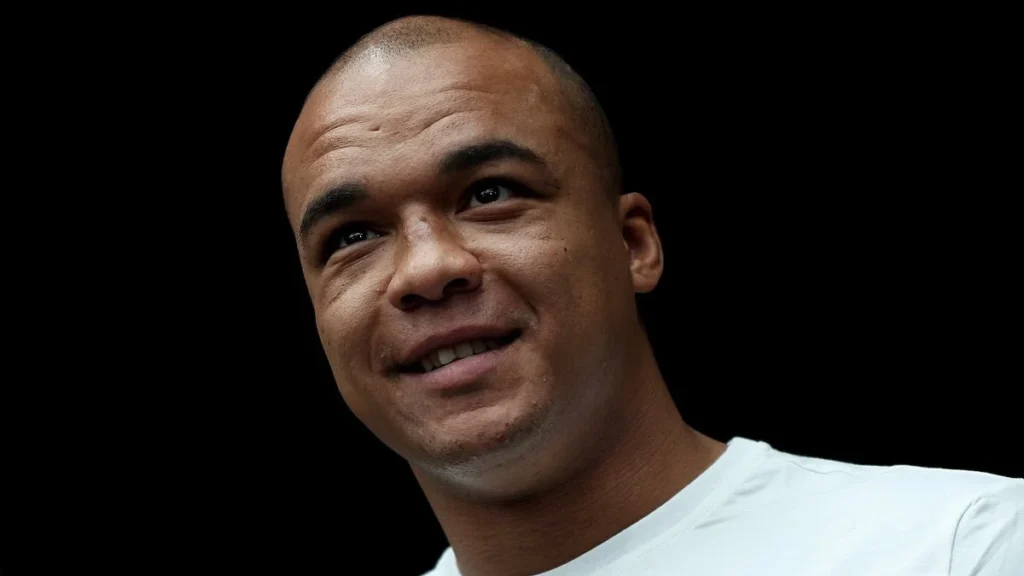
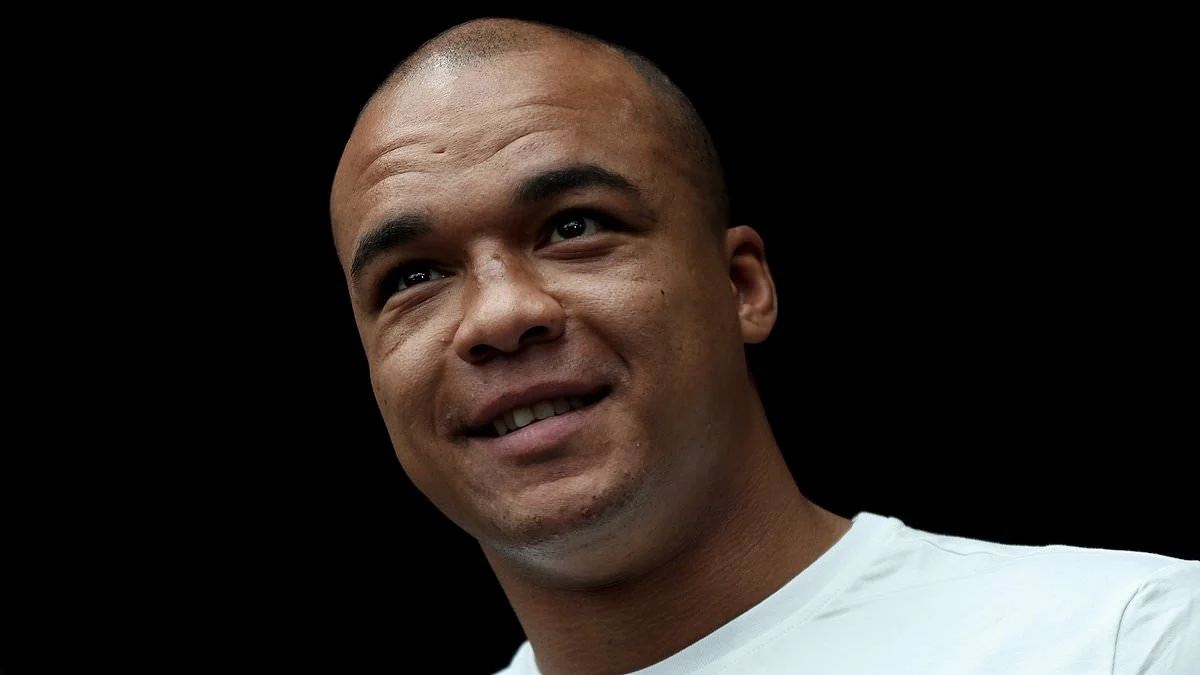
Fabio Wardley is not supposed to be here again so soon.
Not, at least, according to those who watched him endure eleven gruelling, punishing rounds against Daniel Dubois in Manchester last May. Not according to the concerned observers who openly questioned whether his corner should have pulled him out of the firing line much earlier, as his face became increasingly battered and his right eye swelled completely shut. And certainly not according to the critics and pundits who believe the sheer magnitude of the physical punishment he absorbed makes an immediate rematch a risk far too dangerous to contemplate.
Yet, as has become a defining trait of his professional journey, Wardley has never been one to follow the conventional script.
When the 31-year-old first shared the ring with Dubois, who is 29, he did so carrying the prestigious mantle of the WBO heavyweight champion. He made an explosive statement right out of the gate, dropping his formidable opponent twice in the opening three rounds. For a fleeting, thrilling moment, it seemed Wardley was on the verge of producing one of the most stunning and defining victories of his career. However, Dubois demonstrated immense championship resolve, slowly fighting his way back into the contest, wrestling away the momentum, and ultimately stopping the champion in the eleventh round in a war of attrition.
Now, with the WBO title once again hanging in the balance, Wardley finds himself in a familiar psychological and competitive territory: he is the challenger, the bookmakers’ underdog, and the man whom a large portion of the boxing public expects to fall short once more.
And, as he reveals in a candid conversation ahead of the high-stakes rematch, he rather likes it that way.
"It’s been the staple of my career for as long as I can remember, well, since I started. It has been the main focal point," Wardley explains as he reflects on his trajectory through the heavyweight division. "After the first five or six fights, when I started to step up the level, even incrementally, even slightly, people were saying I was going to lose, that it was a step too far, and all the rest of it. It’s all the stuff everyone’s heard before."
For Wardley, wearing the tag of the underdog is not a burden; it is a shield that relieves him of unnecessary external expectations. Saturday evening will bring another explosive chapter as the two heavyweights go toe-to-toe for a second time, but the challenger insists his mindset is entirely unburdened.
"It’s a side of the coin I’m very much used to, and the pressure’s off. I’m the challenger here. I’m expected to lose and expected to go even quicker, and Daniel’s supposed to put on a better performance, and all the rest of it. So there’s no pressure on me. There’s nothing on my shoulders."
It is a remarkably composed and relaxed assessment from an elite athlete preparing to step directly back into the line of fire with the very puncher who handed him the first professional defeat of his career.
Wardley, however, insists that the setback has done little to alter his core identity. He is entirely realistic about the bitter taste of defeat—acknowledging plainly that losing a world title is far from an enjoyable experience—but he firmly refuses to view it as a soul-crushing or career-defining catastrophe.
"Not a lot has changed. I’m not that different. Don’t get me wrong, a loss is never fun. It’s never nice, it’s never enjoyable. But for me, at least, it wasn’t soul-crushing or devastating, and it hasn’t had any effect on me as a person, my character or anything else," he says.
In Wardley’s eyes, the risks he takes are simply part of the professional landscape he chose to navigate. Heavyweight boxing at the elite level is an unforgiving arena, and complete preservation of an unblemished record was never his primary obsession.
"The job’s the job, the game’s the game. From the very beginning, I’ve accepted that getting through heavyweight boxing unscathed isn’t guaranteed, especially given the way I compete at the highest level and my desire to take on the biggest challengers out there," Wardley notes.
He is quick to remind anyone questioning his matchmaking that the first encounter with Dubois was entirely of his own making. He did not stumble into a mandatory defense against a terrifying puncher; he actively sought out the challenge to test the absolute limits of his capabilities.
"I think people forget that the first time around, I picked Daniel. I asked for that fight because I looked at the crop of heavyweights and thought, ‘That’s the best one to challenge myself against.’ Knowing that about myself, and knowing that’s my angle, was I ever going to get through this undefeated like Floyd Mayweather? Probably not. So, look, it comes how it comes. But as long as I’m happy with myself in terms of the performances, that I’ve given my all and all the rest of it, I can sleep at night."
That unwavering willingness to place himself directly in the firing line is precisely what has turned Wardley into one of the most compelling and popular figures in the modern heavyweight landscape. His fights are spectacles defined by high drama, fluctuating momentum, and raw courage, and the first meeting in May was no exception. He set a blistering, chaotic pace from the opening bell, flooring Dubois within the first ten seconds. Yet, as the rounds wore on, the physical toll began to accumulate, shifting the tide in favor of his opponent.
As the bout ground into the championship rounds, Wardley was forced to absorb a staggering amount of heavy artillery, fighting through visible and considerable damage. The distressing condition of the fighter as he sat on his stool prompted widespread debate outside the ring, with many pundits and fans questioning whether the contest should have been halted earlier. Particular scrutiny was directed at his corner team for allowing him to emerge from his corner ahead of the tenth round.
Wardley, however, vehemently rejects the narrative that his coaching staff failed him or compromised his safety. He views the tight-knit group around him not merely as employees, but as family members whom he trusts implicitly to prioritize his long-term health and welfare above all else, regardless of external criticism.
He is similarly dismissive of the intense media noise and public speculation surrounding the swift timing of the rematch. From his perspective, casual observers watching from a distance simply do not possess the inside knowledge required to evaluate his physical recovery or his state of mind. He maintains that he and his trusted team remain the ultimate authorities on whether his body has healed sufficiently to enter another brutal training camp and subsequent fight.
For a lesser competitor, the prospect of facing the same devastating power that nearly rendered him unconscious just months prior might breed hesitation or psychological doubt. Yet Wardley has confronted that terrifying reality head-on, engaging in the necessary internal dialogue to make peace with the worst-case scenario before ever lacing up his gloves again.
It is a striking cognitive process: acknowledging the very real possibility of enduring the exact same physical punishment, questioning whether he is truly prepared to undergo that ordeal once more, and ultimately finding complete acceptance before throwing a single punch in preparation.
"It’s a level of early acceptance. The second I triggered the rematch clause, even before that, I had to have a conversation with myself and ask, ‘This could go the exact same way. Are you ready for that? Are you OK with that?’" Wardley shares candidly. "As long as the answer is yes from me to me, then cool, let’s go. But by now, it’s nowhere near my brain as a question mark or something I’m having to deal with, battle with or anything else. It’s already been ticked off, boxed and put away. It is what it is."
There is a distinct lack of melodrama in how Wardley articulates his mindset. He does not cloak himself in hollow bravado or pretend that the inherent dangers of the sport do not exist. His bravery is grounded in a pragmatic realization of what it means to be a top-tier heavyweight fighter who relies on a dynamic, aggressive style.
That fierce competitive pride is especially evident when discussing his behavior inside the ring when things are not going his way. When caught clean by a devastating shot, Wardley is hardwired to retaliate rather than retreat into a defensive shell, ensuring his opponent understands that success will not come without a price.
"Especially in those moments, it’s about getting back at them. All right, you took one… let your hands go. Don’t just let them get away with it for free. At least let them know. Let them have it in their brain that if they get off a few shots, I’m not just going to take them, run away and roll over."
While that warrior mentality creates unforgettable moments for spectators inside the arena and watching on television, it places immense, high-stakes demands on the cornermen tasked with guiding him through the dark moments of a fight.
When asked about the crucial sixty-second intervals between rounds, Wardley paints a picture of intense, utilitarian focus. For him, those fleeting moments are far too precious to waste on emotional reassurance or sympathetic coddling. With the clock rapidly ticking down toward the resumption of combat, what he craves above all else is cold, hard tactical instruction.
"No, I think it’s 90 per cent tactical, 10 per cent everything else, because in those moments, compassion doesn’t need to come into it. That’s not where the compassion needs to be," Wardley explains.
"Those 60 seconds are so precious, such a small moment. It feels like a click. It feels like nothing. It feels like it’s done and gone so quickly that you’re on your stool, you’re off your stool and the next round has started. In that time, you need to get the information. It’s not time for, ‘Oh, a little rub on the shoulder. Are you doing OK, Fab? Is everything alright? Are you going to be alright, mate? Do you want me to dab your face a bit?’ No. Let me know what I need to know. Let’s get this going again."
As Saturday evening approaches, Fabio Wardley harbors no illusions about the magnitude of the task ahead. He knows the rematch with Daniel Dubois will be deeply demanding, physically exhausting, and fiercely contested. He knows that critics will continue to scrutinize his durability and question his team’s strategic decisions.
Yet, he also remembers precisely why he pursued this path in the first place. For Wardley, the relentless pursuit of the division’s ultimate challenges has always superseded the artificial comfort of protecting an unblemished record. The bitter taste of defeat in Manchester has done nothing to dilute that philosophy. He steps back into the ring because the worst-case scenario has already been faced, analyzed, and accepted—proving once more that for Fabio Wardley, the risk is always worth taking.