
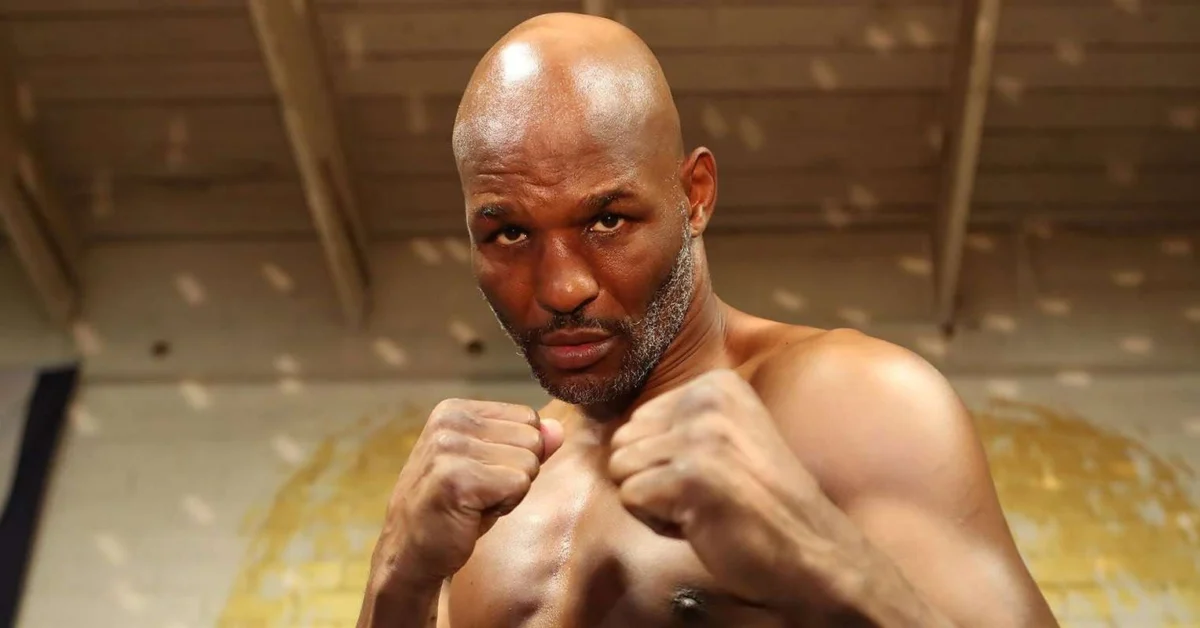
Bernard Hopkins remains an enduring symbol of longevity, defensive mastery, and tactical brilliance in the sport of professional boxing. Widely regarded as one of the greatest fighters of the last thirty years, the man famously known as "The Executioner" forged a legendary career that spanned nearly three decades, defying conventional aging curves in a brutal sport.
Yet, even a competitor as fiercely proud and accomplished as Hopkins is willing to acknowledge the absolute peak of a generational rival. In a candid assessment shared with The Ring Magazine, Hopkins reflected on his storied career and offered a definitive verdict on how he would have fared against a prime Roy Jones Jr., conceding that the electrifying multi-division champion simply operated on a level that no one could match.
The admission offers a fascinating glimpse into the mind of a Hall of Famer who shared the ring with some of the most formidable punchers and technicians in boxing history. Hopkins, whose professional journey began back in 1988, experienced the highs and lows of the sport firsthand. Though his career got off to an inauspicious start with a defeat in his professional debut, he quickly regrouped to carve his name permanently into boxing’s history books.
Hopkins rose to true prominence during the middle stages of the 1990s, a golden era for the middleweight division. His breakthrough moment arrived in 1995 when he stopped Segundo Mercado in the seventh round to capture the IBF world middleweight championship. That victory served as the foundation for a historic reign. Hopkins went on to make a remarkable number of successful defenses of his crown, establishing a standard of dominance at 160 pounds that few could challenge.
His division-conquering run culminated in a defining moment in September 2004, when he achieved undisputed status by decisively defeating Oscar De La Hoya, becoming the first man to knock out the superstar with a signature liver shot. Rather than resting on his laurels or retiring at the peak of his middleweight supremacy, Hopkins chose to conquer new frontiers. He made a calculated move up to the light heavyweight division, proving that his ring IQ and conditioning could translate against naturally bigger men. In 2011, he captured the WBC world title by defeating Jean Pascal.
Even after suffering a setback against Chad Dawson just one year later, "The Executioner" refused to fade away. He bounced back to capture another version of the light heavyweight championship by outpointing Tavoris Cloud, further cementing his status as one of the oldest world champions in boxing history. Throughout these campaigns, Hopkins relied on unmatched craft, psychological warfare, and an extraordinary ability to neutralize opponents’ strengths.
However, when pressed about whether his tactical brilliance could have overcome an absolute prime Roy Jones Jr., Hopkins offered a remarkably honest assessment. Speaking to The Ring Magazine, Hopkins explained why the early-career incarnation of Jones presented an unsolvable puzzle inside the squared circle.
"He was smart enough to neutralise my best weapons and smart enough to not get hit by my big shots," Hopkins said. "Even though I got my shots in he wouldn’t get hit by more than one. Like if I got one in… and that’s the thing about fighting unique guys… if a guy lands that one shot, normally there’s another coming behind that."
Hopkins elaborated on the unique physical and mental attributes that separated Jones from every other contemporary of his era, emphasizing that the multi-weight world champion possessed a rare combination of physical gifts and defensive intuition that rendered him practically untouchable during his athletic peak.
"He was an all-around thing – best boxer, best defence, offence," Hopkins continued. "Early career Roy Jones Jr. – speed, reflexes, unorthodox, that type of thing. No one, no one would have beat Roy Jones at that level, where he was at right there and then."
The dynamic between Hopkins and Jones carries a rich historical context that adds significant weight to Hopkins’s remarks. The two elite Americans crossed paths twice professionally, sharing a complex rivalry that stretched across different decades. Their first encounter took place in May 1993, when both men were undefeated rising contenders fighting for the vacant IBF middleweight title. On that night in Washington, D.C., Jones secured a clear unanimous decision victory, handing Hopkins what would be his only defeat between 1988 and 2005.
It would take more than seventeen years for the paths of the two legends to cross again. By the time they met in a rematch in September 2010, both fighters were well past their athletic primes, competing as veterans in the twilight of their illustrious careers. That second bout ended in a disappointing no-contest after Hopkins suffered an accidental shoulder injury following a clash in the fourth round.
Despite sharing the ring twice, a trilogy showdown during their respective prime years never materialized, leaving boxing fans and historians to endlessly debate what might have happened if a peak Hopkins had collided with a peak Jones. Hopkins’s recent remarks effectively settle that debate from the perspective of an insider, acknowledging that even his legendary adaptability would have fallen short against the unmatched speed and reflexes of a prime Roy Jones Jr.