


The number on your bathroom scale tells only half the story. When weight drops, many people celebrate without asking a critical question: how much of that loss was fat, and how much was muscle?
Dr. William Li, a physician and researcher specializing in vascular medicine, recently broke down why preserving muscle matters far more than most people realize—and what specific dietary and lifestyle adjustments can help protect it. His insights reveal that muscle isn’t just about physical appearance or basic strength; it is emerging as one of the most powerful predictors of how long and how well an individual will live.
The Hidden Cost of Weight Loss
Losing weight through diet alone often comes with an invisible and detrimental trade-off. Researchers at Purdue University reviewed 52 distinct studies tracking adults over the age of 50 who were actively losing weight. Their analysis uncovered a troubling pattern: in the vast majority of participants who relied solely on dietary calorie restriction, at least 15% of the total weight lost consisted of lean mass, primarily skeletal muscle.
That loss presents a serious physiological problem. Dr. Li explains that skeletal muscle is the primary site in the human body where blood sugar clearance takes place. Highlighting this mechanism, researchers at the University of Texas Health Science Center at San Antonio reported that up to 80% of insulin-stimulated glucose uptake occurs directly within skeletal muscle tissue.
When an individual loses muscle mass, they are effectively losing their body’s biggest sugar sponge. That deficit makes blood sugar significantly harder to control, which in turn makes overall metabolic regulation much more difficult. Consequently, maintaining lean muscle tissue is essential not merely for physical strength, but for foundational metabolic health and long-term vitality.
Grip Strength: A Surprising Longevity Marker
Beyond metabolic function, muscle strength turns out to be one of the most reliable windows into overall health and expected lifespan. The landmark PURE study, conducted by researchers at McMaster University in Canada, measured the grip strength of nearly 140,000 adults across 17 diverse countries to evaluate its prognostic value.
The findings were stark: for every 5-kilogram decline in grip strength, researchers observed a 16% higher risk of mortality from any cause. Even more striking, grip strength proved to be a better predictor of heart-related death than blood pressure, a metric that has long served as the traditional gold standard for assessing cardiovascular function.
Dr. Li emphasizes that the physical strength a person possesses is far more than a matter of vanity. Instead, it functions as a vital sign, much like body temperature, heart rate, and blood pressure, reflecting complex systemic health processes unfolding deep inside the body.
You Lose Strength Faster Than You Lose Muscle
While advancing age brings natural, gradual declines in both muscle mass and overall strength, research shows that these two parameters do not decline at the same rate. A comprehensive study conducted at the University of Nottingham found that by the age of 75, men lose between 3% and 4% of their functional strength each year, while women experience an annual strength loss of about 2.5% to 3%.
This discrepancy helps explain why everyday physical tasks—such as rising from a low chair, climbing a flight of stairs, or catching oneself after an unexpected stumble—become noticeably more difficult as people age. However, this downward trajectory is not entirely inevitable, and the human body retains an inherent capacity for cellular repair and adaptation.
Two Hidden Systems That Rebuild Muscle
Inside every human muscle reside two specialized systems that can be activated to rebuild tissue at virtually any age. The first involves satellite cells, which function as muscle stem cells tucked quietly against each muscle fiber, waiting for a physiological cue to take action. When muscle tissue experiences stretch, tension, or microscopic damage—such as the micro-tears induced by physical exercise—these stem cells race to repair, regenerate, and strengthen the fiber.
The second system involves capillaries, the body’s tiniest blood vessels, which are thinner than a human hair and wrap around every single muscle fiber. These microscopic vessels act as vital supply lines, delivering oxygen, nutrients, proteins, and essential hormones like insulin directly to muscle cells while simultaneously removing metabolic waste products like lactate, which can otherwise cause cramping and fatigue.
Dr. Li, who specializes in the study of angiogenesis—the physiological process through which new blood vessels grow—points to a fascinating collaborative study from McMaster University and Maastricht University in the Netherlands. Researchers trained 22 healthy older men, with an average age of 71, through a 24-week resistance exercise program.
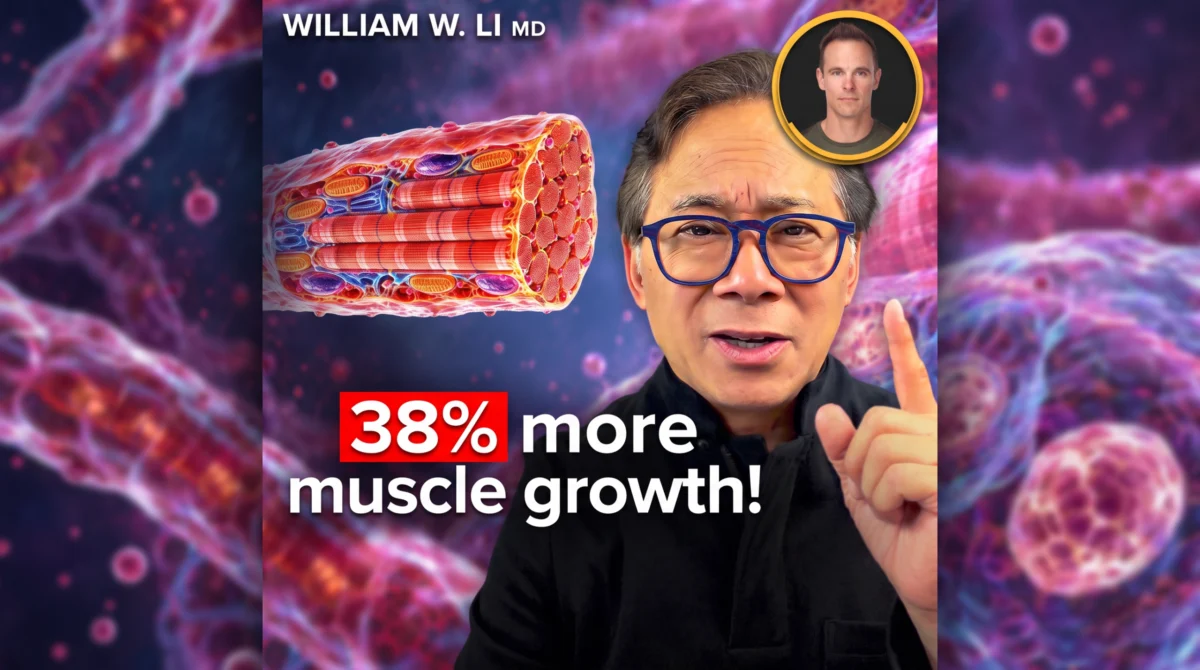
The subjects who entered the study with denser capillary networks in their muscles experienced 38% larger muscle fiber growth compared to participants who had fewer active blood vessels. Furthermore, their satellite cell populations increased by roughly 73% in response to the enhanced blood supply. These findings demonstrate that building muscle is not solely about the mechanical act of lifting weights; it requires ensuring that muscles possess an optimal vascular network capable of supporting growth and regeneration.
How to Keep Blood Vessels Healthy
The simplest and most direct way to maintain healthy blood vessels within skeletal muscle tissue is through consistent physical movement. Exercise physically forces blood to surge through vessels, and that mechanical motion acts as a biological signal telling the vascular network to stay healthy, flexible, and expansive. Even regular walking contributes significantly to this vascular maintenance.
At the same time, diet plays a powerful complementary role. Certain whole foods deliver specific bioactive compounds that actively improve microvascular blood flow and trigger the formation of new blood vessels, supporting the body’s natural regenerative capacity.
The Foods That Build Muscle and Blood Vessels
Dietary protein serves as the primary biochemical switch for muscle development. Every time an individual consumes adequate protein, it triggers muscle protein synthesis, which is the body’s internal signal to construct new muscle tissue. However, as people age, their muscles naturally become less sensitive to this anabolic signal.
Researchers at McMaster University investigated the exact quantity of protein required to fully activate muscle protein synthesis across different age groups. In younger men, with an average age of 22, it required approximately 16 grams of protein to maximize the response. In contrast, older men, averaging 71 years of age, required 27 grams of protein to achieve the same metabolic switch. Consuming protein quantities beyond that specific threshold in a single meal did not stimulate additional muscle building.
Dr. Li recommends aiming for roughly 25 to 30 grams of high-quality protein at each meal, emphasizing that whole foods should always serve as the foundational starting base before considering supplements.
In addition to protein, fatty fish such as salmon, sardines, mackerel, herring, and anchovies provide an abundance of omega-3 fatty acids, which offer distinct benefits for musculoskeletal health. Researchers at the Washington University School of Medicine in St. Louis assigned 60 healthy adults aged 60 to 85 to receive either omega-3 fish oil supplements or corn oil over a six-month period.
At the conclusion of the trial, the group receiving fish oil gained 36% more thigh muscle volume, and their hand grip strength improved by an average of about 5 pounds. Omega-3s appear to actively blunt the normal age-related decline in muscle mass and hold considerable promise in helping to prevent sarcopenia, the medical term for degenerative muscle loss. The daily dose utilized in the trial provided an amount of omega-3 fatty acids roughly equivalent to what a person would consume from a palm-sized portion of fatty fish.
Beets represent another powerful dietary addition because they are exceptionally rich in natural inorganic nitrates. Once ingested, the human body converts these nitrates into nitric oxide, a signaling molecule that relaxes and dilates blood vessels, thereby enhancing overall blood flow. Improved vascular circulation ensures that a larger volume of oxygen and vital nutrients reaches working muscle tissues.
Researchers at Indiana University in Indianapolis provided 16 older adults, with an average age of 71, with concentrated beetroot juice and subsequently tested their muscle strength by measuring knee extension speed. Within hours of consuming the beet juice, participants showed an immediate 5% improvement in knee extension speed and a 7% increase in overall muscle power. Following two weeks of daily beet consumption, muscle speed increased by 7% and power output rose by 9%. Dr. Li suggests incorporating whole beets into the daily diet by roasting, steaming, or grating them into salads, and pairing them with complementary nitrate-rich greens like arugula or spinach.
Exercise: The Non-Negotiable Component
While nutrition provides the necessary building blocks, dietary changes alone cannot preserve or rebuild muscle mass without physical exertion. Regular resistance training directly stimulates satellite cell activation and improves local blood flow. A comprehensive review conducted by a research team at Tohoku University examined 16 clinical trials and concluded that individuals who engaged in regular muscle-strengthening activities experienced a 10% to 17% lower risk of mortality from all causes, including major chronic conditions like heart disease and cancer.
The optimal dose for reaping these systemic health benefits appears to be remarkably accessible, landing at roughly 30 to 60 minutes of targeted resistance activity per week. This can be accomplished through two brief weekly sessions focused on working major muscle groups in the legs, hips, back, chest, shoulders, and arms using simple, foundational movements. The critical factor in these exercises is ensuring that the final repetitions of a set feel genuinely challenging, as this mechanical stress is what signals the muscle fibers to trigger repair and growth pathways. Complementing this with cardiovascular exercise like walking, along with natural daily movements such as carrying groceries, rounds out an effective physical regimen.
A Special Note for GLP-1 Users
For individuals utilizing GLP-1 receptor agonist medications for weight management, the challenge of muscle preservation becomes even more acute. Clinical observations suggest that rapid weight loss achieved through pharmacological interventions can sometimes involve a disproportionate loss of lean muscle mass alongside fat tissue. In light of this dynamic, Dr. Li underscores the heightened necessity for GLP-1 users to deliberately prioritize adequate protein intake and integrate consistent resistance training into their daily routines to protect their underlying muscle tissue.
Measuring What Matters
Because a standard bathroom scale cannot distinguish between reductions in fat mass and losses of skeletal muscle, more sophisticated assessment tools are required to track true physical progress. Dr. Li utilizes a device known as the Hume Health Pod, which assesses body composition through bioelectrical impedance analysis. This technology passes a virtually imperceptible electrical current through the body and measures the speed and resistance with which it travels.
Because muscle tissue contains significantly more water than fat tissue, it conducts electrical currents differently, allowing the device to estimate skeletal muscle mass, overall body fat percentage, and muscle distribution across the arms, trunk, and legs. Identifying imbalances, such as noticeably less muscle mass in one leg compared to the other, can highlight compensatory habits or previous injuries that require targeted attention. Tracking these metrics over time provides a clear picture of whether a wellness regimen is successfully building functional muscle while simultaneously reducing excess fat.
Muscle is much more than a cosmetic attribute; it functions as a metabolic powerhouse, a critical blood sugar regulator, and a primary indicator of longevity. Through a combination of targeted nutritional habits—such as consuming adequate protein, omega-3 fatty acids, and dietary nitrates—paired with regular resistance training, individuals can activate their body’s inherent regenerative systems at any stage of life. As ongoing research continues to confirm, strength truly functions as a vital sign of health.