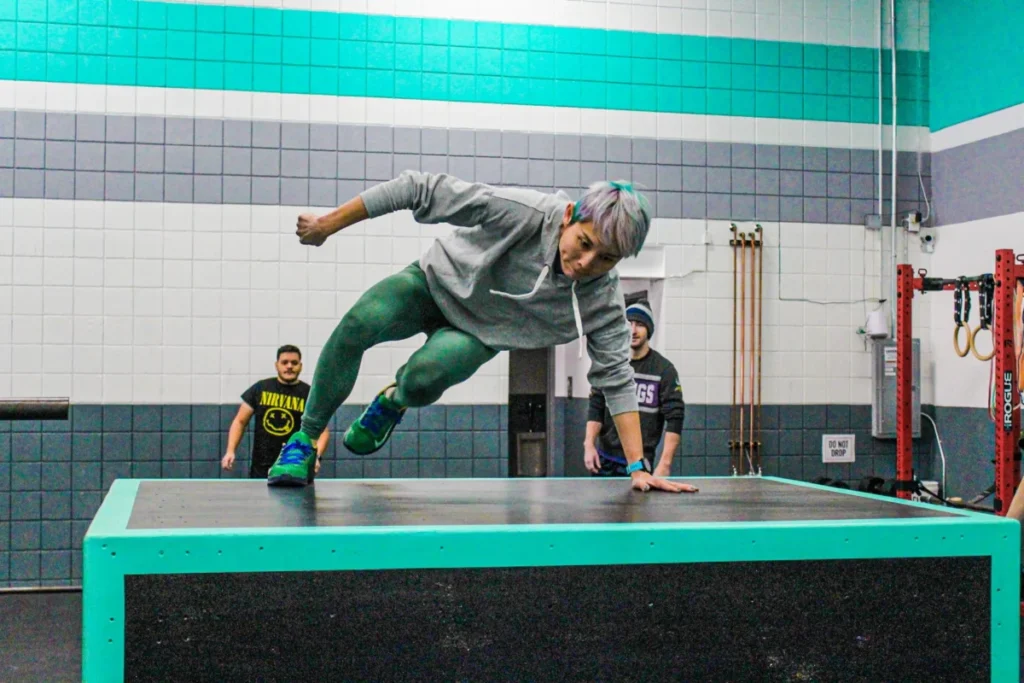

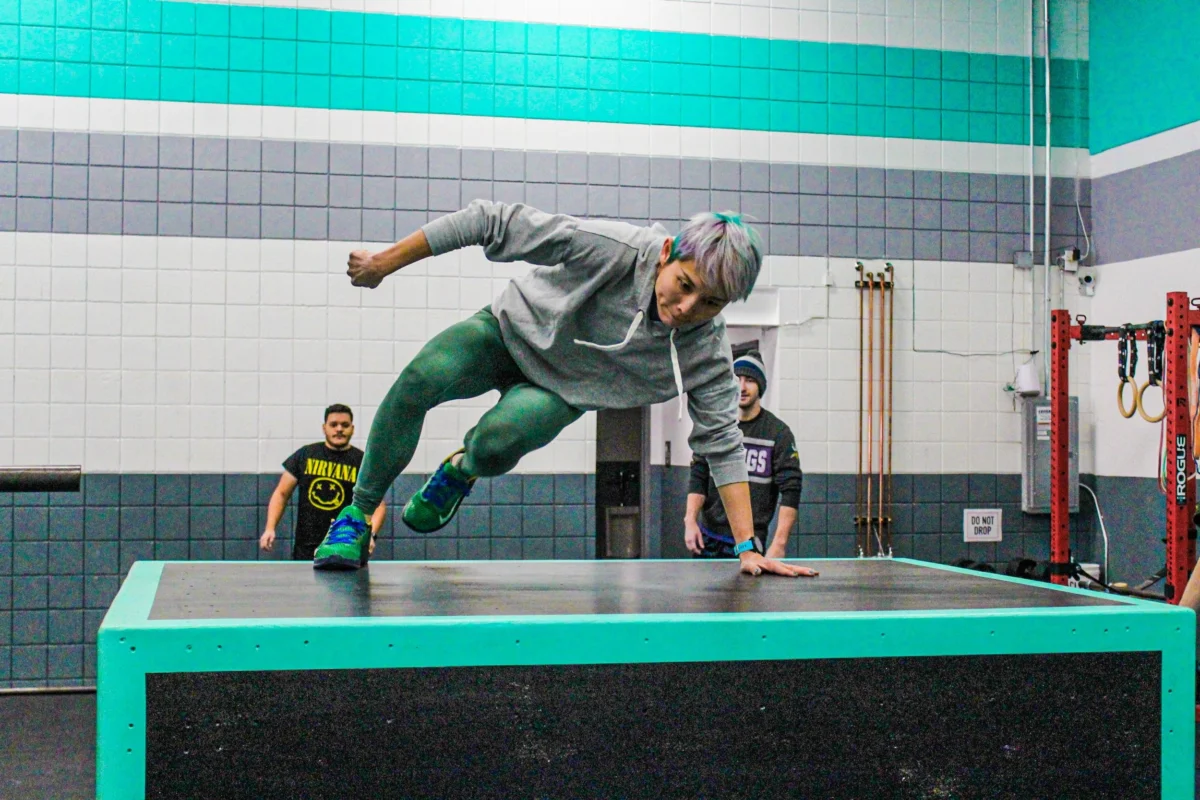
Inside a spacious, high-ceilinged gymnasium in Vancouver, British Columbia, 60-year-old Jane Henry breaks into an assertive sprint toward a sturdy foam obstacle. Without hesitating, she plants both palms squarely against the top edge, tucks her lower body, and vaults cleanly over the structure with practiced, fluid precision.
To the casual observer, Henry’s effortless clearance might look like the result of a youthful background in competitive gymnastics. In reality, she has spent nearly fifteen years honing her craft in parkour—an athletic discipline rooted in running, jumping, climbing, vaulting, and creatively navigating environmental obstacles.
Across popular culture and viral online videos, parkour has long been associated with fearless teenagers and twenty-somethings leaping between urban rooftops, scaling concrete facades, and executing high-flying acrobatics. Yet beneath the high-octane spectacle lies a fundamental movement system that a growing number of older Canadians are adopting. For adults seeking functional longevity, this discipline is proving to be a powerful vehicle for healthy aging, providing unique physical and mental tools to combat the natural declines of growing older.
Now, academic researchers and geriatric health specialists are beginning to corroborate what these practitioners have discovered through experience: navigating physical obstacles in controlled environments may be one of the most effective ways to preserve mobility, enhance spatial awareness, and prevent devastating falls.
When Jelly Legs Lead to Something More
Henry’s introduction to the sport arrived by circumstance rather than long-term design. One week before celebrating her 46th birthday, she walked into Origins Parkour in Vancouver with the intention of registering her son for classes. While standing along the perimeter of the facility, she found herself transfixed by the young athletes bounding off walls, balancing across narrow bars, and swinging across overhead scaffolding.
Instead of seeing an activity reserved strictly for youth, something clicked. As Henry recalls, watching the athletes sparked an instinctive desire to participate: she observed what the mostly young practitioners were doing, and her brain immediately urged her to try it. It looked genuinely fun, and she chose not to dwell on whether she was physically capable or whether society deemed it age-appropriate.
Her very first 90-minute session tested her limits. She left the facility with severe physical fatigue—the classic sensation of trembling "jelly legs"—yet her mind was energized by the potential of what her body could learn.
During that inaugural class, Henry encountered foundational vaulting techniques, including the Kong vault. The maneuver requires an individual to build running momentum, drive forward, plant both hands on an elevated surface, and draw the knees tightly to the chest, effectively leapfrogging the body over the obstacle in a single, continuous arc. For a beginner in their mid-forties, driving head-first toward an obstacle feels deeply unnatural; as Henry notes, the movement runs entirely counter to what the brain instinctively identifies as sensible or safe behavior.
Fourteen years after that initial encounter, Henry has thoroughly outlasted her son’s interest in the discipline. Now retired from a multifaceted working life that included careers in house construction as well as fashion and costume design, she maintains an active training regimen. Looking back on her years of practice, she credits parkour with yielding measurable enhancements in her physical stability, muscular strength, motor coordination, and real-time reaction speed.
The Science Behind Parkour for Aging Bodies
While prescribing vaulting and wall-climbing to aging adults may initially sound unorthodox to conventional medical practitioners, exercise scientists are increasingly prioritizing dynamic, multi-component physical training over isolated, repetitive gym workouts.
Teresa Liu-Ambrose, a professor of physical therapy at the University of British Columbia and the Canada Research Chair in Healthy Aging, points out that comprehensive physical regimens targeting balance, functional strength, and rapid muscle power are exceptionally effective at mitigating the danger of falls. According to clinical evidence, targeted exercise interventions that challenge these combined systems can reduce an individual’s fall risk by 28 percent or more.
The clinical concern surrounding falls in later life is substantial. As the human body ages, subtle degradations in neuromuscular communication, joint proprioception, and explosive muscular power accumulate. This gradual erosion of functional stability elevates the likelihood of slipping or tripping, which frequently results in traumatic bone fractures, hospitalization, long-term disability, or an abrupt loss of personal independence.
Addressing the hesitation older adults often face when contemplating non-traditional movement, Liu-Ambrose notes that chronological age should not be viewed as an inherent barrier to trying challenging physical activities. Instead, the critical variable lies in appropriately scaling and individualizing the movement patterns to meet an individual’s specific baseline capacity.
Parkour directly trains the physiological qualities that decline with advancing age. It demands explosive muscular power to propel the body upward, dynamic balance to navigate changing footings, continuous spatial orientation to track surrounding obstacles, and shock-absorbing techniques to ensure safe landings. Traditional exercise modalities, such as stationary cycling or weight machines, often isolate single planes of movement in predictable settings. In contrast, every parkour sequence functions as a living physical puzzle, requiring continuous adjustments that stimulate the musculoskeletal and nervous systems simultaneously.
Breaking Down the Intimidation Factor
Despite its clear physical benefits, the prospect of entering a parkour facility can be intimidating for middle-aged and older adults accustomed to standard fitness centers.
Tom Coppola, an experienced instructor at Origins Parkour, stresses that beginner curricula are deliberately structured to remove danger and demystify the discipline. Regardless of chronological age, new students spend their early sessions working entirely on or near the floor, learning foundational biomechanics long before attempting elevated or dynamic maneuvers.
Coppola maintains a steadfast conviction that the fundamental principles of parkour are accessible to everyone. His facility welcomes students spanning from five years of age to any older adult willing to attempt the discipline. Although Origins does not operate classes exclusively reserved for seniors, the foundational exercises are infinitely adjustable, allowing diverse demographics to train in the same physical space safely.
Training typically commences with simple ground-based locomotion, such as the quadrupedal bear crawl—moving on hands and feet across the floor. This fundamental pattern reintroduces practitioners to supporting their own body weight across multiple contact points. Gradually, as shoulder stability and core control develop, instructors teach students how to utilize that same quadrupedal mechanics to push against raised ledges, negotiate low blocks, and pull themselves onto low platforms.
Werner Tanzo experienced this gradual progression firsthand. A 50-year-old information technology professional living in Burlington, Ontario, Tanzo was introduced to the discipline at Play Project gym during a parent-child introductory class with his son.
During an early training session, Tanzo found himself standing before a six-foot slanted wooden wall. Standing at 5 feet 7 inches, the sheer height of the incline felt daunting; looking up at the obstacle, he initially doubted his capacity to clear it.
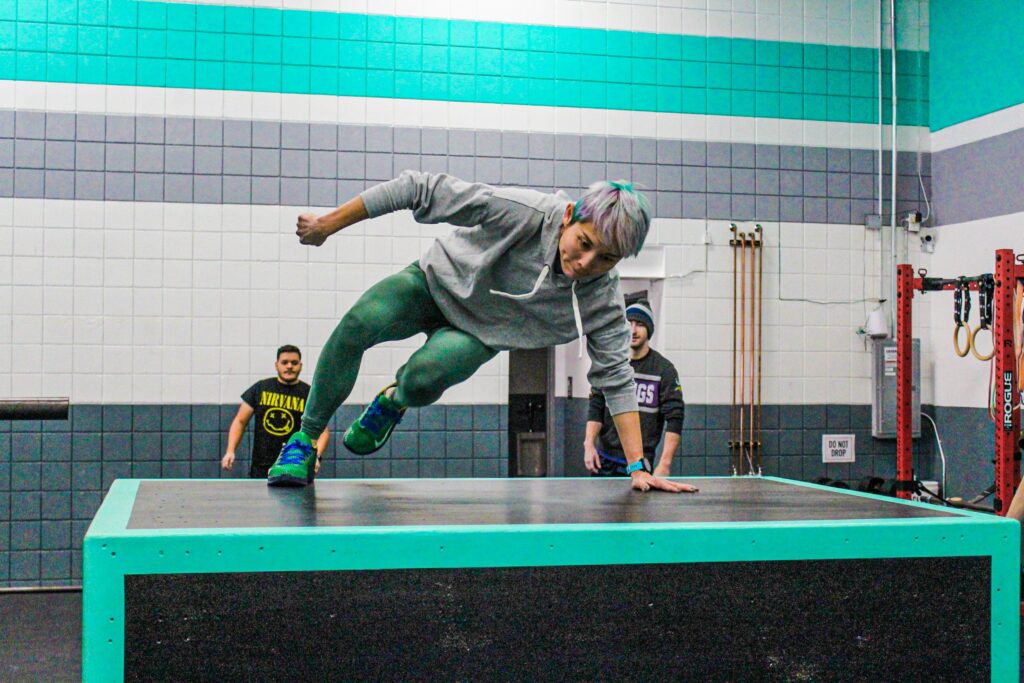
Yet under the guidance of instructors who broke down the kinetic chain—demonstrating how forward running momentum could be redirected upward through foot placement and upper-body pull—Tanzo successfully crested the wall before the class ended. Experiencing such tangible, clear progression provided immediate encouragement, motivating him to continue pursuing the sport.
Building Confidence Through Movement Mastery
The physical rewards gained from navigating physical obstacles are accompanied by an equally pronounced psychological shift. By exploring their physical boundaries in a controlled environment, older practitioners often develop an acute understanding of their actual capabilities, shedding self-imposed limitations and building confidence that translates into their broader daily lives.
Safety remains the central priority. Liu-Ambrose emphasizes that any adult embarking on a strenuous new exercise program, particularly one involving dynamic movement, should seek clearance from a qualified physician and begin strictly at their baseline capacity. Because parkour movements can be broken down into micro-progressions, individuals with reduced joint mobility or deconditioned baselines can still participate constructively without overextending themselves.
Within the gym, Coppola places heavy emphasis on proactive self-protection. Long before students are allowed to launch themselves across wide gaps or over obstacles, they undergo systematic training on how to handle errors: how to fall safely, how to bail out of an uncompleted attempt, and how to evaluate environmental risks in real time.
Students regularly drill ground-level rolls designed to disperse kinetic force across the soft tissue of the back, and practice redirecting their momentum by pushing off vertical surfaces with their feet when they lose balance. These movements are not merely gym stunts; they are functional reflexes that can directly prevent injury in everyday life.
As Coppola observes, if an individual begins to slip or fall on a sidewalk, the ability to execute an instinctive side roll or breakfall can be the precise factor determining whether they stand right back up and continue walking, or suffer a catastrophic hip fracture.
The Reality of Risk and Injury
While parkour fosters resilience, it carries authentic physical demands that require honesty and self-discipline. Coppola notes that common minor ailments among practitioners include friction-related hand rips—where calluses tear away while gripping bars or coarse wooden edges—alongside joint impingements or acute ankle sprains from awkward landings.
Over her decade and a half in the sport, Henry has dealt with her own share of physical setbacks, ranging from repetitive strain issues to cracked ribs sustained during training. However, navigating those setbacks has helped her cultivate a sophisticated, intuitive assessment of her own physical state.
Over time, Henry has developed the discipline to accurately evaluate physical risk relative to her personal safety margins. During training, if she approaches an obstacle and an internal instinct warns her against proceeding, she stops immediately without letting ego dictate her choice.
This acute somatic awareness serves as its own vital form of functional training. As individuals navigate the biological realities of aging, the ability to listen closely to physiological feedback, identify personal limits, and respect bodily warnings becomes an invaluable asset for lifelong health.
Beyond Muscles: The Cognitive and Social Benefits
The advantages of parkour extend well beyond muscular hypertrophy and joint stability. Navigating non-standard obstacles demands ongoing visual-spatial calculations, immediate motor planning, and creative problem-solving. This continuous mental engagement creates an active cognitive load comparable to complex motor disciplines such as dance, martial arts, or tai chi.
Coppola points out that immersion in parkour fundamentally alters how individuals visually interact with everyday environments. Through consistent training, ordinary urban infrastructure takes on an entirely new meaning: an ordinary sidewalk curb transforms into a beam for testing balance or practicing short precision jumps, while a mature park tree ceases to be static scenery and becomes a dynamic opportunity to climb, reach, or swing.
Furthermore, Liu-Ambrose highlights the profound influence of the social environment on sustained healthy aging. Group movement activities foster regular community connection, social interaction, and shared purpose—factors that research consistently ties to preserved cognitive vitality and emotional well-being among older demographics.
The community atmosphere provides both encouragement and mutual accountability. Henry frequently coordinates outdoor training sessions with her regular practice partner, Catherine Beston. Venturing beyond the specialized gym setting, the two women regularly visit outdoor playgrounds, balancing along uneven landscape rocks, swinging across overhead monkey bars, and scaling public rope-climbing pyramids.
Rediscovering Play in Adulthood
Perhaps the most transformative dimension of parkour for older practitioners is not purely physiological, but psychological: the deliberate recovery of unstructured playfulness.
In mainstream adult life, movement is frequently reduced to a chore—measured in steps, calorie expenditures, or repetitive gym sets. Parkour dismantles this utilitarian framework. Coppola characterizes the discipline as an inherently playful pursuit that reconnects adults with the instinctive physical exploration of childhood, prompting individuals to test what their bodies can accomplish and safely push up against their perceived limits.
Henry embodies this philosophy down to the core. When moving through urban environments or natural spaces, she sees structural architecture as an open invitation for exploration rather than an impassable boundary. Embracing this mindset, she views urban design simply as a canvas to play on, readily remarking that she considers herself a child at heart who has no intention of ever fully growing up.
A Growing Movement for Healthy Aging
Within Canada, dedicated parkour initiatives for older demographics remain an emerging niche, with pioneers like Henry, Tanzo, and their instructors carving out space in facilities originally designed for younger cohorts. Internationally, however, the paradigm is shifting rapidly: specialized, low-impact parkour programs specifically designed for seniors have gained institutional traction in countries like the United States and Singapore, reflecting a broader scientific and cultural recognition of the sport’s preventive health potential.
The growing appeal of parkour stems from its rare combination of genuine amusement and practical functionality. By integrating balance, power, agility, spatial perception, and fall recovery into a single discipline, parkour targets the exact physiological faculties that conventional aging patterns tend to degrade. Simultaneously, it infuses movement with a cognitive spark and community camaraderie often absent from traditional fitness routines.
For older adults willing to look past youthful stereotypes and step into the gym, parkour offers an empowering counter-narrative to traditional views on aging. It demonstrates that the human body retains an extraordinary capacity to adapt, learn, and vault past expectations at virtually any stage of life.