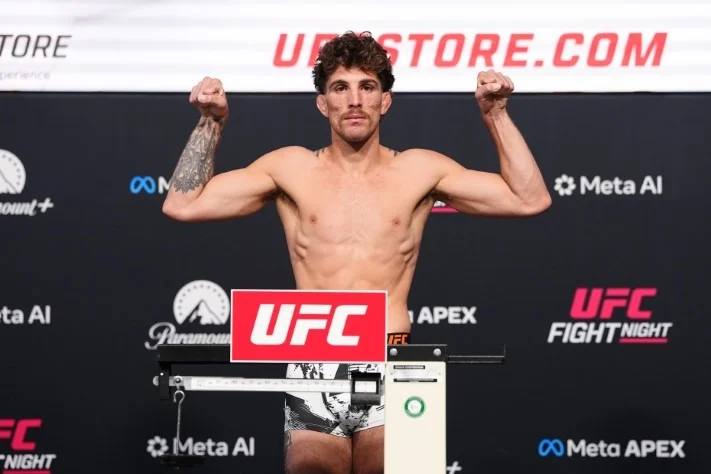



The World Boxing Association has officially expressed its profound regret following the cancellation of the scheduled WBA Featherweight World Championship bout between reigning champion Brandon Figueroa and challenger Tomoki Kameda, which was set to take place in Las Vegas. The high-stakes 126-pound title contest was called off after Figueroa failed to reach the mandatory featherweight weight limit during the official pre-fight weigh-in proceedings, subsequently experiencing severe medical complications that rendered him physically unable to compete. In strict accordance with the established regulations and championship rules of the WBA, Figueroa lost his world championship status as a direct consequence of his failure to meet the contractual and regulatory weight requirements for the division.
The unexpected breakdown of the championship main event in Las Vegas sent immediate ripples through the professional boxing community, emphasizing the stringent and uncompromising nature of weight limits in championship combat sports. The official weigh-in serves as the vital regulatory checkpoint prior to any sanctioned bout, ensuring that both athletes enter the ring on an equal physical footing defined by the strict boundaries of their respective weight divisions. For the featherweight class, that ceiling is set precisely at 126 pounds. When a defending champion fails to make weight, governing body rules dictate the immediate forfeiture of championship status, transforming what was meant to be a premier title defense into a complex administrative and procedural matter for the sanctioning organization, event organizers, and the athletes involved.
Following the failure at the scale and the subsequent medical complications experienced by Figueroa, the WBA extended its official well-wishes to the outgoing champion, placing immediate priority on fighter health and safety. WBA President Gilberto Jesús Mendoza publicly conveyed the organization’s sincere desire for Figueroa to achieve a full and complete recovery from the medical complications that impaired his weight-making process and ultimate ability to take part in the event. Weight reduction in elite world championship boxing frequently requires athletes to undergo extreme physiological conditioning and intense fluid management in the final hours leading up to the official scales. When an athlete’s physical system suffers acute complications during this taxing process, immediate intervention by medical personnel and athletic commission officials becomes essential to prevent severe and lasting damage to the athlete’s health.
While Figueroa focuses on his health recovery following the loss of his title, his scheduled opponent, Tomoki Kameda, was left navigating an extraordinary set of circumstances despite fulfilling every requirement demanded of a professional fighter. The WBA explicitly praised Kameda for his exemplary conduct throughout the entirety of the fight buildup. The Japanese contender had dedicated months of intense preparation to his training camp, meticulously managing his conditioning, diet, and physical output to ensure peak readiness for the world title opportunity. On the day of the official weigh-in, Kameda performed his duties with complete professionalism by stepping onto the scale at or under the required 126-pound featherweight limit, satisfying all obligations established by the sanctioning body and the local regulatory authorities.
The loss of a world championship opportunity after completing an exhausting months-long training camp and successfully making weight represents one of the most frustrating challenges a professional boxer can encounter. Beyond the strenuous physical demands of preparing for a 126-pound title fight, contenders invest significant emotional energy and substantial financial resources into their training camps. When a championship contest is abruptly cancelled at the scale due to an opponent’s weight failure and subsequent medical emergency, the compliant contender is deprived of the chance to earn the world title inside the ring. Acknowledging the absolute dedication demonstrated by Kameda and the difficult position he was placed in through no fault of his own, the WBA leadership announced that resolving his competitive status will be handled with the highest level of administrative priority.
To formally address the status of the featherweight championship and establish a clear path forward for all impacted parties, the WBA Championships Committee has scheduled an official meeting for Monday, October 19. According to the official statement issued by President Mendoza, reviewing Kameda’s situation and evaluating his rights relative to the WBA Featherweight World Championship will serve as the top item on the committee’s agenda. The governing body’s committee is tasked with reviewing the full context of the cancelled Las Vegas contest, determining Kameda’s standing regarding a future title opportunity or vacant championship bout, and ensuring that any administrative rulings align strictly with the sanctioning body’s bylaws and procedural precedents.
In conjunction with addressing Kameda’s immediate future, the WBA Championships Committee must also carefully weigh the rights and positions of other highly ranked contenders within the featherweight division ratings. The 126-pound weight class remains one of the most dynamic and competitive divisions in modern professional boxing, featuring a deep roster of top-tier contenders competing for position near the summit of the WBA rankings. When a world title becomes vacant through weight forfeiture, the sanctioning organization is required to balance the immediate claims of the scheduled challenger with the contractual and ranking rights of other top-rated contenders, ensuring that the process of crowning a new champion remains fair, orderly, and fully compliant with official ranking guidelines.
Beyond resolving the immediate title vacancy at featherweight, the events in Las Vegas have highlighted the ongoing efforts of governing bodies to enhance regulatory consistency across the sport. President Mendoza revealed that the WBA is actively working in close coordination with the Nevada State Athletic Commission (NSAC) as well as other state and international athletic commissions. The primary objective of this collaborative initiative is to harmonize weigh-in procedures, regulatory frameworks, and administrative protocols across different jurisdictions. By aligning these rules, the WBA and regulatory commissions aim to ensure that every professional boxer competes under completely clear, uniform, and predictable standards regardless of where a championship fight takes place.
The relationship between international sanctioning bodies like the WBA and state regulatory entities such as the Nevada State Athletic Commission is fundamental to the proper administration of world title fights. While sanctioning bodies establish championship belts, manage official contender rankings, and set global title rules, state athletic commissions maintain legal oversight over event licensing, official scale operations, referee and judge appointments, and ringside medical clearances within their specific territories. Discrepancies in procedural timing, weigh-in policies, or medical protocols between different jurisdictions can create confusion for athletes and promotional teams. Through direct collaboration with the NSAC and other leading regulatory agencies, the WBA seeks to eliminate procedural ambiguities and reinforce a standardized environment that prioritizes athlete welfare and transparent rule enforcement.
The physiological demands of making weight and the uncompromising enforcement of division limits remain among the most challenging operational aspects of professional combat sports. The featherweight division’s 126-pound limit requires exceptional physical discipline from elite athletes who routinely walk around at significantly heavier weights during off-camp periods. When an athlete pushes their body to the absolute limit during the final stage of weight reduction, extreme dehydration can lead to critical health risks, including severe cardiovascular strain and heat illness. Under such conditions, pulling a fighter from a scheduled championship bout—regardless of the high financial and promotional stakes involved—is a necessary health safeguard enforced by medical authorities and sanctioning rules to prevent life-threatening outcomes.
The formal position articulated by Gilberto Jesús Mendoza reflects the complex balance sanctioning bodies must maintain between regulatory discipline and human compassion. By applying WBA rules to strip the championship following a weight failure, the organization maintains the structural integrity of its weight divisions, sending a clear message that championship titles cannot be retained when regulatory weight requirements are missed. Simultaneously, by offering formal medical well-wishes to Brandon Figueroa, the WBA leadership acknowledges the severe physical strain and inherent unpredictability associated with elite athletic weight cuts.
As the international boxing community awaits the outcomes of the WBA Championships Committee meeting on Monday, October 19, attention remains focused on how the governing body will restructure the top of the 126-pound division. Tomoki Kameda stands as the central figure in these pending administrative decisions, having fulfilled every professional obligation required of a world title challenger. The forthcoming rulings by the committee will provide essential direction for Kameda, the division’s top-rated contenders, and fight promoters looking to schedule the next WBA Featherweight World Championship contest.
Ultimately, the cancellation of the Brandon Figueroa versus Tomoki Kameda world championship match in Las Vegas underscores the delicate intersection of athlete health, strict regulatory compliance, and administrative governance in world championship boxing. As the WBA moves forward with its October 19 committee session and continues its joint efforts with the Nevada State Athletic Commission and global sanctioning partners, the organization remains focused on upholding clear rules, protecting fighter safety, and restoring clarity to the WBA featherweight division.