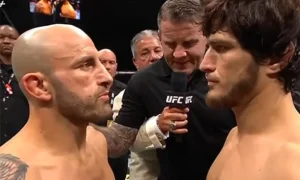

The turbulent intersection of big-money boxing promotions, shifting financial backing, and elite fighter leverage has claimed another casualty. Shakur Stevenson’s swift and surprising departure from Zuffa Boxing has left the combat sports community questioning the immediate future of Dana White’s promotional venture, while simultaneously dissecting the missteps of a pound-for-pound star.
When Stevenson initially put pen to paper with Zuffa, the signing was heralded by some as a potential paradigm shift. Yet, the partnership unraveled at a breathtaking pace. After being offered a matchup against Rayo Valenzuela—arguably the most viable name on Zuffa’s active roster—Stevenson ultimately turned down the fight and secured his release. The fallout has sparked a fierce debate among boxing analysts regarding who bears the heavier burden of blame for the collapse: a struggling promotional outfit trying to find its footing in a notoriously cutthroat sport, or a fighter whose leverage may not match his lofty ambitions.
Scott Christ
Why did Shakur Stevenson even sign with Zuffa in the first place? Was he promised fights the promotion simply couldn’t actually deliver? Was he told they would be signing a slate of marquee names, thereby setting up actual blockbuster bouts for him? Because when he signed, the best option sitting on Zuffa’s actual roster was Rayo Valenzuela. When that fight was finally put on the table, Stevenson turned it down and promptly negotiated his release.
In reality, there were precious few alternative fights the promotion could offer him. Richardson Hitchins? Perhaps, though while that may look like a better fight on paper, it is not necessarily a significantly bigger commercial draw, and Stevenson has consistently signaled that he does not want to campaign at a full 147 pounds. With Zuffa thus far steering clear of the "in-between" divisions, such as the 140-pound junior welterweight class where Stevenson last fought, one has to wonder what the overarching plan actually was.
The entire situation looks baffling from both sides, and it is hard to argue that either party emerges looking particularly good. The growing concerns regarding Zuffa’s long-term viability—though perhaps not inducing genuine panic—are glaringly obvious. If the operation is not backed by an absolute mountain of Saudi financial support, it simply isn’t going to go very far. Dana White has proven himself to be a remarkably successful promoter in the realm of mixed martial arts, but he is fundamentally not a boxing promoter. The events of the past month or so have made him look completely out of his depth in a sport that operates under an entirely different set of rules. Running a dominant MMA organization does not automatically translate to navigating the labyrinthine politics of boxing, and White does not appear particularly adept at fighting off the back foot when negotiations go south.
Still, it would be a mistake to let Stevenson escape scrutiny. Like White, he attempted to play a high-stakes hand under the assumption that he held significantly more leverage than he actually possessed, and now he finds himself back at the drawing board. Stevenson will undoubtedly find another meaningful fight out there—and a potential matchup against O’Shaquie Foster might suddenly look a lot more interesting to him now—but this stands as a remarkably messy chapter for the fighter just as it does for Zuffa.
Wil Esco
Let’s be entirely honest: it is remarkably difficult not to view this development as a far worse look for Zuffa Boxing than it is for Shakur Stevenson. When you weigh the grand promoter wars, the endless chest-pounding declarations between figures like Dana White and Eddie Hearn, and the loud proclamations of a new promotional powerhouse, only for the enterprise to stall out so dramatically in the second half of the year, the trajectory is alarming.
Now, add to that the loss of a pound-for-pound elite talent who stood as the best fighter on their roster—even if his style wasn’t always the most commercially explosive—coupled with widespread reports of Saudi financial backers scaling way back on their support. In a remarkably short span, Zuffa has gone from being billed as a seismic power player to what can, at best, be characterized as a fringe contender with no realistic prospects of ever truly breaking through the established promotional monopolies.
It has been a persistently rough several months for Zuffa, and the past few weeks have undeniably been the roughest of all. Genuine questions are now being raised regarding the future viability of the enterprise as a serious promotional force. By comparison, Stevenson’s future career prospects remain considerably brighter. As far as this analyst is concerned, it is not even a close debate.
John Hansen
It is practically impossible to think any less of Zuffa Boxing at this stage, which naturally leaves the bulk of the criticism falling on Shakur. At least Shakur has actually accomplished something significant inside a boxing ring, whereas we are still waiting for Zuffa to do anything of note beyond spending someone else’s money and executing an aggressively mediocre imitation of a major boxing promotional outfit over in the UK. And, of course, there is their ongoing endeavor to erode the few legal and political protections that fighters have managed to secure over the last several decades.
While nobody is making specific legal allegations or pointing direct fingers, what is the obvious presumption here? Was Zuffa simply not negotiating in good faith? Did they fail to offer Shakur the guaranteed dollar amount he felt his status commanded? Isn’t that narrative essentially the overarching story of UFC history writ small? Is anyone genuinely surprised? Perhaps the only real surprise is that Dana White allowed him to walk away so quickly and peacefully.
After all, Stevenson’s primary complaint during his tenure with Top Rank was that they either couldn’t secure the massive paydays he desired or couldn’t deliver the elite opponents needed to elevate his career, leaving him feeling stalled. Now, he has found himself equally unable to accomplish his goals under the Zuffa banner. Where does he turn next?
Does he go to Oscar De La Hoya, whose promotional style often resists making competitive matches unless fighters force his hand contractually or walk away entirely? Or does he look to Eddie Hearn, a promoter known for refusing to overpay for anyone, even the very fighters he discovered and developed from obscurity? What viable options remain when the entity with the most direct access to the Saudi checkbook ultimately fails to deliver what you expect?
Ultimately, Stevenson looks worse off and finds himself in a more precarious professional position. Zuffa as a promotional entity would have to completely collapse to come out of this looking worse than it already does.
Patrick Stumberg
This is honestly a much trickier question than it initially appears on the surface. Examined in a vacuum, the blame falls on Stevenson by a wide margin. Unverified reports and industry scuttlebutt suggest he was demanding exorbitant financial figures, turned down a career-high payday to face what should have been a straightforward assignment against "Rayo" Valenzuela, and attempted to force Devin Haney into a corner by demanding a strict catchweight alongside a burdensome rehydration clause.
When negotiations completely imploded and Stevenson requested his release, Zuffa granted it without a protracted legal battle. The superficial takeaway is that Stevenson signed with an organization that initially vowed never to work with rival promoters, yet actively negotiated with those very competitors on Stevenson’s behalf while striving to meet financial demands that vastly exceeded anything Stevenson had earned previously, ultimately permitting a gracious exit when the partnership proved untenable.
The underlying complication, however, is that this did not happen in a vacuum. Zuffa actively manufactured this environment when they reportedly tabled a staggering $15 million offer to Conor Benn—a domestic-level fighter who has never captured a major world title—to face the fading remains of Regis Prograis. By dangling such astronomical figures, the promotion set an unsustainable precedent, likely in an aggressive bid to lure top-tier talent through their doors, and now they are forced to reap the turbulent consequences.
Thus, the broader debate over whether Stevenson is acting like a diva for demanding the kind of money that Zuffa had already proven willing to lavish on a far lesser name becomes a bit of a wash. Unfortunately for Stevenson, that leaves his botched negotiations with Devin Haney as the definitive tiebreaker. Calling out a recognized welterweight champion while simultaneously refusing to compete on equal terms at an unrestricted welterweight limit is widely viewed as a questionable tactical move, leaving him on the losing side of public perception as he surveys his next promotional home.