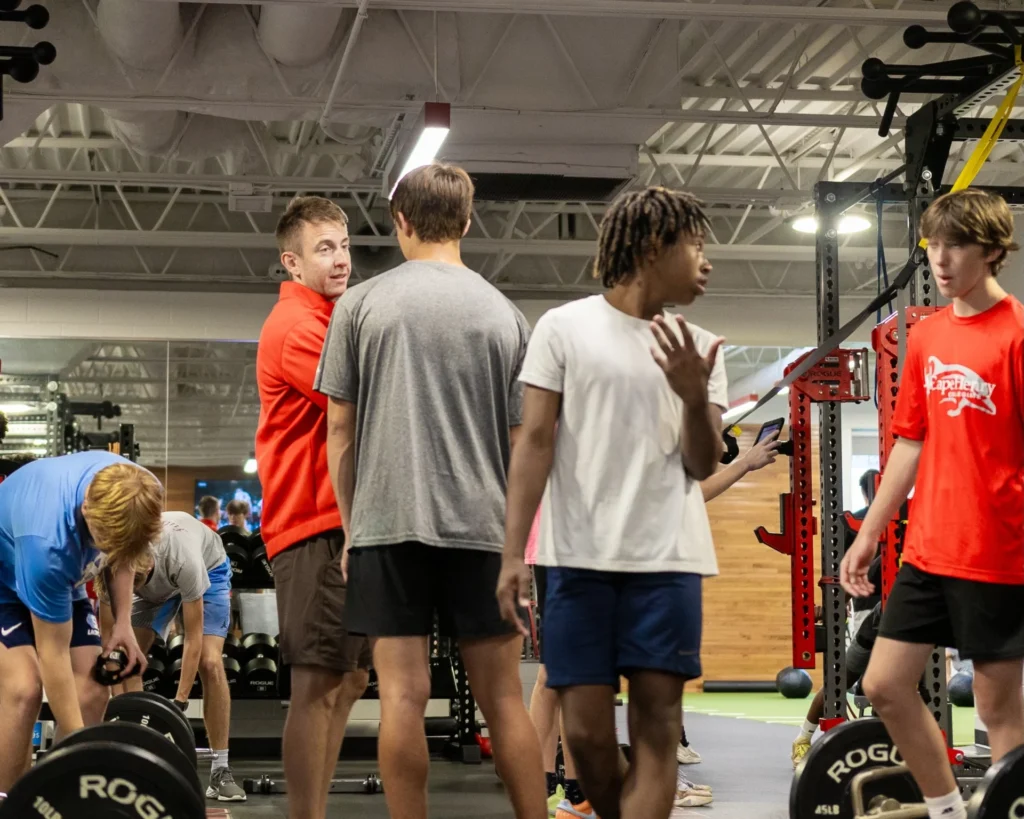

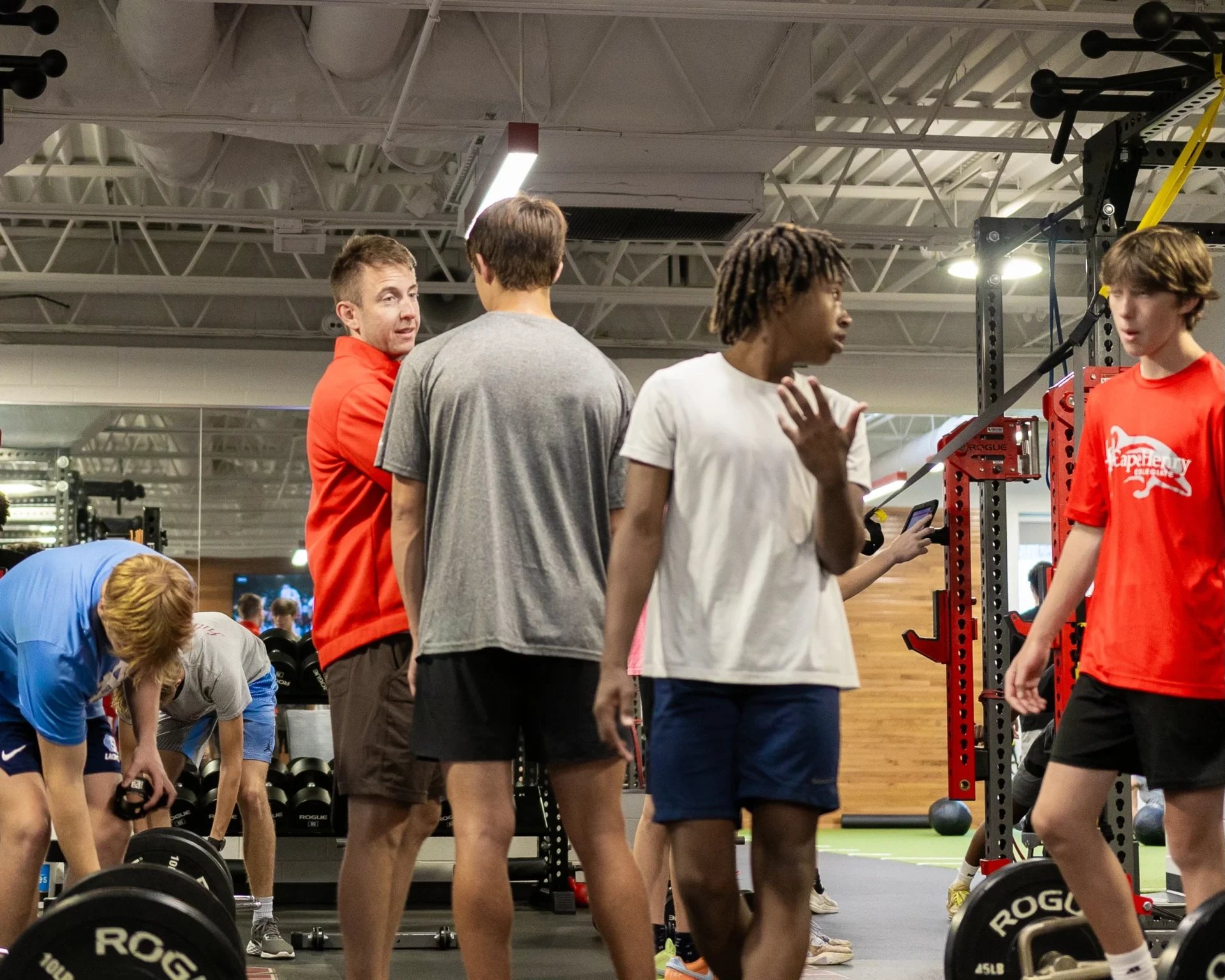
Throughout a diverse coaching career spanning the NCAA Division I level, the NBA, international high-performance sports, and youth development, one fundamental truth has consistently emerged. The athletes who experience the most successful long-term development are almost invariably those who adhere to simple systems, maintain unwavering consistency, and demonstrate a high degree of engagement.
Yet, youth athletes today frequently experience the exact opposite environment. A single young athlete typically plays for a school coach, a club coach, and across multiple sports at various competitive levels—sometimes managing all of these commitments simultaneously. These coaches rarely communicate with one another or even acknowledge each other’s existence, and foundational athletic shortcomings only amplify the complexity of the modern sports ecosystem. Both athletic trainers and performance coaches often chase fatigue with offerings marketed as “speed and agility,” leading young athletes to chase muscle soreness, pay for arbitrary training sessions from unvetted providers, and follow fleeting social media trends.
This fragmented environment requires a solution-oriented approach from coaches committed to building systems that genuinely serve long-term athletic development. Over years of practical application, a streamlined philosophy has emerged: full-body training distributed evenly across the weekly schedule, utilizing varied daily emphases, maximum effort programs, and repeated effort sets. Alongside these traditional pillars, velocity-based training (VBT) has established itself as an invaluable asset for modern practitioners.
For experienced coaches, VBT is less about obsessing over raw numbers and more about cultivating absolute intent. It provides athletes with immediate feedback, teaching them to execute movements with purpose. Because young athletes constantly adapt to rapid changes in growth, coordination, and body awareness, training the nervous system is just as vital as building raw muscular strength. Rather than forcing athletes into rigid, pre-determined percentages, VBT allows coaches to adapt dynamically to daily readiness, control fatigue, and keep the training process engaging.

Why Full-Body Training Works Best for Young Athletes
One of the most persistent missteps in youth athletic development is the attempt by athletes, trainers, and families to maintain unrealistic training schedules. Young competitors must navigate year-round practices, games, travel commitments, academic stress, inconsistent sleep habits, and unbalanced nutrition. Furthermore, medical appointments, orthodontic adjustments, family vacations, and basic daily routines continually disrupt schedules. Coaches frequently witness athletes missing training sessions due to these unavoidable life variables.
Faced with these competing demands, the classic coaching maxim remains profoundly relevant: the best training program is the one an athlete can actually follow. Demanding that adolescent athletes maintain a four-day upper-lower split significantly increases the likelihood that they will miss one or two sessions per month. This reduces overall training volume and stunts long-term progression. The issue intensifies when prescribing a traditional bodybuilding split dedicating specific days to isolated body parts. Missing a scheduled chest day means an athlete goes an entire week without stimulating those muscle groups.
These traditional structures lack the flexibility required by the chaotic schedules inherent in youth sports. By implementing a full-body training frequency three times per week, every movement pattern and muscle group is addressed during every single session. Missing an isolated workout does not completely derail cumulative training volume. A three-day structure provides maximum flexibility regarding which specific days the athlete trains, requiring them to complete three sessions across a seven-day window—a manageable feat even within a turbulent youth sports calendar.
The most potent and frequently underestimated characteristic of full-body training is its superior motor learning effect. This frequency ensures repeated exposure to fundamental movement patterns. Strength training is a physical skill, fundamentally no different from mastering a jump shot or a golf swing. Athletes refine these movement patterns through frequent, deliberate practice. The more often young athletes correctly execute squats, hip hinges, pushes, pulls, sprints, jumps, and core stabilizations, the more technically efficient they become.

This motor learning benefit is particularly pronounced during the window immediately preceding and surrounding Peak Height Velocity (PHV). During this rapid maturation phase, an adolescent’s limbs elongate swiftly, often out-pacing neurological adaptation. These abrupt and unpredictable changes in body proportions make self-organization difficult, creating a developmental stage frequently described as adolescent awkwardness. Most modern research suggests that athletes navigating this phase benefit significantly from a relatively high training volume utilizing submaximal loads. Every repetition helps reinforce the neurological pathways connecting the brain to the body, assisting the adolescent in organizing physical movements within a controlled environment.
Through frequent exposure to multi-joint movements, full-body training delivers steady repetition of essential mechanics. While coaches often cite enhanced recovery as a primary benefit of full-body setups, the realities of youth athletes require careful contextualization. Many young competitors utilize their supposed rest periods to participate in additional sports practices, complete academic assignments, work part-time jobs, or engage in other extracurricular activities. True physical recovery is often limited.
Consequently, effective recovery strategies must rely on consistent, age-appropriate nutritional education, the gradual development of sound lifestyle habits, proper periodization, loaded multi-joint movements performed through full ranges of motion, and intelligent exercise selection. This is where velocity-based training becomes exceptionally useful. Ultimately, youth athletic development is less about driving maximum fatigue and more about steadily building coordination, intent, power output, and movement competence over time.
The 8/5/3 Method for Youth Strength Development
Applying sets and repetitions to a full-body framework requires distinct operational categories: maximum effort, repeated effort, and dynamic effort. For maximum effort protocols, a specialized framework known as the 8/5/3 method combines and adapts several established training influences.

The primary strength of the 8/5/3 system lies in its simplicity. It provides enough variation to sustain continuous athletic progress without introducing unnecessary complexity, successfully balancing hypertrophy, absolute strength, and explosive power within a structured progression model. The framework draws inspiration from years of elite coaching experience, incorporating concepts from established programming models, multi-week training blocks, and practical insights gathered from managing large groups of athletes possessing diverse maturity levels and training ages.
When training mixed groups of adolescent athletes ranging from 12 to 18 years of age simultaneously, a scalable, self-regulating program that accounts for growth and maturation is essential. Initial applications of traditional percentage-based models often reveal that the prescribed repetition windows do not provide enough time for younger athletes to adapt and progress. Frequently, the first week is spent simply learning the mechanics, the second week features the athlete’s initial genuine execution, and only by the third week can they truly begin pushing their limits. Expanding these blocks into systematic mini-cycles provides athletes with the necessary runway to grow.
Integrating adapted autoregulation methods demonstrates that athletes achieve significant developmental strides when exposed to moderate-to-high repetition ranges. Maintaining moderate-to-high repetition counts throughout the majority of the training year yields optimal benefits for developing athletes. The 8/5/3 approach operationalizes this by cycling through three distinct phases: three weeks emphasizing sets of eight repetitions, three weeks utilizing sets of five, and three weeks focusing on sets of three.
A major advantage of this methodology is that it does not require a predicted one-repetition maximum (1RM) to initiate a productive training session, nor does it matter when an athlete enters the program. While starting with the eight-repetition phase is ideal, the inclusion of an as-many-repetition-as-possible (AMAP) set allows any athlete to integrate into the training flow at any point. A novice participant with zero prior experience might begin their first session working with an unloaded aluminum technique bar. Weight is slowly added across warm-up sets until the athlete reaches a challenging load that limits them to roughly 10 repetitions on the final AMAP set.

By the following week, a projected 1RM can be established, allowing loads for subsequent working sets to be prescribed accurately based on recorded performance rather than guesswork. The athlete then targets an AMAP set using the assigned weight, gradually refining their estimated 1RM over time. This framework primarily governs primary maximum effort lifts such as bench presses, squats, and deadlifts, while also extending to complementary movements like chin-ups, split squats, push-ups, and overhead presses.
Understanding Velocity-Based Training
Within this performance framework, velocity-based training and dynamic effort work in tandem. This category of exercise is defined by the intentional acceleration of submaximal loads at maximum concentric velocity. Physics dictates that force equals mass multiplied by acceleration. Traditional training often fixates entirely on the mass variable while neglecting the critical role acceleration plays in human performance. Moving submaximal loads with maximal speed assists with load selection, fatigue management, readiness assessment, and the refinement of neuromuscular control.
A primary advantage of VBT is the immediate objective feedback it provides to the athlete. Many young competitors struggle with what strength literature defines as autogenic or neurological inhibition—a protective physiological mechanism associated with structures like the Golgi tendon organs that dampens muscular force output before an athlete reaches true physical failure. Essentially, the brain applies the brakes before the muscle requires it.
Velocity feedback helps athletes overcome this hesitation. By displaying how quickly the bar moves on every single repetition, VBT encourages athletes to push past internal psychological barriers. This trains both the muscular system and the nervous system concurrently, building a stronger connection between intent and physical execution. Furthermore, VBT helps coaches tailor daily training loads to actual performance readiness rather than assuming an athlete possesses identical energetic capacity every day. Real-time velocity feedback reduces natural intra-set velocity drop-off and elevates competitive drive.

Integrating VBT into the 8/5/3 Framework
Incorporating velocity-based training alongside dynamic effort movements ensures these elements mutually reinforce maximum effort protocols. Instead of merely increasing absolute intensity across a training block, volume is managed progressively while specific velocity targets are monitored. Load selection is dictated by movement velocity rather than arbitrary percentages. Athletes typically begin with a load matching previous successful parameters, adjusting weight slightly up or down based on the initial repetition’s velocity reading until it falls squarely within the designated target zone.
If an athlete’s bar speed falls below the target zone—indicating movement that is too slow due to fatigue or stress—the load is reduced by a small increment. Conversely, if movement velocity exceeds the target zone without signs of fatigue, weight is added. This integrated self-regulation ensures that the weight on the bar responds directly to the athlete’s physiological readiness on that specific day.
These velocity zones serve as reliable operational baselines rather than rigid universal constants. They apply most effectively to compound, multi-joint movements utilizing moderate loads, such as trap bar jumps, squat variations, bench press throws, or push press throws. For less stable or unilateral movements, monitoring general performance trends across an entire training cycle takes precedence over pursuing a single exact velocity metric.
Over the course of a multi-week training cycle, athletes traverse a broad spectrum of the force-velocity curve, developing strength-speed, speed-strength, and high-velocity qualities sequentially rather than attempting to train every attribute simultaneously year-round. This velocity progression also enables post-activation potentiation strategies, pairing maximum effort work with explosive dynamic efforts to prepare athletes for peak competitive output.

Practical Implementation and Tracking
Effective implementation of self-regulation requires reliable data collection. Tracking progress enables coaches to make real-time adjustments and secure verifiable performance improvements. Linear position transducers provide objective, real-time velocity feedback during training sessions. Beyond simply instructing an athlete to move faster—a difficult concept for young competitors accustomed strictly to chasing heavier loads—attaching a tracking device immediately focuses attention and drives neural adaptation.
Coaches track straightforward metrics from week to week: absolute load, completed repetitions, mean concentric velocity for maximum effort working sets, and target velocity ranges for VBT sets. Evaluating these data points prior to designing the subsequent week’s training allows for proactive adjustments. If an athlete’s movement velocity at a given load demonstrates a consistent upward trend across multiple sessions, the load can be adjusted upward ahead of schedule. Conversely, declining bar speed signals the need to reduce volume or intensity before excessive fatigue accumulates.
Platforms like TeamBuildr complement this data collection by organizing training schedules, archiving historical performance data, and facilitating communication between coaches and athletes. For larger groups and team settings, such digital infrastructure ensures program scalability and consistency without sacrificing individualized autoregulation. By recording both external loads and internal velocity markers, coaches can accurately monitor every component of physical performance over time.
Ultimately, athletic development requires a steadfast return to core principles. Youth athletes do not require overly complicated systems, premature specialization, or short-term performance schemes. They thrive in structured environments where movement quality, coordination, absolute strength, and consistency remain the primary focus over extended periods. Meeting young athletes precisely where they are physically, emotionally, and developmentally creates more resilient, capable competitors prepared for long-term athletic success.