


Published: October 12, 2026
At the dawn of every track and field season, coaches face a familiar dichotomy of emotions. On one hand, there is the palpable excitement of launching a fresh campaign and setting new competitive goals; on the other, the daunting weight of starting from scratch. For a track coach managing a roster of up to 40 athletes—each bringing a unique profile of strengths, weaknesses, and disparate skill levels—laying down foundational training blocks can quickly become an overwhelming logistical challenge.
In the high-stakes environment of competitive track and field, drills often suffer from an undeserved reputation as mere time-fillers. Yet, seasoned coaches know they are indispensable tools for molding raw potential into refined performance. Managing a diverse group spanning everything from short sprints and middle-distance relays to horizontal jumps and both short and long hurdles requires immense creativity. Pushing athletes too hard courts disaster through injury and overtraining, while under-preparing them leaves them exposed on race day. Finding that delicate equilibrium demands precise communication, careful microcycle planning, and, above all, smart foundational integration.
Fortunately, modern coaching structures are evolving to share this heavy workload. Collaborating closely with specialized field event coaches helps distribute the physical and cognitive load, allowing programs to align technical jumping and hurdling sessions with broader daily training themes. Even so, the sheer variety of athletic competence across a large team means that coaches must frequently weave general drills directly into warm-up routines. These foundational movements serve a dual purpose: they teach the core mechanics of jumping and hurdling while simultaneously acting as an early-season talent identification filter. Because these exercises are straightforward enough for athletes to learn quickly, they also foster peer-to-peer leadership when coaching bandwidth is stretched thin.
The Core Philosophy: Speed Rules All Disciplines
The foundational truth governing technical events is remarkably simple: hurdlers and jumpers are, first and foremost, sprinters. As experienced sprint and hurdle coach Graham Eaton routinely emphasizes, speed serves as the absolute best indicator of future success across virtually every discipline in track and field. If an athlete lacks raw speed, they cannot hope to become an elite hurdler or a dominant horizontal jumper.
Consequently, hurdlers within structured sprint programs typically complete half or the majority of standard sprint training before breaking away early to execute independent mechanics. They round out their sessions with dedicated hurdle starts or modified repetitions utilizing reduced heights and shortened spacings. Identifying true hurdle talent early is critical, especially when working with developmental athletes who lack the raw speed or stature necessary to execute a clean three-step clearance technique. Historical tracking shows that elite male hurdlers nearly universally cross the 100-meter dash barrier in under 12 seconds, underscoring the undeniable primacy of flat-out velocity.
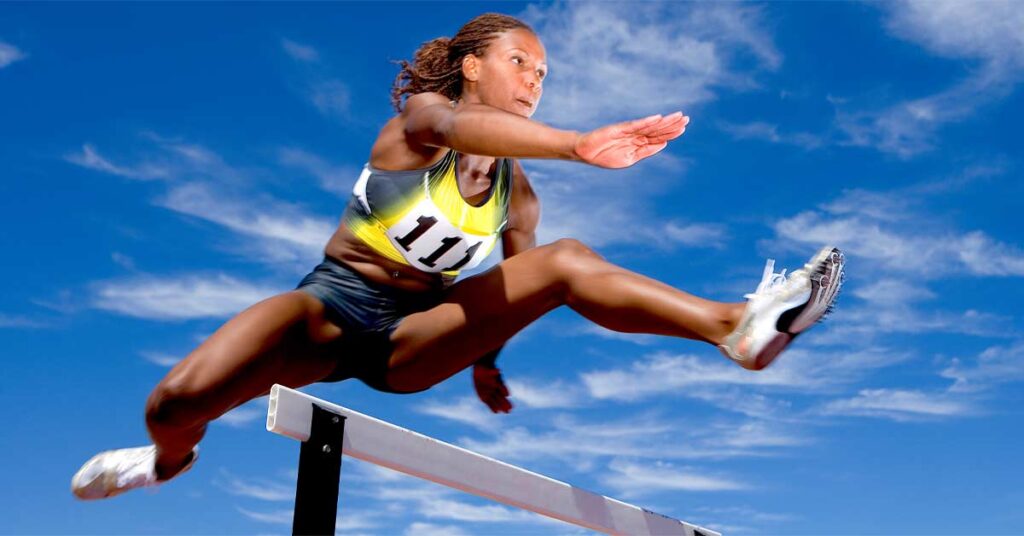
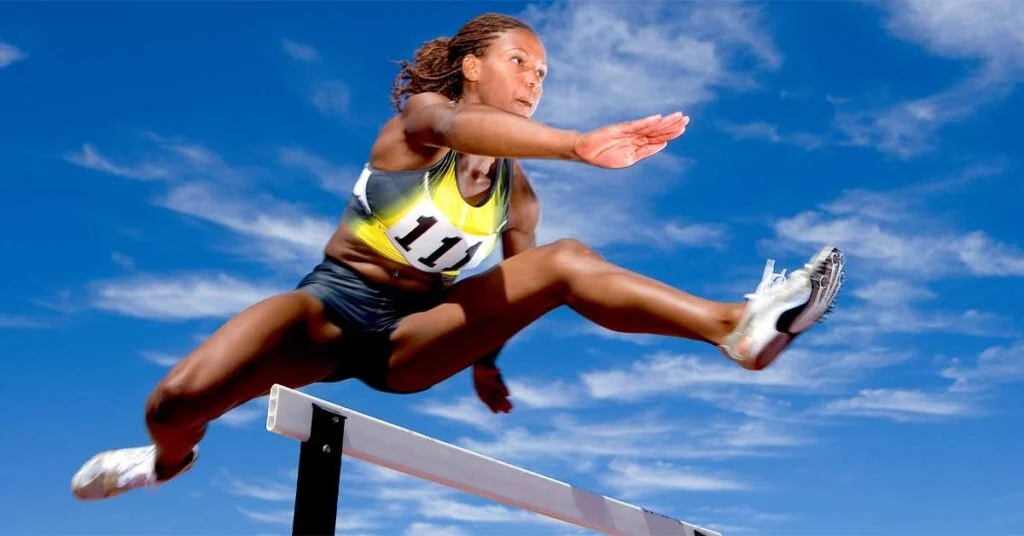
Traditional barrier drills focusing exclusively on stationary lead legs often fall short because they encourage overly relaxed movements that fail to translate into dynamic, high-speed execution. While trailing leg drills retain significant value for teaching athletes how to maintain proper toe dorsiflexion and feel the trailing limb sweep cleanly beneath the armpit, stationary lead-leg repetitions can quickly degrade into sloppy habits the moment a coach’s attention is diverted elsewhere. Many conventional hurdle exercises fail to provide athletes with immediate, dynamic feedback or opportunities for self-organization. To bridge this gap, innovative coaches have turned toward more fluid, movement-based preparations like the "rain dance" drill.
Introducing the "Rain Dance" for Developing Hurdlers
The "rain dance" exercise has emerged as an invaluable starting point for teaching proper lead-leg technique and upper-body positioning without the rigid limitations of static stationary work. While it does not single-handedly teach optimal takeoff distances or trailing-leg mechanics, it excels at training athletes to maintain dynamic balance and aggressively attack the barrier. Because takeoff errors frequently cascade into severe technical breakdowns further along the hurdle clearance or landing phase, mastering the initiation of the movement is paramount.
By integrating the rain dance into regular warm-ups alongside acceleration work, coaches can instill greater confidence as athletes approach the first hurdle. Better still, the drill can be executed seamlessly with large groups simultaneously. This scalability allows coaching staffs to spot natural rhythm, coordination, and foot-strike quickness early in the season—an invaluable asset for smaller scholastic programs trying to build competitive rosters efficiently.
Galloping and the "Field Frolicker" for Horizontal Jumpers
Just as speed underpins successful hurdling, basic physics dictates that velocity is equally critical in the long jump. Yet, despite speed being a major asset, many fast young athletes struggle to translate their flat-track speed into horizontal jumping success. Common pitfalls include decelerating into the board, casting the arms outward, hesitating at the takeoff, or striking the board heel-first. Without an efficient, aggressive takeoff, converting horizontal momentum into vertical lift becomes mathematically impossible. As the coaching axiom dictates, a bold foul is vastly superior to a thousand fearful hesitations.
To combat these tendencies, the galloping drill—often utilized as a dynamic simulation of the long jump’s penultimate step—serves as an exceptional neuromuscular development tool. It allows athletes to execute multiple correct long jump takeoffs consecutively without the cognitive burden of hitting a precise takeoff board. Throwing a novice jumper down a full runway without teaching these foundational mechanics practically guarantees frustration and stagnation.
The galloping drill develops the specific neuromuscular qualities required for a sound takeoff, bridging the gap between raw sprinting and explosive jumping. Coaches can integrate this movement flexibly into speed days as a dynamic warm-up preceding 10-meter fly runs, or embed it directly into acceleration progressions. By utilizing variations ranging from low, controlled gallops to higher, more expansive bounds and finally sprint-transitions, athletes learn to manage high-velocity takeoffs without significant speed loss. This constant reinforcement of rhythm, timing, and posture not only benefits aspiring long jumpers but also introduces general sprinters to elastic, plyometric movement patterns that enhance overall athletic development.
Unlocking the Triple Jump Through Standing Variations
The triple jump is a discipline that demands extraordinary patience. Much like hurdling and long jumping, rushing inexperienced athletes directly into full-approach repetitions risks anchoring deeply ingrained technical flaws that prove difficult to correct later. Standing triple jumps offer a controlled, low-intensity pedagogical solution, allowing athletes to master the individual phases of the jump safely and methodically.
Beginning from a stationary, feet-together stance on turf or grass, athletes utilize an aggressive double-arm swing and a low, powerful push from both feet to propel themselves onto a dominant takeoff leg. They must drive the opposite thigh parallel to the ground before landing balanced on both feet with an upright torso. Initially, distance is entirely secondary to posture and clean mechanics. Simple verbal cues like "left-right-together" help athletes internalize the sequence until the rhythm becomes second nature.
As proficiency grows, coaches can challenge athletes to project further while maintaining stable, regular phase intervals. This teaches the body how to self-organize and absorb force efficiently during the initial double-foot takeoff, preparing the foundational mechanics needed for the complex rebound phases of a full-approach triple jump. Whether applied to raw beginners or seasoned competitors fine-tuning specific technical nuances, standing triple jumps deliver high reward with minimal joint trauma.
Bringing It All Together in the Annual Plan
Synthesizing general foundational drills with event-specific training requires a clear, overarching vision. In well-resourced programs blessed with dedicated coaching staffs for distance, sprints, jumps, and throws, structuring progressive training blocks is streamlined. However, even coaches working in resource-constrained environments where a single individual must oversee every discipline can successfully bridge the gap between general athleticism and specialized event mastery.
The foundational weeks of general preparation represent a crucial window in the annual calendar. Establishing simple, robust movement habits early directly dictates an athlete’s trajectory for the rest of the competitive season. Whether it is mastering the critical distance between the starting blocks and the first hurdle, refining takeoff mechanics on the runway, or learning to control phase heights in the triple jump without excessive skeletal impact, thoughtful drill selection transforms general athletic capacity into specialized technical excellence. When coaches view drills not as mindless fillers but as precise pedagogical instruments, they unlock the true potential hidden within every multi-talented sprinter on the track.