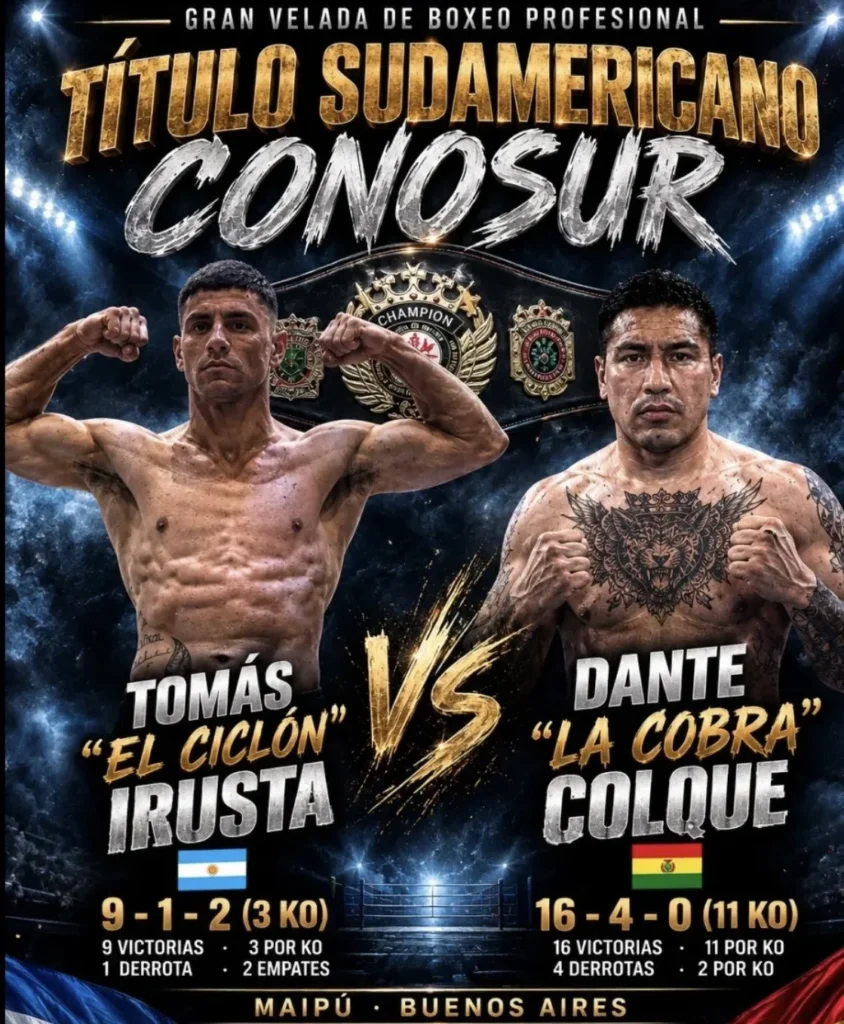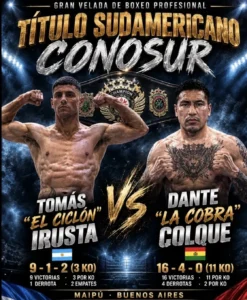

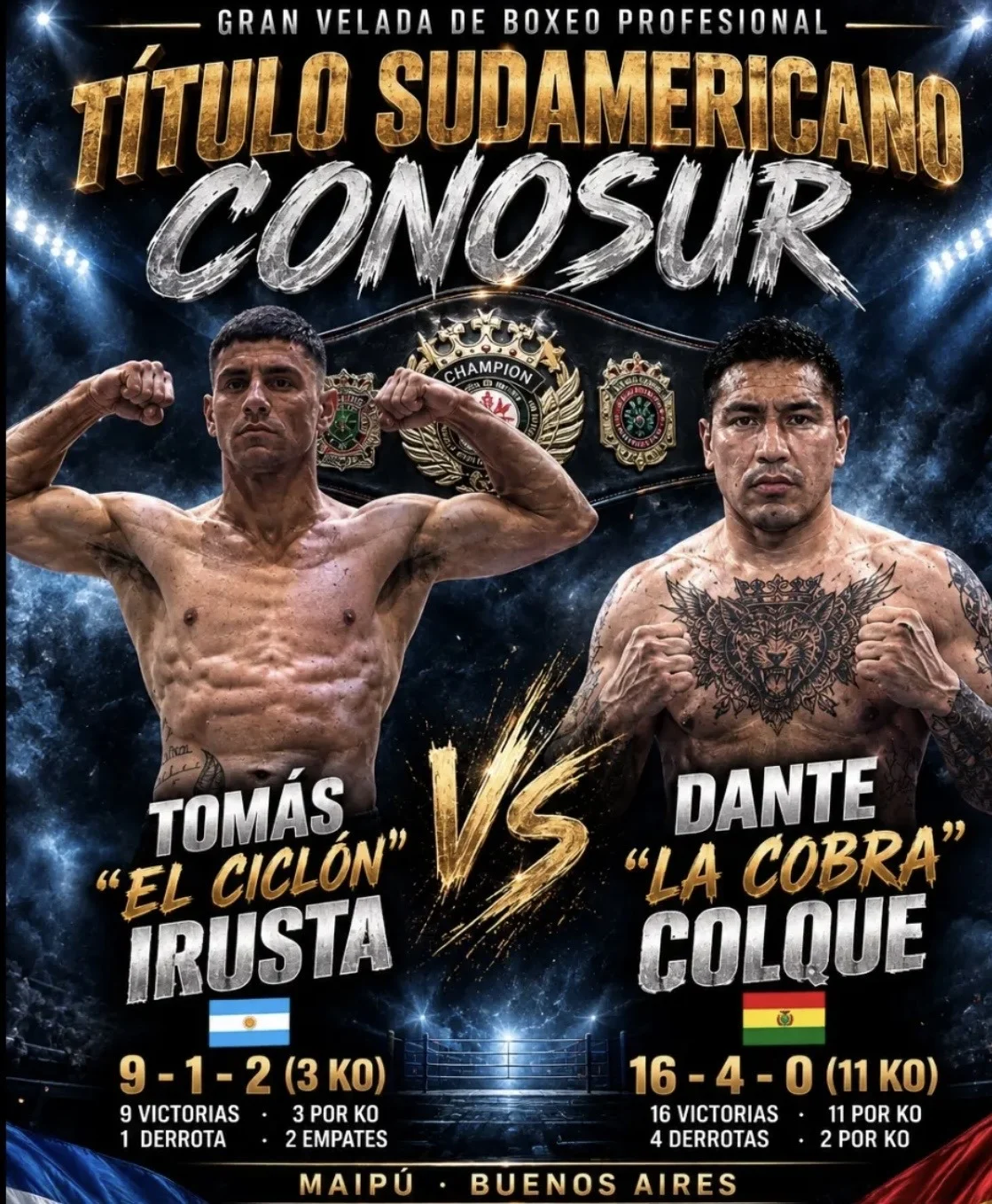
The super lightweight division is set to take center stage this Friday, October 16, as Club Jorge Newbery plays host to a compelling regional championship contest. In a matchup that features a distinct contrast of boxing styles and tactical philosophies, Tomás Fermín Irusta and Dante Colque will square off for the vacant World Boxing Association (WBA) Fedelatin Southern Cone super lightweight title. Competing at the standard 140-pound limit, both fighters enter the ring with significant incentive, seeking to claim regional silverware and carve out a firmer standing within one of professional boxing’s most historic sanctioning bodies.
The upcoming contest highlights the ongoing importance of regional title bouts in the modern combat sports landscape. As the pioneering sanctioning body in professional boxing, the WBA utilizes its regional apparatus—including the Fedelatin Southern Cone crown—to provide rising contenders with a platform to demonstrate their capabilities, secure recognized accolades, and advance their positions on the broader international stage. For both Irusta and Colque, the vacant 140-pound championship represents far more than a belt; it is a vital opportunity to establish authority within the division and capture the attention of sanctioning officials and fight fans alike.
From a tactical perspective, the showdown at Club Jorge Newbery presents a classic stylistic confrontation between a poised, technically minded boxer and a relentless, high-pressure inside fighter. The manner in which each participant enforces his strategic agenda will inevitably dictate the tempo, trajectory, and ultimate outcome of the championship bout.
Tomás Fermín Irusta approaches this Friday’s contest with a clear focus on tactical discipline, technical precision, and ring generalship. Widely recognized for his composed demeanor inside the squared circle, Irusta relies on a solid foundation of defensive fundamentals that allow him to remain calm under pressure and evaluate openings as they develop. Rather than engaging in unnecessary firefights or overextending his offense, Irusta prefers to establish control from the center of the ring, operating as the commander of pace and distance.
At the core of Irusta’s strategic framework is his lead jab. By establishing a consistent and authoritative jab from the opening bell, Irusta aims to dictate the range of the contest, measure the distance between himself and his opponent, and disrupt any offensive momentum Colque attempts to build. A sharp, well-timed jab serves multiple purposes for a technical fighter of Irusta’s mold: it acts as a primary scoring tool, keeps aggressive opponents at bay, and lays the groundwork for more complex offensive combinations.
To complement his jab and maintain control over the geography of the canvas, Irusta relies heavily on fluid lateral movement and intelligent footwork. Rather than moving in straight lines, which would allow a forward-marching opponent to close the distance easily, Irusta utilizes lateral pivots and side steps to circle away from danger. This movement is designed to constantly reset the alignment of the fight, forcing his opponent to adjust his stance and turn his body before launching punches. By continually shifting his position, Irusta aims to neutralize incoming advances, avoid getting trapped along the ring perimeter, and preserve the spatial cushion required to execute his long-range offense.
When openings present themselves in his opponent’s defense, Irusta’s preferred offensive method centers on crisp, straight-punch combinations delivered through the middle of the guard. Rather than relying on wide looping shots that leave him vulnerable to counterattacks, Irusta prioritizes straight shots—such as the classic one-two combination—that travel along the shortest path to the target. By identifying lapses in his opponent’s defensive posture, Irusta can pierce the guard with accuracy and efficiency, accumulating points and landing impactful blows while maintaining his own defensive balance.
Standing directly in opposition to Irusta’s structured approach is Dante Colque, an aggressive competitor whose ring identity is forged in physical warfare, relentless momentum, and high-volume inside fighting. Colque brings a combative temperament to the ring, demonstrating a clear preference for hard, grinding encounters where physical durability and psychological resolve are tested to their limits.
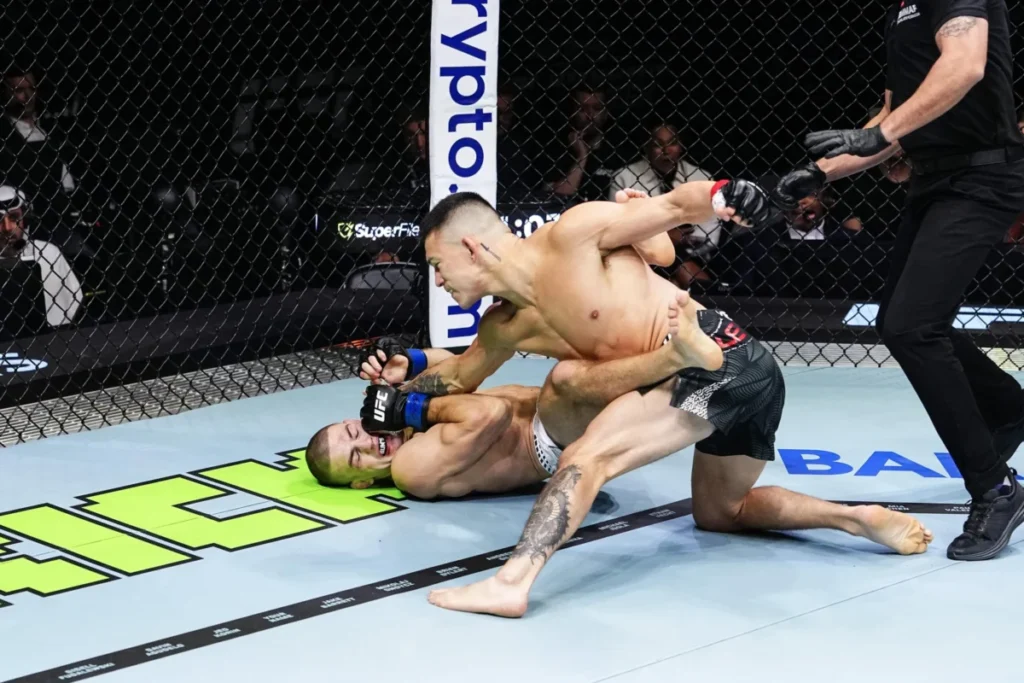
Unlike opponents who favor long-range boxing battles or delicate tactical chess matches, Colque shows little interest in staying on the outside or engaging in a jab-heavy duel from distance. Instead, his primary objective from the outset of any contest is to systematically close the distance, eliminate open space, and force his rival into tight, uncomfortable exchanges. To achieve this, Colque relies on the art of cutting off the ring, using aggressive footwork to block lateral escape routes and steadily push his opponent toward the ropes or corners.
Once inside close quarters, Colque’s offensive arsenal becomes particularly dangerous. Operating in the pocket, he prioritizes heavy, compact hooks directed at the midsection. Body punching is a cornerstone of Colque’s physical approach, serving to wear down mobile opponents, sap their stamina over the course of the rounds, and force them to lower their guard to protect their ribs and solar plexus. By investing heavily in work to the body, Colque aims to diminish the fluid footwork and sharp reflexes of technically inclined fighters, effectively grounding them as the fight progresses.
Furthermore, Colque’s relentless forward aggression is designed to induce chaos and disrupt the composure of fighters who rely on structure and rhythm. By forcing continuous exchanges at close range, Colque seeks to break down his opponent’s technical form, turning the bout into a test of physical endurance and durability along the ropes. His ability to impose his physical presence and thrive in close-quarters combat makes him a formidable adversary for anyone attempting to maintain a clean, distance-based strategy.
The narrative of Friday’s championship bout ultimately hinges on which fighter can successfully dictate the terms of engagement at Club Jorge Newbery. The contrast between Irusta’s controlled, perimeter-oriented boxing and Colque’s intense, inside pressure creates a dynamic set of variables that will unfold over the course of the scheduled super lightweight contest.
If Irusta is able to execute his game plan effectively, the fight is likely to tilt in his favor. Success for Irusta requires unwavering tactical discipline and constant spatial awareness. He must avoid the temptation to linger on the ropes or engage in static exchanges, using his lateral movement to continuously escape Colque’s pressure and reset in the center of the ring. If Irusta can consistently keep Colque at the end of his jab, land clean straight combinations through the guard, and navigate the canvas without being cornered, he can control the scoring, minimize physical punishment, and build a commanding lead on the scorecards.
Conversely, if Colque succeeds in breaking through Irusta’s jab and smothering his distance, the outcome of the contest becomes vastly more unpredictable and electrifying. Should Colque manage to cut off the ring and pin Irusta along the ropes or in the corners, the contest will transform into a grueling, toe-to-toe battle. In that environment, traditional technical fundamentals can become secondary to physical strength, body attack efficiency, and short-range punching power. An inside slugfest along the ropes would favor Colque’s aggressive style, forcing Irusta into a fight for survival where every exchange carries high risk.
As Friday, October 16 approaches, the anticipation surrounding the event at Club Jorge Newbery continues to grow. With the vacant WBA Fedelatin Southern Cone super lightweight title hanging in the balance, both Tomás Fermín Irusta and Dante Colque stand on the precipice of a pivotal career moment. The 140-pound division will watch closely as these two distinct combatants enter the ring, each determined to impose his willpower, validate his fighting style, and leave the venue as the newly crowned champion.