

Professional bodybuilding has transformed into a high-stakes, dangerous sport where young athletes are increasingly willing to sacrifice their long-term health—and potentially their lives—for the chance to become the next champion. While the pursuit of physical perfection has always demanded immense discipline, the modern era has introduced unprecedented pharmacological extremes that are trickling down to unprecedentedly young demographics.
The underlying reality of the sport remains sobering: cardiac arrest continues to be the leading killer in competitive bodybuilding. Professional competitors face more than five times the risk of sudden cardiac death compared to amateur athletes. Yet, what is most alarming to medical professionals and industry veterans alike is how young competitors are beginning this dangerous trajectory. Some teenagers are starting as early as 16 or 17, diving headfirst into intensive regimens of steroid injections and extreme dieting in pursuit of physiques that may ultimately cost them decades of their lives. This is the dark side of modern competitive bodybuilding that rarely receives open discussion.
When Dreams Begin: The Teen Bodybuilder Pipeline
Logan Dushman started his journey into the sport much like many other young men, watching his father train and admiring impressive physiques showcased across social media platforms. What began as innocent athletic inspiration, however, quickly escalated into something far more extreme.
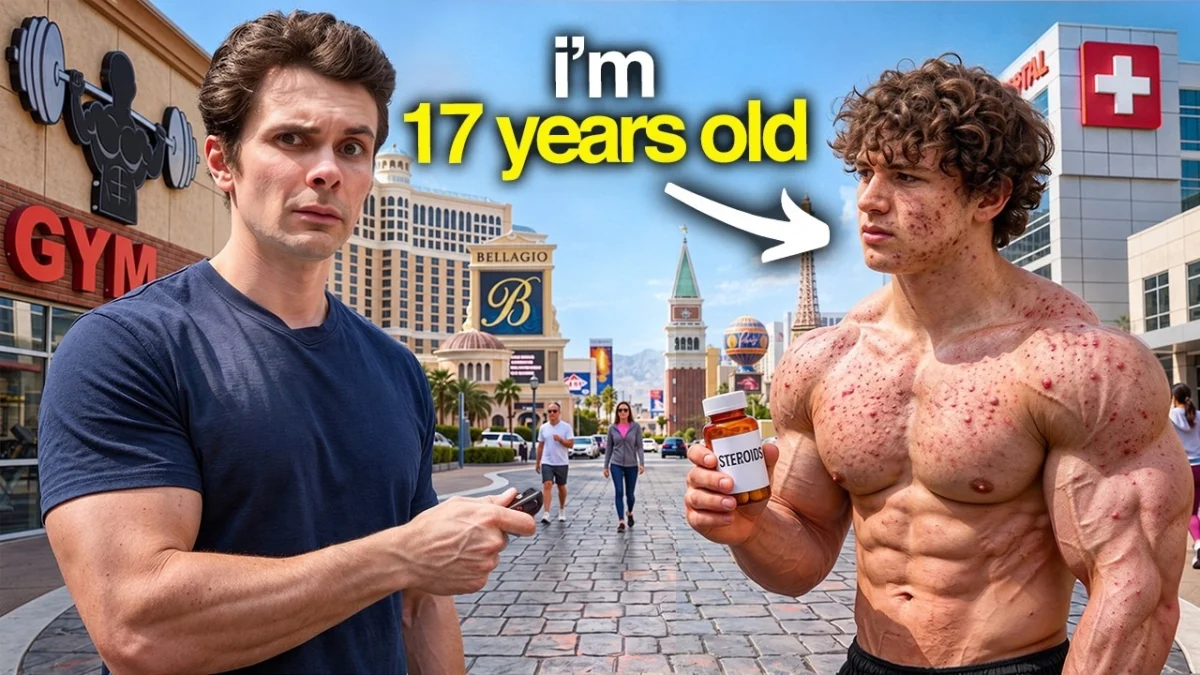
Reflecting on his early mindset, Dushman noted that once he identified the pinnacle of the sport, he made a firm commitment to himself at just 11 or 12 years old to do whatever it took to get there. By the time he was 17 and a half years old, Dushman was already utilizing performance-enhancing drugs. Weighing approximately 260 pounds, he serves as a prominent example of a growing trend of teenagers entering competitive bodybuilding with pharmaceutical assistance long before their endocrine and skeletal systems have fully matured.
During his preparation for competitions, his regimen included multiple stacked compounds at dosages that alarm medical professionals. His testosterone levels notably peaked at 3,000 ng/dL, which is roughly ten times the upper limit of what is considered normal for an adult man.
Beyond the immediate physical risks, Dushman encountered severe psychological side effects that disrupted nearly every aspect of his daily life. In the early stages of his drug use, he experienced intense mental side effects, recalling periods of hearing voices, severe insomnia, and profound psychological distress that strained his relationships and personal finances. Despite this turmoil, he pressed forward, driven by an unshakeable belief that the severe sacrifices would eventually yield validation.
The Most Controversial Case: Show Rybak
If Dushman’s journey highlights the pressures faced by aspiring teen competitors, the case of Show Rybak illustrates an even more extreme approach to the sport, cementing his status as one of its most controversial figures.
Rybak’s peak steroid consumption reached an astonishing 4,700 milligrams per week, a staggering total achieved by stacking multiple powerful compounds simultaneously. He openly acknowledges that he began utilizing these substances as a teenager, easily sourcing them through online channels for remarkably low prices per bottle. Detailing his regimen, Rybak has noted taking massive pre-workout doses alongside thousands of milligrams of additional compounds.
His daily existence just 11 days before stepping on stage was characterized by severe deprivation. Subsisting largely on cream of rice, cucumbers, and nicotine vapes to blunt his appetite, Rybak lived in a constant state of physical pain where simple daily tasks became arduous struggles. Yet, he viewed this profound suffering as an essential and necessary investment in his future.
This physical toll is further evidenced by permanent visible damage. Severe scarring covers Rybak’s chest area—the result of a volatile combination of steroid-induced acne and problematic Accutane treatments. When asked whether he harbors regret over the permanent scarring, Rybak maintains that the physical sacrifice will ultimately be justified when he achieves professional status, demonstrating a mindset where the permanence of the legacy outweighs the permanence of the damage.
The Underground Market and the Counterfeit Crisis
A major driving force behind the prevalence of adolescent steroid use is sheer accessibility. An investigation into the underground market reveals how frictionless the acquisition process has become. Operating through burner phones and word-of-mouth referrals, illicit dealers often move substantial sums in product each month, with some of their youngest customers reported to be just 13 or 14 years old. These teenagers are frequently motivated by proximity to the culture, observing older figures or relatives utilizing testosterone and desiring to emulate them without grasping the pharmacological reality.
Compounding these dangers is the pervasive issue of counterfeit and substandard products within the black market. Users have virtually no reliable mechanism to verify the purity, correct dosing, or exact chemical composition of what they inject into their bodies. As experienced bodybuilders note, a single decimal point error by an unlicensed underground manufacturer when compounding potent substances can yield fatal consequences.
Expert Medical Analysis on Cardiovascular Risks
To better understand the physiological dangers, medical experts point directly to the heart muscle. Celebrity cardiologist Dr. Ernst von Schwarz has detailed how chronic use of testosterone and growth hormone forces heart muscle cells, known as cardiomyocytes, to undergo hypertrophy, or abnormal enlargement.
This thickening of the ventricular walls creates a critical perfusion problem, where the heart’s internal blood vessels struggle to adequately supply oxygen to the deepest layers of the muscle tissue. According to Dr. von Schwarz, this oxygen deficit lays the theoretical groundwork for sudden cardiac death. Furthermore, the expert has highlighted multiple pathways to fatality, noting that many competitors experience catastrophic events such as aortic rupture due to extreme physical straining, while others suffer the fatal consequences of growth hormone overdoses or accidental administration of veterinary-grade formulations.
Competition week remains the most perilous window for athletes. The dangerous convergence of extreme dehydration and severe electrolyte imbalances—affecting crucial levels of magnesium, potassium, calcium, and sodium—creates optimal conditions for life-threatening cardiac arrhythmias. Even individuals with structurally normal hearts can experience sudden cardiac arrest when these delicate systemic balances are severely disrupted.
The Physical and Psychological Toll of Professional Prep
For those who reach the professional ranks, the daily demands of the sport are relentless. Competitors report enduring hours of machine-based cardio alongside tens of thousands of daily steps during contest preparation, reaching a state of physical exhaustion where simple tasks like climbing stairs become monumental hurdles.
The physical side effects reported by elite athletes are extensive, ranging from elevated blood pressure and joint pain to long-term endocrine suppression. Relationships frequently bear the collateral damage of this singular focus. Athletes describe becoming emotionally detached, pushing family and friends away as they retreat into the demanding bubble of contest preparation.
Even among those who achieve the ultimate goal, the retrospective view often reveals profound regret. A seven-time Olympia competitor who ultimately chose to walk away from the stage pointed out that no collection of trophies can ever compensate for the lost time with family or the permanent erosion of personal health. Having achieved the pinnacle of success, his perspective shifted to recognize that human fulfillment requires dimensions far beyond athletic dominance.
Disordered Eating and the Post-Competition Rebound
Beneath the surface of disciplined nutrition lies a widespread prevalence of disordered eating patterns within bodybuilding. Athletes frequently cycle through extreme restrictive phases, such as weeks of zero-carbohydrate intake, sometimes resorting to compulsive behaviors like chewing and spitting out food merely to experience flavor without caloric impact. Special milestones, such as birthdays, often pass entirely devoid of emotional resonance, reduced instead to a mechanical march toward stage condition.
The psychological and physiological battles often peak only after the competition concludes. Following a show, metabolic adaptation and intense hunger frequently drive explosive weight gains of 20 to 40 pounds in a matter of weeks. This rapid rebound places immense strain on the cardiovascular system through fluid retention and edema, as the body reacts violently to months of artificial famine. Coupled with body dysmorphia and the difficulty of watching stage-lean physiques fade, the post-competition period presents a severe mental health challenge that many athletes are ill-equipped to navigate.
Ultimately, professional bodybuilding demands an unforgiving choice between immediate athletic glory and long-term vitality. While a new generation of teenagers continues to step forward, willing to gamble their futures for a place in history, a sobering counter-narrative from retired veterans suggests that the true cost of the journey often far outweighs the temporary reward of a trophy.