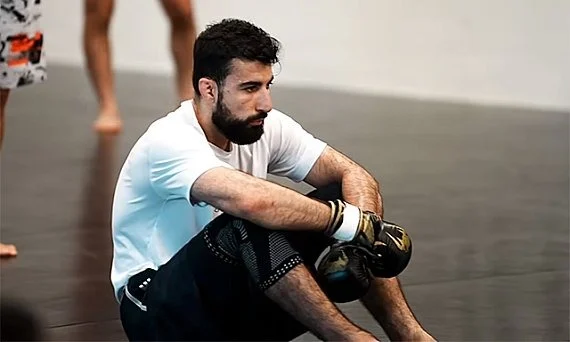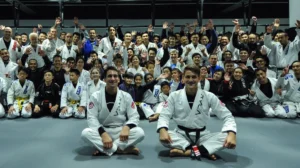

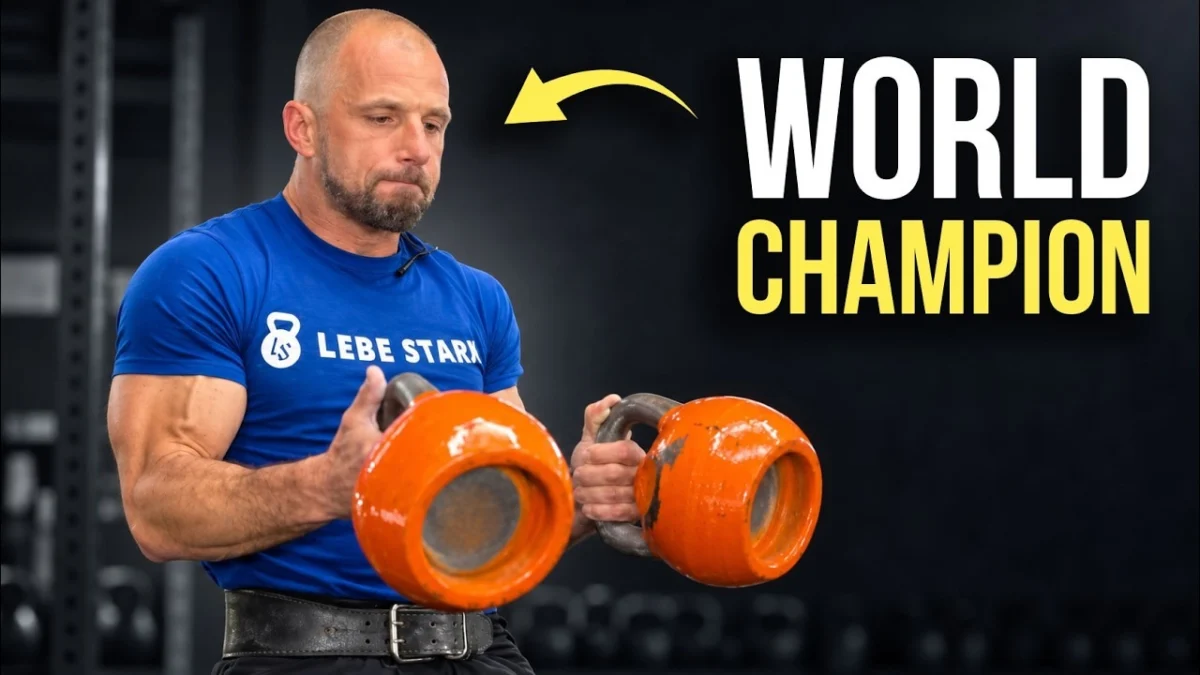
Eleven-time world champion Dennis Vasilev recently spent an intensive weekend at Liberish, celebrating the gym’s tenth anniversary by hosting an exclusive masterclass dedicated to kettlebell sport preparation. Rather than merely observing or instructing from a distance, the legendary athlete trained shoulder-to-shoulder with the local team, imparting decades of hard-earned wisdom regarding mobility, pacing, and recovery. What unfolded over the course of the weekend offered participants a rare, unfiltered two-hour window into how elite kettlebell athletes systematically prepare their bodies to handle demanding competition-level training with grueling 32-kilogram bells. In a sport where practitioners move massive amounts of weight continuously for minutes at a time, every micro-detail—from joint preparation to mental pacing—carries profound significance.
The Warm-Up Nobody Skips If They Want to Stay Healthy
Vasilev’s rigorous approach to warming up is not treated as an optional suggestion; it is a strict, non-negotiable requirement born from past mistakes. Recalling an early lesson from his career on 32-kilogram bells back in 2001, Vasilev noted how rushing into a training session without adequate preparation led to a painful impact injury across his rib cage. That early setback instilled a deep respect for methodical preparation, a principle he has faithfully applied for more than two decades. His joint-by-joint mobility sequence begins systematically at the hands, working methodically up through the wrists, elbows, and shoulders before descending to address the lower body. Every surface receives deliberate attention, utilizing external friction to generate warmth from the outside in while concentric rotations mobilize the joints from the inside out. Wrist rotations flow seamlessly into elbow articulation, which then transitions into complex shoulder circles utilizing varying arm positions to target specific muscle groups.
The Stick Rotation Game-Changer
Among Vasilev’s extensive arsenal of mobility drills, stick rotations stand out as a revolutionary tool for athletic longevity and performance enhancement. Vasilev advises building up to one hundred repetitions per workout, divided evenly into sets of ten to distribute the volume throughout the training session. The strict operational rules of the drill demand that the arms remain completely straight and the elbows locked in absolute extension throughout the entire movement. Vasilev credits this specific exercise with single-handedly resolving chronic fixation problems in his kettlebell training within a span of just two months, noting the delightful bonus that his foundational rack position improved simultaneously as a direct result.
Earning Your Way to Heavy Bells
No matter how many world championship titles he has secured over his illustrious career, Vasilev approaches 32-kilogram kettlebells with unwavering caution and respect. His specialized warm-up protocol does not jump straight into heavy resistance; instead, it progresses carefully through multiple weight increments, starting at sixteen kilograms and moving upward through twenty, twenty-four, and twenty-eight kilograms before finally touching the thirty-two-kilogram competition bells. Each weight tier receives its own dedicated set of five cleans followed by five double half snatches. The execution speed during these warm-up sets is deliberately measured, completely devoid of rushing, with extra breaths taken between repetitions to ensure optimal shoulder positioning and structural integrity. Before initiating actual working sets, Vasilev implements a thirty-second test at competition weight to precisely dial in his pacing, counting the completed repetitions and doubling that figure to determine a sustainable rhythm for the upcoming workout.
The Rhythm Behind the Pace
Pace dictates how many total repetitions an athlete executes within a single minute, but rhythm dictates how those repetitions are strategically distributed across that timeframe. While lighter bells allow Vasilev to work continuously for fifty to fifty-five seconds before taking a rest, heavier weights require him to fracture each minute into smaller, manageable chunks. For a target of nine repetitions per minute using thirty-two-kilogram bells, he employs a calculated pattern of two reps in the first quarter, three in the second, two more by the forty-five-second mark, and two final repetitions to close out the minute.
Water Spray, Chalk, and Competition Mindset
Equipment selection plays a vital structural role in kettlebell sport, and Vasilev ensures all gear is properly positioned before he touches his working weights. His belt is meticulously fitted at the iliac crest, specialized wristbands are secured, and competition footwear is laced tightly. Then comes a ritual that frequently startles newcomers: the application of a water spray to his t-shirt. By misting the elbow region, he creates a tacky, adhesive landing surface that helps anchor the heavy bells securely during the rack position. Moisture is gradually absorbed throughout the set, necessitating reapplication between rounds. Paired with chalk to keep the hands dry, the combination of water spray and dry skin establishes optimal contact points throughout the dynamic movement cycle. Vasilev’s broader pacing philosophy centers on conservative starts and disciplined progressions, ensuring the first set always feels deceptively easy so that maximum energy is preserved for the punishing final minutes of the session.
The Two-Minute Work Sets
The specific training protocol demonstrated by Vasilev at Liberish consisted of three two-minute work sets utilizing double half snatches, followed by a final two-minute set of cleans, with strict two-minute rest intervals separating each working round. This structure represents just one localized component of a much broader, undulating training cycle where volume gradually increases over successive weeks as competition dates approach and set durations expand from two minutes toward the grueling ten-minute standard. While the Liberish team worked with lighter bells to prioritize technical proficiency and sustainable pacing over matching elite competition weights, participants carefully tracked their metrics, adjusting their cadence based on real-time feedback and physiological response.
Between-Set Recovery
Rest periods within Vasilev’s protocol are never passive interludes; instead, they serve as active recovery windows. He utilizes stick rotations to maintain shoulder mobility and flush out accumulated tension, alongside a lacrosse ball rolled against the wall to target six specific trigger points across his middle, upper, and lower back. This self-myofascial release specifically addresses his historically sensitive zone between the shoulder blades, mitigating the chronic strain common among elite kettlebell sport competitors.
GPP Circuit: The Unsexy Foundation
Following sport-specific lifting, the training transitions into General Physical Preparation, featuring a streamlined circuit designed to build work capacity without relying on traditional bodybuilding paradigms. The emphasis remains firmly on developing functional durability capable of supporting heavy loads overhead for extended durations. Push-ups are performed in a distinct kettlebell sport style, moving from a rigid straight-arm plank to a chest-to-floor touch and back to a locked-out top position, often broken into structured micro-sets to mirror competitive lifting strategies.
The Stretching Protocol Nobody Wants to Skip
Vasilev’s comprehensive post-workout recovery routine is as non-negotiable as his initial warm-up. On a standard training day, this phase would be preceded by four to five kilometers of light running for active recovery, though the Liberish masterclass transitioned directly into floor-based mobility work. The systematic stretching sequence begins face-down on a mat, working through internal and external shoulder rotations with elbows planted perpendicular to the floor to preserve rack position quality. Isometric static holds are woven throughout the flexibility work, challenging athletes to maintain maximum muscular contractions for brief intervals before relaxing into deeper ranges of motion. Glute stretching receives prominent emphasis, as data gathered from specialized sensor suits has repeatedly identified the glutes as the single hardest-working muscle group across all foundational kettlebell lifts, including cleans, long cycles, and snatches.
Hamstrings, Hip Flexors, and the Seated Sequence
Seated flexibility work progresses methodically, beginning with the release of foot tension through toe manipulation and internal rotations, before transitioning into dual-approach hamstring stretches that alternately target the lower back and the upper posterior chain. Advanced movements incorporate deep hip openers, such as locking the foot under the elbow to pull the lower leg toward the chest, or progressing through kneeling quad stretches designed to gradually improve structural range over months of patient practice. Vasilev consistently emphasizes relaxation over brute muscular force, relying on gravity and controlled breathing rather than momentum to guide the body past comfort zones safely.
Lessons from an Iron Will
Reflecting on his journey, Vasilev attributes his systematic methodology to years of trial, error, and hard-earned resilience. Guided by the foundational philosophy of his legendary coach Sergey Rachinsky—who taught that true mastery is revealed not when an athlete is fresh, but when conditions are far from ideal—Vasilev maintains his strict structural routine regardless of external stressors, such as recovering from a grueling twelve-hour flight with minimal sleep. By viewing every training session as a holistic integration of physical qualities, Vasilev continues to refine the precise habits that have allowed him to capture eleven world titles and sustain an elite athletic career long past the typical retirement age of the sport.