

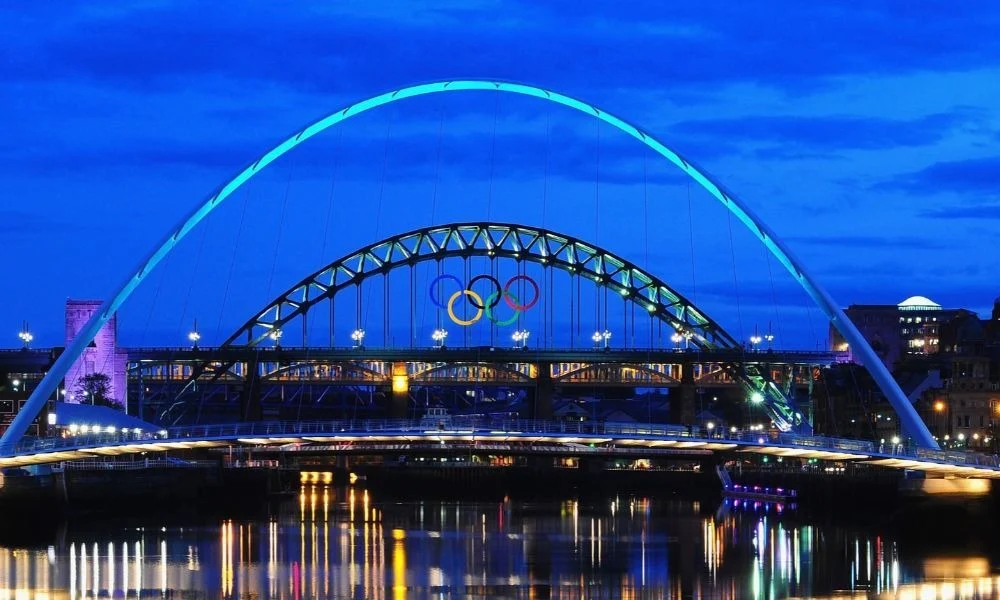
UK Sport has officially submitted a strategic assessment for a potential bid from the North of England to host the 2040 Olympic Games, marking a significant milestone in the country’s long-term sports hosting strategy. However, the national agency acknowledges that soaring operational and logistical costs associated with major global sporting events have forced a much more disciplined and considered approach regarding which projects receive financial and institutional backing.
The initial momentum for the concept began in May, when the UK government officially commissioned UK Sport to evaluate the feasibility, associated costs, and potential socio-economic benefits of launching a regional Olympic bid. Under the current proposal, the Games would adopt an innovative multi-city hosting model rather than relying on a single host metropolis. This decentralized approach would see major events and infrastructure distributed across key northern urban centers, including Manchester, Liverpool, Sheffield, and Newcastle. Planners envision the massive undertaking not merely as a multi-week sporting spectacle, but as a catalyst for a wider, long-term economic and sporting regeneration project designed to rebalance regional investment and infrastructure.
Speaking exclusively to SportsPro at the SportAccord Forum in Lausanne, Esther Britten, UK Sport’s deputy director and head of major events and external affairs, confirmed that the initial exploratory work has been successfully completed. She noted that the timing feels appropriate to begin seriously examining the possibility of bringing the Olympic and Paralympic Games back to Britain, building directly upon the widely acclaimed legacy of London 2012.
Reflecting on the timeline, Britten noted that UK Sport has long maintained a clear view on when the nation might realistically re-enter the bidding arena for the world’s largest sporting gathering. UK Sport had always considered that there was simply no way the country could realistically position itself as a partner to the international Olympic and Paralympic movement again until the 2040s. Consequently, she explained, it has been genuinely fascinating to initiate that strategic look and explore what a modern British bid might entail. A project of this magnitude is undeniably a long-term endeavor, and while the strategic assessment has now been submitted, stakeholders will have to wait to see how the international landscape unfolds next.
Britten’s enthusiasm for future bids is deeply rooted in the enduring legacy of past successes. She fondly characterizes London 2012 as one of the greatest regeneration projects global sport has ever witnessed. That landmark event served as the gleaming crown jewel of an extraordinary decade for British sports administration. During that golden era, the UK successfully played host to an enviable roster of premier global events, including the men’s Rugby World Cup, the World Athletics Championships, and the men’s Cricket World Cup.
That rich tradition of hosting has continued unabated in recent years. The nation has recently welcomed high-profile competitions such as the UEFA Women’s Euros, multiple iterations of the Commonwealth Games, and an extensive array of individual World and European championships across a diverse spectrum of sports.
Looking ahead, even when setting aside the speculative horizons of a 2040 Olympic project, the United Kingdom continues to boast a robust, highly active pipeline of major international events. This calendar includes the upcoming UEFA Euro 2028 football championship, high-profile stages of the Tour de France, and the recently confirmed Netball World Cup, which is scheduled to take place in Manchester. Furthermore, the UK currently stands as the leading front-runner to secure hosting rights for the 2035 FIFA Women’s World Cup.
To support this ambitious portfolio, the UK government has allocated a substantial financial war chest of £500 million, equivalent to approximately $667 million, dedicated specifically to aiding event delivery and operational readiness. Yet, despite this significant public investment, UK Sport maintains a rigorous evaluation framework. Any prospective bid backed by the agency must satisfy a comprehensive matrix of sporting, economic, and societal criteria. As a result, certain events are actively deprioritized or passed over entirely if their projected domestic impact is deemed insufficient to justify the escalating financial outlays required.
Britten candidly admitted that the organization has increasingly had to make difficult decisions to decline hosting opportunities. When she first stepped into her role many years ago, turning down events was a rare occurrence. In the past, the operational mindset was built on a straightforward understanding that if a major continental showcase—such as a sport’s European Championships—was available and the country had never hosted it before, the automatic response was a firm commitment that they really should pursue it. Today, however, the financial reality is entirely different, and officials are far more likely to conclude that an event is simply too expensive for the nation to undertake.
This cautious fiscal discipline was notably evident in the race for the 2029 World Athletics Championships, a competition UK Sport was intensely eager to bring to British shores. Buoyed by the successful staging of the 2017 championships in London, a strong history of hosting the Commonwealth Games, and preparations for the 2026 European Athletics Championships in Birmingham, local sporting authorities harbored high hopes that their bid would emerge victorious. Ultimately, however, London’s bid was outmaneuvered by rival proposals from Nairobi and Munich, meaning that 2033 represents the next available vacancy on the global athletics calendar.
Discussing the competitive nature of the bidding process, Britten acknowledged that the outcome was anticipated from the very beginning. She noted that the organization made the deliberate strategic decision to announce its intention to bid for 2029 very early in the cycle. In a departure from standard protocol, UK Sport even took the unusual step of publicly revealing the full funding package it had successfully secured from government and partners. This move was deployed as a tactical maneuver designed to deter and fend off international rivals. Unfortunately, despite these proactive measures, it did not alter the final decision of the governing body.
Nevertheless, Britten expressed genuine admiration for the broader health of the sport and the intense competition orchestrated by the international federation. She emphasized that it is brilliant to witness World Athletics enjoying such robust global competition. To see three major European capitals and hubs—Rome, London, and Munich—actively re-engaging in a fiercely contested bidding race for what is arguably the third-biggest sporting event in the world, combined with the historic opportunity for that marquee event to be hosted in Kenya for the very first time, represents an absolute triumph for World Athletics. She added that this vibrant competition stands as a glowing testament to the exceptional work the organization has done in developing and delivering a truly brilliant property.
Acknowledging the disappointment of the outcome while maintaining a sportsmanlike perspective, Britten reiterated that the domestic team went into the contest knowing how fiercely competitive it would be. Because UK Sport does not frequently experience defeat in bidding races, the organization was ultimately pleased to extend its formal congratulations to the sporting authorities in Kenya and Germany for successfully securing the hosting rights for the 2029 and 2031 championships, respectively.