


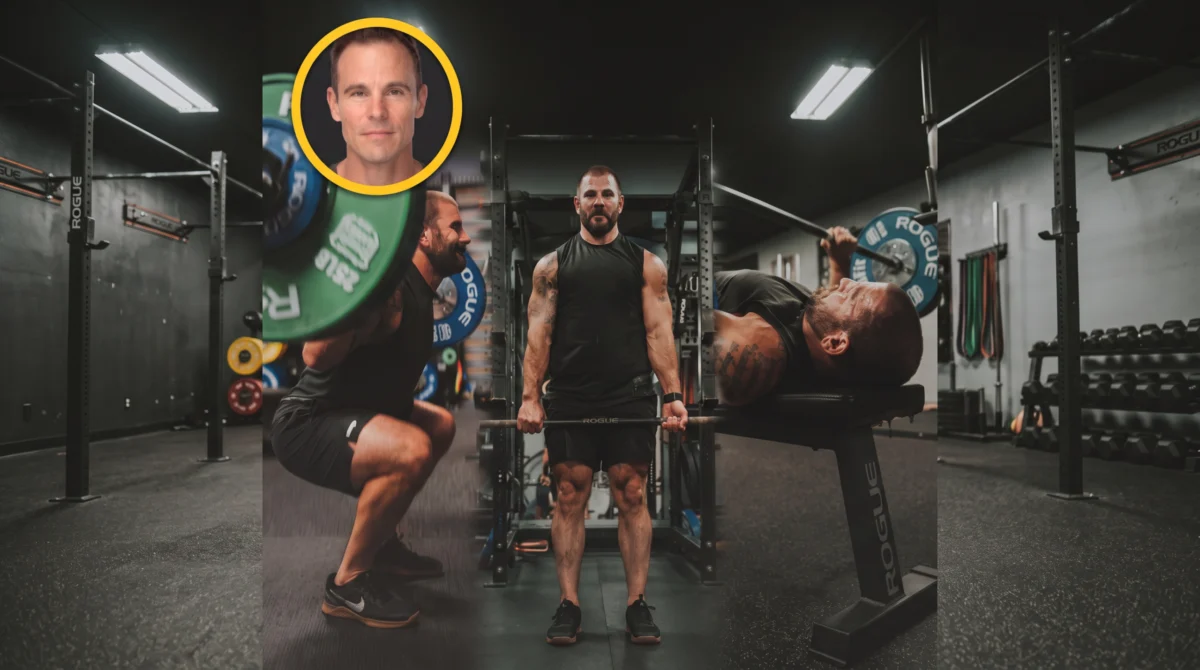
Five-time CrossFit Games champion Mat Fraser has officially announced his return to competitive fitness in 2027, bringing an end to a retirement that began following his unprecedented and dominant victory in 2020. The announcement instantly sent shockwaves through the functional fitness community, marking the anticipated end of a seven-year hiatus for an athlete widely considered the greatest to ever grace the sport.
Yet, the comeback confirmation was only part of the story emerging from Fraser’s latest training sessions. In a demonstration of his enduring work ethic and physical capacity, Fraser recently tackled a grueling, old-school bodyweight benchmark workout. The session offered a rare window into the meticulous strategy, physiological quirks, and mental fortitude that propelled him to an untouchable status during his competitive years—and provided a clear sign that his engine remains remarkably intact.
The workout itself is a classic test of strength-endurance, a format popularized by fellow athlete David Wein. Weighing in at 194.8 pounds, Fraser loaded a barbell precisely to 195 pounds and attacked a monumental volume of work: 100 back squats, 100 bench presses, and 100 deadlifts at bodyweight, immediately followed by a punishing one-mile run.
The 2027 Comeback Confirmation
When directly questioned about whether he would ever step back onto the competition floor, Fraser did not hesitate or dodge the inquiry. He plainly confirmed his intentions, stating that his current plan is to compete again in 2027.
This decision establishes a seven-year gap between elite-level competitions, an absolute eternity in the fast-evolving landscape of professional fitness. Fraser retired at the very apex of his career after securing his fifth consecutive CrossFit Games title in 2020. His upcoming return will serve as the ultimate test of whether his legendary dominance can successfully weather years spent away from the grueling demands of competition-level training regimens.
The Bodyweight Benchmark That Tests Everything
The training session Fraser chose to execute is designed to push an athlete to their absolute limits. By combining high-volume resistance movements with a cardiovascular finale, the format forces the body to navigate "concurrent training interference"—a physiological state where the human body must simultaneously attempt to recover from heavy strength demands while executing intense aerobic work.
While exercise science indicates that this concurrent style of training can occasionally blunt pure strength gains compared to dedicated strength programs alone, it remains an indispensable tool for functional fitness athletes. For competitors like Fraser, the trade-off between absolute power and multi-domain capacity is well worth the physical toll.
Fraser completed the entire sequence in an impressive 36 minutes and 58 seconds, comfortably beating his personal target of finishing under the 45-minute mark. His performance laid bare the calculated pacing strategies that defined his championship career.
Strategic Execution: Sets, Reps, and Rest
The back squats formed the opening salvo of the workout. Fraser maintained steady, manageable sets of five repetitions throughout the entire century of reps, incorporating brief, tactical pauses between efforts. Describing his approach, he noted that he was largely winging the pacing, utilizing brief three-breath intervals before stepping back under the bar. These micro-rests—sometimes lasting five seconds, sometimes fifteen—kept his blood flowing effectively without inducing complete muscular failure.
The bench press, however, presented a starkly different challenge. Fraser had correctly predicted prior to the session that the pressing volume would serve as his primary bottleneck. Starting with sets of three, he quickly transitioned to doubles and was forced to grind out singles during the first half of the 100 repetitions. Despite the dwindling rep schemes, his rest intervals remained minimal, with his hands staying anchored to the bar during most breaks. Reflecting on the grind, Fraser noted that in future attempts, he would modify his strategy to sit up completely every ten reps to facilitate a more deliberate recovery.
The deadlifts ultimately brought a pleasant surprise. Rather than sapping his energy as anticipated, the heavy pulling movements proved manageable. Fraser dropped to strict sets of five for the final twenty repetitions, implementing a rigorous breathing protocol between lifts. By executing three deep breaths while resting in a deep squat, one breath upon standing, and a final breath on the descent to grab the bar, he successfully slowed his heart rate while efficiently managing his time.
Navigating the Mile Run and Environmental Variables
The physical toll culminated in a one-mile run across hilly terrain—a complication that Fraser immediately noted he would eliminate in future iterations. With his adductors heavily fatigued and pumped from the preceding squats and deadlifts, his agility on the inclines was noticeably restricted. He opted to walk the steepest sections of the hill before resuming a running stride on the flat road.
This decision highlighted the value of experienced neuromuscular judgment. Preserving movement quality by walking through compromised terrain prevents injury and frequently yields faster overall times than stubbornly grinding through a degraded running form.
A Throwback to Early Rivalries and External Pacing
The benchmark workout was deeply nostalgic for Fraser, serving as a direct throwback to his formative training years between 2013 and 2015. During that era, athletes routinely posted their daily metcon times and training logs on social media. While Fraser initially struggled to understand why competitors would willingly broadcast their training intelligence, he ultimately exploited the data ruthlessly.
He specifically targeted the workout times of fellow competitor Noah Olsen. Following training blogs in arrears, Fraser would wait for Olsen to post his scores and then use those figures as a concrete target. In the early stages of his career, when he was still learning how to gauge effort across unfamiliar time domains, relying on external benchmarks provided invaluable pacing guidance.
Physiology and High Heart Rate Thresholds
Throughout the session, Fraser wore a heart rate monitor to evaluate his cardiovascular response after years away from high-intensity training. The monitoring brought to light a remarkable physiological anomaly that his coach, Jake, had previously documented.
Following a past knee surgery, Fraser was measured hitting a staggering heart rate of 208 beats per minute during a moderate-intensity bike session—a reading verified manually with a stopwatch and a physical count. Remarkably, Fraser was able to hold a conversation at that extreme cardiovascular stress level, a feat typically impossible for most individuals. Experts note that while maximum heart rates are heavily dictated by genetics and age, elite endurance athletes often possess larger hearts with superior stroke volume, allowing them to sustain high heart rates with lower perceived exertion.
Practical Lessons and the Path to 2027
Fraser’s performance yields several critical takeaways for athletes attempting high-volume functional fitness protocols. Strategic rest intervals governed by structured breathing protocols consistently outperform random rest. Furthermore, proactively reducing rep schemes before hitting absolute muscular failure prevents the catastrophic fatigue that demands extended recovery.
By emphasizing the importance of controlling environmental variables, such as opting for flat running routes, Fraser underscored how eliminating external complications allows for a more accurate assessment of athletic capacity.
Concluding his reflections, Fraser left an open invitation for the broader fitness community to test themselves against his benchmark time, offering a reminder that scaling the weight appropriately allows recreational athletes to experience the exact same metabolic challenge. As the fitness world looks ahead, Fraser’s 2027 comeback stands as an unprecedented test case for the sport, asking whether intelligent training and strategic rest can successfully defy the passage of time. Based on the composure and capability he displayed during this brutal test, betting against the five-time champion remains a risky proposition.