


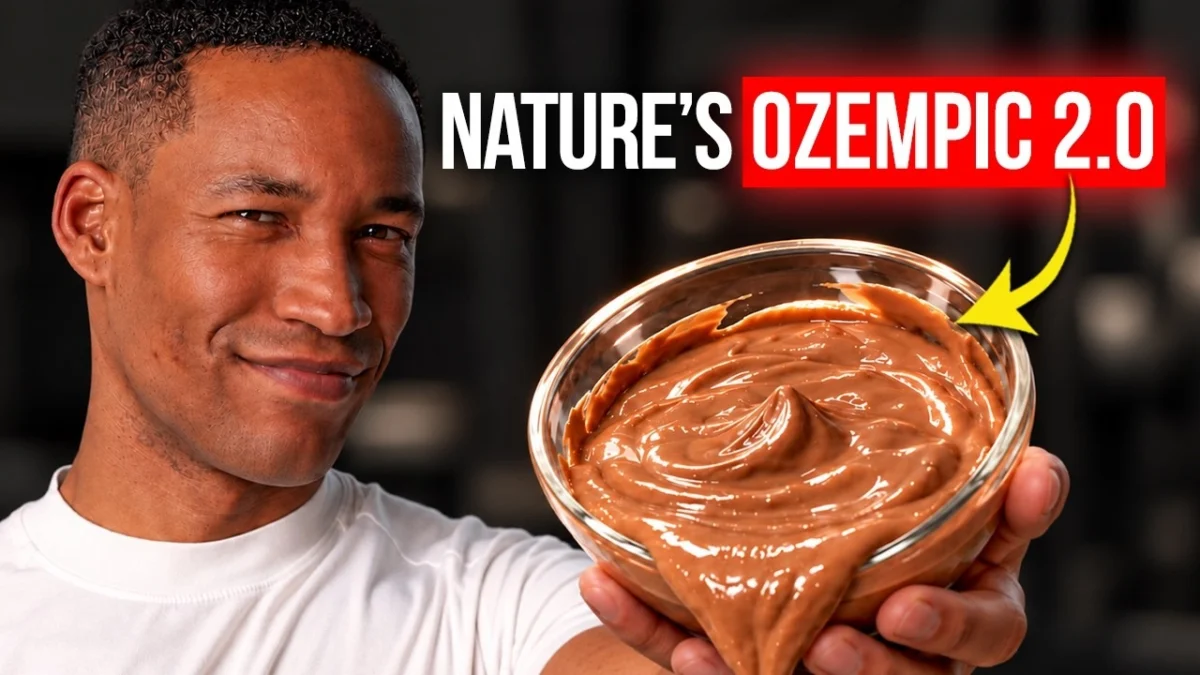
Dr. Michael Diamonds is making waves across health and fitness circles with his homemade "velvet rope" pudding—a deceptively simple culinary blend of whey protein and psyllium husk that he claims naturally triggers the same appetite-suppressing hormone mimicked by blockbuster weight-loss drugs like Ozempic.
The medical doctor, scientist, and professional natural bodybuilder says this 100-calorie pre-meal trick could help people lose weight without medication, or potentially assist individuals looking to transition off prescription drugs like semaglutide. However, the proposal has ignited broader discussions within the medical and nutritional communities regarding whether everyday kitchen ingredients can truly replicate the biochemical impact of advanced pharmacotherapy.
The core question facing researchers and everyday consumers alike is whether a three-minute preparation using pantry staples can genuinely deliver results that rival specialized medications costing hundreds of dollars per month. While the concept has captured widespread public attention, experts emphasize the need to carefully examine the underlying physiology before drawing direct parallels between a dietary snack and a clinical injection.
The Recipe: Whey Protein Meets Psyllium Husk
At first glance, Diamonds’ pudding formula is remarkably straightforward, requiring only components that are likely already sitting in a typical kitchen cupboard. The preparation involves mixing half a scoop of whey protein, translating to roughly 15 grams, with five ounces of warm water. A tablespoon of psyllium husk is then stirred into the liquid, followed by optional flavorings such as cinnamon or vanilla extract to improve palatability.
Within two to ten minutes of mixing, the combination thickens into a pudding-like consistency. Diamonds recommends consuming the mixture approximately ten minutes before meals, whether breakfast, lunch, or dinner, up to three times daily. Each serving delivers roughly 15 grams of protein, five grams of carbohydrates with four of those coming from fiber, and a total of 100 calories.
Health professionals, however, emphasize one crucial safety warning associated with the recipe: individuals must drink a full eight-ounce glass of water immediately after consuming the pudding. Because psyllium husk rapidly absorbs liquid, it requires adequate systemic hydration to move safely and effectively through the human digestive tract without causing blockages or discomfort.
How It’s Supposed to Work: The “Doorman” and “Velvet Rope”
To explain the physiological mechanics behind his method, Diamonds employs a metaphorical library analogy. In his framework, carbohydrates entering the body represent books, insulin acts as the librarian storing them, and when too many arrive simultaneously, they tend to get swept under the carpet and stored as fat.
Within this conceptual model, whey protein functions as a security guard or doorman, while psyllium husk acts as a velvet rope creating an orderly queue. Together, they are intended to ensure that incoming nutrients enter the systemic circulation slowly and steadily, thereby preventing overwhelming insulin spikes.
The actual biological mechanism driving this process revolves around glucagon-like peptide-1, commonly known as GLP-1. This is a gut hormone naturally released when protein reaches the gastrointestinal tract. Diamonds explains that when the protein arrives in the gut, the body releases GLP-1, which acts as a message sent upstairs to tell the brain to slow down consumption. GLP-1 is known to slow gastric emptying, signal satiety to the brain, and help regulate blood sugar, mirroring the exact biological pathways that medications like Ozempic and Wegovy are specifically engineered to target.
What Research Actually Shows About Whey Protein and GLP-1
There is solid scientific evidence supporting whey protein’s impact on appetite regulation and blood sugar management, although the observed effects are considerably more modest than enthusiastic presentations might imply. A notable study conducted at Newcastle University provided 24 men with 15 grams of whey protein ten minutes before breakfast. Compared to a control group that consumed only water, the pre-meal whey increased GLP-1 levels two to threefold, slowed gastric emptying, and reduced post-prandial blood sugar spikes by 13 to 18 percent.
When researchers expanded this line of inquiry to include 18 individuals with type 2 diabetes who consumed whey before all three daily meals for a full week, participants spent approximately two additional hours per day with their blood sugar levels within a normal, healthy range. Furthermore, a comprehensive review of 16 separate trials confirmed that pre-meal whey consumption consistently lowers blood sugar peaks, slows the rate at which food leaves the stomach, and elevates GLP-1 concentrations. The exact timing of consumption—whether 30 minutes or 10 minutes prior to eating—did not appear to significantly alter the outcomes.
In head-to-head comparisons against other macronutrient sources, whey frequently outperforms alternatives. When researchers evaluated whey alongside casein and soy in the context of a soy-based breakfast, whey consistently delivered the strongest GLP-1 response and suppressed subjective hunger most effectively.
Why Whey Works Better Than Eggs
Diamonds specifically addresses why whole foods like eggs, despite being an exceptional source of high-quality nutrition, are not his primary choice for this particular pre-meal protocol. While acknowledging that eggs belong in a balanced diet, he points out that scientific trials demonstrate whey is among the fastest proteins to reach the gastrointestinal tract.
Because whey protein is rapidly digested and absorbed, it reaches the gut quickly enough to initiate the GLP-1 cascade before the primary meal arrives. For individuals who follow dairy-free lifestyles, Diamonds notes that pea protein appears to offer similar physiological benefits based on preliminary observations from smaller trials.
Psyllium Husk: The “Velvet Rope” for Blood Sugar
Psyllium husk, a well-known soluble fiber supplement, forms a viscous, gel-like substance when combined with liquid, functioning similarly to how chia seeds thicken yogurt. Extensive research demonstrates that psyllium can meaningfully influence both blood sugar and lipid profiles, particularly in populations managing metabolic conditions like diabetes.
In a clinical trial involving men with type 2 diabetes who took psyllium twice daily for eight weeks, participants experienced an 11 percent decrease in post-meal blood sugar across the entire day, alongside a notable 19 percent reduction specifically following lunch. Remarkably, the benefits of psyllium extended beyond the immediate meal it accompanied, continuing to influence glycemic responses at subsequent meals throughout the day.
A broader review encompassing 35 clinical trials found that individuals with type 2 diabetes who consumed psyllium before meals experienced a 37 percent drop in fasting blood sugar, while their hemoglobin A1C, which measures three-month average blood glucose, decreased by nearly one full percentage point. Beyond glycemic control, psyllium is widely documented for its ability to lower cholesterol levels, introducing an additional cardiovascular benefit to the proposed pudding formulation.
Does It Really Compare to Ozempic?
This is the juncture where claims regarding natural alternatives require significant medical context. While both the homemade pudding and prescription semaglutide operate through the GLP-1 pathway, their underlying mechanisms and clinical magnitudes differ dramatically.
Natural GLP-1 released in response to ingested whey protein remains active in the human bloodstream for less than two minutes before being broken down by natural enzymes. The body produces this hormone in short, transient bursts around meal times, which is precisely the physiological response the pudding seeks to enhance.
In contrast, pharmaceutical agents like semaglutide are molecularly engineered to resist rapid enzymatic breakdown. A single weekly injection maintains elevated, steady-state GLP-1 activity continuously throughout the day and week at levels the human body cannot produce independently. As Diamonds acknowledges, pharmaceutical weight-loss results operate in an entirely different league, with clinical trials demonstrating average weight reductions of 15 to 20 percent of total body weight, whereas the benefits of a protein and fiber pre-meal protocol are measured in more modest appetite suppression and stabilized blood sugar.
Individual biological variations also play a critical role in these outcomes. Clinical observations cited in related discussions indicate that men carrying higher amounts of visceral belly fat may produce roughly 27 percent less GLP-1 in response to whey compared to leaner counterparts, suggesting that body composition influences individual responsiveness. Furthermore, foundational research trials have predominantly involved small sample sizes and specific demographic cohorts, limiting the broader generalization of the findings.
Combining Protein and Fiber: Stronger Together
The rationale for combining whey protein and psyllium husk draws from independent nutritional studies evaluating macronutrient interactions. One specific trial investigated whey alone, guar gum fiber alone, and a combination of both administered 15 minutes prior to meals in subjects with type 2 diabetes.
The findings revealed that while whey produced the largest immediate GLP-1 spike, the combination of whey and fiber together proved most effective at slowing gastric emptying, pointing toward complementary physiological effects. Diamonds approaches his formulation as the combination of two individually proven dietary elements, noting that while this exact culinary recipe has not undergone formal clinical trials, its components rest on established scientific principles.
The Protein-First Eating Strategy
Beyond the specifics of the pudding recipe, Diamonds advocates for a broader behavioral principle known as the protein-first eating strategy, which encourages consuming protein and fiber components before carbohydrates during any given meal.
Clinical investigations involving individuals with type 2 diabetes have demonstrated that consuming the exact same meal components in differing orders produces vastly different metabolic responses. When participants consumed chicken and vegetables prior to eating bread, their subsequent blood sugar readings were 29 percent lower at the 30-minute mark and 37 percent lower at one hour compared to trials where they consumed the carbohydrates first.
For individuals who do not have whey or psyllium available, Diamonds suggests utilizing accessible whole-food alternatives, such as consuming a small portion of lean meat, fish, or a plant-based protein source prior to the main carbohydrate-containing portion of a meal.
Real-World Application and Weight Management
To illustrate how adequate protein intake influences long-term adherence, Diamonds references a client case study involving a 50-year-old named Donnie, who successfully achieved a low body fat percentage through tailored nutritional management. By systematically adjusting caloric intake while concurrently scaling protein consumption upward, the client managed subjective hunger sensations effectively without experiencing persistent cravings or the desire to snack between meals.
This real-world application underscores the fundamental principle that sufficient protein intake, regardless of the precise delivery vehicle, plays a powerful role in moderating appetite and supporting adherence to energy-restricted diets.
For individuals currently prescribed GLP-1 receptor agonist medications, Diamonds offers an explicit cautionary note, advising patients never to discontinue their prescribed therapy in favor of dietary adjustments without direct medical supervision. He highlights data indicating that individuals who abruptly stop GLP-1 medications typically regain a substantial portion of lost weight within a year, emphasizing that sustainable weight management requires lifelong behavioral, nutritional, and lifestyle foundations regardless of pharmaceutical intervention.
Ultimately, while the velvet rope pudding is not a direct natural substitute for prescription weight-loss injections, the science supporting pre-meal whey protein and psyllium husk remains legitimate for supporting blood sugar regulation and appetite awareness. Providing protein and fiber at a low caloric cost, the protocol represents a low-risk dietary addition for individuals seeking to optimize their metabolic health, demonstrating that sustainable eating habits continue to play a vital role in human nutrition.