


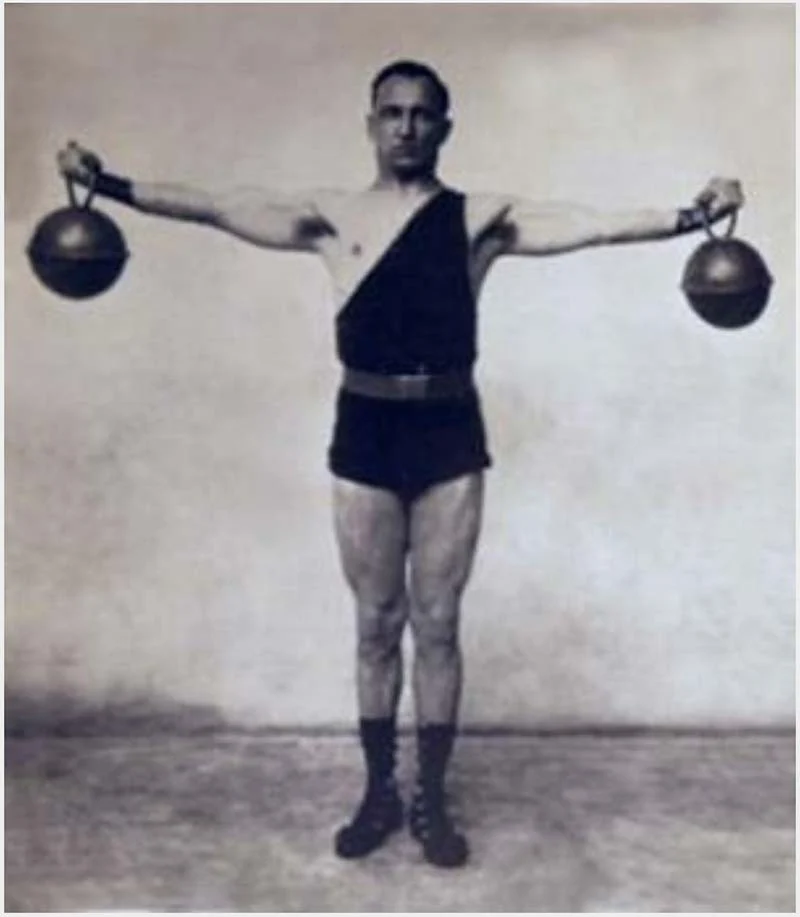
October 23, 2026 — For decades, strength and conditioning coaches have debated the absolute efficacy of various training modalities. Among the most contentious tools in the modern gym is the cast-iron kettlebell—a deceptively simple apparatus consisting of a ball with a single handle. While popular figures like Pavel Tsatsouline and Dan John have cemented the kettlebell’s place in contemporary training regimens, its sudden resurgence in Western fitness culture is often wrapped in historical mythos.
Trainer Ken Jakalski recently weighed in on the ongoing discourse, explaining why he continues to incorporate kettlebells into his athletes’ programs, how he seamlessly integrates them with traditional heavy lifts, and why he firmly rejects the notion that they represent a superior form of strength training.
The modern obsession with kettlebells largely stems from their reintroduction to American trainers as a secret conditioning tool utilized by Soviet special forces. However, cultural historian David Landau offers a starkly different perspective, noting that kettlebells are historically tethered to the circus, vaudeville, and the old-world tradition of physical entertainment.
Landau has characterized kettlebells as "a fake entertainment, a rudimentary weight apparatus that has many shortcomings." This skepticism begs the question of why the fitness industry has witnessed such an enthusiastic, widespread return to the tool. Landau attributes this phenomenon to a pervasive, romanticized belief in the absolute superiority of Soviet training systems, pointing to cinematic touchstones like Rocky IV. In the film, the fictional Soviet boxer Ivan Drago is portrayed as the ultimate product of high-tech training laboratories and sophisticated diagnostic equipment, contrasting sharply with Rocky Balboa’s rustic barn workouts and abdominal twists performed under a yoke of oxen.

The reality of Eastern Bloc training, however, paints a vastly different picture. As Rick Brunner clarified in his book Soviet Training and Recovery Methods, the actual environment of Soviet athletes was far from high-tech. In real life, the scenario is entirely the reverse. Soviet athletes trained in rustic barns and damp basements, utilizing equipment manufactured from old railway wagon axles, and running through deep snow. The vast majority of Soviet athletes had never set eyes on a computer, let alone a computerized Cybex machine, a Lifecycle, or a Stairmaster.
Landau reinforces this observation by recounting how American visitors touring Russia in the 1980s encountered athletes training with crude, homemade instruments. When asked where they sourced their training information, these athletes pointed to a dusty stack of old Weider Muscle magazines. Alongside basic barbells and isometric racks sat a few odd weights that bore a striking resemblance to modern kettlebells.
Consequently, the kettlebell known to contemporary gyms is not a modern iteration of a scientifically engineered strength apparatus. Early weightlifters readily acknowledged the inherent limitations and deficiencies of the tool. As a classic quote attributed to Alan Calvert cautions, the individual who purchases a single kettlebell under the impression that it will develop every muscle in the body to an equal degree is destined for profound disappointment.
Why Trainers Still Utilize Kettlebells
Despite these limitations and the surrounding marketing hyperbole, iron balls with handles remain a foundational element in many professional training programs. Proponents of kettlebell training present several valid arguments for their continued utility. John Powers, for instance, emphasizes that a primary advantage of kettlebells over conventional dumbbells, barbells, and machines lies in the dynamic and ballistic nature of their movements.

Athletes can leverage kettlebells to execute complex sequences involving lifting, pushing, pulling, and stretching. The most significant physiological benefit is that the demand for heightened inter- and intramuscular coordination, alongside kinesthetic awareness, remains constant throughout the entire exercise. Every kettlebell movement recruits a broader array of muscles and joints, forcing the core, hips, and deep stabilizing musculature to engage in continuous stabilization.
Dan John has frequently underscored this utility, noting that teaching a technically sound swing and incorporating variations of the deadlift delivers measurable athletic impact. For many coaches, the kettlebell swing remains an indispensable foundational movement for both metabolic conditioning and athletic preparation.
In practical application, many coaches utilize kettlebells as a progressive transition toward primary compound lifts. These include trap bar deadlifts, single-leg deadlifts, single-leg cleans, and step-ups. Kettlebells serve as an accessible introductory bridge to mastering these complex movement patterns. Among the most favored variations are the goblet squat—executed by holding a kettlebell in a racked position against the chest—and the classic ballistic swing.
Historical validation for these methods can be found further back in the literature. An article published in the 1984 Soviet Weightlifting Yearbook, titled "Kettlebell Lifting as an Effective Means of Physical Education," concluded that kettlebell exercises offered immense value as a training methodology across a remarkably broad spectrum of sports.

The authors of the 1984 report highlighted that the suitability of kettlebell lifting stemmed from the feasibility of individualized training, the technical simplicity of the movements, the low cost of acquisition, and the capacity for athletes of varying ages to train and compete together. The report asserted that kettlebell training successfully develops core physical qualities and elevates physical work capacity, justifying its standing as an effective pillar of physical education.
Avoiding Dogma in Strength Training
Even as a growing roster of modern athletes and coaches advocate for kettlebell protocols, fundamental questions remain. Is the kettlebell a magic bullet that enhances every dimension of physical performance? Is it inherently superior to dumbbells or barbells? Or is the persistent fervor surrounding kettlebells simply another iteration of what renowned Dutch sprint coach Henk Kraaijenhof famously described as "old wine in new bottles"?
For practitioners like Jakalski, the appeal of kettlebells lies simply in the fact that athletes enjoy utilizing them, rather than viewing them as a mechanical upgrade over other established strength protocols. Kettlebells represent one of numerous valid avenues available to coaches for developing functional strength.
Reflecting on the broader philosophy of physical preparation, strength researcher Mel Siff offered a balanced perspective that continues to resonate across the athletic community. Kettlebell training can be exceptional and highly enjoyable, much like dumbbell training, barbell training, and numerous other modalities of physical development. The overarching caution for modern coaches and athletes is to ensure that passion for a specific tool does not devolve into dogmatic zealotry that blinds practitioners to the merits of alternative methods.