
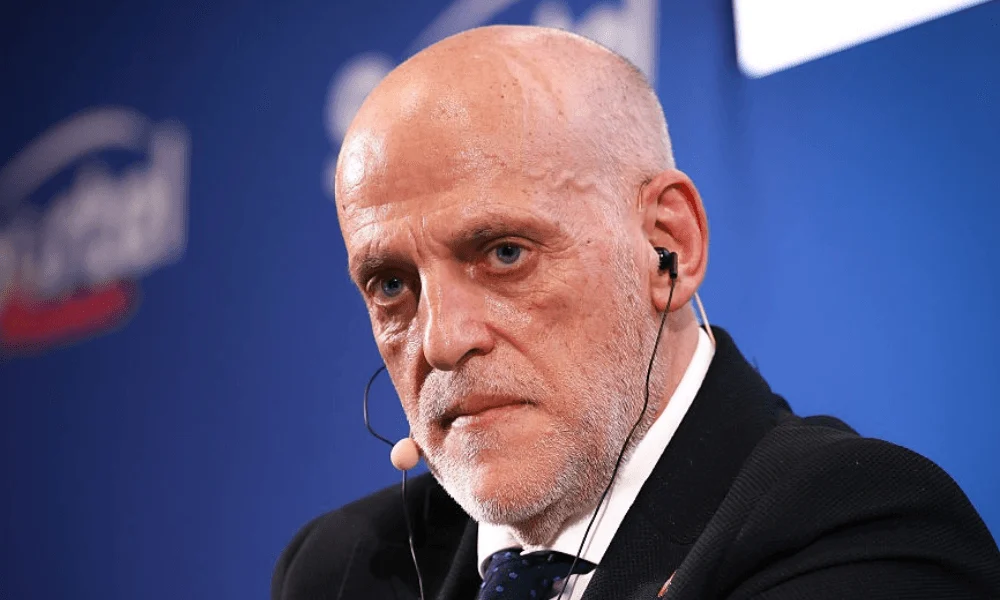
LaLiga president Javier Tebas has asserted that Manchester City thoroughly deserve to face justice after being found guilty of breaching Premier League financial rules, while simultaneously demanding sweeping governance reforms at both FIFA and UEFA. The comments from the outspoken Spanish football administrator mark a significant escalation in the ongoing debate surrounding financial fair play, regulatory enforcement, and the distribution of power within the global football ecosystem.
The controversy surrounds a monumental independent commission verdict that found Manchester City guilty of 114 out of 115 charges leveled against the club for extensive and systemic breaches of cost-control regulations. According to the findings of the exhaustive investigation, the Premier League club engaged in deliberate efforts to artificially inflate its commercial revenues and aggressively reduce its operational costs by a staggering figure exceeding UK£900 million.
This financial maneuvering took place between the 2009/10 and 2017/18 seasons, a prolific era during which Manchester City secured three of their eight Premier League titles. Furthermore, the independent commission determined that the club had failed to cooperate fully during the lengthy investigation, compounding the severity of the regulatory infractions.
The current situation stands in stark contrast to a previous legal battle fought by the club at the continental level. In 2020, Manchester City successfully appealed a two-year ban from European club competitions handed down by UEFA for alleged financial fair play violations. The Court of Arbitration for Sport (CAS) ultimately ruled that several of the European governing body’s allegations could not be legally punished because the time elapsed exceeded the relevant statutes of limitations, while a €30 million fine was significantly reduced to €10 million.
Unlike European sporting regulations, however, the Premier League operates under no such statute of limitations. Should Manchester City’s ongoing appeals prove unsuccessful, legal and football industry experts anticipate that the eventual punishments could be extraordinarily severe. Potential sporting and financial sanctions under consideration range from substantial points deductions and expulsion from the competition to massive monetary penalties that could reshape the domestic league landscape.
The fallout from the commission’s findings has already reverberated across the English top-flight and the wider European game. Several of Manchester City’s domestic rivals have privately or publicly suggested they could pursue legal action against the club. Beyond domestic borders, the financial misconduct would inevitably have impacted European competitors, including various LaLiga teams that crossed paths with Manchester City in high-stakes UEFA Champions League encounters during the investigated period.
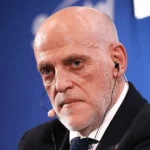
Addressing media representatives at the Sportel sports business conference in Monaco, Tebas declined to speculate on the exact nature of the sanctions Manchester City should face, though he emphasized that he is monitoring the unfolding situation with intense interest. He underscored his hope that whatever penalties are ultimately decided upon will be significant enough to serve as a powerful deterrent, discouraging other ambitious clubs from attempting to bend or circumvent financial regulations in the future.
Recalling historical friction between himself and the English club’s leadership, Tebas pointed to an encounter that took place years prior. He noted that he has been tracking the club’s financial practices for a long time, referencing a tense exchange at a sports business conference in Manchester back in 2017 where the club’s chief executive officer confronted him over his vocal public criticisms of their financial operations.
Elaborating on his current perspective, Tebas stressed that the final resolution of this high-profile case carries immense importance for the broader football community. He noted that the integrity of both the Premier League and the wider European football ecosystem hangs in the balance, adding that certain individuals felt compelled to depart from UEFA over the controversy surrounding Manchester City, reinforcing his belief that absolute justice is necessary for all parties involved.
While it remains unclear precisely which former officials Tebas was alluding to, Yves Leterme, the former chief investigator of UEFA’s Club Financial Control Body, had previously faced pointed criticism in public statements issued by Manchester City during earlier legal disputes. Leterme stepped down from his role at UEFA in 2021, though there has never been any formal suggestion linking his departure directly to the Premier League club.
When pressed on whether the Manchester City case highlights an urgent structural need for stricter and more comprehensive financial regulation across European soccer, Tebas pointed to the operational model implemented within his own competition. He highlighted LaLiga’s stringent economic control rules, noting that adherence to these domestic spending limits has left Spanish clubs with a fraction of the cumulative debt burdens carried by many of their continental counterparts.
Expressing a mixture of critique and pragmatic advice, Tebas remarked that he hopes the Premier League will eventually recognize the value of adopting more sensible, sustainable financial safeguards, pointing out that English football currently navigates a remarkably complex financial landscape.
Despite passionately demanding accountability and justice on behalf of UEFA, the typically combative LaLiga chief did not spare European soccer’s governing body from critique. Tebas argued that the governance of the sport is overly centralized and should instead be subject to oversight by a much wider array of administrative bodies and legal frameworks.
Tebas has long established himself as a vocal critic of FIFA president Gianni Infantino, frequently taking aim at his management style, administrative decisions, and controversial commercial proposals, such as plans to sell lucrative equity stakes in the men’s FIFA World Cup.
Calling for institutional accountability, Tebas elaborated on his vision for structural reform, stating that he would like to see meaningful changes implemented across the governance models of FIFA, UEFA, and other major sports institutions in alignment with rulings handed down by recognized sports courts of law. He criticized existing institutional frameworks as monopolistic, arguing that governing bodies must operate with absolute transparency regarding every administrative and commercial decision—a standard he insists is currently not being met.
Reiterating his firm stance on regulatory compliance, Tebas concluded that the established rules must apply universally, insisting that every participant within the global game must respect the established framework.