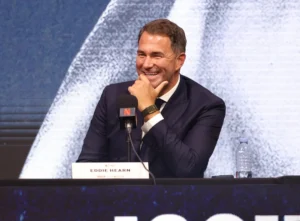
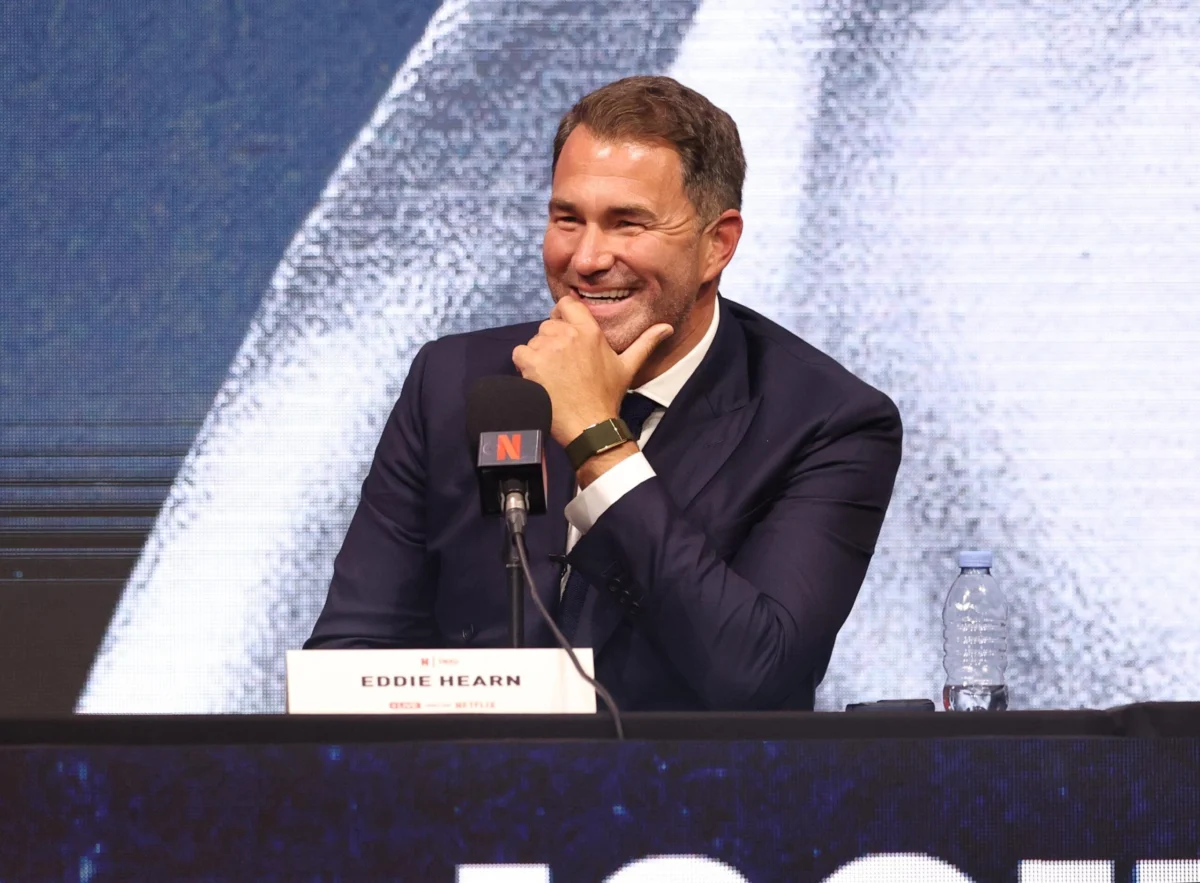
On Monday, pound-for-pound boxing great Shakur Stevenson secured his official release from Zuffa Boxing without ever having stepped into the ring for the promotion. The unexpected departure marks a staggering blow for Zuffa Boxing and UFC CEO Dana White, especially given that Stevenson was widely considered the single biggest and most high-profile signing in the promotion’s brief and turbulent history. Parting ways with a marquee talent of Stevenson’s caliber before he could even make his promotional debut is a devastating look for the organization. Naturally, Matchroom Boxing head Eddie Hearn is reveling in the unfolding chaos.
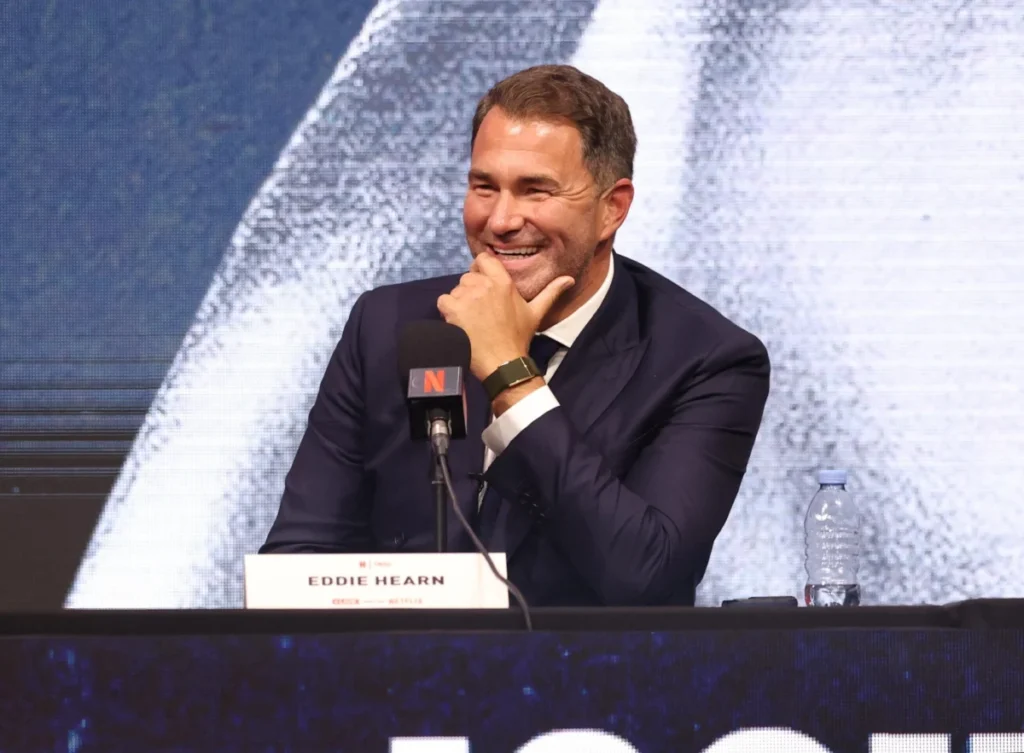
In a candid and extensive interview with iFL TV, Hearn made his feelings crystal clear regarding the stunning development, admitting that his initial reaction was pure disbelief. Unbelievable, he noted, adding that he genuinely thought the news was nothing more than an elaborate publicity stunt until he received confirmation directly from sources close to the fighter.
Until Shakur’s team called and messaged him late Sunday night, Hearn said he assumed it was all part of some strange promotional rollout because the situation was so fundamentally bad, so deeply embarrassing, and so humiliating for Zuffa that it simply did not seem like it could possibly be real. The moment the news broke publicly, Hearn recalled his phone immediately lighting up with dozens of messages from industry insiders and associates echoing the sentiment that Zuffa was finished, that the organization was actively imploding, and that Dana White was facing a catastrophic PR nightmare.
Reflecting on the unprecedented nature of the situation, Hearn pointed out the sheer absurdity of a promotional company securing a pound-for-pound elite fighter, trumpeting them as their flagship signing, only for that athlete to walk away without a single bout to their name. In the entire history of professional boxing, Hearn challenged, no one could name a single comparable instance where a promoter signed a pound-for-pound great—the biggest signing of their entire corporate existence—only for the fighter to exit before a single opening bell had even rung. That has simply never happened before in the sport.
Hearn did not miss the opportunity to take aim at earlier statements made by Dana White concerning the historic nature of Zuffa Boxing and the grand body of work fans could expect to witness by the conclusion of the year. Sardonically acknowledging those declarations, Hearn remarked that Zuffa had indeed made history, albeit in the most unintended and catastrophic way possible, by actually managing to sign a major star and never giving him a single fight. That, he quipped, was certainly a unique body of work to display.
Admitting that he and his team were going to dine out on the spectacle, Hearn conceded that his rivals would undoubtedly do the exact same thing if the shoe were on the other foot. While he maintained he would not sit in front of the cameras and officially declare that Zuffa was entirely finished, an embarrassment, entirely devoid of credibility with fighters and fans alike, or completely dormant in America since July with zero upcoming U.S. shows planned for the remainder of the year, his smirk and rhetorical delivery suggested otherwise. He remarked that anyone looking at the situation from the outside would have to laugh and call it remarkably easy work while wondering aloud just what on earth was going on behind closed doors.
The public friction between Hearn and White has defined much of the boxing landscape throughout 2026, a rivalry that ignited immediately after White expanded his combat sports empire into the sweet science under the Zuffa Boxing banner. Hearn has repeatedly asserted that White and his executive team fundamentally lack the specialized knowledge required to navigate the complex nuances of the boxing business. In the wake of Stevenson’s sudden release, Hearn treated the moment as the ultimate vindication, treating the media to a comprehensive victory lap.
They simply do not know what they are doing, Hearn stated bluntly, warning upcoming fighters against placing their hard-earned careers and lasting legacies into the hands of non-boxing personnel who possess zero understanding of the industry. Praising other top-tier athletes for recognizing the warning signs, Hearn highlighted Devin Haney as the picture of shrewd career management. Haney, sensing that a partnership with Zuffa was misguided, ultimately bypassed the promotion to forge a lucrative deal with DAZN. Now, Hearn noted, Shakur Stevenson will likely follow a similar path to secure his future.
Both Haney and Stevenson find themselves facing frustrating layoffs in the prime of their athletic careers. Hearn pointed out that Devin Haney has not boxed professionally since November 2025, while Shakur Stevenson has been inactive since January 2026. Describing them as true pound-for-pound greats of the sport, Hearn urged them to stay active and face the toughest competition available rather than falling for high-profile offers that ultimately stall their momentum. Signing with a promotional entity only to find oneself four months later without a fight, or even a fight scheduled on the horizon, represents a severe threat to an elite athlete’s prime years.
Offering praise to the newly freed fighter, Hearn commended Shakur Stevenson for having the courage to recognize that Zuffa was not the right environment for his career. It takes real conviction to walk away from a major corporate entity and declare that the people in charge do not know what they are doing, Hearn said, adding that Stevenson ultimately made the necessary move to protect his career from potential ruin before exploring his next promotional steps.
The departure of Stevenson is merely the latest chapter in a punishing sequence of events for Zuffa Boxing. The organization has labored to establish a meaningful foothold within the fiercely traditional and tight-knit boxing community. Further complicating their entry into the sport, one of their most celebrated acquisitions—former Hearn-promoted star Conor Benn—suffered a devastating, high-profile knockout defeat at the hands of Ryan Garcia during their high-stakes bout in September.
Recalling that rough stretch, Hearn noted that Zuffa signed Conor Benn only to watch him get smashed to pieces in the ring, followed quickly by signing Shakur Stevenson and failing entirely to deliver him a single bout. Emphasizing the promotion’s physical absence from the U.S. market, Hearn pointed out that Zuffa has not staged a single event in America for five months, with another six or seven months projected to pass before they return stateside. He mocked past executive interviews inviting the public to judge the company by its year-end body of work, characterizing the overall enterprise as an awful, disastrous, monstrous, and embarrassing capitulation that drives up blood pressure and leaves industry observers shaking their heads. In the memorable words of one of his old nemeses, Hearn concluded that barely ten months into the venture, it was already all over, rover.
Despite his scathing critique, Hearn does not genuinely believe that Zuffa Boxing will vanish completely from the landscape. Given that the promotion is heavily backed and co-owned by Turki Alalshikh and Sela, the prominent entertainment enterprise based in Saudi Arabia, the financial resources to remain operational are virtually limitless. Even so, Hearn is convinced that this high-profile public relations disaster will serve as a massive, near-insurmountable setback for their long-term ambitions in the sport.
They will undoubtedly be back in some capacity, Hearn acknowledged, but they have definitively shown their true colors to the combat sports world. They understand nothing about boxing, nothing about the delicate process of developing a fighter’s career, and any athlete who chooses to sign with Zuffa Boxing might as well take their legacy, tear it up, and throw it straight into the bin. That, he argued, is the raw reality of the situation. He concluded that if fighters are willing to take that kind of gamble for a quick payday and the prospect of fighting just once a year—or, in the specific case of Shakur Stevenson, not fighting at all—then the choice is theirs to make.