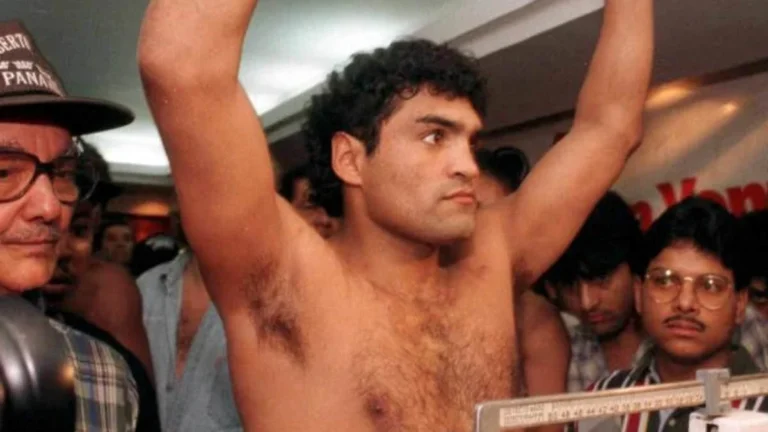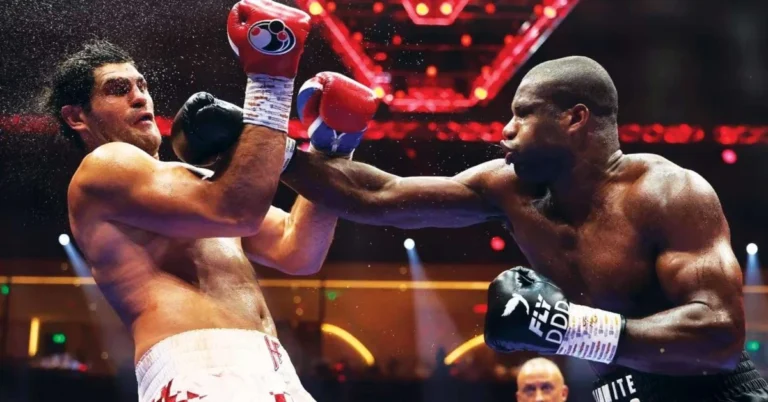

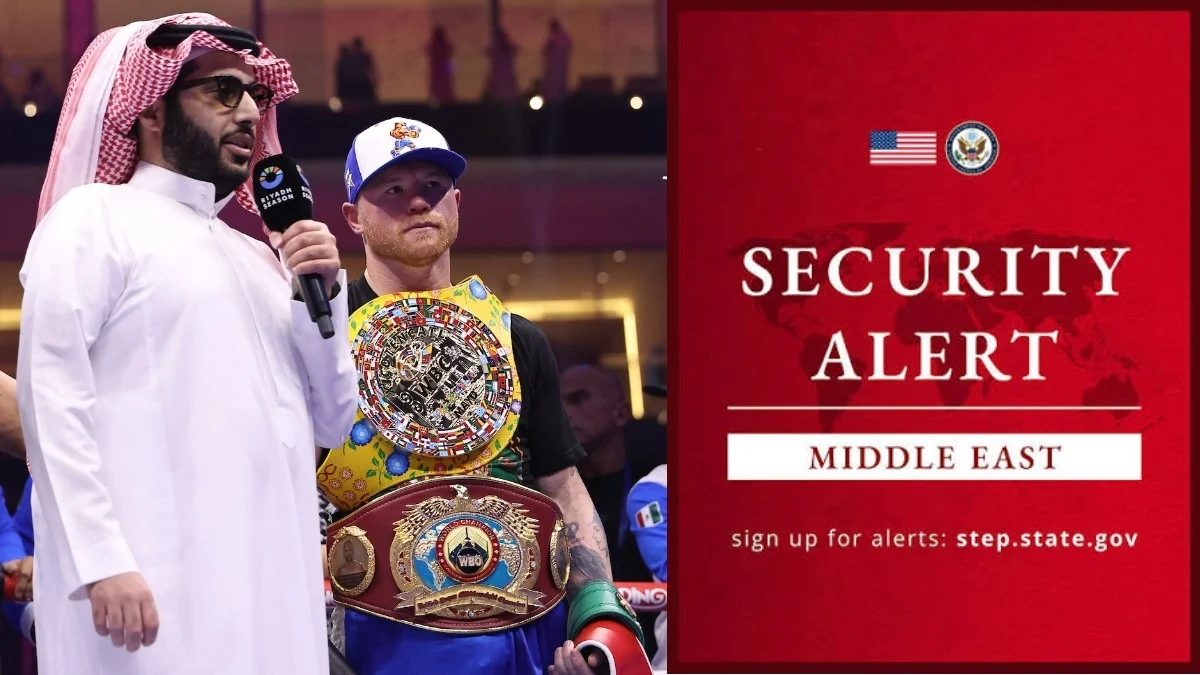
In a stark confrontation between elite sports promotion and heightened regional geopolitical conflict, Mexican boxing icon Saul "Canelo" Alvarez is reportedly determined to proceed with his high-stakes bout against Christian Mbilli in Riyadh, Saudi Arabia, scheduled for October 31. The Mexican superstar’s willingness to travel into the kingdom comes at a time of severe security uncertainty, marked by explicit military threats targeting Saudi aviation and infrastructure.
The decision has highlighted an extraordinary paradox within the kingdom. While the former multi-division champion and WBC super middleweight titleholder expresses defiance in the face of danger, reports indicate that Saudi Arabia’s de facto ruler, Crown Prince Mohammed bin Salman, is taking extreme personal safety measures, moving between heavily fortified palaces equipped with underground bunkers.
This dramatic contrast between a visiting sports superstar preparing to perform before a live international audience and the host country’s leadership operating under severe security protocols has raised urgent questions regarding the safety of the fighters, their support teams, media personnel, and international spectators expected to travel to Riyadh for the event.
       +-------------------------------------------------------+
       |             OCTOBER 31: RIYADH SHOWDOWN               |
       +-------------------------------------------------------+
                                   |
         +-------------------------+-------------------------+
         |                                                   |
         v                                                   v
+---------------------------------+  +---------------------------------+
|      CANELO'S DEFIANCE          |  |       SECURITY REALITY          |
|  • "Fears nothing" stance       |  |  • Airspace/Airport warnings    |
|  • Insists on fighting in Riyadh|  |  • Royal bunker precautions     |
|  • High-stakes WBC title defense|  |  • Redeployed air defenses      |
+---------------------------------+  +---------------------------------+
Canelo’s Resolve and Turki Alalshikh’s Declaration
The primary catalyst for keeping the event in the Saudi capital appears to be a direct personal agreement between Canelo Alvarez and Turki Alalshikh, the Chairman of Saudi Arabia’s General Entertainment Authority and the driving force behind the kingdom’s aggressive expansion into international sports entertainment.
According to Alalshikh, Alvarez personally reached out to assure organizers that he has no intention of pulling out of the October 31 fight, regardless of the worsening security climate surrounding the Arabian Peninsula.
"Canelo reached out and told me he’ll still fight in Riyadh this October, no matter what happens. He fears nothing," Alalshikh publicly stated.
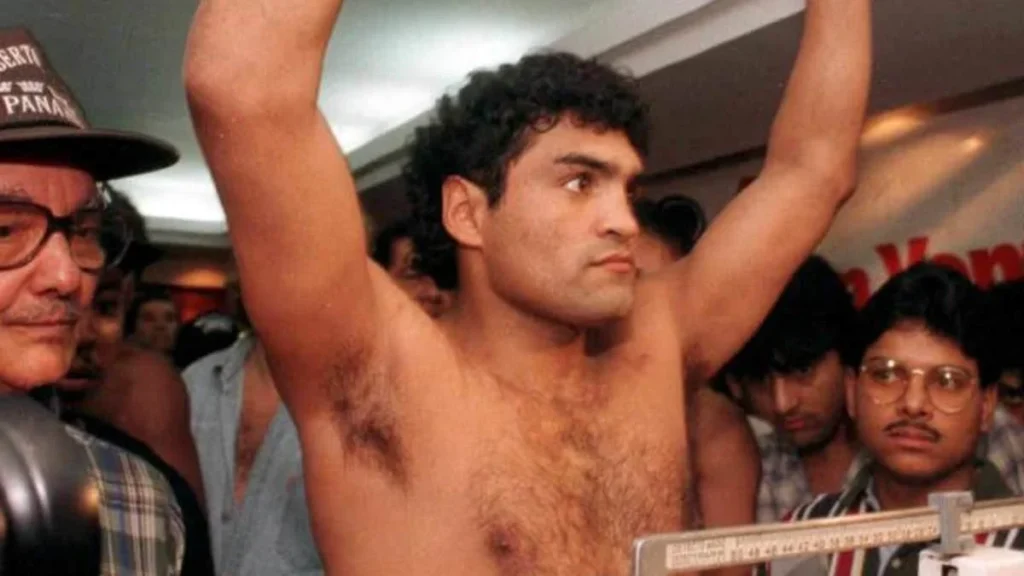
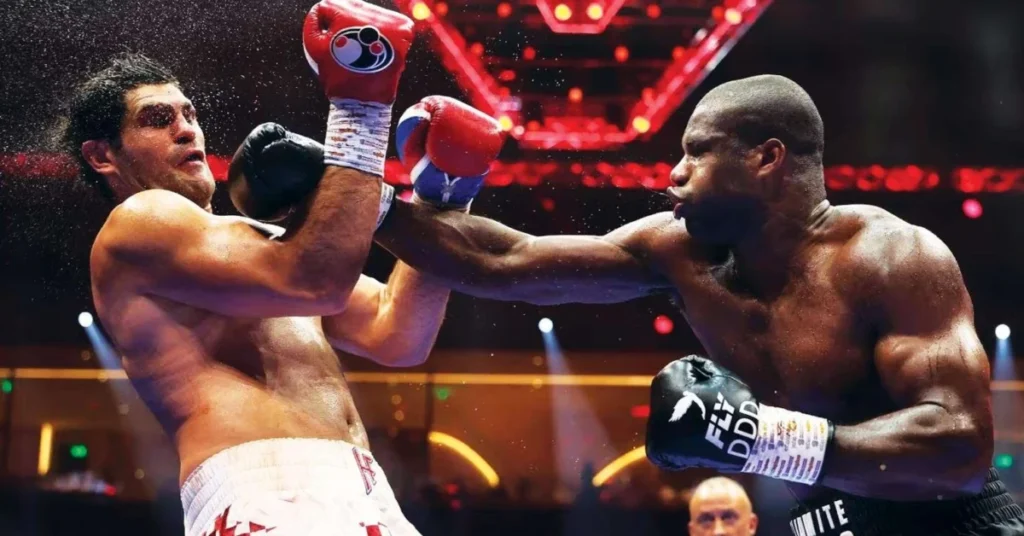
The message, relayed through Alalshikh, reflects the fearless persona that Alvarez has cultivated throughout his decorated professional career. Facing Christian Mbilli, a formidable challenger seeking to claim a major title on the global stage, Alvarez appears intent on maintaining his schedule without regard to external threat levels.
However, boxing analysts and safety experts note that while a fighter’s personal bravery is a hallmark of combat sports, applying that fearlessness to an active geopolitical crisis presents significant real-world dangers. The willingness of a marquee fighter to risk his personal safety does not eliminate the physical threats facing the hundreds of trainers, corner staff, promoters, event production crews, and international fans who must travel into the region to execute a major pay-per-view spectacle.
Aviation Warnings and Escalating Regional Risks
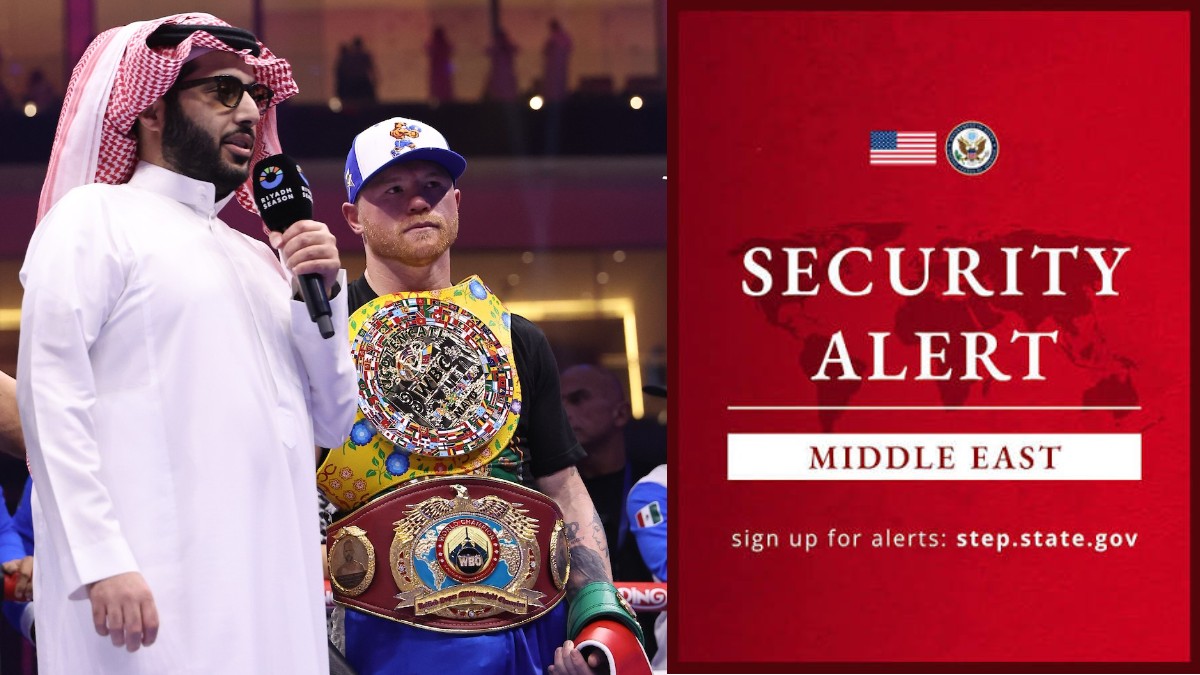
The security concerns surrounding the Riyadh card are not theoretical. They stem from direct and explicit warnings issued by military forces actively targeting Saudi Arabian infrastructure.
Yahya Saree, the military spokesman for the Houthi movement, issued a public directive explicitly warning commercial airlines, airport workers, and civilian travelers to avoid using Saudi Arabian airports and airspace. The military warning contained only limited exceptions, specifically excluding airspace and facilities serving the holy Islamic pilgrimage sites of Mecca and Medina.
This targeted warning places civilian air traffic passing through Riyadh’s major aviation hubs directly in the crosshairs of potential military strikes. The explicit nature of the threat has prompted several foreign governments to review and update their travel advisories for Saudi Arabia, cautioning their citizens against non-essential travel to the region due to the risk of missile and drone attacks.
While there is no evidence to suggest that Canelo Alvarez, Christian Mbilli, or the fight event itself have been singled out as specific targets by attacking forces, the broad nature of the aviation threat inherently impacts anyone traveling to Riyadh. A major international sporting event requires dozens of commercial and private flights to transport fighters, sanctioning body officials, broadcast crews, and global media. In an environment where civilian airspace is explicitly declared unsafe by hostile forces, every incoming flight represents a calculated risk.
Saudi Crown Prince’s Precautions
The severity of the current threat climate within Saudi Arabia is further underscored by reports detailing the extreme measures being taken to protect the nation’s highest leadership.
According to a detailed report by the Wall Street Journal, Crown Prince Mohammed bin Salman has significantly altered his daily routines and living arrangements in response to the escalating danger. The report reveals that the Crown Prince has been moving between "heavily guarded palaces equipped with bunkers," relying on a highly specialized, elite security detail to manage his movements.
Furthermore, intelligence assessments cited by the publication highlight growing concerns over Saudi Arabia’s air-defense capabilities. With stockpiles of foreign-supplied missile interceptors facing potential depletion amid recurring attacks, military commanders have been forced to strategically redeploy air-defense batteries. Priority for these high-value defensive systems has been directed toward safeguarding vital state infrastructure and royal residential complexes rather than public venues or general civilian sectors.
These documented precautions paint a sobering picture of the operational reality inside the kingdom. The fact that the monarchical leadership requires underground bunker protection and concentrated air-defense assets underscores the tangible nature of the missile and drone threats facing the capital.
The resulting contrast is striking: international sports figures and fans are being encouraged to assemble in Riyadh for an entertainment spectacle at the same time the country’s leadership operates within fortified, bunker-accessible compounds. While Alvarez’s determination to fight under any circumstances aligns with his warrior ethos, it highlights a stark divide between elite promotional rhetoric and the practical realities of defense and security on the ground.
Why Is Turki Pushing Ahead?
Despite the mounting security risks and warnings from international aviation and intelligence entities, Turki Alalshikh has shown no inclination to postpone the event or relocate the fight to a neutral international venue. The insistence on holding the Alvarez vs. Mbilli card in Riyadh raises critical questions about the underlying motivations driving Saudi Arabia’s sports strategy.
Over recent years, Saudi Arabia has spent billions of dollars attempting to position itself as the capital of global sports, with professional boxing serving as a centerpiece of this initiative. By hosting major championship bouts featuring the world’s top pugilists, the kingdom has sought to transform its international image, stimulate commercial enterprise, and position Riyadh as a global hub for business and tourism.
       +-------------------------------------------------------+
       |             SAUDI SPORTS INVESTMENT MOTIVES           |
       +-------------------------------------------------------+
                                   |
         +-------------------------+-------------------------+
         |                         |                         |
         v                         v                         v
+-----------------+       +-----------------+       +-----------------+
|  GLOBAL IMAGE   |       |  ECONOMIC DIVERSITY     |  NORMALCY &     |
| Rebrand national|       | Boost tourism, commercial| CONFIDENCE     |
| international profile|   | ventures, entertainment | Project stability|
+-----------------+       +-----------------+       +-----------------+
Within this broader framework, maintaining the October 31 fight in Riyadh serves an important promotional narrative. Canceling or relocating a high-profile bout due to security threats would represent a public setback to the kingdom’s efforts to project stability and safety to foreign investors and tourists. By ensuring that a global icon like Canelo Alvarez fights in Riyadh as scheduled, organizers hope to signal that the capital remains secure and operational despite regional turbulence.
However, critics argue that using high-profile sporting events to project a sense of normalcy during an active security crisis places commercial and public relations goals above human safety. While commercial contracts, promotional obligations, and venue investments represent significant financial commitments, they carry inherently higher stakes when balanced against active threats to civilian airspace.
Logistically, the fight could be moved to several alternative global venues. Both Alvarez and Mbilli have commanded major audiences in neutral international territories, and relocating the bout would allow the athletic contest to proceed without exposing the fighters, their camps, and traveling fans to the risks associated with an active threat zone.
Yet, for the time being, the General Entertainment Authority remains steadfast in its commitment to host the card in Riyadh. As the October 31 date approaches, the boxing world remains caught between the compelling spectacle of a major super middleweight title fight and the volatile realities of regional conflict. Alvarez’s defiance has ensured that the fight remains on track, but it has not resolved the fundamental tension between sporting ambition and physical safety.