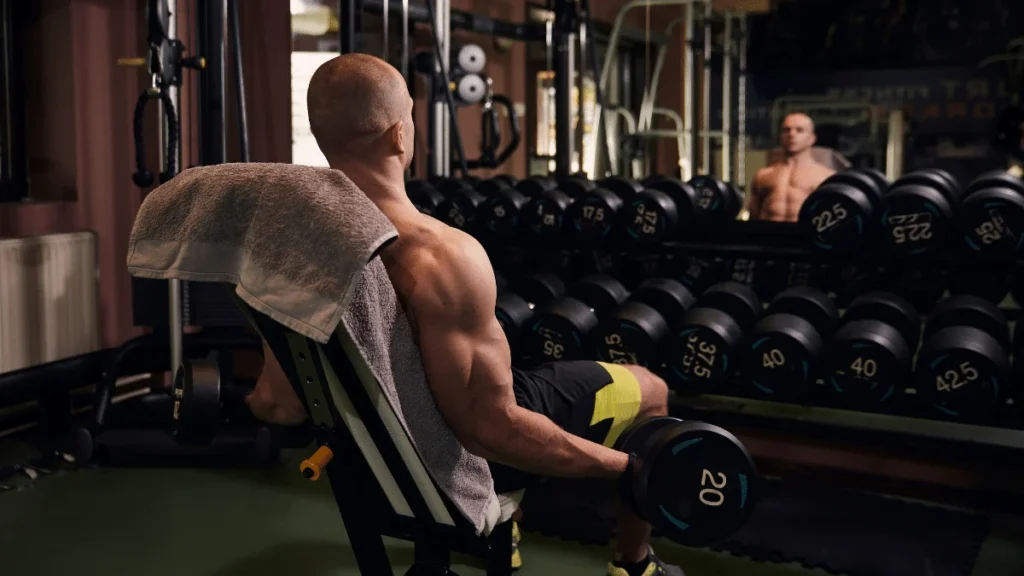


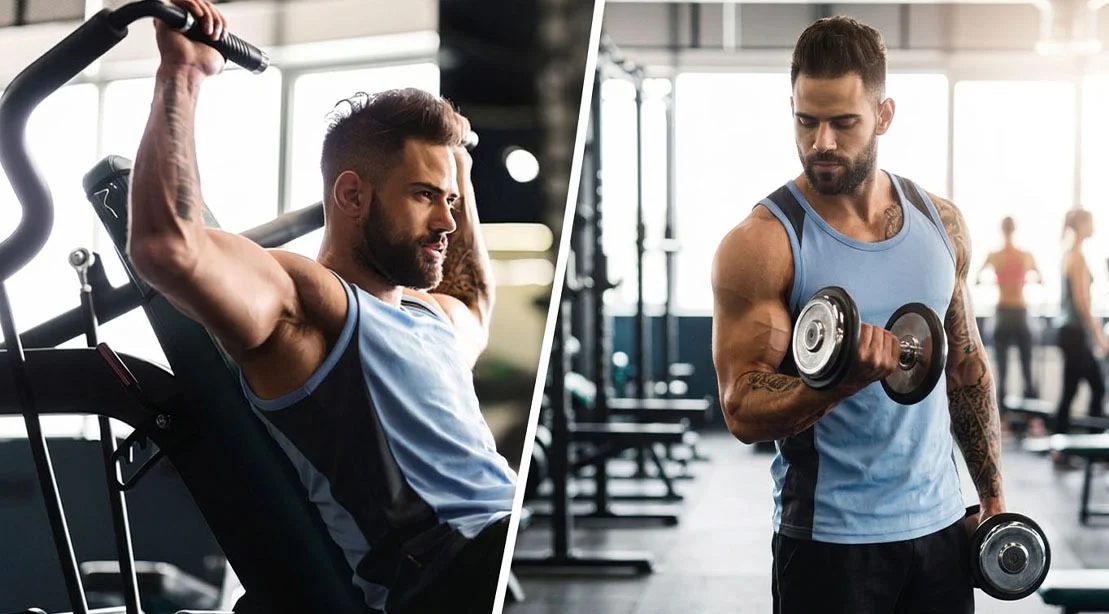
For decades, the barbell reigned supreme in the world of physical culture. Since its invention, free weights have been universally regarded as the absolute gold standard for building muscle mass and raw strength. Heavy compound lifts using barbells and dumbbells were the core of any serious training program. Machines, by contrast, were often relegated to the periphery—viewed as tools strictly for beginners, physical therapy rehabilitation, or finishing off a muscle group after the hard, foundational work with free weights had already been completed.
Today, however, that longstanding hierarchy is being challenged. Walk into many well-equipped commercial fitness centers, and you will find an array of advanced apparatuses that look more at home in a NASA training facility than a traditional iron gym. Modern facilities now prominently feature Pendulum squats, Arsenal Strength rows, converging chest presses, and other specialized biomechanical devices designed to revolutionize how we lift.
These modern engineering marvels feature sophisticated resistance profiles and adjustable movement paths. They are designed to challenge targeted muscle groups smoothly throughout an entire range of motion, allowing lifters to focus entirely on the contraction without constantly worrying about balance, coordination, or stabilizing a wobbling load. Yet, before anyone hastily abandons their trusty barbells and iron plates, a fundamental question hangs in the air: are modern strength machines genuinely superior for building muscle, or are we simply mistaking clever engineering for superior physiological results?
Why Free Weights Still Work
Despite the high-tech innovations filling modern weight rooms, free weights remain remarkably effective, highly versatile, and responsible for helping generations of lifters build impressive physiques and extraordinary strength. Industry experts emphasize that traditional tools should not be discarded lightly.
"Free weights should always remain the foundation," explains Matt Wenning of Wenning Strength. "They develop strength, coordination, and stability that machines cannot fully replicate."
This enduring effectiveness comes down to several distinct physiological factors. Progressive overload is remarkably straightforward with free weights. Barbells are easy to load incrementally, and standard dumbbells typically increase in manageable intervals, making it simple to track progress over time. Furthermore, because barbells provide a more stable platform than dumbbells, they allow lifters to safely handle much heavier loads.
Another vital element is stabilization. Human bodies rely on prime mover muscles, such as the quadriceps, alongside smaller stabilizer muscles, such as the rotator cuff. Free weights inherently engage both systems simultaneously. While machines require far less stabilization due to their fixed designs, and while increased stabilization does not automatically equate to greater muscle growth, the neuromuscular coordination developed through free weights is profound.
Finally, free weights offer unmatched freedom of movement. Many machines lock the user into a rigid, predetermined path. With dumbbells and barbells, lifters are not confined to a single fixed track, allowing them to subtly adjust grip angles, elbow positions, and pressing paths to suit their unique biomechanics and personal comfort.
The Rise of the Machines
The fitness industry’s recent pivot toward high-tech equipment is driven by a broader cultural shift. Jay Ashman of Ashman Strength offers a unique perspective on this modern phenomenon.
"We are in the midst of the ‘optimization’ trend, that’s heavy on aesthetics," he explains. "Why would a trainee not use the easiest tool for the job? Doesn’t make it the best tool, but it’s the most efficient."
Manufacturers like Arsenal Strength, Rogers Athletic through their Pendulum Strength line, and Prime Fitness have capitalized on this trend by engineering equipment that offers unprecedented levels of body customization. A major breakthrough in this domain is the development of sophisticated resistance profiles. Using cams, lever arms, and adjustable loading positions, modern machines can alter how resistance is applied throughout an exercise’s range of motion. Because human muscles do not produce equal force at every joint angle, a machine that matches resistance to the muscle’s natural force curve can provide a distinct training advantage.
Furthermore, greater stability allows for heightened mental focus. When lifting along a guided path without the burden of balance, the target muscles receive maximal tension while stabilizer muscles take a temporary backseat.
"If I’m trying to maximize mechanical tension through a particular muscle," explains Gareth Sapstead, CSCS, "reducing the stability demands can be a good thing because you’re challenging the target muscle rather than worrying about balance, coordination, or maintaining position."
Modern machines also boast advanced ergonomics, including adjustable seats, chest pads, starting positions, and handles. Innovations like converging pressing arms—where hands move closer together near the lockout—and diverging rowing paths allow for natural, independent limb movement. This facilitates effective unilateral training, helping lifters identify and address side-to-side strength imbalances with minimal coordination demands.
Scientific Findings: Free Weights Versus Machines
When looking past the marketing claims, what does actual scientific research say about the comparative muscle-building efficacy of free weights versus machines?
"We know that our muscles," Ashman notes, "cannot tell the difference between free weights and machines regarding muscle growth."
Recent scientific literature largely supports this observation. A comprehensive 2023 systematic review and meta-analysis examined 13 separate studies involving over a thousand participants comparing free-weight and machine training. Among the studies measuring hypertrophy, researchers found no distinct advantage favoring either category. Another meta-analysis by Heidel and colleagues similarly concluded that both modalities induced comparable amounts of muscle growth, a finding reinforced by other comparative trials published around the same time.
However, researchers note an important caveat: these scientific reviews generally compared broad categories of traditional machines and free weights, rather than the newest generation of specialized, highly adjustable biomechanical machines.
When evaluating strength outcomes rather than pure muscle growth, specificity becomes the deciding factor. The existing meta-analyses show that lifters who train with free weights improve more when tested on free-weight movements, while those who train with machines perform better on machine-based strength tests. Strength is highly equipment-specific; performing a machine-based movement will develop the target musculature, but it will not inherently teach the complex balance and coordination required for a heavy barbell lift.
Evaluating the Pendulum Squat Versus the Barbell Back Squat
To truly understand whether modern machines hold a practical edge, it is instructive to compare a marquee machine like the Pendulum squat directly against the traditional barbell back squat.
The Pendulum squat utilizes a guided, arcing motion that drastically reduces balance demands. Depending on the exact design and user setup, this can make it significantly easier to achieve deep flexion and isolate leg drive. Some variations also feature customized resistance profiles that alter the difficulty curve across the movement.
The primary advantage of the machine is external stability, which allows lifters to challenge their quadriceps intensely without spinal loading, balance issues, or torso control acting as the limiting factor. For individuals with specific mobility limitations or physical discomfort when supporting a heavy bar across their upper back, the Pendulum squat provides a viable and productive alternative.
Conversely, the barbell back squat remains unmatched for developing barbell-specific strength, overall neuromuscular coordination, and the ability to brace against heavy loads. It is a fundamental movement for competitive strength athletes and offers greater versatility for lower-body development as a whole. Ultimately, while the Pendulum squat may serve as an exceptional tool for targeting the quadriceps, it does not guarantee superior overall muscle hypertrophy compared to its traditional counterpart.
The Continuing Case for Free Weights
While modern machines offer targeted isolation and adjustable setups, strength training encompasses broader physical adaptations. For maximal strength development, the barbell remains indispensable. No machine can entirely replicate the nuanced skill and systemic coordination required to step under a heavily loaded bar.
Free weights also demand superior movement skills, requiring lifters to pilot loads through free space while simultaneously controlling multiple joints and maintaining posture.
"I still favor free weights for developing strength, coordination, positional control," Sapstead notes. "The ability to produce force through more complex movement patterns works well for clients who want a physique that performs as well as it looks."
Additionally, free weights offer unmatched versatility and accessibility. They provide everything needed for a complete workout without requiring specialized, high-cost apparatuses that occupy substantial floor space.
Integrating Both Approaches for Optimal Results
Rather than viewing the fitness landscape as a zero-sum battle between opposing camps, leading coaches advocate for a blended approach. Sapstead’s philosophy centers on finding the tool that places optimal tension on the target muscle through a comfortable range of motion while allowing for consistent progression.
"The best exercise is the one that places sufficient tension on the muscles you’re trying to develop through a useful range of motion while allowing consistent progression," he says. "Sometimes that’s a barbell, sometimes a dumbbell, and sometimes a really well-designed machine."
Practical program design often dictates that equipment selection should be driven by specific training goals. If the objective is improving a competition lift like a squat or bench press, free weights are non-negotiable. However, when the primary goal is pure muscle hypertrophy, lifters enjoy far greater flexibility.
Strategic use of machines can also help manage systemic fatigue and enhance safety. Modern machines allow lifters to isolate specific musculature and increase training volume without generating the overwhelming systemic fatigue often associated with heavy barbell compounds. Furthermore, training to muscular failure is substantially safer on guided apparatuses, eliminating the risk of being pinned beneath an unsupported barbell during high-intensity drop sets or solitary training sessions.
Ultimately, today’s advanced machines have firmly earned their place alongside traditional barbells and dumbbells. While they have not definitively dethroned free weights for overall muscle development, they offer valuable alternatives for targeted hypertrophy, injury management, and efficient training. For most lifters, the optimal path forward relies not on choosing one exclusively, but on intelligently combining both to suit individual needs and long-term fitness goals.