

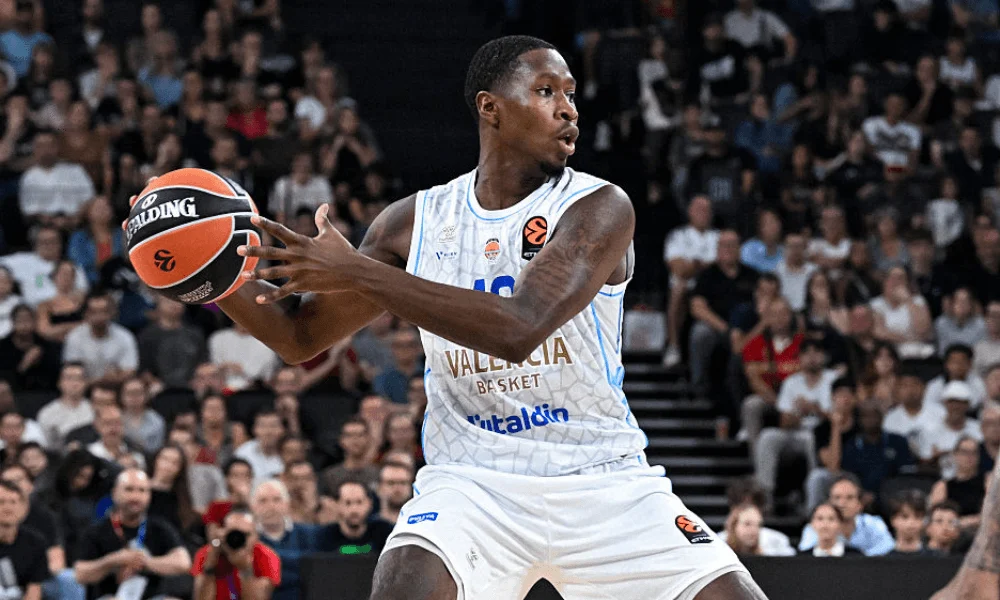
The future of European basketball has been thrust back into a high-stakes geopolitical contest after the Euroleague confirmed major plans to overhaul its financial and governance structure.
During a pivotal meeting held in Italy, the 13 permanent shareholder clubs of the pancontinental competition voted decisively to transition away from their traditional licensing model and formally move toward a permanent franchise system. Concurrently, Reuters reports that these team owners turned down a formal collaborative proposal put forward by the National Basketball Association (NBA).
According to reports from Gazzetta dello Sport, the NBA’s collaboration proposal was strictly conditional. The US-based league had made its offer dependent on the Euroleague abandoning its internal plans to create franchises and expand its current footprint to a 24-team competition.
The NBA, widely recognized as a world leader in sports entertainment, has been steadily trailing a long-awaited update on its own ambitious plans for a 16-team European league. Backed by the International Basketball Federation (Fiba), the NBA has targeted a launch date of October 2027 for this new venture.
This timeline and ambition have placed the North American league on a direct collision course with the Euroleague. However, the tone of the Euroleague has softened noticeably in recent months, largely following the arrival of long-serving former NBA executive Jesus “Chus” Bueno, who stepped into the role of chief executive in January.
Bueno has adopted an appreciably different approach and tone compared to his predecessor, Paulius Motiejunas, regarding the prospect of a joint project with the NBA. Despite the recent rejection of the specific collaboration terms, outlets including The Athletic have reported that Euroleague officials and leadership remain entirely open to further dialogue with the NBA moving forward.
The Euroleague Franchise Era
Faced with the looming prospect of the NBA encroaching directly upon its traditional territory and market share, the Euroleague has pivoted over the past several months from a posture of outright opposition toward a strategy of tactical consolidation and commercial strengthening.
Back in July, speaking directly at the SportsPro Investment Summit, Bueno emphasized that all basketball stakeholders "should be open and not be afraid" of pursuing a collaborative partnership, given the potentially massive collective rewards on offer for the sport across the continent.
Simultaneously, under Bueno’s stewardship, the Euroleague has pressed forward with a comprehensive package of commercial updates designed to provide the organization with enhanced financial leverage and long-term security.
Currently, 20 teams compete in the Euroleague each season. Thirteen of these clubs hold permanent membership via lucrative ten-year A-licences, which grant them a controlling majority stake in the competition’s commercial arm, Euroleague Commercial Assets (ECA). Other participants gain entry through sporting success in domestic competitions and the second-tier EuroCup.
Over the course of the summer, ECA developed an innovative operational concept designed to convert those existing ten-year licences into permanent franchises. The organization canvassed market interest by establishing individual franchise valuations ranging from €60 million to €320 million. The planned rollout strategy for this ambitious scheme was intended to begin with the 13 incumbent licensees, with another eight franchises subsequently made available ahead of the 2027/28 season.
According to statements from Bueno, concrete deals were already in place to smoothly transition the A-licence clubs into permanent franchises during the 2026/27 campaign. These opportunities were offered on a discounted, first-refusal basis directly to existing team owners.
However, with the clubs voting at the recent meeting to hold off on expanding the Euroleague to 24 teams next year, it remains unclear precisely when or how those additional franchises will ultimately be issued. Last week, the Euroleague confirmed to Reuters that it had already received 14 separate formal bids for those prospective holdings, generating a total valuation of over €800 million in potential franchise fees.
Ultimately, this week’s landmark vote theoretically deepens the structural ties between the permanent member clubs and the central Euroleague organization. Bueno and the broader executive leadership team hope this financial restructuring will help catalyze rapid growth in asset values across the board.
NBA Europe Emerges
The NBA first went public with its ambitious vision for a standalone European competition back in November 2025. The broad operational outline of the project has remained remarkably consistent ever since: a 16-team league featuring 12 permanent franchise members, complemented by qualified teams advancing from domestic competitions and the Fiba Basketball Champions League.
Fiba’s own premier European club competition has effectively served as a prominent rival to the Euroleague since its inception in 2016. Historically, the international federation once operated the continent’s undisputed top-tier club competition before the Euroleague broke away to form its own independent structure in 2000.
The preferred host cities earmarked for NBA Europe teams are widely understood to include Paris, Lyon, London, Manchester, Rome, Madrid, Barcelona, Athens, Istanbul, Milan, Munich, and Berlin. Several of these major metropolitan hubs are already home to established Euroleague clubs, while organizations like the London Lions have previously held clear ambitions of reaching the top tier through the EuroCup.
Detailed public information regarding the inner workings of NBA Europe has been relatively scarce for much of the past two years. Nevertheless, the NBA has periodically highlighted immense investor curiosity. Prominent media outlets have reported intense interest from more than 120 separate would-be ownership groups, with proposed entry fees sometimes exceeding US$1 billion per franchise.
It is widely anticipated that the final composition of the league will feature a diverse hybrid combination of existing traditional basketball clubs, newly created franchises, and sports entities tied to major continental soccer heavyweights. In March, Qatar Sports Investments—the majority owner of UEFA Champions League winners Paris Saint-Germain—publicly confirmed that it was among the active bidders.
Considerably less information is publicly available regarding the precise involvement of other major European soccer institutions. However, The Athletic has reported that advanced discussions were progressing smoothly with several prominent teams. Furthermore, senior NBA executives, including deputy commissioner Mark Tatum and George Aivazoglou, the managing director for NBA Europe and the Middle East, attended the annual European Club Association conference in Copenhagen to engage with football leadership.
Meanwhile, traditional Spanish basketball powerhouses FC Barcelona and Real Madrid both renewed their respective Euroleague licences in 2026. However, Real Madrid’s director of basketball, Juan Carlos Sanchez, has previously voiced strong personal support for a comprehensive alliance between European clubs and the NBA.
Inevitably, the true perspectives and intentions of all prospective investors will become significantly clearer once the ongoing high-level talks between the NBA and the Euroleague reach a definitive conclusion.
Moving to a Half-Court Approach
Throughout the entire course of these negotiations, the NBA has held steadfastly to an ambitious target of an October 2027 tip-off for its new European competition.
Whether that timeline can survive the latest strategic decisions made by the Euroleague remains to be seen. One well-placed source linked to a prospective NBA franchise suggested to The Athletic that the mooted launch date would prove "impossible" unless the Euroleague formally comes on board as a partner.
Regardless of the political hurdles, NBA Europe appears poised to become a reality soon, marking a massive strategic statement of intent from an organization that has hosted regular-season and exhibition basketball games in the region since 2011. Aivazoglou is scheduled to appear at a major sports business conference in London, where he is expected to share further progress regarding the structural shape of the new league and provide a formal reaction to the Euroleague’s decisive meeting in Italy.
In alignment with his international counterparts, NBA commissioner Adam Silver has repeatedly reaffirmed his personal preference for cooperation and unity in recent weeks. Speaking to American team owners last month, Silver emphasized that "[NBA Europe] would be strengthened by joining forces with the Euroleague."
Following this week’s developments, the NBA and Fiba released a joint public statement reiterating their firm intention to press ahead with the development of NBA Europe while simultaneously keeping the door wide open for a prospective partnership with the Euroleague.
"A partnership between the EuroLeague, Fiba and the NBA to unify the European basketball ecosystem would unlock the game’s enormous potential across Europe for the benefit of clubs, players and, most importantly, fans," the joint statement read.
"The NBA and Fiba remain committed to moving forward with a new professional men’s league in Europe and helping build a stronger, more sustainable basketball ecosystem alongside partners who share our vision of growth, opportunity and the core principles of the European sports model."
While this week’s meetings did not immediately produce a formal alliance between the two major governing bodies, all key stakeholders remain in agreement on one fundamental point: professional club basketball in Europe has long fallen short of its significant commercial promise. The critical question moving forward is whether these powerful entities will ultimately find a workable means of exploring that vast potential together.