By Phil Jay
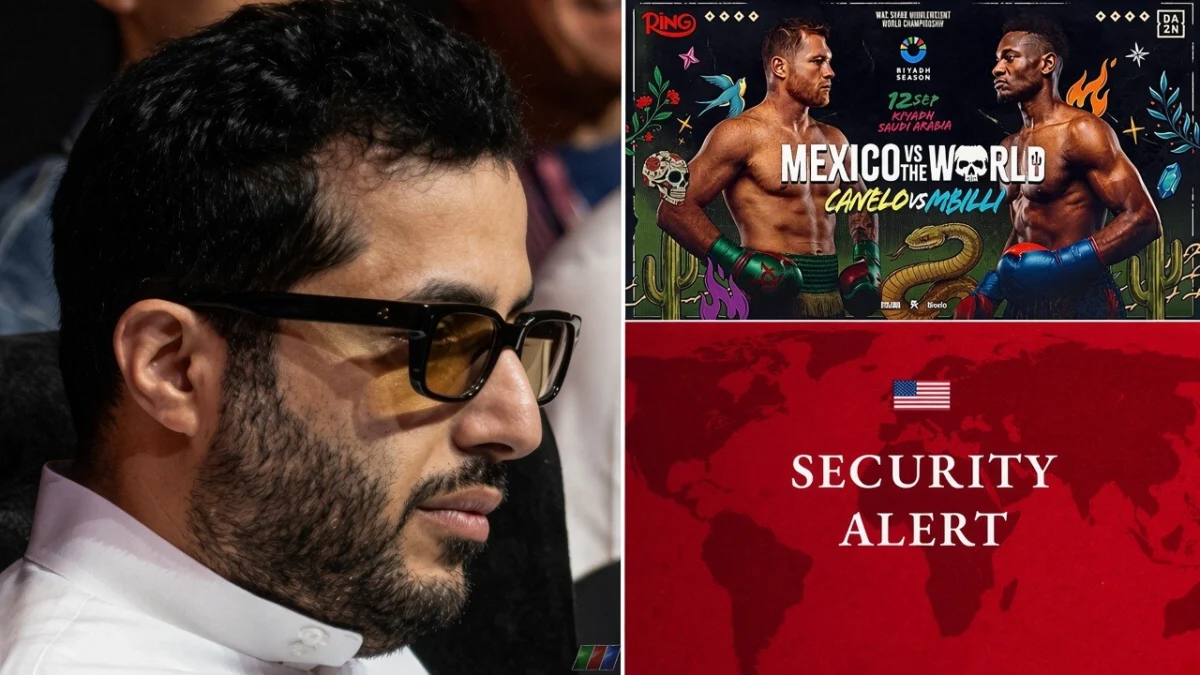
Turki Alalshikh faces an imminent and critical decision regarding the high-profile October 31 clash between Mexican superstar Canelo Alvarez and challenger Christian Mbilli, following reports that 12 people were killed and hundreds injured in devastating attacks on Riyadh’s international airport.
With only 20 days remaining until the opening bell, the mega-fight remains officially scheduled to take place in the Saudi capital. This is despite a rapidly escalating security crisis in the region and increasingly urgent travel warnings issued by several foreign governments. The geopolitical and security landscape surrounding the Saudi capital has shifted dramatically, casting a heavy shadow over what was intended to be one of the marquee boxing events of the year.
International travel advisories have added immense pressure to the promotion. The United Kingdom has strongly advised its citizens against all but essential travel to the Riyadh province, pointing to the volatile security environment. Meanwhile, the United States Department of State has urged American citizens to entirely reconsider travel to Saudi Arabia due to the heightened risk of localized violence and terrorism.
The security breaches specifically targeted King Khalid International Airport, resulting in physical damage and severe disruptions to regional and international flight paths. These disruptions have created logistical nightmares and mounting uncertainty for the international fighters, cornermen, trainers, athletic officials, cutmen, and global broadcast crews who are expected to fly into the country in the coming days. Despite the closure of normal transit channels and the obvious threats posed to civil aviation, Alalshikh pushed forward with the promotion, officially announcing the full ten-fight undercard even after the fatal attacks had already occurred, giving no public indication that the venue would be shifted.
Turki Defends Saudi Security
In the immediate aftermath of the tragedy, Alalshikh took to social media platform X to address the nation and the global boxing community. In a series of statements translated from Arabic, he publicly mourned those who lost their lives while expressing unwavering confidence in his country’s military and internal security apparatus.
"O Allah, protect my homeland with Your eye that never sleeps … O Allah, guide the aim of our heroes … O Allah, have mercy on our martyrs and heal our wounded … May every despicable soul who wishes harm upon the land of the Two Holy Mosques be thwarted … This country is safe and secure from above the seven heavens!" Alalshikh wrote.
In a separate post addressing the perpetrators, he warned that the blood of those killed would not be wasted and that those responsible would ultimately pay a heavy price for their actions.
While Alalshikh’s personal confidence in the stability and defense of Saudi Arabia is clear and absolute, the reality facing foreign nationals, media personnel, and athletes expected to travel directly into Riyadh is considerably less reassuring. The contrast between state-level assertions of absolute security and the stark advisories issued by Western governments has created an unprecedented dilemma for the boxing industry.
Prominent members of the combat sports media did not hesitate to voice their alarms. American boxing journalist Dan Rafael shared the official United States Embassy security alert with his followers on October 8, adding a grim piece of commentary: "Good luck to those traveling for Canelo vs. Mbilli."
Fellow boxing podcaster and analyst Dan Canobbio was even more direct in his public plea to the sport’s biggest active attraction, writing plainly on social media: "Don’t do it Saul."
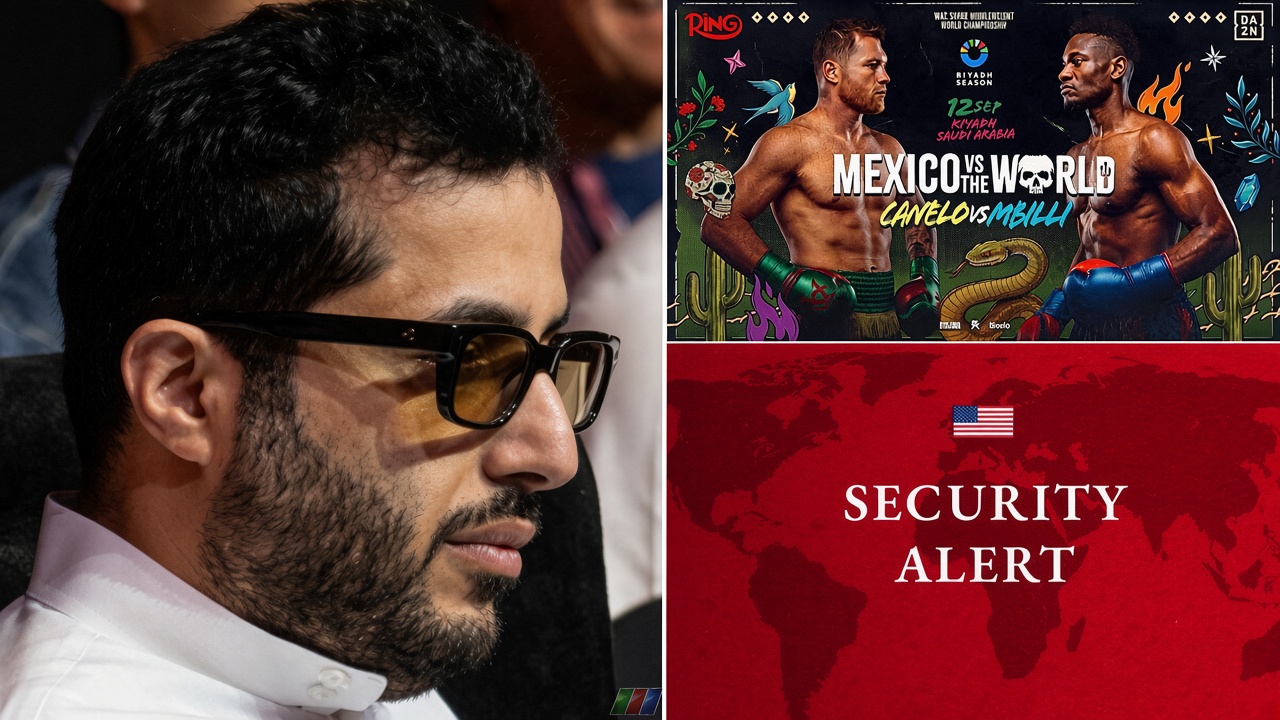
Both reactions vividly reflect deep-seated industry concerns about thrusting one of boxing’s most valuable superstars and his traveling entourage directly into a metropolitan center whose primary international gateway has just been successfully targeted by hostile attacks.
With less than three weeks remaining until fight night, Alalshikh’s decision to roll out the full undercard details while body counts were still being tallied has raised serious questions. Fighters on the preliminary and supporting bouts, many of whom rely entirely on the guidance of major promoters and athletic advisors, may have been given assurances that Riyadh remains fully operational and secure, despite external evidence to the contrary.
The question of whether to relocate the entire production to an alternative global venue must now be taken under serious consideration by all key stakeholders. The physical safety and well-being of the fighters, their families, team members, media, and fans must take absolute priority over the geopolitical and commercial ambitions of keeping the event anchored in Riyadh.
World Boxing News reported earlier this month that Las Vegas had already been evaluated and considered as a viable potential alternative location if Riyadh ultimately became unavailable due to scheduling or regional conflicts. The subsequent undercard announcement emerged precisely as the first reports of casualties began filtering out through international news outlets, and the ground situation has only continued to deteriorate since that time.
Turki Alalshikh’s personal determination to keep the fight firmly planted in Riyadh is obvious and understandable given his heavy investment in establishing Saudi Arabia as the new global capital of boxing. However, the prominent Saudi matchmaker and advisor must surely realize that staging a major international combat sports event under these severe conditions carries risks that far outweigh the commercial benefits.
Canelo Alvarez and Christian Mbilli have already been forced to endure one prior postponement in their promotional timelines, and neither competitor should reasonably be expected to put their health, their preparation, or their support teams in unnecessary physical danger simply to preserve a specific geographic location for the bout.
Relocating a fight of this magnitude at the eleventh hour would undoubtedly represent another logistical setback and a financial headache for the organizers. However, there is a far greater price to pay if something goes catastrophically wrong in a combat zone.
With strict government travel warnings officially in place, 12 people dead, and hundreds more hospitalized with injuries, Alalshikh has precious little time left to make a decision that should now be straightforward. The fight can easily go ahead in an alternative, secure global destination. There is no legitimate reason that it absolutely has to take place in Riyadh under a cloud of violence and active military threats. Canelo vs. Mbilli in Saudi Arabia must be canceled.
About the Author
Phil Jay is the Editor-in-Chief of World Boxing News (WBN), a BWAA-acknowledged boxing news website founded in 2010. A veteran boxing reporter with 16 years of experience, he has interviewed world champions, broken international exclusives, and reported ringside from major events. His work is published worldwide through WBN and distributed on platforms including Apple News.