

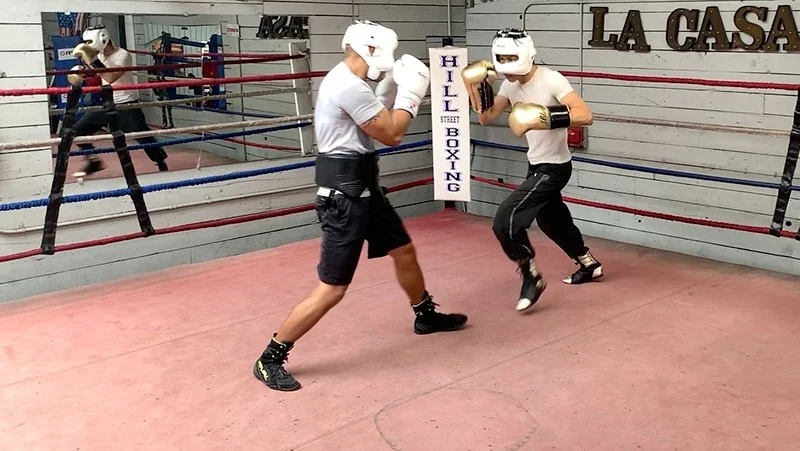
In the sweet science of boxing, few concepts are more widely misunderstood than the art of "fighting on the outside." For generations, fighters and trainers alike have thrown around the term to describe operating at a long range, keeping opponents at arm’s length, and using distance as a primary shield. However, a closer look at the mechanics of the ring reveals a harsh truth: simply put, there is no such thing as fighting on the outside by retreating in a straight line.
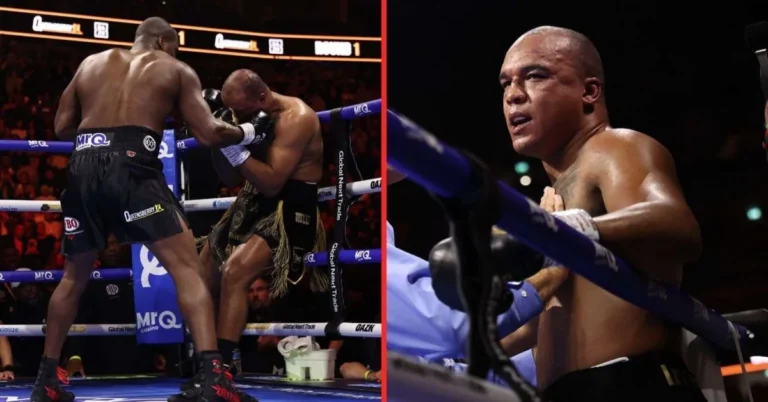
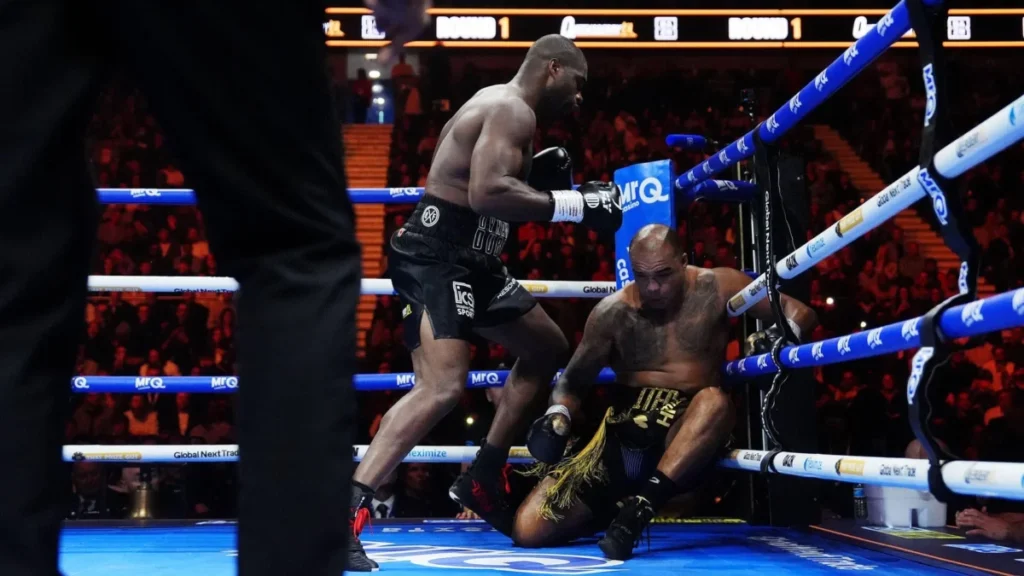
When boxers attempt to maintain long-range distance by constantly stepping backward, they inevitably run out of real estate, trapping themselves against the canvas ropes where they become easy targets. The alluring temptation of the backstep has long seduced amateur and professional fighters alike, acting as a psychological "Get out of Jail Free" card when pressure mounts.
When a fighter is overwhelmed, eating clean shots, or struggling to track incoming punches, the instinctual reaction is to hit the emergency backstep button. Statistically, a clean backstep can avoid almost any punch. It is undeniably safer in the immediate moment than blocking, slipping, rolling, or ducking, because stepping entirely out of range means an opponent’s punch lands strictly in empty air.
Yet, this trusty maneuver carries a fatal flaw. The backstep ultimately changes nothing about the tactical scenario. At best, a backward stride buys safety from a single combination or a pair of punches. Once that momentary gap is created, the pressing opponent simply steps forward, erasing the distance and placing the retreating fighter right back in the danger zone—only this time with significantly less space behind them.
The physical dimensions of a boxing ring impose strict limitations on linear retreat. Even in a massive regulation ring, a defensive-minded fighter starting from the center can typically take no more than two meaningful backsteps before finding their back pinned against the ropes. The first step yields the center of the ring, and the second brings the ropes into play, creating an immediate psychological panic.
Furthermore, the nature of these backward movements matters deeply. Micro-steps designed to maintain an aggressive, counter-punching stance are entirely different from panic-driven leaps that sacrifice balance and posture. Relying solely on raw footwork speed to continually flee an oncoming opponent is an unsustainable strategy. It demands superhuman endurance, relies heavily on facing an exceptionally slow or rigid opponent, and inadvertently builds the confidence of the aggressor, who senses fear and presses the attack like a shark smelling blood in the water.
To truly control the distance and survive the onslaught, fighters must abandon the linear retreat and master the art of lateral movement. Circling around an opponent—whether clockwise toward their right hand or counter-clockwise toward their left—is widely recognized by elite tacticians as the only reliable method to ensure a fighter never runs out of space.
Lateral movement offers distinct advantages that straight-line running can never match. First, circling around an opponent preserves space infinitely. While linear backward movement leads directly to the ropes, lateral movement opens up an endless perimeter of angles, allowing a fighter to continue moving sideways or even drop back as a last resort only when necessary.
Second, lateral movement keeps the defender actively within punching and countering range. The primary way to prevent an opponent from advancing unchecked is to make them think twice before stepping forward. Fighters cannot fire effective counters if they constantly leap themselves entirely out of range, just as they cannot mount a defense if they are trapped in a cycle of absorbing a blow, swinging wildly into open air, and getting driven back again by a recovering attacker.
Analyzing footage of historical masters like Muhammad Ali or Sugar Ray Leonard reveals the true nature of their legendary movement. Observers often remember them "running" backward, but a closer examination shows they were actually moving laterally while continuously sticking the jab into their opponent’s face. They remained in range, disrupting the opponent’s rhythm while keeping themselves dynamically elusive.
Finally, a laterally moving target presents a notoriously difficult geometry for an attacker. Striking diagonally or at an angle forces an opponent to punch awkwardly outside their natural center line, making incoming blows far easier to deflect or evade.
Executing effective lateral movement requires subtle adjustments in angles and body positioning. Fighters can alter their circling trajectory to be more sideways, which generally neutralizes an opponent’s forward momentum and frustrates their timing, or more forward-leaning to apply pressure and disrupt an aggressor’s rhythm. Additionally, managing the torso hunch is critical; many fighters instinctively pop upright when moving defensively, exposing their chin and head to swinging blows. Maintaining a slight crouch, with the head tucked securely, ensures that lateral movement remains genuinely elusive while keeping the fighter balanced and ready to strike.
Ultimately, the true definition of "fighting on the outside" is not about retreating to a static point in the distance; it is about maintaining dynamic, continuous movement. As long as a fighter keeps moving—utilizing lateral angles, shifting directions, and employing active head movement—they remain safely on the outside. Conversely, the moment a fighter stops moving laterally and relies purely on running straight back, they surrender control of the ring. Breaking the ingrained habit of the straight backstep is essential for any fighter looking to master the ring, proving that the safest way to handle pressure is never to run away, but rather to go over, under, and around the storm.