

Recent scientific research has fundamentally shifted our understanding of human aging, revealing that physical fitness and strength do not fade away in a slow, gentle slope throughout life. Instead, a comprehensive new body of data shows that physical capabilities hit a critical turning point and drop off sharply around the age of 35, a phenomenon that occurs even among individuals who maintain regular, active exercise routines.
This sobering discovery stems from a remarkable 47-year study that tracked participants across nearly five decades, offering researchers a rare, uninterrupted window into how human physical capacity evolves over the entire adult lifespan. While the findings challenge deeply ingrained assumptions about aging and exercise—demonstrating conclusively that even dedicated fitness regimens cannot entirely stop the biological clock—they also shed light on powerful, evidence-based strategies that can help individuals slow this inevitable decline and preserve their quality of life.
The Surprising Turning Point
For generations, conventional wisdom held that physical degradation was a gradual, linear process beginning much later in life, and that staying active could largely insulate a person from the effects of aging. However, the 47-year study revealed that fitness levels and absolute strength begin their distinct downward trajectory right around age 35, marking a pivotal inflection point in human physiology.
What makes this discovery particularly striking is that it applies universally, catching even those who maintain consistent, lifelong exercise habits. When individuals cross the threshold into their mid-thirties, their fundamental physiological systems undergo a profound shift. The unprecedented duration of the research project allowed scientists to observe these trends across generations, confirming that this mid-life drop is not an anomaly of lifestyle, but a deeply embedded biological reality. As individuals move past this milestone, the curve of physical decline steepens, transforming a gentle slope into a much more accelerated path of deterioration.
Why Age 35 Matters
The mid-thirties represent a true physiological watershed moment for the human body. During this specific window, multiple biological systems that support endurance, strength, and overall performance begin a coordinated, synchronized decline.
At a microscopic level, muscle mass starts decreasing at a measurable and consistent rate. Simultaneously, cardiovascular efficiency—the body’s ability to utilize oxygen effectively during exertion—begins its gradual reduction. Perhaps most noticeably for everyday life, recovery from physical exertion, intense workouts, and minor injuries takes significantly longer than it did in the twenties and early thirties.
These microscopic and systemic changes do not occur overnight, nor do they instantly impair daily functioning. However, the long-term study identified age 35 as the approximate tipping point where these biological shifts become statistically detectable and uniformly consistent across large populations, regardless of occupational background or baseline health.
High-Intensity Training Shows Unique Benefits
While no exercise program or lifestyle intervention can completely halt age-related physiological decline, contemporary sports science suggests that specific training modalities can alter the trajectory. Recent investigations into different exercise regimens indicate that high-intensity interval training, commonly known as HIIT, may offer older adults a distinct advantage over more traditional, moderate-intensity workout approaches.
A separate six-month clinical study examined various exercise modalities in older demographics, closely monitoring their effects on body composition. The results yielded unexpected insights into how different physical stressors interact with aging tissue. Participants who incorporated high-intensity interval training into their routines successfully lost body fat while fully preserving their existing muscle mass. In contrast, participants engaging exclusively in steady-state, moderate-intensity exercise experienced a small but measurable loss of lean muscle tissue alongside their fat reduction.
This distinction carries immense clinical significance as the body ages, because preserving lean muscle tissue directly influences metabolic health, physical independence, and overall resilience against chronic illness and frailty.
Strength Training’s Critical Role
Beyond cardiovascular endurance and metabolic conditioning, resistance training has emerged as a non-negotiable pillar for combating the physical toll of aging. According to recent findings, targeted strength training is arguably one of the most powerful tools available to help individuals maintain their physical independence well into their later decades.
As individuals age, progressive muscle loss—clinically referred to as sarcopenia—makes routine daily tasks progressively more difficult. At the same time, this loss increases vulnerability to slips, falls, and structural injuries. This dynamic creates a concerning cycle where reduced physical activity leads to accelerated muscle atrophy, which in turn discourages further movement.
Fortunately, the research offers a remarkably encouraging takeaway: even minimal doses of strength training can yield meaningful physiological benefits. Data suggests that committing to just one dedicated strength training session per week can make a measurable difference in preserving muscle mass and functional capacity over time, lowering the barrier to entry for those who might otherwise feel overwhelmed by rigorous gym schedules.
The Acceleration Problem
One of the most profound insights delivered by the 47-year study is that physical decline does not proceed at a steady, uniform pace. Instead, deterioration actively speeds up as individuals transition through their forties, fifties, and beyond.
This acceleration phenomenon explains why the functional gap between a sedentary person and an active person may appear relatively modest during early middle age, but widens dramatically by the time individuals reach their sixties and seventies. The compounding nature of biological aging means that small early advantages in fitness compound over decades, resulting in stark differences in mobility and health in later life.
What Regular Exercisers Still Face
Perhaps the most sobering reality highlighted by the research concerns individuals who maintain rigorous, consistent exercise routines throughout their entire adult lives. Even these dedicated fitness enthusiasts cannot entirely bypass the biological reality of the age-35 turning point.
Regular physical activity does not prevent aging; rather, it fundamentally alters the rate of decline. Active individuals consistently maintain higher absolute fitness levels than their sedentary peers, yet they still experience the same measurable decreases in physiological capacity over time.
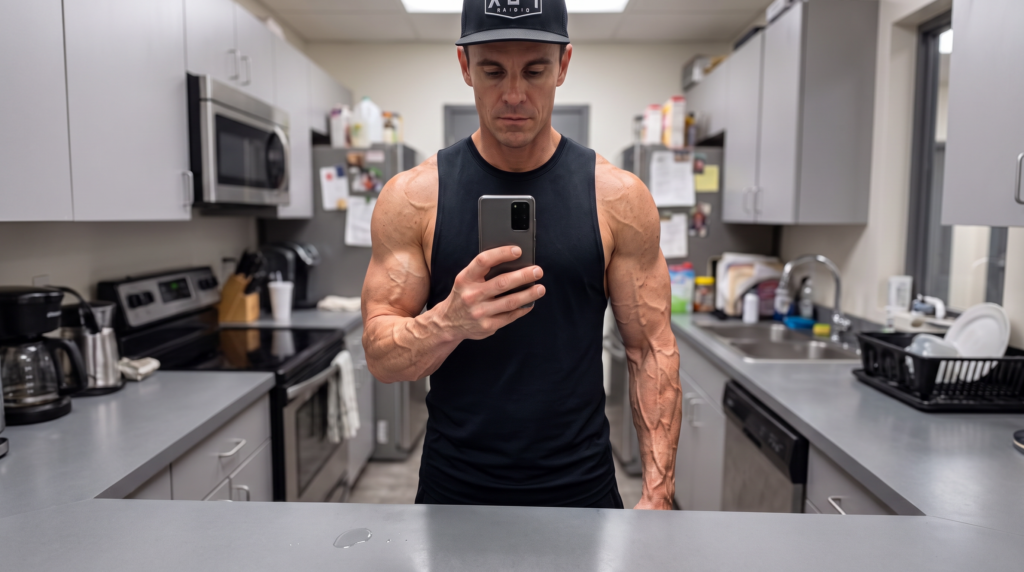
This dynamic underscores both the biological inevitability of aging and the powerful protective buffering of exercise. A physically active 60-year-old may possess the cardiovascular and muscular fitness of an inactive 45-year-old—a substantial practical advantage that preserves autonomy, vitality, and health span.
Practical Implications
These scientific findings carry vital messages for anyone navigating their mid-thirties and beyond. Recognizing that significant physical decline begins around age 35 creates a unique window of opportunity for proactive health intervention.
Individuals who establish structured exercise programs earlier in life enter their biological decline phase from a significantly higher physiological baseline. For instance, a person who begins consistent training at age 32 will likely possess superior functional fitness at age 55 compared to someone who adopts similar habits at age 45, even if both follow identical training routines thereafter.
Furthermore, the research validates the widespread anecdotal experiences reported by adults in their mid-thirties: the widespread feeling that workouts demand more sheer effort, that recovery takes noticeably longer, and that maintaining baseline fitness requires far more deliberate attention than it did a decade prior.
Beyond Cardiovascular Exercise
While public conversations surrounding fitness and longevity have historically centered on cardiovascular health and aerobic endurance, recent scientific literature emphasizes that maintaining muscle mass is equally critical to overall health.
Skeletal muscle tissue functions as much more than a mechanical lever for movement. It acts as a vital metabolic organ that helps regulate blood sugar, supports systemic bone density, generates essential body heat, and provides the functional independence that defines quality of life in advanced age.
The clear metabolic differences observed between high-intensity protocols and moderate-intensity regimens in preserving muscle while shedding fat underscore that the specific intensity and nature of exercise matter profoundly for managing body composition as the body matures.
The Minimum Effective Dose
For individuals who find demanding, multi-day exercise regimens intimidating or entirely impractical given modern lifestyle constraints, the research surrounding minimal effective doses offers genuine encouragement. The empirical finding that a single weekly resistance training session can provide measurable protective benefits effectively dismantles the pervasive "all-or-nothing" mentality that discourages many adults from starting.
While this data does not imply that one session per week is biologically optimal—as more frequent training almost certainly yields superior long-term results—it establishes a realistic, sustainable baseline that busy adults can successfully maintain. In the grand scheme of health, consistency over decades matters far more than fleeting adherence to an impossible ideal. A modest, manageable program maintained consistently for thirty years will always outperform an ambitious, grueling routine abandoned after three months.
What Happens When Decline Accelerates
The meticulous documentation of accelerating physical decline across the decades clarifies why two individuals of the exact same chronological age can exhibit vastly divergent physical capabilities. Two seventy-year-olds can inhabit entirely different physical realities based entirely on their cumulative exercise histories and lifestyle habits.
This acceleration also confirms that it is never truly too late to reap the rewards of physical activity, though early intervention undeniably produces more dramatic outcomes. While a sixty-five-year-old who picks up strength training for the first time will not achieve the exact physiological profile of someone who started at thirty-five, they will almost certainly surpass their sedentary peers in functional ability, balance, and independence.
The Reality of Biological Aging
Ultimately, these extensive findings reinforce a fundamental biological truth: aging involves real, measurable physical decline that cannot be entirely erased through lifestyle choices alone.
However, they simultaneously demonstrate that the velocity, severity, and functional impact of that decline remain substantially within individual control. The gap between an active aging trajectory and a sedentary one can translate directly into years or even decades of preserved independence, mobility, and vitality.
Exercise may not act as a literal fountain of youth, but it serves as the closest functional equivalent available to modern science—not by reversing time, but by substantially slowing the forward journey of biological aging.
Moving Forward
The findings of this historic 47-year study provide an invaluable roadmap for understanding human physical aging while highlighting the exact interventions needed to navigate it successfully. Age 35 emerges not as an insurmountable cliff, but as an essential signpost indicating that the body’s relationship with physical fitness has fundamentally evolved.
Armed with this empirical knowledge, individuals can make informed decisions regarding their fitness priorities, set realistic expectations for their bodies, and plan effectively for long-term health. The overarching goal shifts from an unrealistic quest to prevent aging to the art of aging as well as possible—maintaining maximum function, autonomy, and vitality for as long as biology allows.