


Over the decades, the landscape of unarmed combat has undergone a profound transformation, shifting from ancient, ritualized systems of self-defense to the dynamic, multi-disciplinary arena of modern Mixed Martial Arts (MMA). For generations, traditional martial arts have maintained a rich history firmly rooted in deep-seated philosophies, strict discipline, and time-honored techniques passed down through centuries. In stark contrast, modern MMA represents a streamlined, highly pragmatic fusion of various fighting styles engineered specifically for maximum real-world combat efficiency and athletic dominance in a competitive cage.
The ongoing debate between traditional martial arts and MMA frequently surfaces whenever enthusiasts, practitioners, and analysts attempt to determine which overarching approach holds true superiority in a physical altercation. However, a closer examination reveals that the reality of this comparison is far more nuanced than a simple binary choice between old and new. Rather than existing merely as opposing forces, these two worlds represent entirely different paradigms of human movement, psychological conditioning, and physical expression.
To understand the core differences between traditional martial arts and MMA, one must look beyond the surface level of punches and kicks. Comparing their underlying philosophies, complex technical arsenals, and rigorous training methodologies provides a clearer picture of how each path shapes its practitioners and helps individuals determine which approach best aligns with their personal objectives.
The Philosophical Foundations
One of the most significant and defining distinctions between traditional martial arts and MMA lies in the foundational philosophies that govern them. Traditional systems—such as Karate, Kung Fu, and Taekwondo—traditionally place an immense amount of weight on personal character development, mental discipline, and profound respect for instructors, peers, and opponents alike. Many of these traditional martial systems carry deep cultural, historical, or spiritual significance, functioning not merely as fighting systems, but as complete ways of life that teach core human values extending far beyond the walls of the dojo.
Consider the practice of Karate, where students are routinely expected to internalize and live by a strict code of ethics incorporating principles such as honor, humility, integrity, and relentless perseverance. Similarly, within the discipline of Judo, the central ethos extends far beyond physical self-defense to encompass mutual welfare, mutual respect, and the continuous pursuit of self-improvement for the betterment of society. Within these traditional frameworks, the cultivation of moral character is often viewed as being just as crucial as the physical mastery of the techniques themselves.
In stark contrast, MMA is a distinctly modern athletic development that prioritizes real-world combat effectiveness, strategic adaptability, and physical dominance. Athletes who train in MMA enter the gym with the explicit goal of succeeding in highly competitive arenas, often drawing fluidly and selectively from a wide array of specialized fighting disciplines including Western boxing, Brazilian Jiu-Jitsu (BJJ), Muay Thai, and collegiate or freestyle wrestling. While core values such as discipline, respect, and hard work remain vital within professional MMA camps, the driving force behind the training is decidedly practical. The emphasis rests squarely on functional skills, athletic conditioning, and tactical execution rather than philosophical teachings or spiritual heritage.
Ultimately, the choice for any practitioner examining traditional martial arts versus MMA comes down to a fundamental question of personal intent: are they searching for a holistic, culturally rich, and philosophical approach to personal growth, or are they seeking a rigorous sport that prioritizes uncompromising combat effectiveness and athletic versatility?
Techniques and Fighting Styles
When examining the technical landscape of traditional martial arts alongside modern MMA, the contrast in fighting styles is remarkably stark. Traditional martial arts are frequently characterized by formal, highly structured stances, predetermined movement patterns known as katas, and rigidly prescribed techniques. For instance, disciplines like Karate and Taekwondo focus heavily on precise striking arts, placing an enormous emphasis on lightning-fast high kicks and linear punches designed to deliver pinpoint impact. Kung Fu is widely recognized for its fluid, serpentine movements and a diverse range of open-hand strikes, complex blocks, and sweeping evasions that historically drew inspiration from the natural movements of animals.
Traditional martial systems tend to encourage the painstaking perfection of individual techniques over many years of repetition. This pedagogical approach generally relies on practicing within a controlled environment, often placing minimal emphasis on chaotic live sparring during the early stages of a student’s development. While these traditional techniques can possess incredible aesthetic beauty and devastating localized efficiency, critics frequently argue that they can become overly rigid when forced to adapt to the fluid, unpredictable, and chaotic nature of a real, unscripted fight.
Conversely, the defining hallmark of MMA is an absolute dedication to versatility and tactical adaptability. Modern MMA competitors train extensively across multiple distinct disciplines—incorporating elite-level striking, intricate ground grappling, complex submission holds, and grinding clinch work—all of which are designed to be deployed interchangeably depending on how a fight unfolds. An elite MMA athlete must maintain absolute proficiency in both standing exchanges and ground-based combat, possessing the ability to transition seamlessly from a powerful striking combination to a dynamic takedown attempt. This multi-layered approach creates a fighting style that is inherently unpredictable, highly fluid, and largely devoid of stylized rigidity.
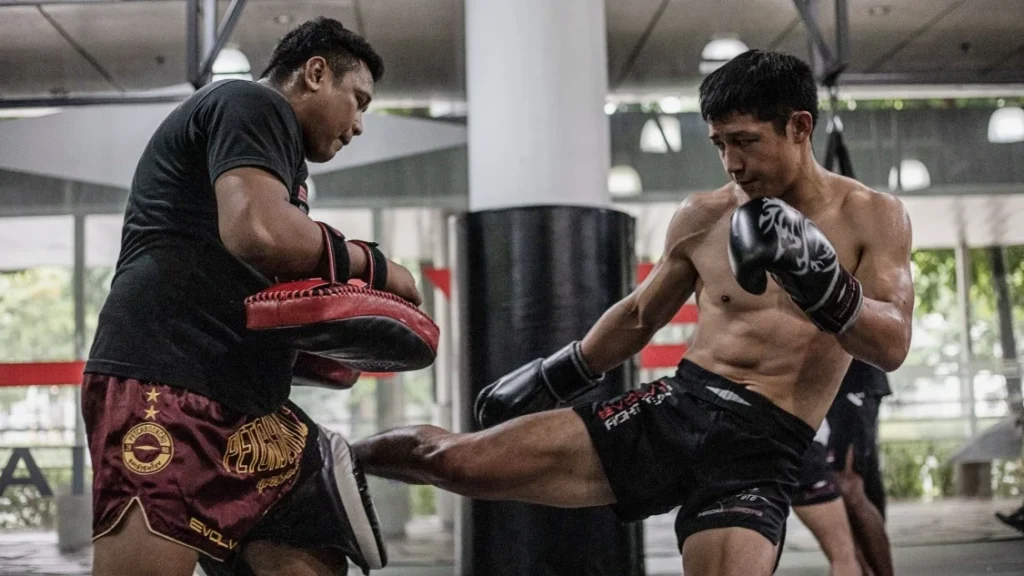
MMA techniques are meticulously engineered to be practical and reliable in high-stress, real-world scenarios or high-stakes athletic competitions. Instead of striving to master a single, isolated martial art, MMA fighters are actively encouraged to hybridize elements from across the global combat sports spectrum. For example, a modern cage fighter might utilize the brutal clinch and elbow strikes of Muay Thai to control distance, transition into a powerful double-leg wrestling takedown to secure dominant position, and ultimately apply the intricate joint locks or chokes of Brazilian Jiu-Jitsu to force a submission. By blending these diverse assets, fighters create a comprehensive toolkit tailored for every conceivable range of combat.
Deciding between these two paths requires practitioners to evaluate whether they wish to specialize deeply in the artistic mastery of a single, defined discipline or embrace the expansive flexibility that comes with cross-training across multiple contrasting styles.
Training Methods and Sparring
Another major point of divergence in the ongoing dialogue between traditional martial arts and MMA is the structural design of daily training regimens. Traditional martial arts typically place a heavy operational focus on form work, technical drills, and katas—pre-arranged sequences of movements designed to simulate combat encounters safely. This specific style of physical repetition builds deep muscle memory, physical discipline, and high levels of technical precision. However, these structured drills do not always translate seamlessly or directly into the chaotic, spontaneous reality of an actual live combat scenario.
When it comes to sparring within traditional martial arts environments, the exchanges are traditionally controlled, technical, and limited to light or medium contact. This is particularly evident in arts like Karate and Taekwondo, where practitioners adhere to strict rulesets designed to minimize the risk of injury. While this controlled methodology successfully builds student confidence, sharpens timing, and refines mechanical execution, it frequently lacks the raw intensity, psychological pressure, and physical unpredictability of an authentic, full-scale confrontation.
In sharp contrast, MMA training programs are built around a foundation of live, resistant sparring and situational drilling designed to simulate the grueling conditions of a real fight as closely as humanly possible. MMA athletes regularly participate in rigorous, full-contact sparring sessions that condition their bodies and minds for the immense physicality and psychological stress of actual competition. The training environment is notoriously demanding, placing an equal premium on cardiovascular conditioning, muscular strength, explosive power, and sheer endurance alongside technical skill acquisition.
Furthermore, MMA practitioners must master the art of real-time transitions, moving fluidly between striking ranges, wrestling exchanges, and grappling sequences without missing a beat. This comprehensive conditioning equips MMA athletes with a broad, resilient skill set capable of adapting on the fly to rapidly changing circumstances, whether inside a walled cage or in an uncontrolled environment outside the gym.
For individuals weighing their options between traditional training and mixed martial arts, the choice of daily training culture is paramount. Those who prefer a structured, lower-impact environment focused on methodical progression will find traditional martial arts deeply accommodating. Conversely, those seeking high-intensity, full-contact dynamic sparring will find that MMA provides a much more visceral and realistic simulation of actual combat.
Competition and Practical Application
The environments in which traditional martial arts and MMA test their practitioners in competitive settings could hardly be more different. Traditional martial arts competitions are governed by highly specific, often restrictive rulesets that carefully dictate which techniques are permitted, how contact can be made, and how points are awarded. In tournament circuits for disciplines like point-fighting Karate or Olympic Taekwondo, competitors are judged primarily on the speed, precision, control, and cleanliness of their strikes, rather than the physical trauma or structural damage inflicted upon an opponent.
By comparison, modern MMA competitions—most notably those promoted by global organizations such as the Ultimate Fighting Championship (UFC)—feature vastly more permissive rulesets that accommodate a massive spectrum of techniques originating from dozens of different martial traditions. Within the boundaries of the cage, athletes are free to strike with punches, kicks, knees, and elbows, initiate complex wrestling takedowns, and attempt game-ending submissions on the mat, all with remarkably few tactical restrictions. The ultimate objective extends far beyond accumulating numerical points; fighters aim to definitively neutralize their opposition through decisive strikes or forced submissions. This uncompromising, full-contact framework makes MMA exceptionally appealing to athletes seeking to test their physical mettle in an intensely realistic and thoroughly unpredictable competitive environment.
Additionally, many combat analysts and self-defense experts argue that MMA techniques offer a higher degree of direct applicability in modern, real-world self-defense situations due to their uncompromising emphasis on functional practicality and physical adaptability. While many traditional martial arts systems certainly contain effective self-defense applications, critics note that certain stylized techniques taught in traditional settings may falter when tested against an aggressive, resisting attacker in an unstructured environment.
Ultimately, an individual’s preference between traditional competition and mixed martial arts competition should hinge on whether they value a sport governed by formal control, precision scoring, and codified discipline, or one driven by unvarnished combat efficiency, versatility, and open-ended athletic testing.
Which Should You Choose?
Selecting the ideal path between traditional martial arts and mixed martial arts ultimately hinges on an honest assessment of an individual’s personal goals, physical thresholds, and long-term aspirations. For those drawn to an immersive practice deeply intertwined with cultural heritage, philosophical inquiry, and structured personal discipline, traditional martial arts can provide a profoundly rewarding and fulfilling journey. The steadfast focus on ethical development, respect, and technical mastery remains an ideal match for practitioners who view martial arts as an art form and a way of life that extends far beyond the bounds of combat.
Conversely, individuals whose primary ambition is to forge themselves into exceptionally well-rounded, adaptable, and physically robust fighters will likely find that mixed martial arts serves as a far more suitable vehicle. The cross-disciplinary training model encourages practitioners to absorb the most demonstrably effective techniques from a multitude of combat backgrounds, fostering a high degree of versatility capable of handling a wide array of physical confrontations.
Because both traditional martial arts and modern MMA offer unique, valuable skill sets, there is no universal consensus regarding which approach is objectively superior. The final decision rests entirely on what an individual hopes to extract from their personal martial arts journey—whether that destination is found in the pursuit of self-discipline and tradition, or within the demanding crucible of real-world combat efficiency.
Conclusion
The ongoing comparison between traditional martial arts and mixed martial arts vividly illuminates the diverse philosophies that have guided human combat, physical training, and personal development across the ages. While traditional systems champion a structured, philosophy-driven approach centered on technical precision and cultural continuity, MMA places its primary focus on unyielding adaptability, live-contact sparring, and proven real-world efficiency. In practice, these two worlds are not mutually exclusive, and many modern athletes and traditionalists alike recognize the value in drawing wisdom from both philosophies. Whether a practitioner chooses to dedicate themselves to the mastery of a single classical discipline or embraces the dynamic, hybrid methodology of modern mixed martial arts, the ultimate measure of success lies in discovering a path that genuinely resonates with their personal interests and ambitions.