
In the small hours of May 16, 1955, my father woke me in the darkness, lit a candle in the scullery, plugged in his old crystal radio set and told me to listen to a world heavyweight title fight taking place thousands of miles away in San Francisco. Don Cockell of Balham, south London, was stepping into the ring to challenge Rocky Marciano of Brockton, Massachusetts, for the world heavyweight championship. Most of the sound that came whistling through the heavy static was the brutal thud of Marciano’s eight-ounce gloves connecting with Cockell’s head and body.
Marciano kept knocking down Cockell, and the resilient Brit kept getting up, refusing to stay down until the ninth round. That was when Rocky finally nailed him to the canvas for good with a booming right hand that seemingly connected while he was already down on his knees.
When the BBC radio commentator later put a question to the victorious champion, Marciano offered a polite post-fight tribute, replying: “Britain can be proud of her boy Don Cockell.”
However, the sentiment did not sit well in a British kitchen. Jack Powell, whose own toughness had carried him through the dangerous beach landings and muddy trenches of the Second World War as well as countless brutal fights both inside and outside the ring, slammed his fist down hard on the kitchen table. “As if keeping beating us ain’t enough,” he muttered, “they have to bloody patronise us.”
I was just 13 years old at the time. Not until I reached the age of 50—and by then, Marciano had long since cemented his legacy as the only heavyweight champion in history to retire completely undefeated—would Lennox Lewis finally end our century-long wait for a British successor to the legendary Bob Fitzsimmons.
During that seemingly endless eternity, the heavyweight division was flooded with a succession of revered American greats who captured the imagination of the sporting world. The golden age of heavyweight boxing delivered historic spectacles such as the Fight of the Century and the Thrilla in Manila—both legendary encounters between Muhammad Ali and Joe Frazier—alongside the Rumble in the Jungle featuring Ali and George Foreman. Fans witnessed the stunning Upset of the Century when Buster Douglas defeated Mike Tyson, the classic battles between Jack Dempsey and Gene Tunney, Joe Louis facing off against both Max Schmeling and Jersey Joe Walcott, and Ali dismantling the formidable Sonny Liston.
That era belonged firmly to the United States, a time when the Stars and Stripes flew high over America’s mocking dismissal of what they termed “Britain’s Horizontal Heavyweights.”
Even when British fighters showed immense courage, recognition was hard to come by across the Atlantic. Henry Cooper remained famously perpendicular against Muhammad Ali—then known as The Greatest of them all—yet there was scant acknowledgment in America of how the Briton knocked Ali down and almost out with his famous left hook, renowned as ‘Enery’s ‘Ammer, during the first of their two stadium fights. Ultimately, Cooper lost both encounters due to his historical propensity to suffer severe cuts.
So, oh, how we gloated years later when we watched Riddick Bowe controversially dump his WBC belt into a London dustbin rather than face Lennox Lewis, a move that resulted in Lewis being elevated to his first world title by decree. We rejoiced when Lewis forcefully validated his status by beating Oliver McCall in September 1995, and we proudly acclaimed Lenny the Lion when he established himself as our only three-time world heavyweight champion.
Similarly, the nation breathed a massive sigh of relief when Frank Bruno finally defeated McCall at an emotional Wembley Stadium to become world champion, just as we fretted for him when he genuflected umpteen times on his way to the Las Vegas ring for a second crushing defeat by Mike Tyson that brought an end to his brief reign.
Even so, British heavyweight boxing was clearly transitioning from an era of famine to a remarkable feast. Looking at the historical numbers, the United States can rightfully boast 53 world champions all-time in the prize-ring’s marquee division, dating all the way back to the immortal John L. Sullivan in the late 1880s. But the UK has accelerated dramatically from having just one active heavyweight champion in 2003—when Lewis bloodied and defeated Vitali Klitschko—to running a total of 11 today, even if one sets aside the asterisks against the names of Michael Bent, Herbie Hide, and Henry Akinwande, who wore the WBO belt before that sanctioning body achieved full global recognition.
David Haye subsequently built upon the Lewis legacy when he bamboozled Russia’s towering seven-foot giant Nikolai Valuev, thereby emulating Evander Holyfield’s rare historical feat of an undisputed cruiserweight king successfully stepping up to become world heavyweight champion.
Later, the formidable Russo-Ukrainian brothers Wladimir and Vitali Klitschko temporarily broke the decades-long US domination of the division, before both Tyson Fury and Anthony Joshua followed in the footsteps of Lennox Lewis by vanquishing Wladimir Klitschko in epic encounters.
Yet, Britannia’s rule at the top of the division was stunningly interrupted by Oleksandr Usyk’s revival of what some jokingly called the Kyiv Conspiracy, featuring two dazzling victories apiece over both the Gypsy King and AJ, followed swiftly by another double over their heir apparent, Daniel Dubois.
Oleksandr the Great’s subsequent abrupt relinquishing of all the major belts opened the gateway to an immediate and vibrant UK renaissance—one in which it is no longer American fighters dominating the landscape, but Brits fiercely battling each other for the sport’s most glittering prizes.
This Saturday at the O2 Arena, Daniel Dubois and the amazingly reconstructed white-collar boxer Fabio Wardley will reprise their blood-and-thunder war for the now widely respected WBO title, with Dynamite Daniel entering the ring as the defending champion.
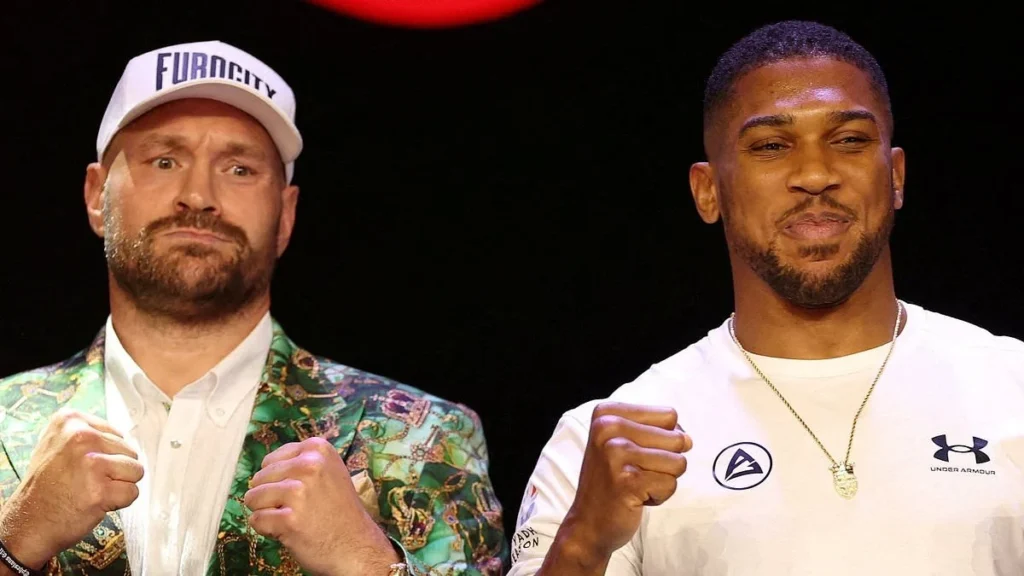
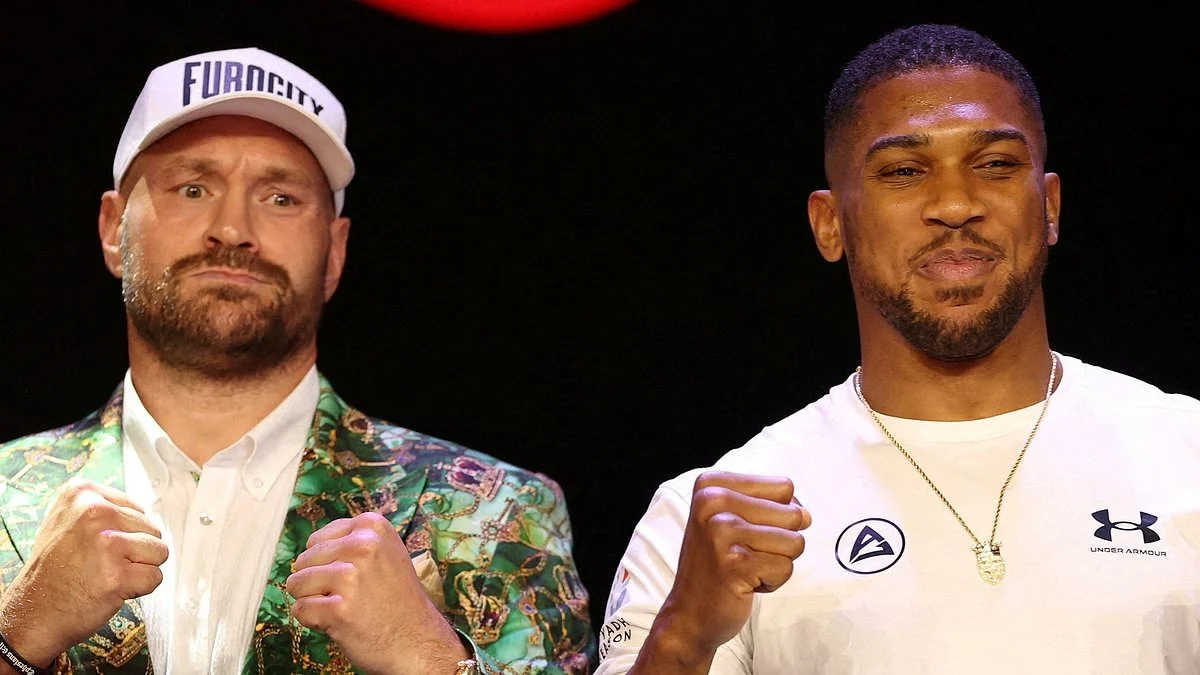
The winner of this clash is widely expected to go on and meet, in the not-too-distant future, whoever prevails in the long-awaited and much-discussed settlement between Tyson Fury and Anthony Joshua. Though it arrives later than many fans hoped, that blockbuster matchup is so full of fascination that it has commanded ticket prices higher than the gross national product of several developing nations.
By the time that takes place, rising prospect Moses Itauma should have fully recovered from a drastic loss of stamina and a blown IBF title shot against Croatia’s Filip Hrgovic, allowing him to resume his path toward leading the division’s next generation. Meanwhile, dangerous German WBC champion Agit Kabayel will soon find himself firmly in the crosshairs of Britain’s elite heavyweights.
With all of these standout fighters—except for Joshua—signed to promoter Frank Warren’s stable, there are plenty more domestic blockbusters and all-British clashes waiting to be made. By contrast, looking out toward the western horizon, there is currently only one young American heavyweight of notable promise, Jared Anderson.
And to think that American boxing purists used to belittle their own last heavyweight champion of note, Deontay Wilder, dismissing him as “just a puncher.” He happens to be the most devastating puncher the division has seen since Iron Mike Tyson. Boxing fans across the Atlantic must surely be wishing today that Tyson Fury had not brought a brutal end to the Bronze Bomber’s five-year run of knockouts during the murderous final act of their legendary trilogy.
Throughout the glorious history of American boxing, the reigning world heavyweight champion stood proudly as a primary symbol of national manhood and sporting supremacy. Today, however, the United States lays no claim to any of the major governing body belts.
There are, of course, extraneous cultural and economic factors at play. The vast majority of strapping young American athletes—whether they are graduating from top-tier colleges or seeking athletic pathways out of inner-city projects—are increasingly turning toward basketball, American football, and baseball, rather than risking a severe head-bashing in the boxing ring on the off-chance of securing generational wealth.
As a result, contemporary American boxing finds itself heavily pinning its future hopes on a brash young Mexican-American welterweight, Ryan Garcia, riding the wave of his destructive performance against a humiliated Conor Benn. Meanwhile, the blue riband division of the sweet science has been hoisted firmly this side of the Atlantic.
It is not quite so Yankee-Doodle-Dandy for American boxing anymore, gentlemen.