

Popular fitness content creator and YouTube personality Sam Sulek recently found himself shaken after upgrading his vehicle’s supercharger, transforming his daily ride from a modest 400 horsepower to a roaring 700 horsepower. The harrowing test drive left such a profound impression on the internet star that it prompted him to issue an unexpected public warning to parents and young drivers alike regarding the dangers of high-performance automobiles.
The harrowing experience served as a launching point for a broader discussion on responsibility, driving safety, and automotive maturity. However, the overarching theme of Sulek’s latest video quickly pivoted from horsepower and automotive modifications to a detailed exploration of one of the most frequently overlooked muscle groups in contemporary bodybuilding: the forearms. In the same broadcast, Sulek walked his vast digital audience through his complete, specialized forearm training protocol, emphasizing why direct, isolated work remains essential for building comprehensive grip strength and muscle symmetry that is both functional and visually striking.
The Supercharger Wake-Up Call
The automotive detour began immediately after Sulek picked up his newly supercharged Mustang from the dealership. Even professional service technicians who handled the vehicle test-drove it and pulled him aside to offer stern, unvarnished warnings about the sheer magnitude of the power increase. The dramatic jump from the 400-horsepower range straight into the 700-horsepower tier proved to be a jarring revelation for the content creator.
Reflecting on the raw speed and acceleration of the modified muscle car, Sulek admitted that the vehicle’s capability was genuinely freaky, offering reassurance to his followers that headlines about a reckless accident would not be in his future. Yet, the adrenaline-fueled test drive triggered deeper reflections on the intersection of teenage drivers and high-horsepower machinery—a combination that he now regards as fundamentally hazardous.
Drawing from his own perspective, Sulek candidly noted that handing the keys of a high-performance machine to a 16-year-old is a recipe for disaster. He suggested that younger drivers should instead earn their stripes behind the wheel of something far more sensible, advocating for what he humorously termed "Camry years" to allow inexperienced motorists to develop real-world spatial awareness, defensive driving skills, and road maturity before ever stepping foot near a performance vehicle.
Audience Demographics and Physique Updates
Amidst the discussions surrounding automotive power and targeted muscle isolation, Sulek also provided his audience with a transparent look behind the curtain of his channel analytics and physical conditioning. Dispelling common assumptions that his viewership consists exclusively of teenagers, Sulek shared demographic data revealing that the largest core segment of his audience actually falls between the ages of 25 and 35, accounting for roughly 40 percent of his total viewership.
On the personal training front, Sulek updated his followers regarding his current physique milestones during an ongoing fat-loss phase. He reported hitting a new low weight of 233.5 pounds on the scale. This physical milestone coincided with strategic adjustments to his workout regimen, which previously involved hitting legs twice per week. To optimize recovery and prevent burnout, Sulek has begun incorporating flexible "wildcard" training days specifically designed to give major muscle groups additional recovery time when needed.
Why Direct Forearm Training Actually Matters
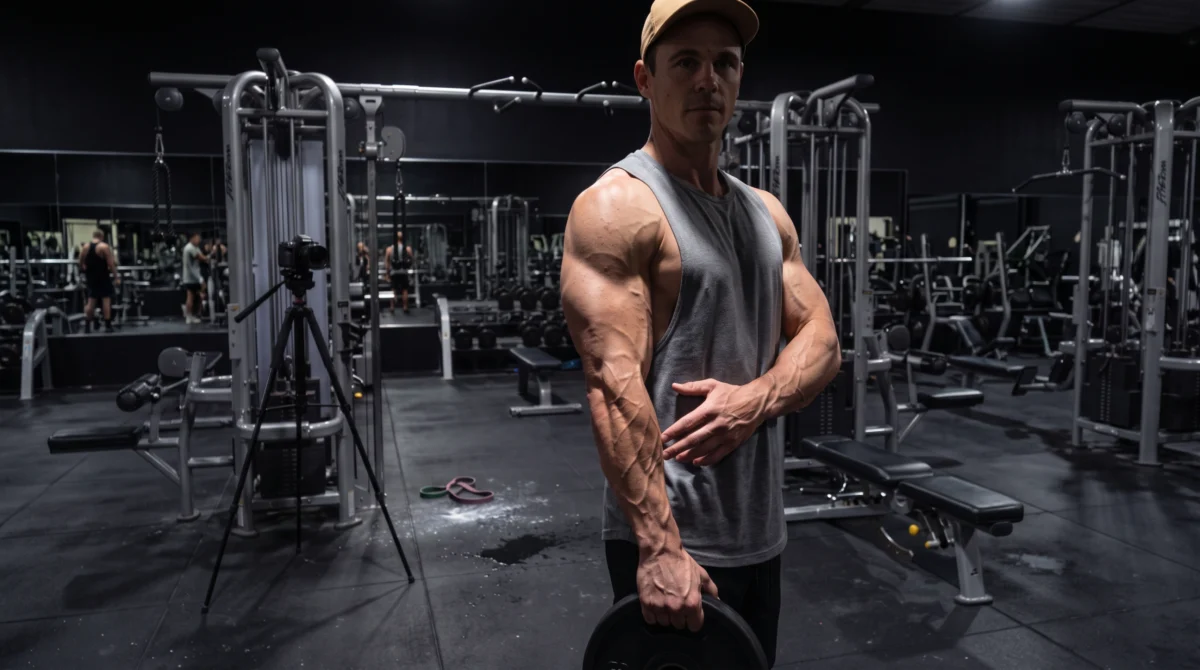
Transitioning to the primary focus of his training discussion, Sulek took direct aim at the prevailing fitness myth that the forearms receive sufficient passive stimulus simply from heavy back training, deadlifts, and pulling movements. His training philosophy is anchored in the necessity of direct, isolated stimulus for every single muscle group, arguing that passive involvement is never treated as acceptable for other upper-body areas.
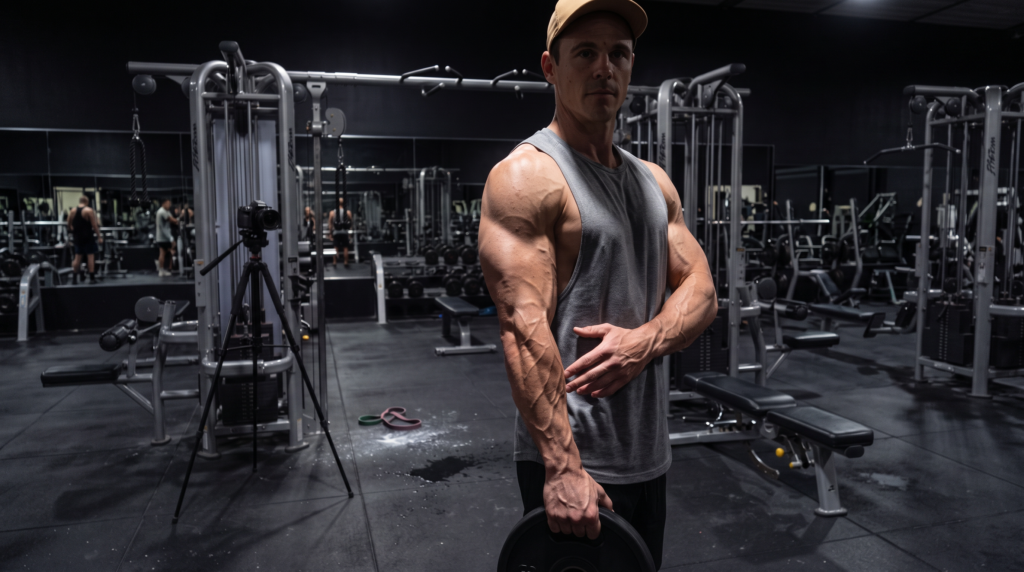
Sulek pointed out that bodybuilders would never expect their chests or triceps to grow optimally purely through secondary engagement on a shoulder day, and he insists the same logic applies to the forearms. Beyond mere aesthetics and the classic look of vascular development, he emphasized the critical functional benefits tied to direct forearm work, including enhanced wrist stability, superior grip strength, and vital injury prevention during heavy pressing movements.
According to Sulek, underdeveloped forearms frequently act as a dangerous weak point during compound lifts. Lifters lacking sufficient grip strength often experience scenarios where heavy dumbbells slip or fail during crucial presses, a phenomenon that can quickly lead to catastrophic training accidents or structural joint strain.
The Complete Forearm Training Protocol
To remedy common deficiencies in forearm development, Sulek outlined a precise three-movement protocol designed to target both the flexors and extensors thoroughly.
He initiates every forearm session by focusing on the posterior side of the forearm, utilizing reverse forearm curls to target the extensor muscles responsible for creating distinct visual separation and forearm lines. Operating in a bench setup where one knee is positioned flat and the opposing foot is elevated to maintain a level leg position, Sulek employs a lighter dumbbell, typically starting around 20 pounds, while advising absolute beginners to scale back to 10 or even 5 pounds. His execution prioritizes slow, controlled repetitions with an emphasis on the eccentric phase, deliberately avoiding partial repetitions or assisted momentum past failure in favor of a clean muscular burnout across roughly six sets of 20 repetitions.
Following the extensor work, Sulek transitions into the primary mass-building movement of the routine: heavy dumbbell forearm curls directed at the flexors. For this movement, he scales up significantly, handling 80-pound dumbbells, though he issues a strong cautionary note advising everyday lifters to approach heavy weights with caution to avoid tendonitis or acute injury. Executing maximum repetitions per set, Sulek always initiates the movement with his weaker left arm to ensure balanced muscular development. Aside from building raw flexor size, this specific heavy rotating friction serves to accelerate natural callus development, fostering the tough, durable hands characteristic of dedicated iron veterans.
The final phase of the routine introduces cable forearm curls to serve as a high-tension finishing movement. Utilizing an 80-pound cable stack, Sulek reduces the absolute load compared to his heavy dumbbell work to place laser-like focus on peak muscular contraction and strictly controlled negatives. Spanning at least three sets, this finishing touch drives an overwhelming volume of blood into the tissue, leaving the forearm musculature completely engorged and temporarily altering hand dexterity due to the sheer intensity of the pump.
The Forearm Pump Phenomenon and Practical Applications
Drawing an intriguing comparison, Sulek likened the physiological sensation of an extreme forearm pump to the experiences of rock climbers. While rock climbers frequently encounter severe forearm congestion during extended climbs involving technical crimping and pinching, they actively work to avoid the pump because excessive blood pooling diminishes grip strength and compromises climbing performance. Conversely, bodybuilders intentionally chase this exact state to maximize metabolite accumulation and localized cellular swelling.
Beyond the immediate confines of the gym, Sulek noted that properly developed forearms create unique lifestyle adjustments, humorously pointing out wardrobe challenges where long-sleeve shirts that comfortably fit the torso inadvertently transform into tight compression sleeves around thickened forearms. More importantly, he highlighted that forearms remain the single most visible muscle group in everyday settings, remaining on display regardless of seasonal clothing choices.
For athletes and resistance training enthusiasts evaluating their weekly schedules, Sulek suggested substituting a standard rest day with a dedicated forearm session, noting that the muscle group recovers rapidly and easily tolerates frequent programming without interfering with heavy upper or lower body lifts. By anchoring his routine in direct isolation, moderate volume, and equal attention to opposing muscle groups, Sulek provides a straightforward blueprint for anyone looking to build functional grip strength and complete upper-body aesthetics.