


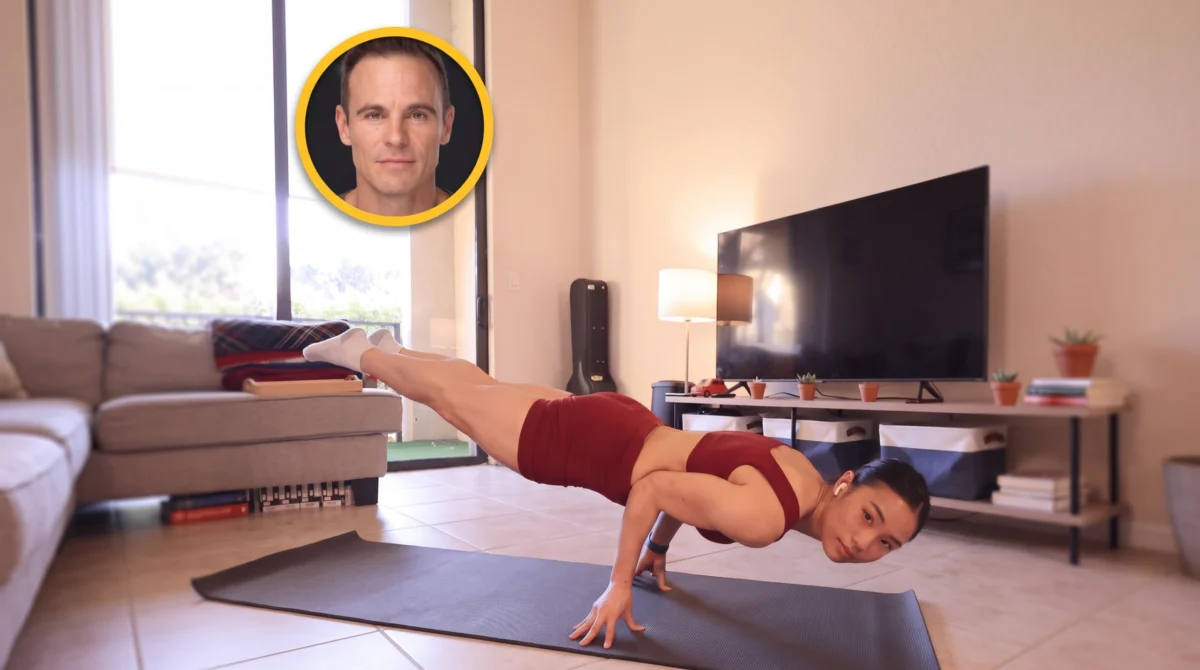
Starting calisthenics can often feel overwhelming when social media feeds are flooded with elite athletes executing flawless, gravity-defying handstands and cranking out endless repetitions of advanced push-ups. For beginners, the digital fitness landscape presents an intimidating wall of perfection that suggests bodyweight training is an exclusive club reserved for the naturally gifted or those with years of prior gymnastics experience.
Yet, the fundamental truth of bodyweight training remains refreshingly simple: it does not require fancy equipment, expensive gym memberships, or an extensive athletic background to begin. One athlete who learned this lesson early in life is now sharing her remarkable 14-year fitness journey—a path complete with a severe wrist injury that forced her to entirely reimagine how handstands and upper-body movements work. Her practical approach cuts through the digital noise, offering a grounded perspective for anyone ready to move their body, starting right where they are.
What Calisthenics Actually Means
At its core, calisthenics is simply bodyweight training. It encompasses foundational movements like push-ups, squats, planks, and handstands, relying entirely on an individual’s own muscle power acting against gravity. There is no need for dumbbells, barbells, or complicated gym machines.
This inherent flexibility makes calisthenics uniquely accessible. A quiet corner of a bedroom, a patch of living room carpet, or a compact hotel room on the road can all serve as viable, effective training grounds. The practice accommodates the practitioner, rather than forcing the practitioner to adapt to the rigid operating hours and equipment availability of a commercial facility.
One Athlete’s 14-Year Journey From Living Room to Finger Handstands
The instructor behind this minimalist philosophy began teaching herself calisthenics at the age of 10, long before modern video algorithms and fitness influencers saturated the internet. At the time, she simply saw people performing impressive physical feats and decided she wanted to learn how to do them herself.
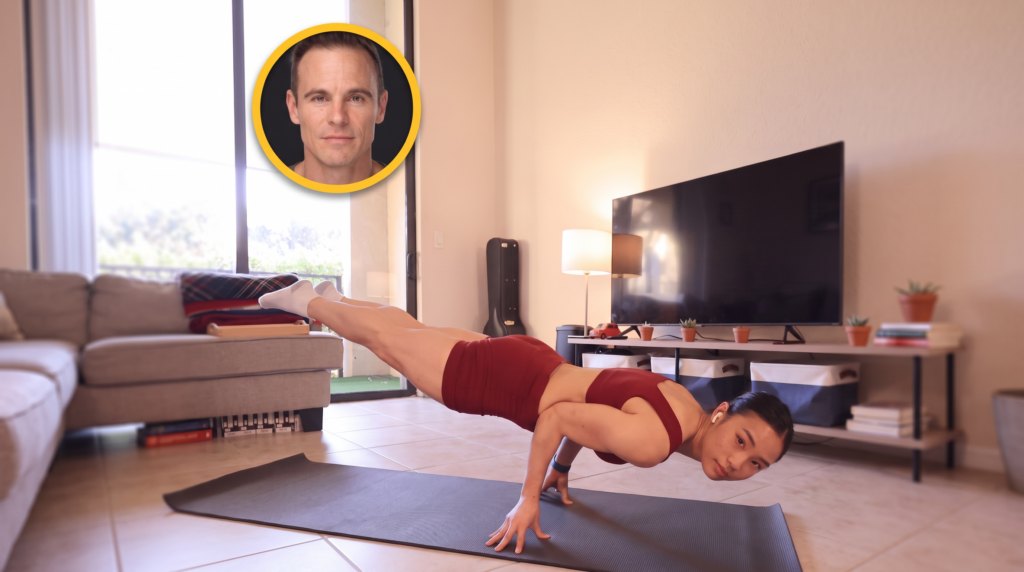
Without financial backing or parental enthusiasm for specialized fitness equipment—her family assumed her interest would fizzle out within forty-eight hours—she carved out a modest space on her bedroom floor and started practicing. Fourteen years later, that early curiosity has evolved into master-level execution, allowing her to perform complex maneuvers like handstands on her fingertips, press handstands, and weighted stalder presses.
However, that trajectory was severely tested by an unexpected medical crisis. At age 14, persistent pain and swelling in her right wrist signaled something far more serious than typical athletic overuse. Two years later, medical specialists diagnosed her with Kienböck disease, a rare and debilitating condition characterized by the disruption of blood supply to one of the small bones in the wrist, known as the lunate.
A subsequent surgery at age 16 left her wrist permanently limited in flexion, rendering her unable to bear weight flat on her palm. Confronted with a physical limitation that would have driven many athletes away from the sport entirely, she chose to adapt. Over years of patient, deliberate skill-building, she transitioned her handstand practice first to her fists and eventually to her fingers, redefining her technique out of necessity.
Eliminating Barriers and Assessing Reality
For beginners, the most common barriers cited—such as a lack of equipment, constrained living spaces, or the absence of a comprehensive training plan—tend to dissolve under close examination. Calisthenics truly begins the moment an individual decides to move their body, whether that means performing modified knee push-ups on a carpet or squeezing in a set of squats during a commercial break on television. Waiting for the ideal moment, new gear, or a sudden surge of motivation often serves as an unconscious delay tactic.
Simultaneously, the trap of comparing oneself to elite performers can severely damage early progress. True physical development must begin from an individual’s actual baseline, rather than an idealized standard projected on a screen. Simple, unglamorous baseline tests reveal current physical capacity without judgment. Acknowledging an inability to perform a standard push-up or hold a prolonged plank is simply informational data, not a moral failing. Every accomplished practitioner remembers struggling through their very first repetitions.
Establishing meaningful, measurable short-term milestones provides the necessary direction to sustain long-term ambition. While grand aspirations like achieving a full human flag, a one-arm pull-up, or a sustained handstand provide a north star, intermediate checkpoints prevent discouragement and map out tangible progress along the way.
Building Sustainable Habits and Avoiding Common Pitfalls
Consistency consistently outperforms perfection in any physical discipline. Whether individuals prefer a fixed schedule with non-negotiable calendar blocks or a more flexible frequency that adapts to a chaotic lifestyle, the underlying principle remains the same: regular practice, even when imperfect, far surpasses sporadic bursts of intense effort followed by prolonged inactivity. Missed sessions do not equal failure, and a single interrupted day does not erase accumulated progress.
Nevertheless, newcomers frequently fall into predictable traps. The most common pitfall is doing too much too soon. Driven by initial excitement, beginners often attempt every advanced drill in a single marathon session, resulting in debilitating soreness and an elevated risk of acute injury or overuse damage. Calisthenics is meant to be additive to a person’s life—building strength and vitality—rather than subtracting from it through avoidable physical setbacks.
Another major hurdle is the temptation to overplan rather than execute. The pursuit of a flawless routine often masks a reluctance to simply begin. Perfectionistic planning leads to endless delays, whereas immediate, imperfect action builds the momentum required for lasting change. By focusing on personal milestones rather than external leaderboards, practitioners can cultivate a resilient mindset that withstands inevitable plateaus and temporary skill regressions.
Ultimately, the journey of bodyweight training is deeply personal. By stripping away the external noise of modern fitness culture, embracing individual physical limitations through creative adaptation, and prioritizing consistent movement over flawless execution, anyone can establish a sustainable practice that endures for a lifetime.