


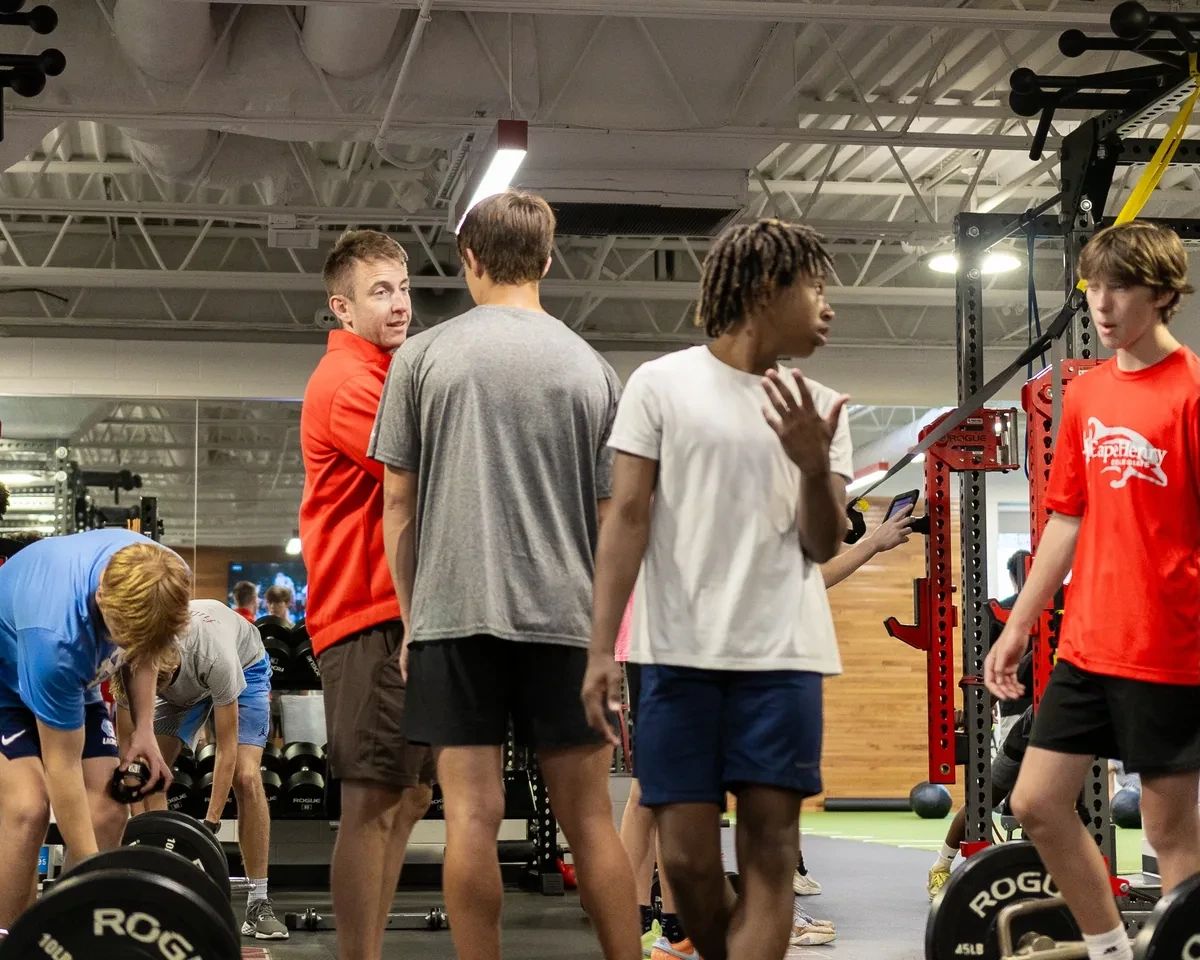
Youth athletic development has long grappled with a fundamental tension: how to instill proper movement mechanics and build physical resilience without overburdening young bodies caught in the crossfire of modern, chaotic schedules. For high school and club athletes juggling schoolwork, intensive sport practices, weekend tournaments, and travel schedules, traditional training splits often collapse. A routine that designates Mondays for lower-body work completely falls apart when a Monday session is canceled due to travel or academic commitments, potentially leaving the athlete without crucial lower-body stimulus for weeks at a time.
To address this widespread challenge in youth sports performance, strength and conditioning professionals are increasingly turning to a three-day full-body template. This programming framework ensures that every major movement pattern is trained multiple times a week, accommodating unpredictable calendars while providing the frequent, high-quality motor exposure young athletes need to master foundational skills and reduce injury risk.
Practice Makes Perfect: The Foundation of Motor Learning
Learning to move efficiently is a skill just like any other, requiring deliberate repetition over months and years rather than isolated high-intensity workouts. According to foundational long-term athletic development models emphasized by researchers like Rhodri Oliver, Jon Oliver, and Avery Faigenbaum, young athletes develop motor skills and coordination through repeated, consistent exposure to the same foundational movement patterns. The more quality repetitions an athlete accumulates, the quicker they master the pattern, allowing them to execute movement sequences automatically under load and speed. This automaticity ultimately enhances both athletic performance and resilience against sports-related injuries.

When a fundamental movement like a squat is practiced three times a week, it becomes a deeply ingrained motor skill. Conversely, practicing that same movement just once a week often resembles starting over from scratch, a setback compounded by the rapid physical growth and maturation of youth bodies.
Beyond motor learning, schedular volatility remains a constant hurdle for coaches working across all competitive levels. A typical youth athlete navigates an intricate web of academic responsibilities, team practices, competitive games, travel leagues, and social commitments. A rigid body-part split is notoriously vulnerable to these disruptions. A flexible three-day full-body program solves this structural weakness by ensuring that every major pattern is visited during every session. If an athletic schedule goes awry and only two sessions are salvaged during a heavy tournament week—perhaps on a Tuesday and a Sunday—no critical pattern is entirely skipped. This flexibility naturally fosters consistency, and consistency remains the primary driver of athletic progress.
Why Three Days Beats One Big Day
When evaluating training frequency, scientific literature on resistance training indicates that when total weekly volume is equal, varying how often a muscle group is trained throughout the week yields similar outcomes for muscle hypertrophy, as noted by Brad Schoenfeld and colleagues. However, for a developing youth athlete whose primary constraints are motor learning, schedule adaptability, and fatigue management, spreading volume across multiple days offers distinct advantages.

Traditional single-focus sessions, such as a dedicated "leg day," often accumulate so much volume that the athlete is forced to grind through the final sets in a fatigued state, leading to degraded technique and diminished returns. By distributing three to four sets of a given movement pattern across three weekly sessions, the young athlete approaches every set fresh, executing each repetition with superior technique and heightened training intent.
Shorter, highly focused sessions lasting between 45 and 60 minutes integrate seamlessly into demanding youth calendars. They also leave adequate recovery time between bouts while delivering three distinct opportunities weekly to practice each movement pattern.
Navigating the Spectrum Between Minimum Effective Dose and Maximum Recoverable Volume
Designing an effective youth training system requires striking a delicate balance between the minimum effective dose and the maximum recoverable volume. Under-training leaves young athletes unprepared for the sudden physical demands of their sports, a concern underscored by extensive research. A landmark meta-analysis of randomized trials by Jakob Lauersen and colleagues demonstrated that structured strength training can cut sports injuries to roughly one-third. Furthermore, sports science literature highlights that athletes unprepared for rapid spikes in workload face significantly greater injury risks than those who have systematically built their work capacities over time.

Conversely, overtraining remains a tangible threat, particularly during adolescent growth spurts when growth plates and surrounding tendon attachments are inherently vulnerable. While historical studies show that young individuals generally recover faster between bouts of high-intensity exercise compared to adults, their cumulative loads from sport-specific activities like throwing, sprinting, and jumping add up quickly.
Research into the minimum effective dose shows that the threshold for maintaining adaptations is often lower than commonly perceived. Studies examining training volume reductions in young adults indicate that surprisingly low volumes can preserve muscle size and strength, driven heavily in pre-pubescent youth by neural adaptations rather than sheer muscle hypertrophy. Because these neural gains stem from frequent, high-quality practice, a three-day template effectively captures this response without pushing athletes toward their maximum recoverable volume. By keeping sessions focused and allowing ample recovery days, coaches can maintain a productive training stimulus that safeguards growing joints while driving athletic development.
Categorizing Movements and Assigning Rep Schemes
Building a comprehensive training system begins with establishing clear movement categories—such as double-leg hip-dominant, double-leg knee-dominant, single-leg variations, and upper-body pushes and pulls—and populating them with appropriate exercises tailored to the athlete’s training age, sport, and available equipment. For instance, a baseball coach might prioritize single-leg hip-dominant movements to address rotational athletic demands, while carefully substituting heavy overhead barbell work with landmine and dumbbell pressing variations to protect vulnerable shoulders and elbows.

To ensure young athletes develop well-rounded physical qualities throughout the annual training cycle, coaches integrate classic effort methods originally developed by Soviet sport scientists and later popularized within strength conditioning circles. These methods include the max effort method for developing absolute strength through heavy, controlled loads; the dynamic effort method for fostering explosive power using submaximal loads moved at maximal velocity; and the repeat effort method for building hypertrophy and work capacity through higher repetition ranges and controlled time under tension.
Over a structured multi-week block, these three methods are systematically rotated across movement categories so that every pattern interacts with each training method on a regular basis. As max effort work progresses toward heavier loads and lower repetitions, dynamic effort velocity targets are adjusted to maintain overall neuromuscular freshness and keep cumulative weekly fatigue well within manageable limits. Repeat effort sets are simultaneously modulated to challenge the athlete closer to momentary muscular failure as the training block advances.
Ultimately, the art of coaching requires continuous adaptation based on the individual standing in front of the practitioner, the specific time of year within the competitive calendar, and the limitations of the training facility. By anchoring youth programs in a flexible, three-day full-body template centered on consistent movement exposure and sound physiological principles, coaches can successfully navigate the complexities of youth sports schedules while laying a resilient foundation for long-term athletic success.