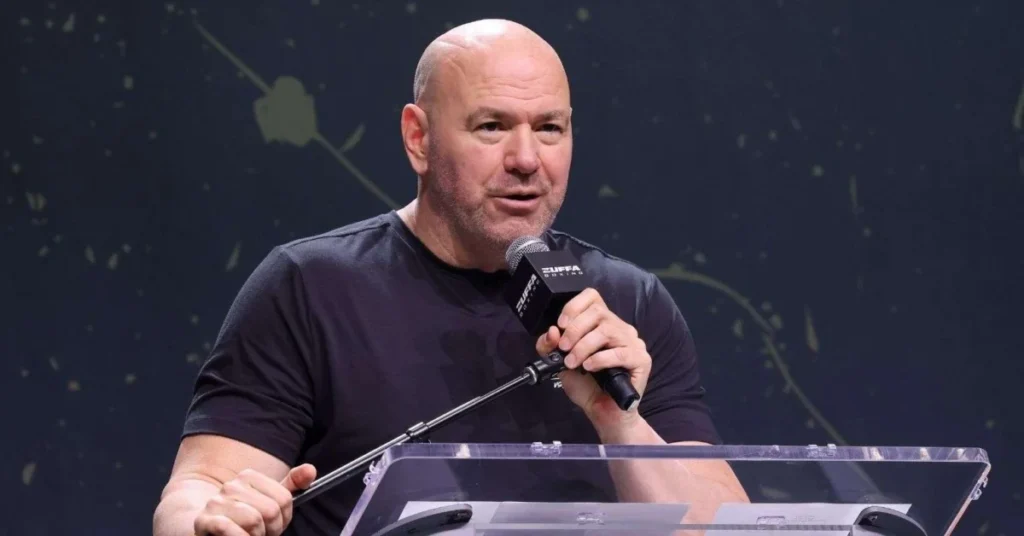
There is only one kind of business Dana White will gladly admit to failing at: funny business.
No, not the kind of funny business with which boxing is often associated—corruption, cash-grabs, and the self-interests of the select few. These are things, incidentally, that White says he is seeking to challenge with his Zuffa Boxing promotion, fueled by the riches of an affiliation with Turki Alalshikh and informed by the incredible success of the Ultimate Fighting Championship, the world-conquering brand that White has helmed since 2001.
It is a different type of funny business that White struggles with, and which he would rather never try again, having been left “messed up for four days” after attempting it.
“Stand-up comedy is the worst. It tortures you,” says White, reflecting on the only pursuit that has truly taken him entirely out of his comfort zone. “I would have to say, it’s the worst thing I’ve ever done. Like, I’ve been to comedy clubs. There’s 10, 15 people in there, whatever. When we did it in LA, the comedy club that we went to [the Laugh Factory] promoted it heavily. So, we pull up to the place—there’s a line a mile down the street. You couldn’t fit one more person in the place. And this is the first time I’ve ever done it. But I cheated. Tony Hinchcliffe wrote my jokes for me. Nobody knew him then [in 2016]; now he’s huge. And even though a professional comedian wrote my jokes, I just…”
He pauses, recalling the agonizing buildup. “So, you’re sitting there, right? And it’s your time to do the jokes. The guy runs right up with the camera in your face: ‘Make everybody laugh, make everybody laugh.’ It’s just… I cannot. This is another level. I shit you not, my body was messed up for four days after that. I was physically destroyed. I don’t think there’s anything harder or more of a mindf*** than stand-up comedy.”
One gets the feeling that it must be true if Dana White is saying it. This is, after all, one of the world’s most successful businessmen; a man who runs multibillion-dollar companies with all the pressures, competition, expectations, and public glare that come with it, and does so with visible confidence and an uncompromising attitude toward his critics and rivals.
It is not just Turki Alalshikh with whom he has close business ties. The UFC—and now Zuffa Boxing—are part of TKO Group, the sports and entertainment giant led by Ari Emanuel, Mark Shapiro, and Nick Khan. TKO also has WWE under its corporate umbrella, meaning the conglomerate comprises the biggest brands in mixed martial arts and professional wrestling, alongside the most headline-grabbing recent arrival on the professional boxing scene.
Beyond traditional fight sports, White sits on the board of Meta, the social media behemoth behind Facebook, Instagram, and WhatsApp. He is also not just a business associate but a close personal friend of U.S. President Donald Trump, serving literally as Trump’s right-hand man on the night of June 14, when the pair walked from the White House to cageside for the UFC’s Freedom 250 event staged on the lawn of 1600 Pennsylvania Avenue.
A man who has risen to this level of influence can only do so if he thrives on the big stage, feels comfortable among powerful people, and handles intense pressure effortlessly—stand-up comedy notwithstanding.
“I guess my biggest skillset is that I like stress. I actually enjoy stress,” he says. “And if I’m not stressed, I try to figure out other ways to make myself feel more pressure. Like, pressure doesn’t bother me. I’m comfortable being uncomfortable. I love it.”
That attitude will serve him well as Zuffa makes inroads into boxing, a sport that does not typically welcome combative disruptors. While Zuffa’s fight cards have typically featured good action resulting from keen matchmaking, a major part of White’s strategy has been to ruffle feathers, whether those feathers belong to boxing’s traditional sanctioning bodies or the sport’s old-guard promoters.
Of those promoters, White has most routinely sparred with Eddie Hearn. He has poached some of Hearn’s biggest stars, including Conor Benn and Johnny Fisher, in moves seen as middle-finger gestures as much as commercial acquisitions. White has also been gleefully involved in social media smack talk with the Matchroom chairman, to the point where there was speculation the two promotional powerhouses might even engage in a boxing match of their own.
It was fanciful stuff, but precisely the kind of material lapped up and distributed far and wide by social media. That is, in all likelihood, why White ran with it: it is a surefire way to generate publicity for himself and his brand.
But even assuming the biggest—and most literal—white-collar boxing match of all time never materializes, White already boasts greater in-ring legitimacy than Hearn, given that he has actually boxed.
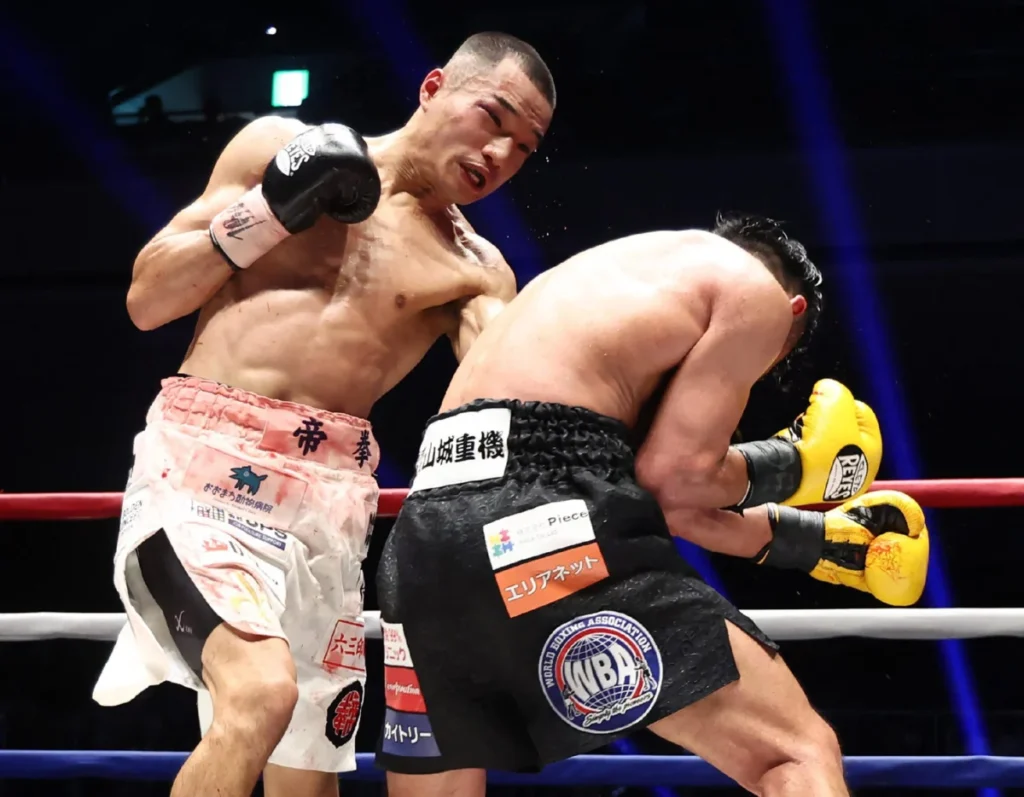
He compiled a self-reported 13-4 amateur record, starting at age 17 and fighting out of the McDonough Gym while he was still in high school in Boston, Massachusetts. White twice attempted to pursue college, dropping out both times while harboring strong ambitions of becoming a professional boxer.
It may come as a surprise to some to learn that the man who essentially created modern MMA as we know it today was raised entirely on boxing.
“My earliest boxing memories were when I was a kid, with my uncles,” he says. “We’d be over at my grandmother’s house and the big fights would be on. I just remember my uncles all going crazy. I remember the buzz and the excitement inside the house, and I guess I just became addicted to it.”
It was that intoxicating buzz that led White into the ring himself, but those professional ambitions were ultimately tempered after he witnessed an aging and apparently damaged former boxer making uncoordinated attempts to work a heavy bag.
“I remember looking at him thinking, ‘what if it happens to me?’” White told the Associated Press in 2018.
Expanding on the end of his own fighting days to Boxing News, he says: “I loved it. I couldn’t imagine doing anything else. But I was standing there going, ‘what the hell am I doing here, man? I don’t want to do this for the rest of my life.’ And I walked out that day and I quit, and I said, ‘I’m getting into the fight business.’ I didn’t know exactly what it meant at the time, but I knew that’s where I wanted to be. And I was young, I had no obligations, no family, none of that stuff. If I’m going to go for it, now’s the time to go for it. And I did. Obviously, at the time, everybody thought it was the dumbest idea ever. Maybe it was! But it all worked out.”
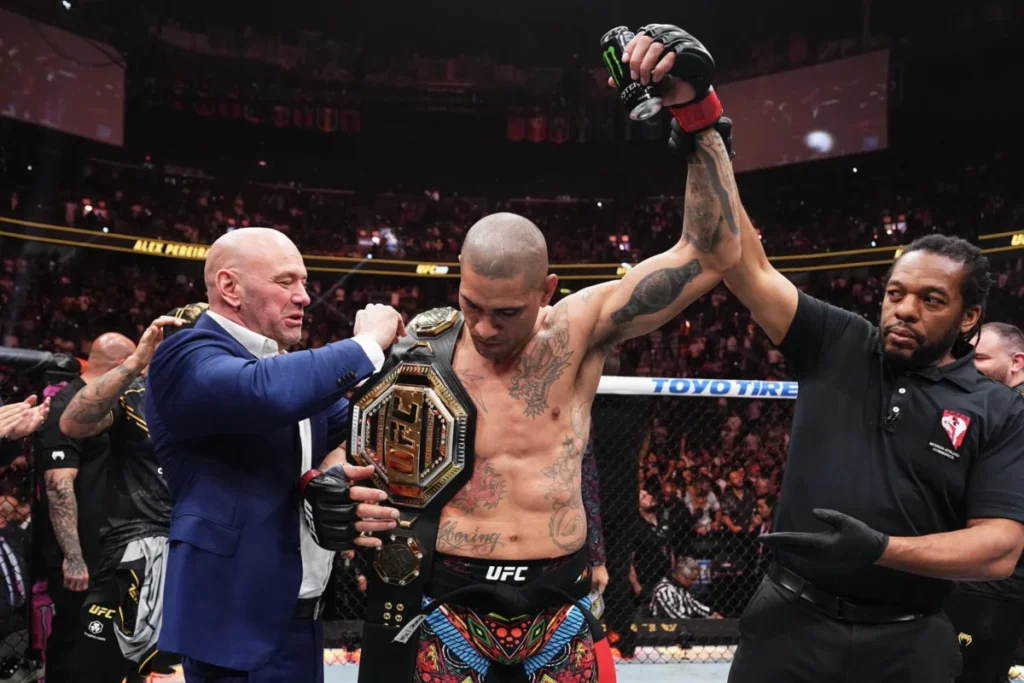
That evaluation is a massive understatement. According to Forbes, the 57-year-old’s estimated net worth sits at $600 million. The UFC, which he was named president of in 2001 after his friends and business partners Frank and Lorenzo Fertitta purchased the organization, is now valued at $12 billion.
Even on its own, the UFC is enormous, to the degree that it is often conflated with an entire sport. There are, of course, many other mixed martial arts promotions, but to the casual observer, the UFC essentially serves as a genericized trademark for mixed martial arts. With the UFC operating in the same corporate fold as WWE and Zuffa Boxing, TKO Group has established itself as the biggest entity not just in a single discipline, but across all of combat sports, commercially competing with the giant franchises of mainstream American team sports. Consequently, despite being a relative newcomer to boxing promotion, White does not even view other traditional boxing promoters as his true rivals.
“In my world, like the Eddie Hearns and the Frank Warrens and all them—you realize, that is not my competition,” he says. “None of those guys are competition for me and my business. The NFL, the NBA, Major League Baseball, and the NHL—that’s my competition. I don’t even look at these other [boxing] guys, you know? Frigging Jake Paul? Are you f***ing kidding me? None of these people are my competition. Who I just mentioned, the four majors, they’re my competition. Here’s the reality: I just did a $7.7bn deal with Paramount. Now, if you play at the level we play at, I guarantee you in the NFL offices, they said, ‘What? There was $7.7bn over at Paramount? That should have been our money!’ That’s the world I’m in now. Those are the guys that I’m competing with, not all these other [boxing] guys out there. Not even close.”
That Paramount deal covers the broadcasting of UFC and Zuffa events across the United States and Canada, while Sky Sports handles Zuffa Boxing in the United Kingdom. This placement means Zuffa occupies unique space on Paramount, which may initially appear to put White at a disadvantage when most of his competitors broadcast on DAZN, forcing boxing fans to manage yet another subscription if they wish to view Zuffa content.
The core difference, however, is that while DAZN lives up to its claim as “the home of boxing,” it is a broadcaster dedicated exclusively to sports, placing heavy emphasis on boxing above all else. As much as that appeals to existing hardcore fight fans, it is a business model unlikely to create new ones. Paramount, functioning as a broad-spectrum network, offers far greater potential to tap into the mainstream market.
This dynamic feeds directly into White’s longer-term strategy. Broadcasting as a whole is more fragmented than ever, but White believes on-demand streaming, delivered globally to any internet-connected device, will make boxing accessible to the wider public once again.
“When I grew up, there was Channel 3, Channel 5, Channel 8, and Channel 13,” he says of the terrestrial networks in the United States. “And I believe that’s going to exist again, but globally, in the next 10 years. Lorenzo [Fertitta] and I, when we started this thing, we always used to dream of a day when everybody on the planet could watch the same fight at the same time on the same channel. Every year, we get closer and closer to that. And now we have the Paramount deal—listen, my deal is seven years—so that’s going to happen in the next seven years.”
It is an ambitious vision, and one that sounds at least feasible given his track record.
White’s other major ambition may prove less realistic, even if it sounds like music to the ears of purist boxing fans: returning boxing to a state of having just one recognized world champion per weight division.
Boxing hasn’t experienced that reality since 1963, following the formation of the WBC alongside the WBA. The IBF and WBO followed in the 1980s, locking the sport into what is tiresomely referred to as the “four-belt era.” White’s initial answer to this fragmentation appeared entirely counterintuitive: he introduced yet another belt, his own Zuffa Boxing championship. In doing so, he initially stated that Zuffa would not recognize the four existing alphabet bodies, presumably imagining that his brand would become so desirable to elite fighters that they would willingly eschew traditional titles in favor of his.
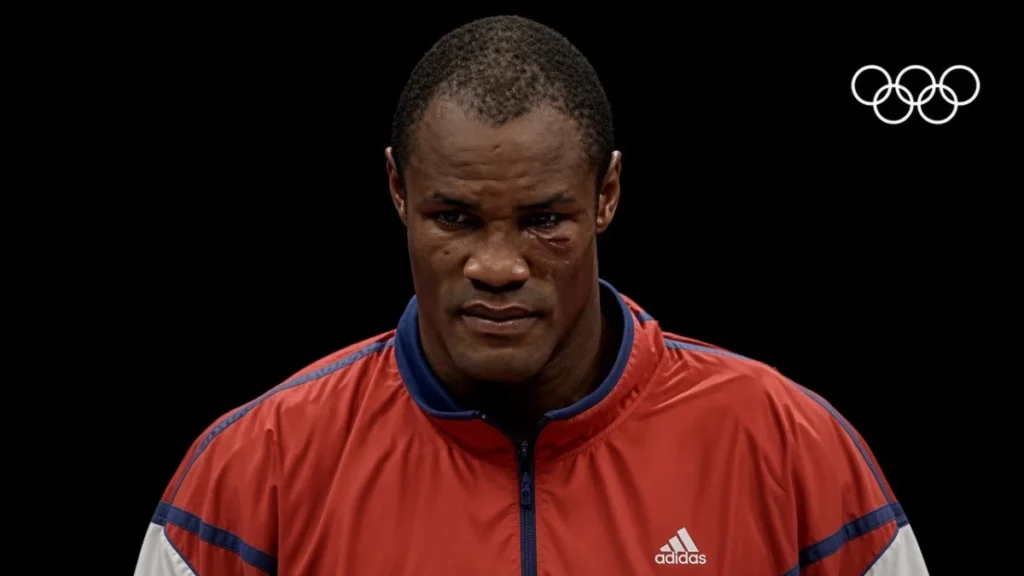
This scenario essentially played out with Zuffa’s first flagship signing, Jai Opetaia, the Australian cruiserweight who held the IBF title at the time.
Even though Opetaia made it widely known he wanted to pursue undisputed status, he was crowned the inaugural Zuffa champion in March after defeating Brandon Glanton. That victory compelled the IBF to strip Opetaia of their championship belt.
It is easy for Zuffa to claim they will not “recognize” existing sanctioning bodies, but recognition ultimately goes both ways. The Association of Boxing Commissions does not recognize Zuffa as a legitimate championship, nor does BoxRec, the industry’s go-to recordkeeping service. As matters stand, the Zuffa belt functions as a ceremonial prize. The IBF essentially regarded Opetaia’s last fight as a non-title contest that he, as their reigning champion, failed to secure permission to participate in, resulting in him being stripped of the belt.
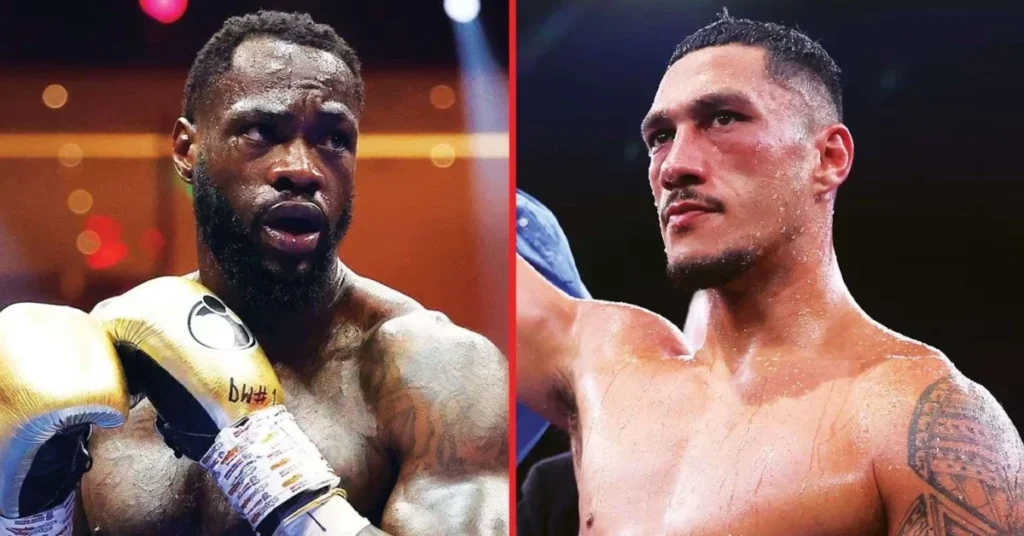
Since then, Zuffa’s Conor Benn challenged WBC welterweight champion Ryan Garcia, and Aaron McKenna captured the IBF middleweight title during Zuffa’s debut event in Ireland. These developments suggest White has undergone a rethink. He has transitioned from telling journalist Dan Rafael in March, “I am not interested in working with sanctioning bodies. I have no interest in it whatsoever,” to describing the situation to Boxing News as a “fluid scenario.”
“With the Zuffa title, there won’t be any question as to who the best in the world is, because you will fight your way up through the gauntlet of bad-ass guys in the sport to become number one and then become the world champion,” he says.
Critics, however, might argue that Glanton, who was decisively outclassed by Opetaia, did not quite fit the description of a top-tier elite fighter.
“The matchmaking will be, you know… you’re not going to have thousands of guys in the sport that are undefeated,” White adds. “लेकिन as you’re stepping to the destination that you want to get to, certain fighters will want to compete for a WBC belt or an IBF belt. So, therefore, it has to be a fluid scenario before you get to the end destination. Some of these kids are like, ‘I always dreamed of fighting for this belt’, and if that is what their goal is, you know, we’ll try to help them do that.”
It represents a notable concession from a man who entered boxing believing he could completely tear up and rebuild one of the world’s oldest sports, an industry anchored by entrenched powerbrokers with decades of accumulated influence.
Still, White insists the sport remains fundamentally broken, though he views that dysfunction as a prime commercial opportunity, just as he did when he first acquired the UFC.
“There’s a lot of things about the business of boxing that I don’t like,” he says. “I mean, even back then, at amateur level, when I was dealing with amateurs, it was just broken, corrupt, and bad. So, it worked out perfectly for me, personally, in that when we got into the UFC, I was able do everything the way that I wanted to do it. Everything that I wanted to do with boxing, I did with the UFC. People ask if the best description [for Zuffa] is that I’ll be building the UFC model in boxing. Well, it’s the boxing model [that I wanted] that ended up being the UFC model that will now be the boxing model, if that makes sense.”
Recalling the early days of MMA promotion, White notes the skepticism he routinely faced.
“When I first started, the narrative was, ‘you will never be as big as boxing; it’s impossible.’ Well, now here we are, 25 years later, and yeah, it’s doing OK! And then they said I’m not going to go into boxing and do everything the way I wanted to do it. Well, I am. You know, everything in life is about timing. In the United States, boxing was so broken that when we did our first [boxing] events, UFC fans would come, all these young people that usually come to my fights, they didn’t know anything about boxing. They didn’t even understand. And the older generation remembers the glory days.”
For White, the path forward involves a systematic teardown and rebuild.
“So, for me, to wrap my head around that, I’m just going to rip it apart and start from the bottom and build it from scratch. But there’s a lot of work to do, just like there was in the UFC. Every once in a while, a big fight will pop up that people will tune in and watch, and the promoters that put it on come in, and it’s a going-out-of-business sale, and they grab as much money as they can, and they don’t care whether the live experience was good, or the television experience was good, and then they run off for another year or two, and then they’ll pop back up, and it’s always these money-grabs every year or two.”
He draws a sharp line between his business ethics and those of his promotion rivals.
“And listen, I don’t ever—well, I already did it, and I don’t want to do it again—I don’t want to be a part of anything that loses money. I think of the other guys involved in the sport are just trying to suck out as much money as they can, and that’s just not what I do. We will put on consistent fights, build guys up, and build the trust up with the boxing fans, like we do with the UFC. We have built this level of trust with our fans that they know we’re going to deliver. Anywhere in the world, we’re going to deliver.”
Except, perhaps, on the stand-up comedy stage.