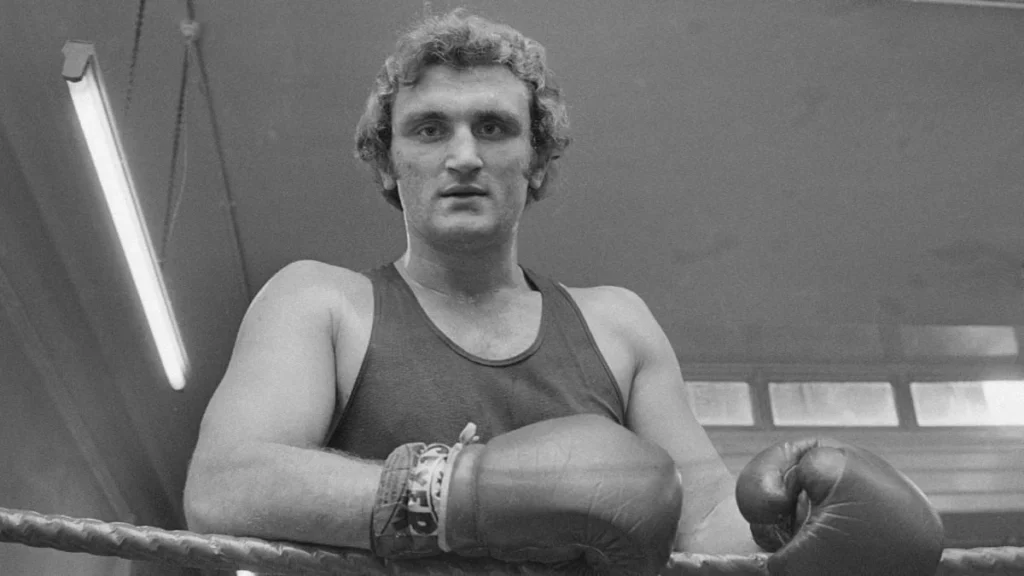

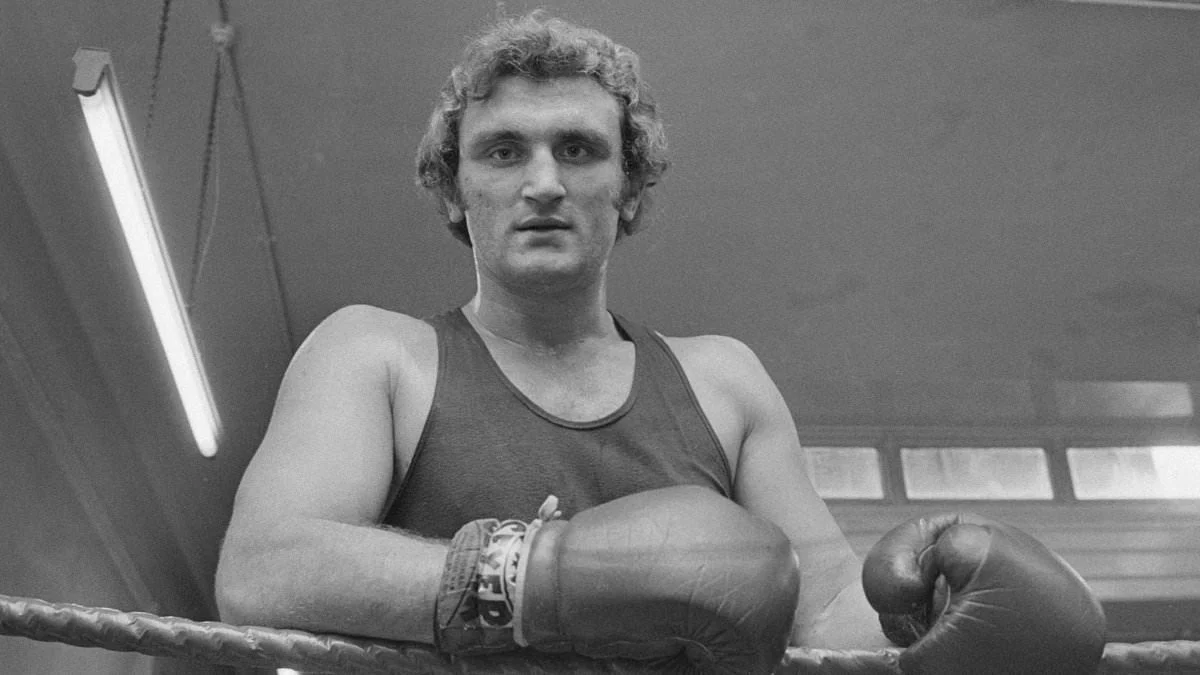
Joe Bugner Jr is charting the occasions when his late father called someone a “f** idiot”. It is a conversation that finds room for both Elvis Presley and Russell Crowe, two iconic figures from entirely different eras of global entertainment.
“I might have even been there when the Elvis one happened,” says the son, aged 56. “I would have been tiny, but I was definitely on that trip to Vegas.”
The occasion behind the tale was fairly spectacular. Joe Bugner, widely remembered as the Greek God of British heavyweight boxing, was in town for the first of his two historic fights with Muhammad Ali, universally known as The Greatest. The year was 1973, and Elvis, The King of Rock ‘n’ Roll, happened to be staying at the same hotel. Captivated by the sporting spectacle unfolding in the city, Elvis invited both fighters to his private suite for a remarkable gathering of titans.
“Elvis gave Ali a robe with ‘People’s Choice’ on the back for the ring walk,” Bugner Jr recalls, looking back at the surreal encounter. “My dad asked something to the effect of, ‘Where’s mine?’ And Elvis then said something my dad didn’t like. I gather dad called him a ‘f** idiot’. Or it might have been ‘d***head’.”
It appears the legendary heavyweight was not easily impressed by celebrity status, regardless of how grand the setting.
“He called a few people ‘f** idiots’, actually. One of them was Russell Crowe. This was years later. He had originally hired my dad as a boxing consultant for Cinderella Man, but then he went with someone else. My dad lost the plot on that!”
There is a lot of laughter down the phone during this conversation, filled with fond remembrances and vivid anecdotes. Yet, there is also an unmistakable current of sadness for Bugner Jr. It was a year ago last month that his father passed away at the age of 75 in Australia, a country he had embraced and called home for four decades.
As a man who had once ranked among the most colourful, recognisable, and contentious personalities in British sport, Bugner had endured the gradual erosions of dementia in the latter stages of his life, a heartbreaking conclusion to a monumental existence.
“It still hurts,” says Bugner Jr, reflecting on the loss. “I miss him. Dementia is terrible, it really is, but I’d say he had a good version of it. By that I mean he was happy.”
The mental toll of the illness manifested in a way that preserved a sense of his glory days, shielding him from the harsher realities of his final years.
“In his head, he was still 38 years old and getting ready for a boxing fight. The next day he might think he was doing an interview in the newspapers. In reality, he was just sat in his room at the care home, but he was happy up until the last days of his life. And it was some life.”
The legacy of that extraordinary life is precisely why we are talking today. Bugner Jr and the respected author David Tossell have collaborated on an excellent new book, The Bugner Identity, which dives deep into the enduring riddle of its title character.
That character was a boy who fled Soviet-occupied Hungary on foot at the tender age of six, only to grow up and go the distance with Muhammad Ali—twice—and the formidable Joe Frazier as a man. Along the way, his life intertwined with the upper echelons of global pop culture: he played football most Saturdays with Rod Stewart, hit the golf course with Dean Martin, named one of his sons after Formula One legend James Hunt, deployed Tom Jones as the best man for his second wedding, and later poured his energy and fortune into a sprawling wine business.
Showbiz types loved him, welcoming him into circles of fame and allowing a level of celebrity in the United States that was rarely matched by British athletes in subsequent decades. However, boxing fans back home were far harder to convince. That was the heavy cost of winning the British, European, and Commonwealth titles from the nation’s absolute darling, Henry Cooper, in 1971.
Bugner was never truly forgiven by the British public for receiving the favourable side of a razor-thin verdict against the beloved Cooper. As Bugner himself once put it with characteristic bluntness: “When I beat Henry Cooper I was no longer British. I was a Hungarian refugee.”
“There was so much resentment from the Cooper fight,” says Bugner Jr. “I spoke to my father about it so many times and probably watched it back even more.”
The debate surrounding the bout has lingered for decades among boxing purists and casual fans alike.
“The thing is, it was a close fight. In the Seventies and Eighties, if the champion was down by a point, he would still get the verdict, but if the fight happened nowadays, I do believe he would have got the decision 100 per cent. Back then, he became the villain for it.”
Older generations will be better placed to understand the tighter grip boxing possessed in that golden era, when domestic bouts captured the undivided attention of an entire nation. Likewise, they will likely know Bugner was hardly reluctant to lean into his role as the bad guy, occasionally using the friction to his advantage.
Rebranding himself as “Aussie Joe” after emigrating to Australia in 1986 only widened certain rifts, and he repeatedly claimed throughout his life that he was hounded out of the United Kingdom by an unforgiving press. In truth, the reality probably lay somewhere in the middle.
“Look, my dad was not above saying things for publicity!” admits Bugner Jr with a knowing smile. “But he wasn’t a villain. He was a really nice, caring guy, and he always loved England. I can promise you, behind closed doors, he was always grateful for what he had in this country after arriving with nothing from Hungary.”
The duality of his public persona and private character formed a complex legacy that followed him until his final days.
“The villain reputation stuck for some people, I suppose. I’ve thought about that a lot in the past year, but I’ll tell you what gave us a lot of comfort after he died—there was genuine warmth in what people wrote about him a year ago.”
The outpouring of appreciation served as a poignant reminder of his impact on the sporting landscape.
“It was really touching and actually quite surprising. I think it would have surprised my dad a bit as well.”
The newly released book will perhaps go some way to shifting perceptions further, offering a comprehensive look at a career that deserves far more recognition than it historically received. The sheer merit of Bugner’s sporting accomplishments has always been underrated, which seems bizarre in review of a career that spanned from 1967 to 1999. During that immense timeframe, he took Ali the full distance to the judges’ scorecards in both 1973 and 1975. In between those grueling bouts, he contested the full 12 rounds of a classic war with Joe Frazier, cementing his status as one of the toughest heavyweights of his generation, even if a credible world title ultimately eluded him.
“One thing I won’t forget is Ali on Michael Parkinson’s show and really sticking up for dad,” says Bugner Jr, recalling a famous television moment. “Parky had laid into him and Ali goes, ‘He’s the only man that took me 15 rounds and took me 12 rounds, and you are telling me that he’s a crap boxer. Does that mean you’re saying I’m a crap boxer?’”
The mutual respect between the fighters transcended the brutal nature of their profession.
“It’s strange to look back now and think how normal it felt for me to be around Ali growing up, but dad and Ali spent a lot of time together in and out of the ring. They were good friends.”
This subject naturally leads Bugner Jr onto the other side of his father’s extraordinary life—the remarkable cast of characters who constantly populated his orbit. Icons like Frank Sinatra and actor Oliver Reed were among those who fell in with Bugner during his glamorous Los Angeles years in the late Seventies. It was notably at Joan Collins’s house that he met his second wife, Marlene Carter.
“It’s only as an adult that you look back and realise it was quite unusual,” reflects Bugner Jr. “I’d see them at the house and, like with Ali, it all seemed normal! I remember asking dad years ago why he supported Manchester United, because there wasn’t any obvious connection, but he had this United woolie hat and scarf. It was because George Best had given them to him.”
The casual blending of sports, cinema, and music defined his father’s social sphere in a way that modern athletes rarely experience.
“I mean, Christ, my brother is called James because he was friends with James Hunt. He would play a bit of golf with Dean Martin, play football with Rod Stewart on a Saturday, Tom Jones was his best man—the way I saw it was he was a kind of a David Beckham figure in the Seventies. But he was a warm and funny guy, nice to anyone on the street, and people liked him.”
With the possible exceptions of Elvis Presley and Russell Crowe, of course, alongside the legion of devoted Henry Cooper fans who never quite let go of the 1971 verdict. Yet, the new book at least offers a wider context that might have been missed by some during the initial, often sensationalised telling of Bugner’s complicated life story.
“He did well for a kid that walked from Hungary to England and didn’t have a pot to p*** in,” says his son, encapsulating the sheer scale of his father’s journey from refugee to global figure. “I’m super proud of him. He wasn’t a villain.”
The Bugner Identity, published by Pitch Publishing, is available now.