
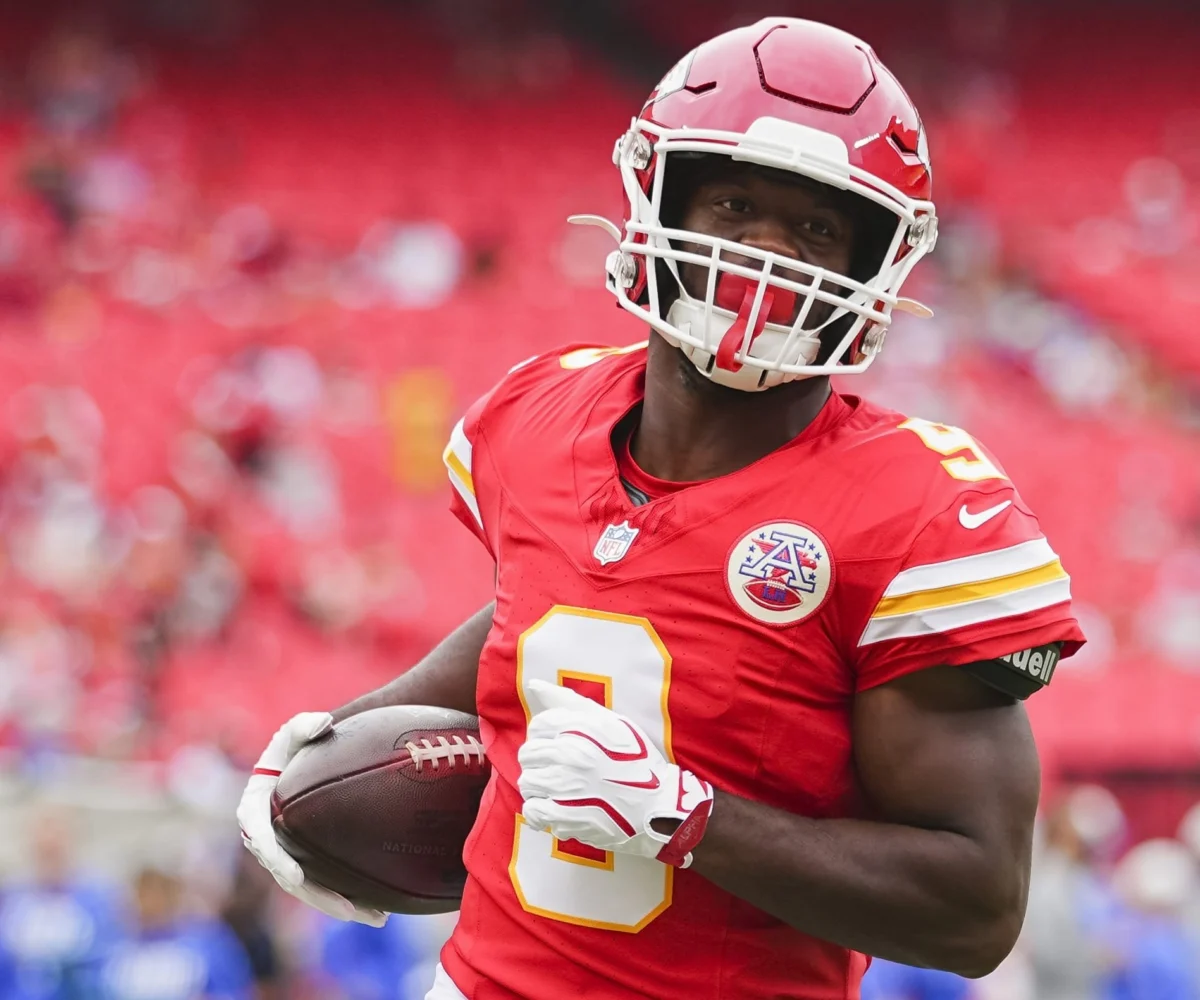
Philadelphia Eagles wide receiver A.J. Brown has firmly established himself as a low-end WR1 in fantasy football and a cornerstone of the franchise’s offense since arriving via trade from the Tennessee Titans. Across his three seasons in Philadelphia, Brown has consistently averaged between 83 and 88 receiving yards and 16.7 to 17.9 PPR fantasy points per game. While a different offensive scheme might yield a higher volume of targets, the setup in Philadelphia has proven exceptionally friendly for big plays and high efficiency. Brown has averaged at least 9.2 yards per target and scored a minimum of seven touchdowns in every single season with the Eagles.
Alongside fellow wide receiver DeVonta Smith, Brown reliably commands over half of the team’s total targets. Tight end Dallas Goedert operates as a distant third option in the passing game, while the rest of the roster fights for the remaining scraps. Throughout Nick Sirianni’s tenure as head coach, the offense has shown no sign of a reliable No. 3 receiver emerging. Nor has there been any indication that Brown is slowing down, aside from the occasional knee or hamstring injury. Standing at 6-foot-1 and 225 pounds, he remains one of the most physically powerful wide receivers in the National Football League, possessing a blend of speed—having run a 4.49-second 40-yard dash at the 2019 NFL Scouting Combine—and elite agility. Turning 28 during the summer, Brown continues to excel at beating defenders downfield, catching short passes, and picking up extra yardage after the catch. The only real drawback to his fantasy outlook is a lack of overall team passing volume, which occasionally limits his ceiling compared to other elite wideouts, making him a safer Round 2 selection rather than a late Round 1 pick.
Brown’s first two years in Philadelphia resulted in the two largest receiving yardage totals in franchise history. Yet, his 2023 campaign ultimately felt somewhat disappointing to fantasy managers because a massive portion of his production was heavily concentrated in September and October before the Eagles suffered a dramatic collapse down the stretch. He put together a dominant stretch of six consecutive games with at least 127 receiving yards between Weeks 3 and 8. However, he managed just two touchdowns and a single 100-yard outing the rest of the year, despite continuing to average 9.4 targets per game from Weeks 9 through 17.
The frustrating end to the season was capped by an absence from Philadelphia’s postseason loss to the Tampa Bay Buccaneers due to a knee injury—marking his first missed game since 2021. Fortunately, the injury was not expected to impact his offseason preparations. Demonstrating his commitment to the franchise, Brown called into a local Philadelphia radio station in February to definitively shut down persistent trade rumors, which always appeared dubious, before signing a lucrative three-year contract extension in April.
Entering his age-27 season, Brown prepares to work under newly hired offensive coordinator Kellen Moore. Moore endured a difficult 2023 campaign with an injury-riddled Los Angeles Chargers squad but is expected to handle play-calling duties in Philadelphia, mirroring the role held by former coordinator Brian Johnson. Moore is likely to attempt to keep DeVonta Smith more heavily involved, especially after the target gap between Brown and Smith widened significantly between 2022 and 2023. However, any added work for Smith is more likely to come at the expense of secondary pass-catchers rather than cutting into Brown’s core share of the offense. Brown’s unique combination of age, elite talent, and established rapport with quarterback Jalen Hurts positions him as one of the safest selections for managers drafting in the late first or early second rounds.
The dominant physical skills that Brown initially displayed during his three-year stint with the Tennessee Titans finally translated into elite fantasy statistics once he escaped the run-heavy, conservative Titans offense and joined a more balanced, spread-out system in Philadelphia. Not only did he achieve a slew of career highs, but he also bested his previous individual water marks by staggering margins, including 39 more targets for a total of 145, 18 more catches for 88, and 421 additional receiving yards to finish with 1,496. It marked a massive breakout year not just for Brown, but also for DeVonta Smith, Jalen Hurts, and running back Miles Sanders. That collective success was heavily aided by an offensive line widely regarded as the best in the league.
Following that Super Bowl run, Sanders departed in free agency, and offensive coordinator Shane Steichen left to become the head coach of the Indianapolis Colts, replaced internally by Brian Johnson. Unlike many teams that experience high turnover after reaching the Super Bowl, the Eagles maintained remarkable continuity on the offensive side of the ball. Brown, Smith, and Goedert retained ample time to run routes, supported by an elite offensive line and a highly mobile quarterback. The primary limitation from a fantasy perspective remains the overall passing volume, as Brown rarely matches the target totals accrued by other receivers of his tier, forcing him to rely instead on big plays and frequent red-zone conversions to sustain WR1 production.
Although Brown has occasionally missed time due to injuries, few wide receivers command more defensive respect from opposing coordinators. Selected in the second round of the 2019 NFL Draft out of Ole Miss, he immediately topped 1,000 receiving yards as a rookie despite initially playing limited snaps, swiftly establishing himself as one of the league’s most dangerous yards-after-catch threats. That early success was hardly a surprise, given that Brown had previously posted back-to-back 1,200-yard seasons at Ole Miss as the team’s primary receiving option ahead of future star DK Metcalf. At the 2019 Combine, Brown weighed in at 226 pounds and clocked a 4.49-second 40-yard dash. While his straight-line measurables do not quite match Metcalf’s, Brown effectively combines the size and power of a workhorse running back with the fluidity and hand-eye coordination of an elite wide receiver.
Those physical gifts were unfortunately only on display part-time during certain stretches, as Brown missed four full games, nearly all of a fifth, and played at less than 100 percent health in several others. Despite those physical setbacks, he finished just shy of the 1,000-yard threshold, registering three separate games with at least 133 yards and a touchdown, plus another standout performance in the playoffs. Ultimately, the Titans were unable to work out a long-term contract extension with their star wide receiver, leading to a blockbuster trade that sent him to the Eagles in exchange for draft capital. Philadelphia promptly locked him up with a four-year, $100 million contract extension.
Reflecting on his journey from Nashville to Philadelphia, Brown has consistently proven his resilience. Despite missing Weeks 2 and 3 of the 2022 season with knee injuries that Tennessee’s medical staff had initially feared might be season-ending, Brown pushed through to secure a second consecutive 1,000-yard campaign. While his extraordinary and ultimately unsustainable 12.4 yards-per-target average from his rookie year regressed, he still managed an elite 10.1 yards per look, ranking fourth in the NFL. Standing 6 feet tall and weighing 226 pounds, he remains a nightmare for defensive backs to bring down in the open field.
Despite seeing only 12 red-zone targets—tying for 34th in the league—Brown managed to convert those opportunities into 11 touchdowns, good for fifth overall. Following the conclusion of that season, he underwent surgery on both knees, which underscored the severity of the physical hurdles he had quietly played through.
Even as a 22-year-old rookie with the Titans, Brown was arguably the most efficient per-play wide receiver in the NFL. Despite seeing just 84 total targets from a combination of Marcus Mariota and Ryan Tannehill, he led all rookie receivers in receiving yards and tied for the rookie lead with eight touchdown catches. His 12.5 yards-per-target average ranked first among the 52 wide receivers who reached the 80-target threshold that season, and his eight receptions of 40 yards or more also tied for the league lead. That dominant rookie campaign even included a 49-yard rushing touchdown to cap off his big-play resume.
Though his early career was defined by a run-first offensive philosophy under head coach Mike Vrabel and coordinator Arthur Smith—an approach that frequently limited his raw target volume—Brown consistently maximized his opportunities. Now fully entrenched as a focal point of a dynamic Philadelphia offense alongside Jalen Hurts and DeVonta Smith, Brown remains positioned to maintain his status as one of the premier wide receivers in professional football.