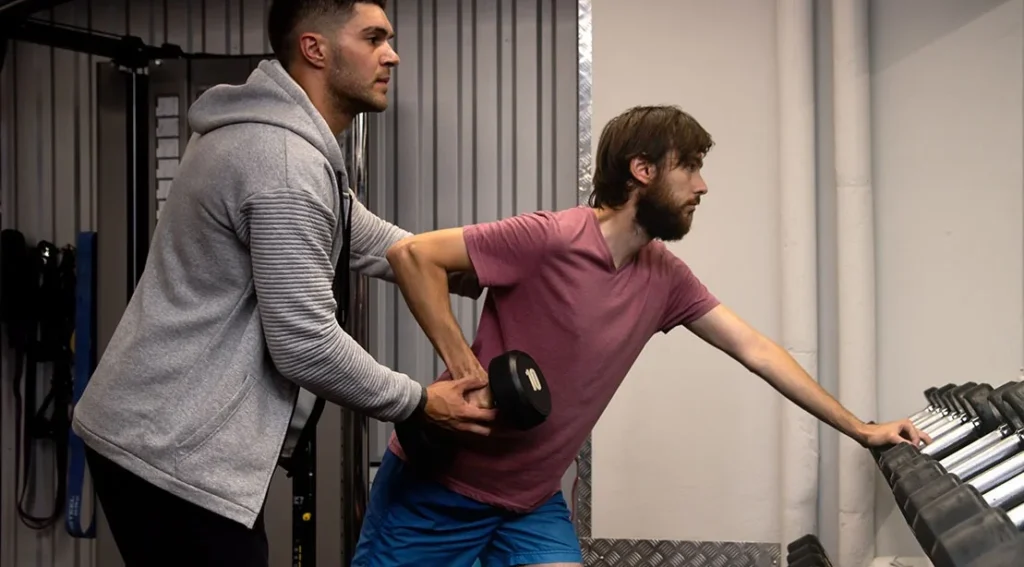




When building muscle volume with heavy compound lifts, lifters often encounter a frustrating bottleneck: fatigue. A set of back squats or bench presses might start crisp, powerful, and technically sound, but once the repetitions pile up, the bar speed slows down considerably. Alongside that drop in velocity, technique often begins to compromise, turning clean reps into grueling grinders.
Hypertrophy cluster sets offer a strategic alternative to traditional straight sets, providing a method to organize heavy workloads without sacrificing movement quality. By introducing short, planned rest periods inside the set, lifters can chip away at a larger repetition target while allowing force production and bar speed a chance to recover between clusters. The result is the accumulation of the necessary volume to support muscle growth, but with a much higher percentage of those repetitions looking and feeling like the ones intended from the start.
This approach makes cluster configurations particularly appealing for multi-joint compound movements. Scientific research has consistently demonstrated that cluster-style set structures can reduce velocity and power loss compared with traditional straight sets. At the same time, long-term training studies suggest that when overall training volume and effort are properly matched, these setups can produce similar muscle hypertrophy outcomes.
The challenge lies in knowing where cluster sets fit into a broader routine and determining how much rest to use so that a hypertrophy session does not accidentally morph into a strength workout dominated by endless breaks. Understanding how to integrate these methods allows athletes to inject quality volume into their biggest lifts while maintaining structural integrity.
Understanding the Mechanics of Cluster Sets
At its core, a cluster set breaks a traditional, continuous set of repetitions into smaller blocks separated by brief, deliberate rest periods placed directly inside the set. For example, a conventional straight set of 12 repetitions on the back squat might be reorganized into three distinct blocks of four reps, with roughly 20 seconds of rest interspersed between each block.
Exercise scientists generally define cluster training by these planned intra-set rest intervals. A comprehensive systematic review and meta-analysis published in Sports Medicine examined protocols that utilize rest periods between individual repetitions or small groups of repetitions, often ranging from approximately 6 to 45 seconds depending on the specific exercise and loading parameters.
When the primary objective is muscle hypertrophy, keeping those intra-set breaks relatively short is essential to ensure the musculature retains an appropriate level of metabolic and mechanical fatigue. A structure such as four repetitions, four repetitions, and four repetitions, separated by 15 to 30 seconds of rest, provides a practical and effective starting point for athletes looking to experiment with the technique.
Why Compound Movements Benefit Most From Cluster Sets
Compound lifts are where cluster sets truly demonstrate their value. Exercises like squats, bench presses, overhead presses, and bent-over rows demand significantly more coordination, stability, and total-body force production than single-joint isolation movements. As fatigue accumulates during a standard set, bar speed inevitably drops, and maintaining optimal joint positioning becomes increasingly difficult, altering the training stimulus for the later repetitions.
Short intra-set rests help mitigate this performance decline. A subsequent systematic review and meta-analysis in Sports Medicine reported that cluster and rest-redistribution configurations successfully preserved movement velocity and power output while simultaneously reducing blood lactate accumulation and perceived exertion when compared to traditional continuous sets.
Clinical research investigating resistance-trained men performing squats and bench presses identified a nearly identical pattern. Lifters sustained higher average barbell velocities during cluster set protocols than during traditional straight sets when utilizing the exact same load based on a 10-rep maximum. In those studies, the cluster protocol incorporated 30 seconds of rest after every two repetitions, providing enough physiological recovery to sustain bar speed without reducing the total number of completed repetitions.
Additional research focusing specifically on the back squat reinforced these findings, noting that 30-second intra-set rests successfully preserved barbell velocity while generating lower blood lactate concentrations than uninterrupted sets. For athletes performing major compound lifts, the practical advantage is clear: a greater proportion of repetitions remain faithful to the original speed and technique intended at the start of the exercise.
Can Cluster Sets Still Build Muscle?
A common concern among physique athletes is whether breaking up a set compromises the mechanical tension and metabolic stress required for muscle growth. Current evidence indicates that the short rest periods characteristic of cluster sets do not blunt hypertrophy, provided the overall training stimulus remains robust.
A study published in the European Journal of Applied Physiology directly compared traditional straight sets with cluster sets that divided 12 total repetitions into three groups of four, using 20 seconds of rest between each cluster. Following an eight-week training intervention, both experimental groups achieved similar increases in muscle thickness and lean tissue mass, provided that total repetition volume and effort levels were closely matched.
This highlights an important caveat: intra-set rest does not serve as a free pass to reduce effort or volume. The external load must still impose a legitimate challenge on the target musculature, and the complete cluster structure must contain enough total work to trigger a meaningful hypertrophic adaptation.
Selecting the Right Movements and Programming the Approach
Movements that involve substantial loading across multiple joints offer the clearest opportunities for incorporating hypertrophy clusters. Lower-body staples like the back squat and the Romanian deadlift, alongside upper-body power movements such as the bench press and chest-supported row, lend themselves well to the method, allowing lifters to manage fatigue effectively without sacrificing the primary training effect.
When programming hypertrophy cluster sets, athletes should begin with a compound lift already integrated into their routine, then divide the standard repetition target into manageable sub-blocks. Moderate to moderately heavy loads are ideal because they permit enough total repetitions while ensuring that each individual cluster remains genuinely challenging.
Intra-set rest should be kept brief, typically ranging from 15 to 30 seconds to allow for partial recovery while keeping the clusters unified as a single working set. Following the completion of the full cluster, a standard inter-set rest period of two to three minutes should be observed before initiating the next round. The final cluster within a set should still feel demanding, with lifters aiming to finish with roughly zero to two repetitions in reserve to maintain an effort level high enough to support muscle growth without requiring repeated technical failures on heavy movements.
When Straight Sets Remain the Better Choice
Despite their utility for heavy multi-joint lifts, cluster sets are not universally necessary for every exercise in a training program. Simpler, single-joint movements often do not require this structural setup, particularly when the goal is to induce local muscular fatigue with minimal technical demand.
Straight sets frequently represent a more efficient and practical choice for isolation exercises such as leg extensions, leg curls, cable flyes, and lat pulldowns. These movements are significantly easier to control as fatigue mounts, and taking a continuous straight set close to muscular failure is often the most direct method for accessory work. For most comprehensive training programs, cluster sets can be reserved for a select few key compound lifts, while traditional straight sets continue to form the foundation of the accessory volume.
As athletes look to integrate these protocols, starting with one or two cluster-based exercises per session—followed by traditional programming for the remainder of the workout—provides a balanced approach to enhancing bar speed, preserving technique, and driving continued muscle development.